Meals That Stretch When Money Is Tight
There have been different times in my life when stretching food wasn’t just a way to save a little money. Growing up in a lower-income household taught me some of it, and later there were years when my own family was living on Employment Insurance (EI) or provincial social assistance—what we generally called welfare—and the groceries really did have to last.
For readers outside Canada, EI provides temporary income support during periods of unemployment, while Ontario social assistance helps people in financial need cover basic living costs.
When my children were young, my then-husband also worked away and I homeschooled, so money wasn’t the only thing in short supply. Time and energy mattered too. If I could cook once and get dinner that night plus another meal the next day, that was a good use of both the food and my time.
What I learned is that meals that stretch aren’t necessarily special recipes. They come from knowing how to portion meat, use filling staples, save small leftovers, make one ingredient work in several meals, and look at what you have as ingredients rather than isolated servings.
The goal isn’t to constantly find different cheap foods. It is to learn how to make the food you can afford do several different jobs.
Quick Answer
The easiest way to make meals stretch is to use smaller amounts of expensive ingredients such as meat alongside filling foods like rice, potatoes, pasta, beans and vegetables. Plan second uses for cooked food, save even small leftovers, and choose ingredients that can move between several meals instead of buying everything for one specific dinner.
Best For:
Times when grocery money is tight
Main Strategy:
Make ingredients work across more than one meal
Useful Staples:
Rice, potatoes, pasta, beans and flour

Protein Strategy:
Use smaller portions throughout a complete meal
Leftover Strategy:
Treat leftovers as ingredients, not servings
Shopping Strategy:
Know how you will use an ingredient before buying it
Making Meals Stretch Is Different From Simply Eating Less
When I talk about stretching food, I don’t mean putting less food on everyone’s plate and calling it a budget meal.
I mean changing the proportions of the meal.
Instead of making a large piece of meat the centre of every plate, I might use a smaller amount of meat with rice, potatoes, pasta, vegetables, beans or soup. The meat is still there, but it becomes one part of a filling meal rather than having to do all the work.
This is also why I don’t think a list of cheap foods is enough. You need to know what to do with those foods once they’re in your kitchen. Most of the foods I relied on during tighter years could do more than one job.

How Do You Know if a Meal Will Actually Stretch?
Not every inexpensive meal is a meal that stretches. I look at whether the ingredients can feed enough people now and still give me some flexibility with what is left.
Before I plan the meal, I ask myself a few questions.
Does it have a filling base? Rice, potatoes, pasta, beans, bread or another inexpensive staple can help carry a smaller amount of the more expensive ingredients.
Can I spread the expensive ingredients throughout the meal? Ground beef mixed with potatoes and vegetables stretches more easily than four separate burgers. The same applies to shredded chicken in soup or thinly sliced beef in a stir-fry.
Can I change the ingredients based on what I already have? Soup, pasta, rice dishes, casseroles and similar meals give you room to use the vegetables, meat or leftovers that need eating.
Will I be able to use what is left? A meal has more value to me if it reheats well or gives me ingredients for tomorrow.
Will my family actually eat it? Making a huge amount isn’t economical if nobody wants the leftovers.
That last question is easy to overlook. Stretching food only works when the food actually gets eaten.
My Basic Formula for Making Meals Stretch
I don’t usually start by looking for a special budget recipe. I look at what I have and try to give each part of the meal a job.
A simple formula that has worked for me is:
Filling base + smaller amount of protein + vegetables + something that brings it together + a plan for what is left.
Here are a few examples.

You don’t need to have every part of the formula every time.
The point is to stop looking at half a package of meat or three leftover vegetables and thinking, “That’s not enough for dinner.”
Instead ask, “What can I put with this to make it enough?”
Portion Meat Before You Cook It
One of the most useful habits I developed was portioning meat according to how I planned to use it.
Take a regular package of ground beef. Instead of assuming the entire package is one dinner, I can divide it into several smaller portions. You can wrap and freeze portions you aren’t using right away to use later.
Those portions can be combined with:
- Rice
- Potatoes
- Pasta
- Frozen vegetables
- Beans
- Soup
- Casseroles
- Sauces
Once meat is crumbled, diced, sliced or shredded throughout a dish, it can contribute flavour and substance without needing to be the largest part of the meal.
That is much harder to do when everyone is expecting an individual piece of meat.
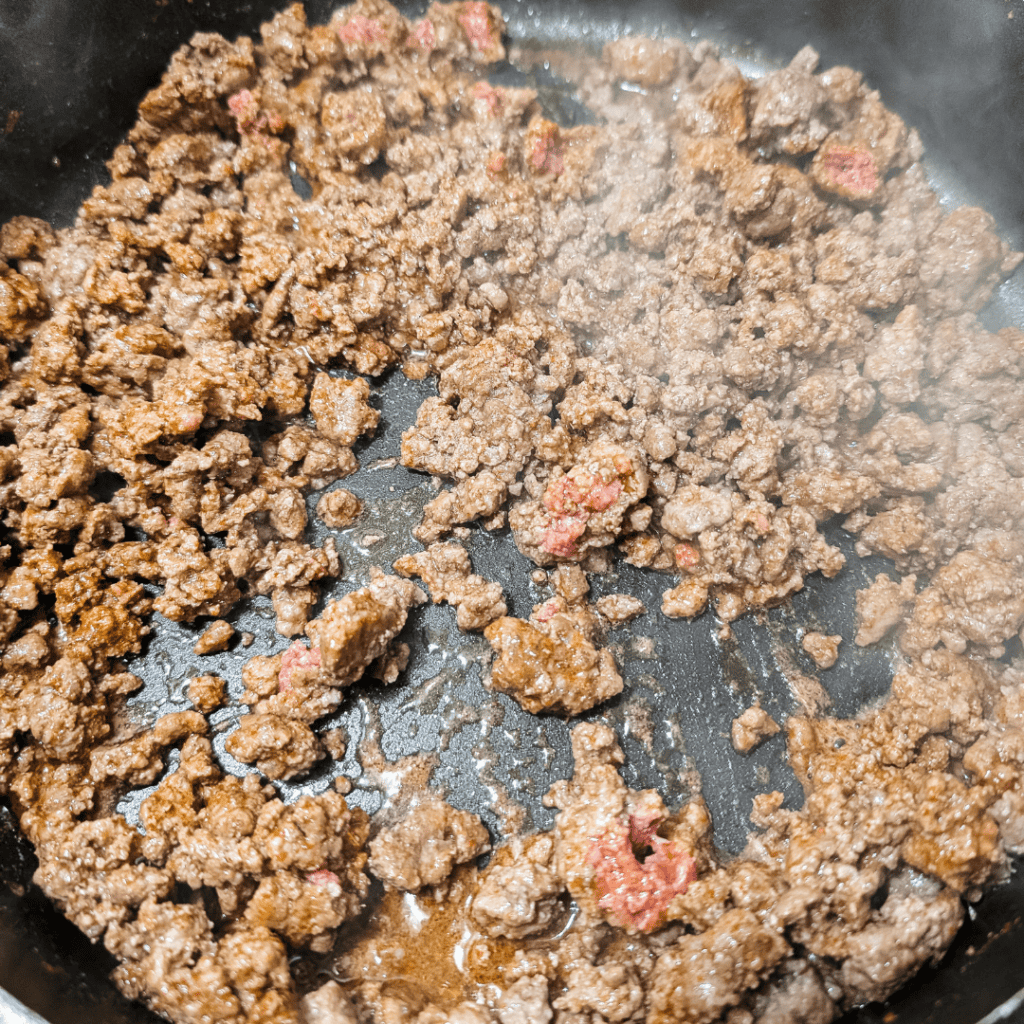
Stretching ground beef
Ground beef is especially easy to stretch because you can distribute it throughout the whole dish.
Other ground meats can work the same way.
A smaller portion can go into chili with beans, a pasta sauce, soup, tacos, a rice skillet or a casserole.
My taco meat is a good example of how I still cook this way. I can use it for dinner one night and turn what remains into wraps for lunch the next day instead of starting another meal from scratch.
Stretching steak and other beef
You don’t necessarily need an expensive steak for every beef meal either.
I make grill-pan steak strips using less expensive cuts when appropriate. The strips might first go into a stir-fry with rice and vegetables and then be used over the next day or two in sandwiches or wraps.
Cutting the beef into strips makes a relatively small quantity easier to distribute throughout the meal.
Stretching chicken and other cooked meat
A small amount of cooked chicken may not be enough to put a piece on everyone’s plate, but it can still be enough for soup, chicken and rice, pasta or a casserole.
This is one of the biggest changes in thinking that helped me during tight years:
The principle is the same with almost any meat: it doesn’t always need to sit separately on the plate. Ground, sliced, shredded, or diced meat can be spread through rice, potatoes, pasta, beans, vegetables, soup, or sauce so a smaller amount contributes to more servings.
This isn’t about simply serving less meat. It’s about making the meat work harder as one part of a filling meal.
Stop asking whether the leftover is enough to serve again. Ask what it is enough to become part of.
Use Rice to Feed More People and Fill Them Up
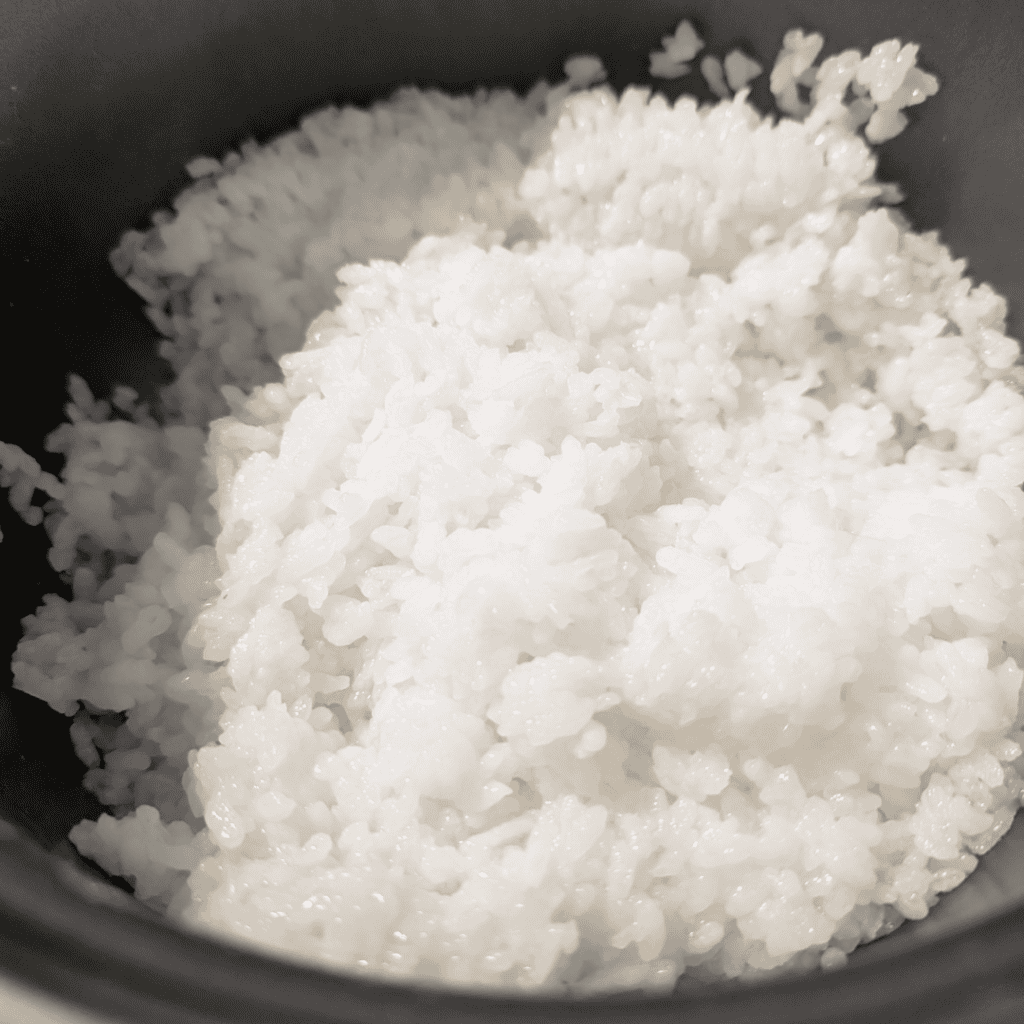
Rice has always been one of my most useful foods when I need meals to stretch.
When there is a good sale, I prefer buying a very large bag rather than repeatedly buying small packages. I have bought bags in the 8-kilogram-plus range because one large bag can last a family for quite a while when stored properly.
Prices vary enormously by location and year, but when I see the large bags at a genuinely good price, that is when I stock up.
In my household, about one cup of dry rice has often been enough to provide the rice portion for four people once it is cooked and served with the rest of the meal.
That makes rice useful underneath or alongside:
- Stir-fries
- Beans
- Chili
- Curry
- Saucy meat
- Stews
- Vegetables
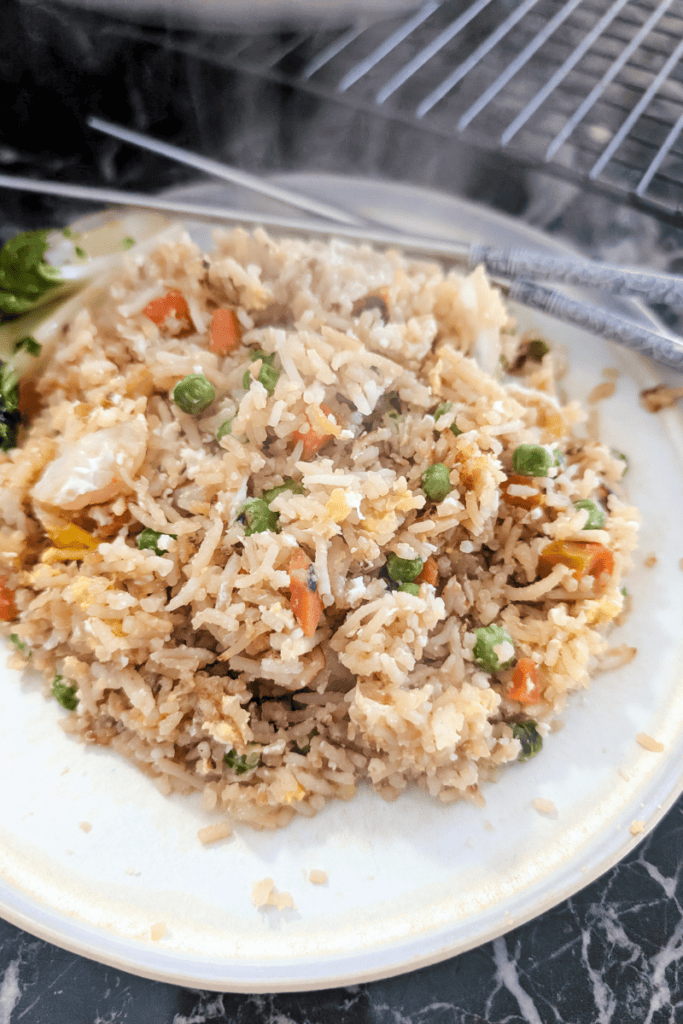
- Fried rice
- Rice bowls
It is also useful when you have several little bits of food but not enough of any one thing to call it dinner.
Some cooked meat, frozen vegetables and rice can become fried rice or a rice bowl instead of remaining three unrelated leftovers.
Buy Potatoes When They’re Cheap and Store Them Carefully
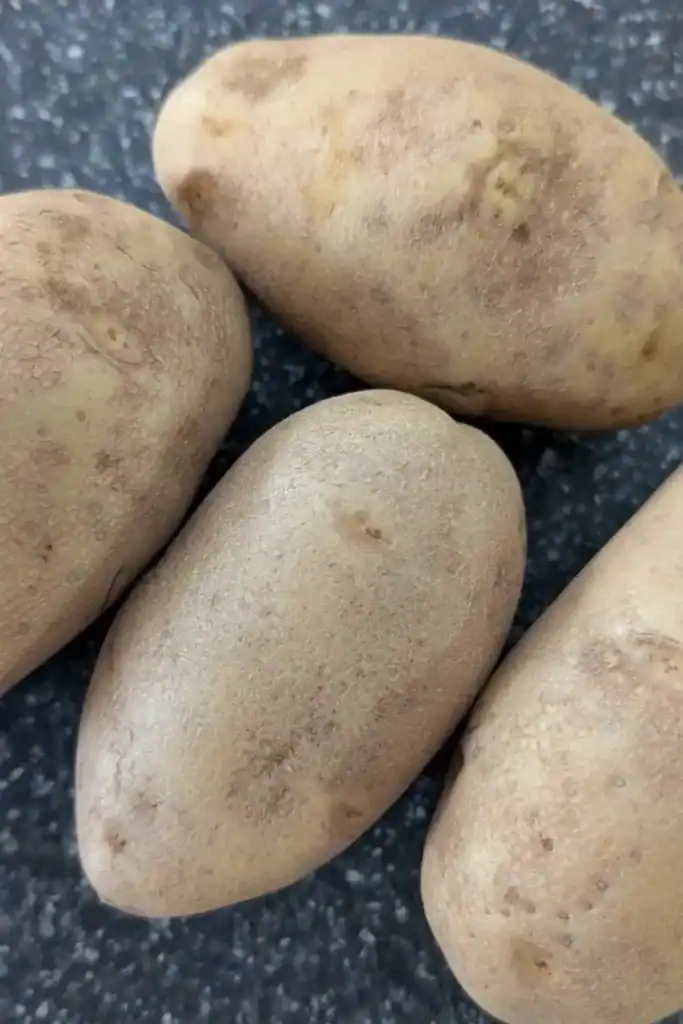
Potatoes were another food I learned to buy when the seasonal price dropped.
There have been times when I could get a 10-pound bag for around $2 in season. That isn’t a price I would promise anyone today because grocery prices vary, but it illustrates why I watch the price and buy more when potatoes become unusually inexpensive.
For portions, I generally figure approximately one or two potatoes per person depending on their size and what else is being served.
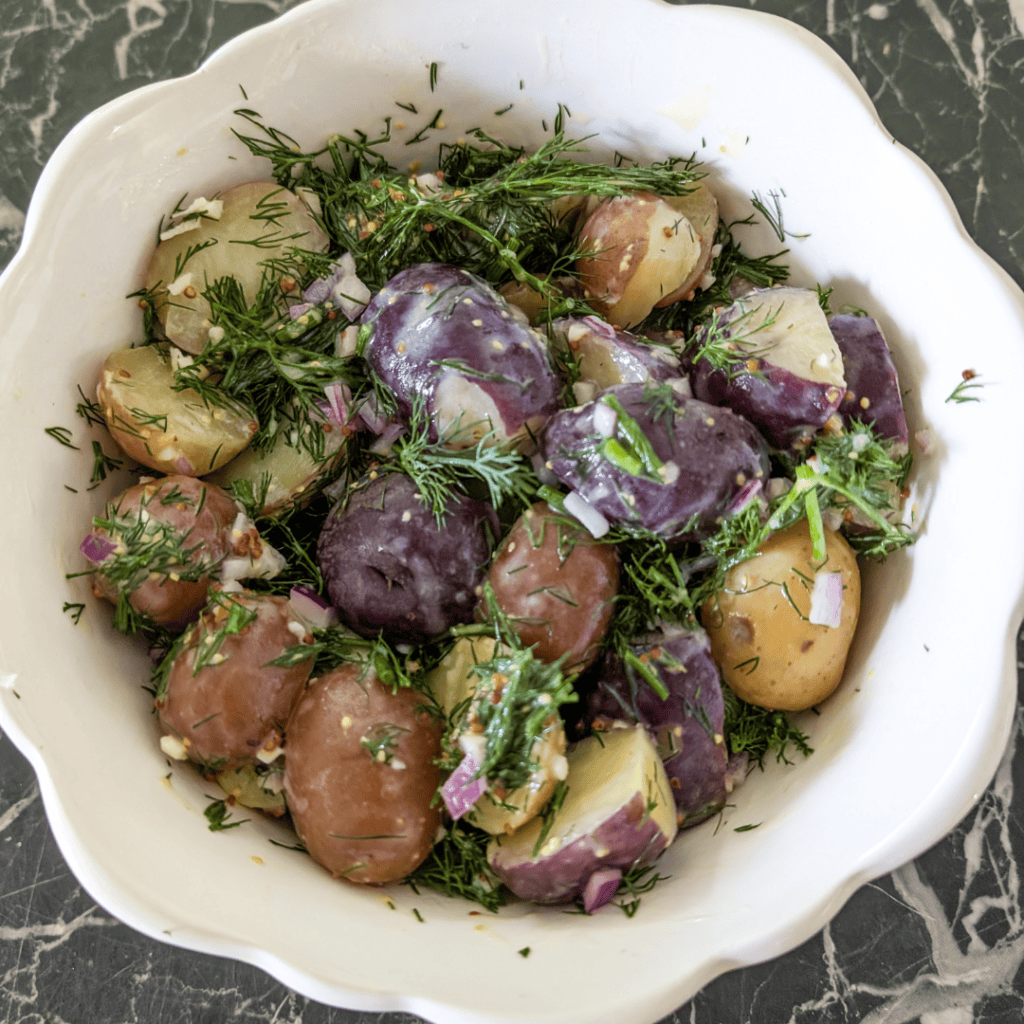
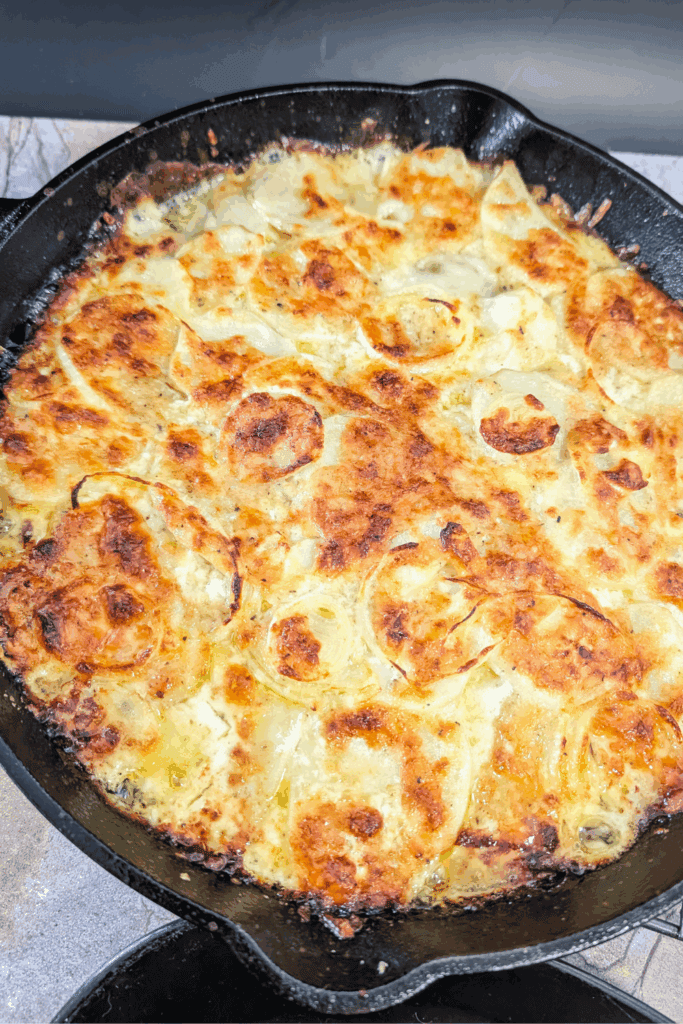

Potatoes can then become:
- Baked potatoes
- Mashed potatoes
- Roasted potatoes
- Breakfast potatoes
- Soup
- Stew
- Hash
- Casseroles
- A filling side for a smaller meat portion
I also learned that buying several bags isn’t a saving if half of them spoil.
Potatoes keep best under cool, dark conditions with ventilation. I use the coolest dark storage area available to me, such as a suitable basement area or lower storage space, keep the light off them and check them regularly. Remove any that are starting to spoil so one bad potato doesn’t sit unnoticed among the rest.
The important correction to my old Rubbermaid-bin habit is airflow: potatoes shouldn’t be tightly sealed into a container that blocks ventilation.
Pasta Is Worth Buying When It Goes on Sale
Dry pasta is another staple I buy ahead when the sale price is worthwhile because it stores well and can take a small quantity of other ingredients a long way.
I’ve stocked several bags when I found pasta around the $1 mark rather than waiting until I needed one package at full price.
Pasta can carry:
- A small amount of ground meat
- Leftover chicken
- Vegetables
- Beans or lentils
- Cheese
- Simple sauces
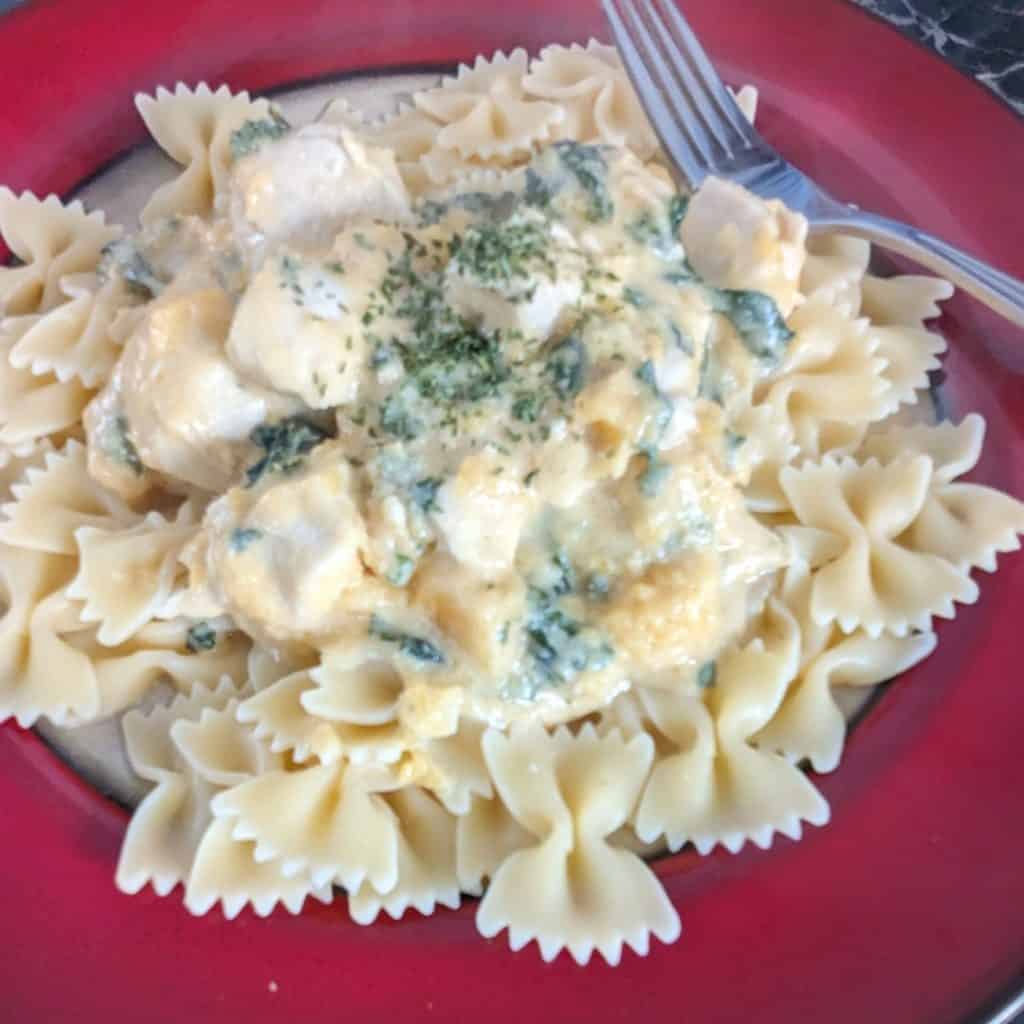
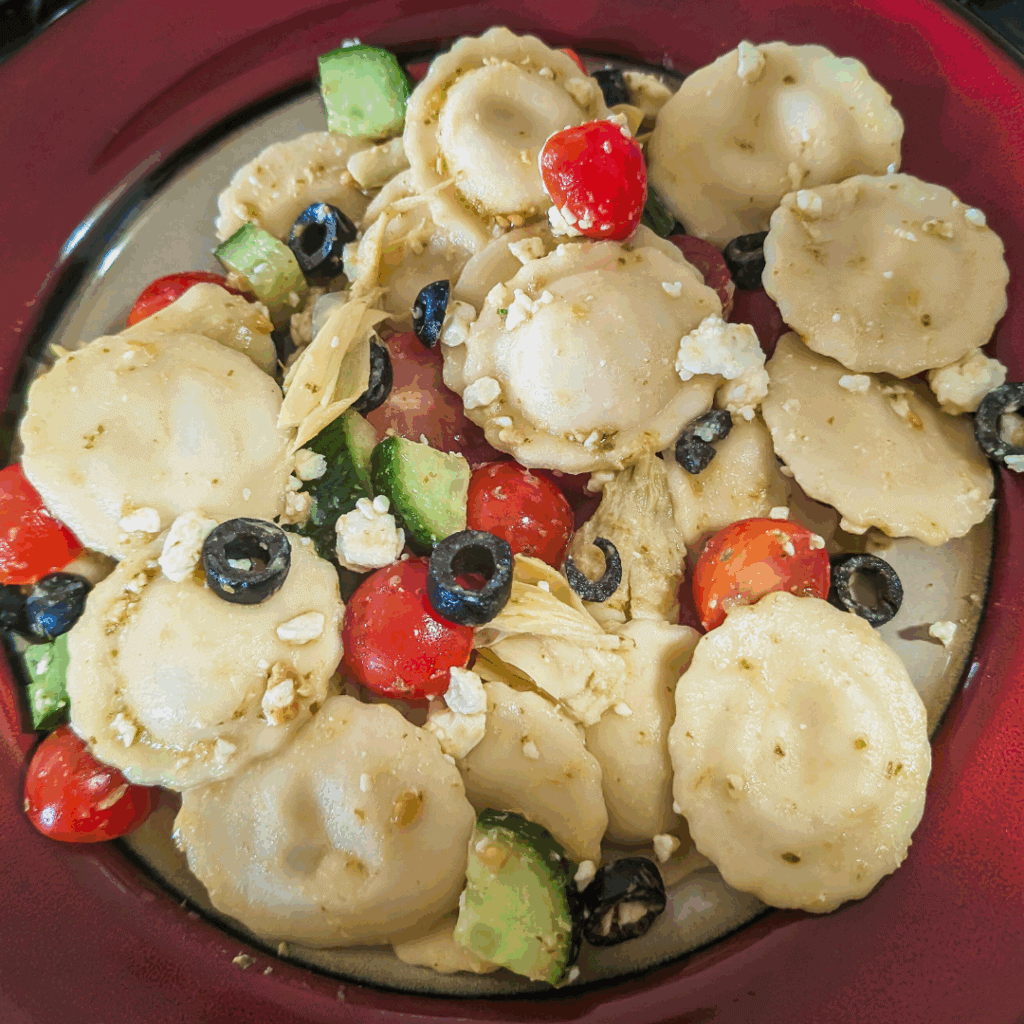

Pasta sauce also doesn’t always have to mean opening an expensive jar of tomato sauce.
Vegetables can be cooked, processed or blended into sauces too. This is something I’m working with more now, including a fall series of pasta sauces that aren’t based entirely on tomato.
I’m also working on making pasta sauce from scratch and freezing a base sauce for later. That kind of batch cooking is exactly the same principle: do more of the work once and give yourself an easier meal later.
Dried Beans Are One of the Cheapest Proteins I Keep Around
Dried beans take a little planning because they need to be rehydrated and cooked properly, but a bag of dried navy beans or pinto beans can become a substantial amount of food.
I particularly like them for soups and stews.
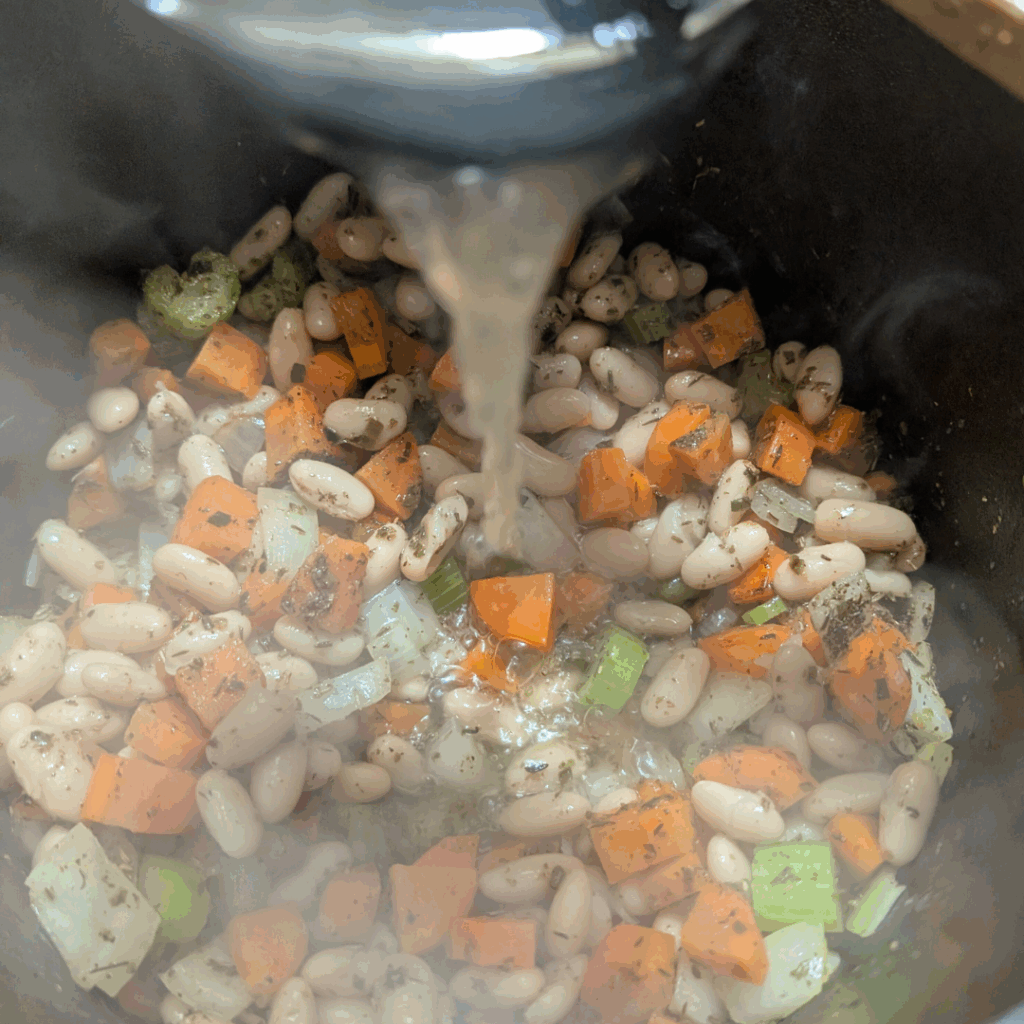
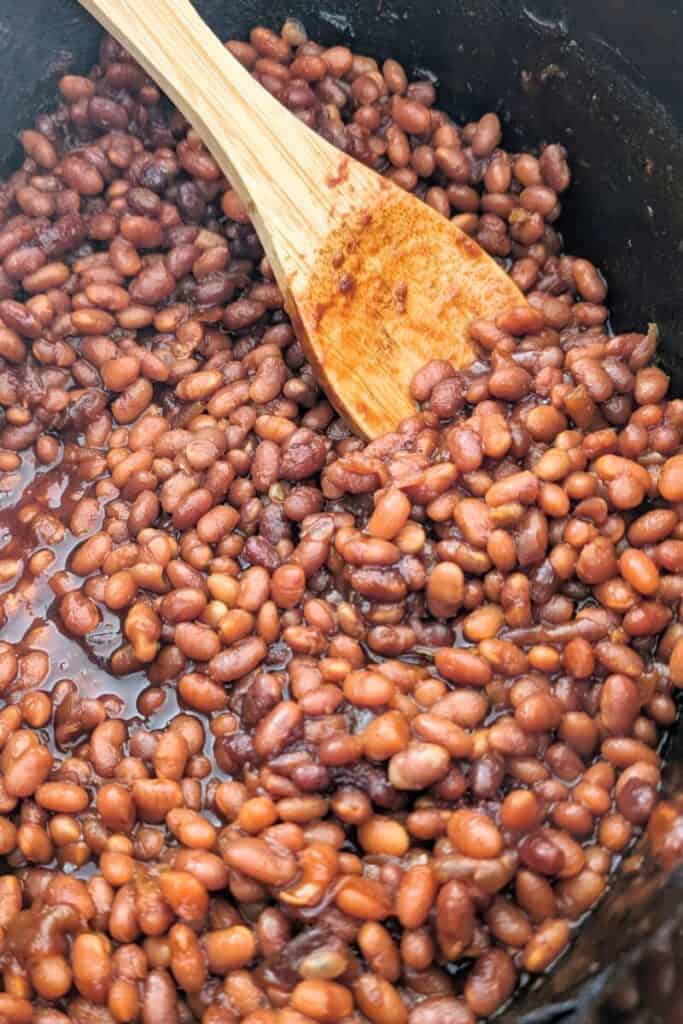

Beans can also help stretch meat rather than requiring you to suddenly switch your entire household to meatless meals.
A smaller quantity of meat plus beans can work in:
- Chili
- Soup
- Stew
- Rice dishes
- Taco filling
- Casseroles
That can be easier on a family that is used to eating meat than abruptly putting an unfamiliar bean dish on the table and hoping everyone is happy about it.
Frozen Vegetables Help Me Use Only What I Need
When I have the choice, I often prefer frozen vegetables to canned vegetables because I like their taste and texture better and I can pour out only the amount I need.
Fresh, frozen and canned vegetables can all be nutritious choices. For me, frozen vegetables are especially practical when money is tight because they keep longer than fresh produce and I don’t have to cook the whole package at once.
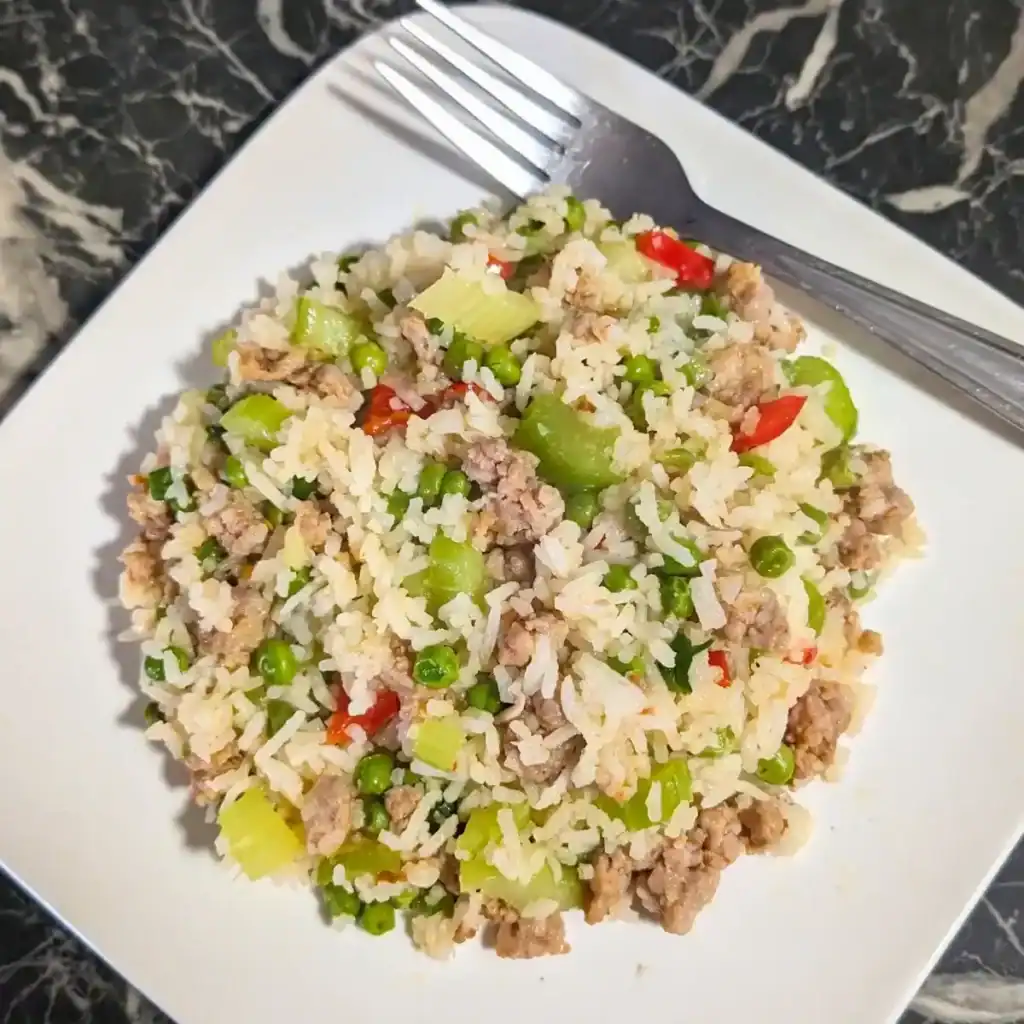
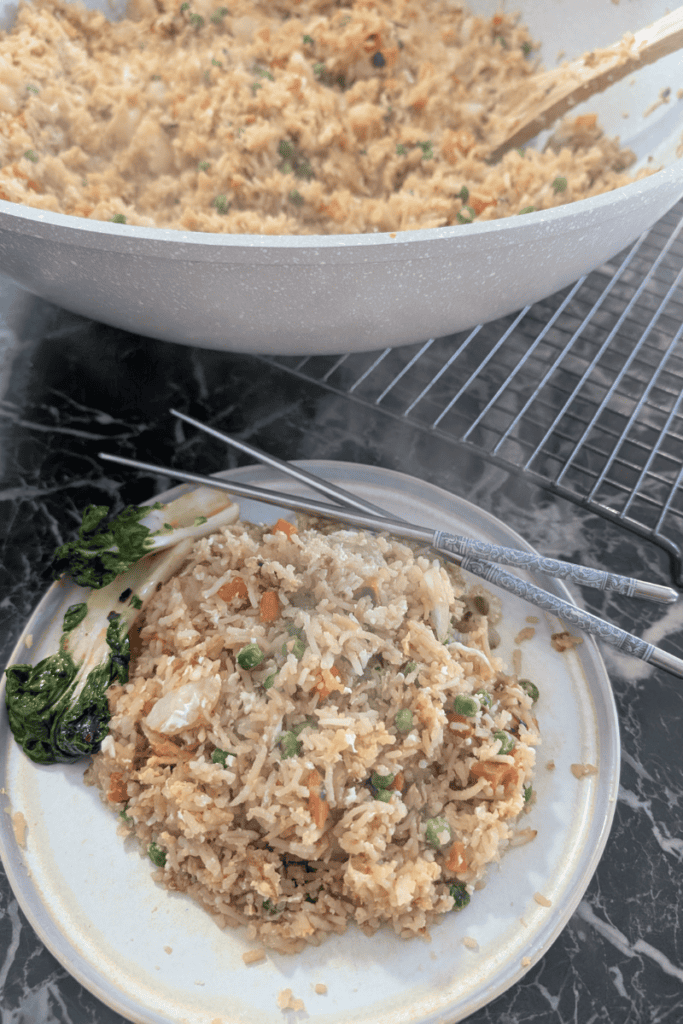

A handful can go into:
- Fried rice
- Soup
- Pasta
- Casseroles
- Stir-fries
- Omelets
- Stews
That flexibility matters when you’re trying to make a meal from several small amounts of food.
Freeze Vegetables Before They Become Waste
I regularly do this even now.
If vegetables in my refrigerator are starting to look tired but are still sound, I try to save them before they become waste. Depending on the vegetable and how I plan to use it, I may freeze it for a future cooked dish or blanch it first before freezing. I label everything with the date so I know what it is and when I froze it.

That changes the question from:
“Can we eat all of this before it goes bad?”
to:
“Can I save this now and give it another job later?”
I wouldn’t freeze vegetables that are rotten, moldy or otherwise spoiled. This is for vegetables that are still usable but are simply past the point where I would want to serve them fresh.
Health Canada recommends refrigerating or freezing leftovers promptly—within two hours—and using refrigerated leftovers within a few days, with exact storage times depending on the food.
Older Vegetables Can Become Stock
Vegetables don’t always have to look pretty to be useful.
Vegetables that are still sound but past their best for serving fresh can sometimes be used for homemade stock.

That stock can then become the beginning of:
- Soup
- Stew
- Gravy
- Rice
- Sauces
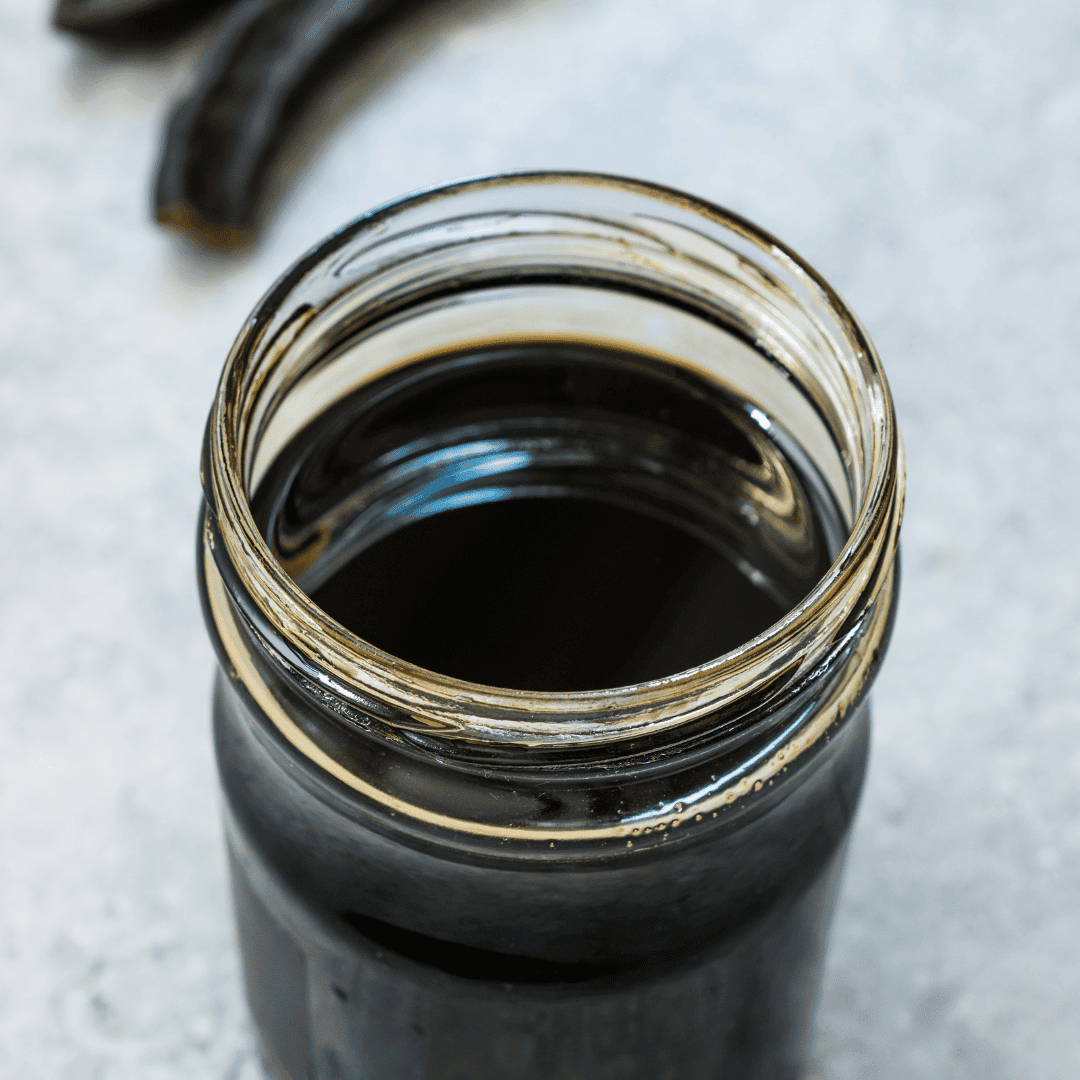
Once the stock has cooled appropriately, I portion it for the freezer so it is there when I need it.
This is another place where scraps and odds and ends begin to matter. When the budget is genuinely tight, getting another useful ingredient out of food you already paid for makes a difference.
Soup Is One of the Best Ways to Stretch Small Amounts of Food
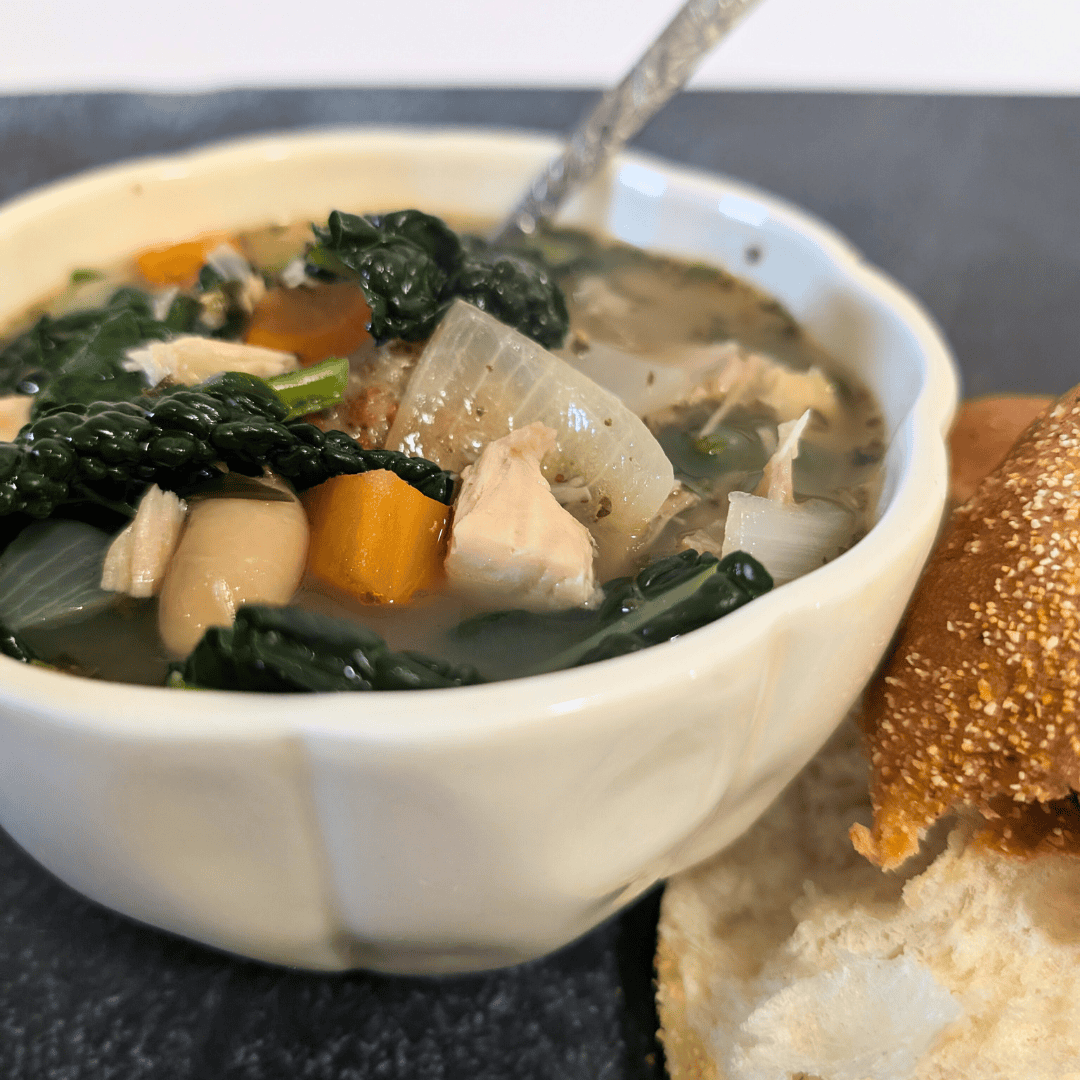
Soup has probably saved more small amounts of meat and vegetables in my kitchen than almost anything else.
A little meat doesn’t look like much sitting in a container.
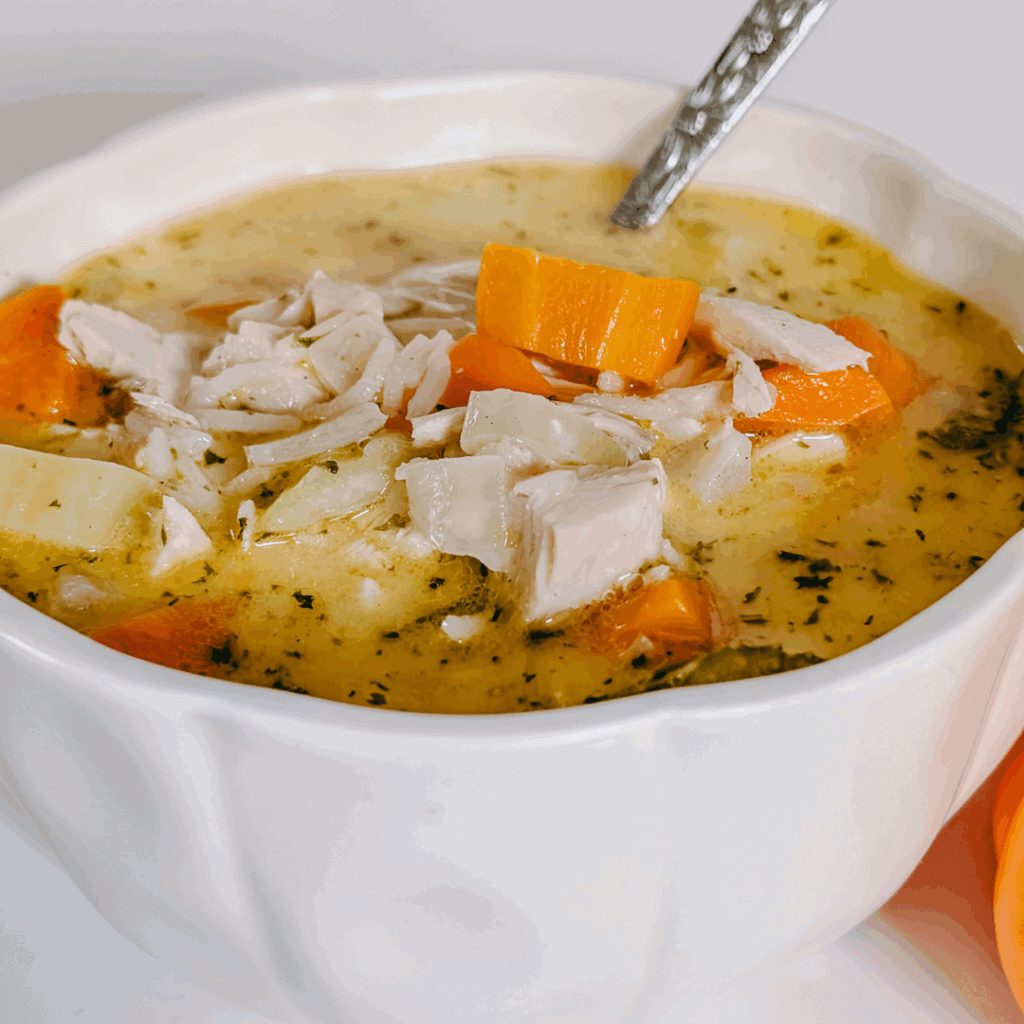
Put it into broth with potatoes, rice, noodles, beans or vegetables and suddenly it contributes to an entire pot of food.
Soup is also forgiving of vegetables that need using soon.
The basic idea is simple:
Broth + something filling + vegetables + whatever protein you have.
You don’t necessarily need large quantities of every ingredient.
Add Something Filling When Soup Isn’t Enough
My kids weren’t always excited when they heard soup was for dinner.
Biscuits changed that.
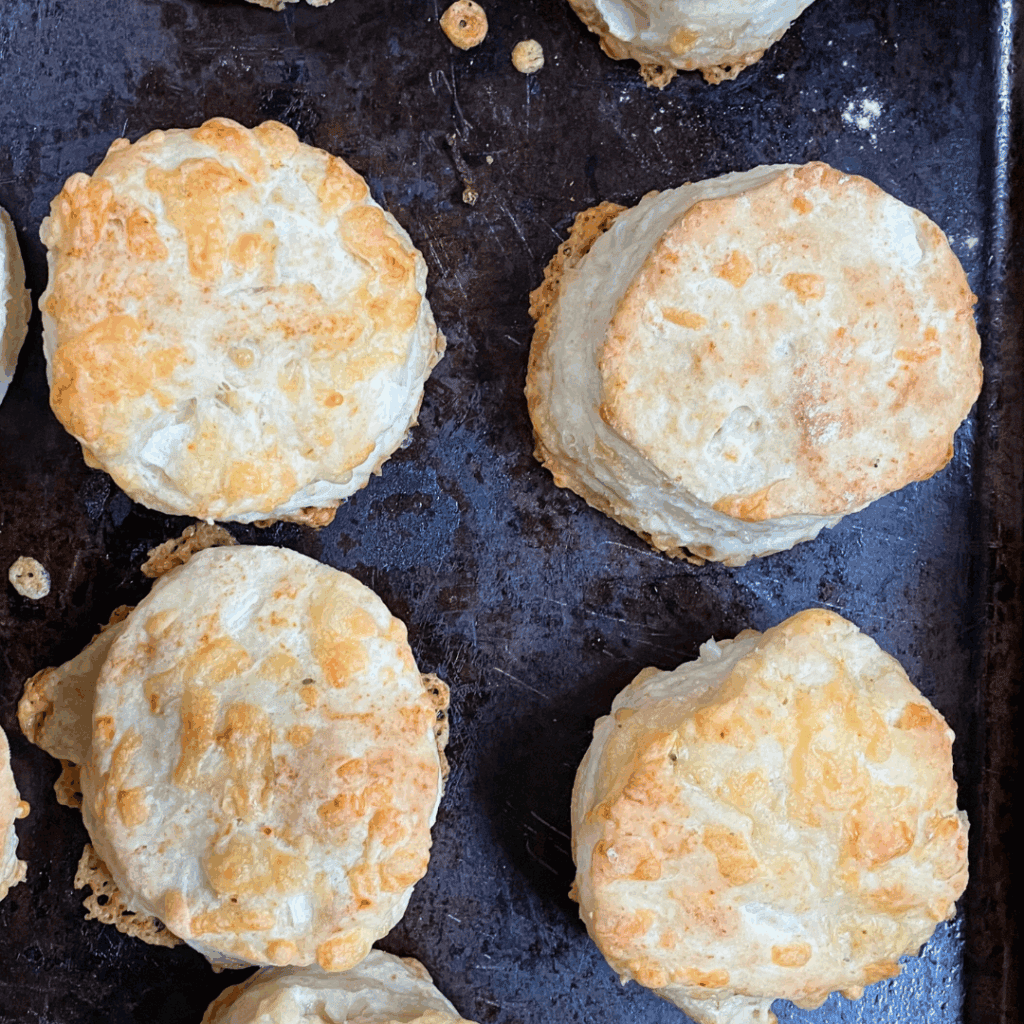
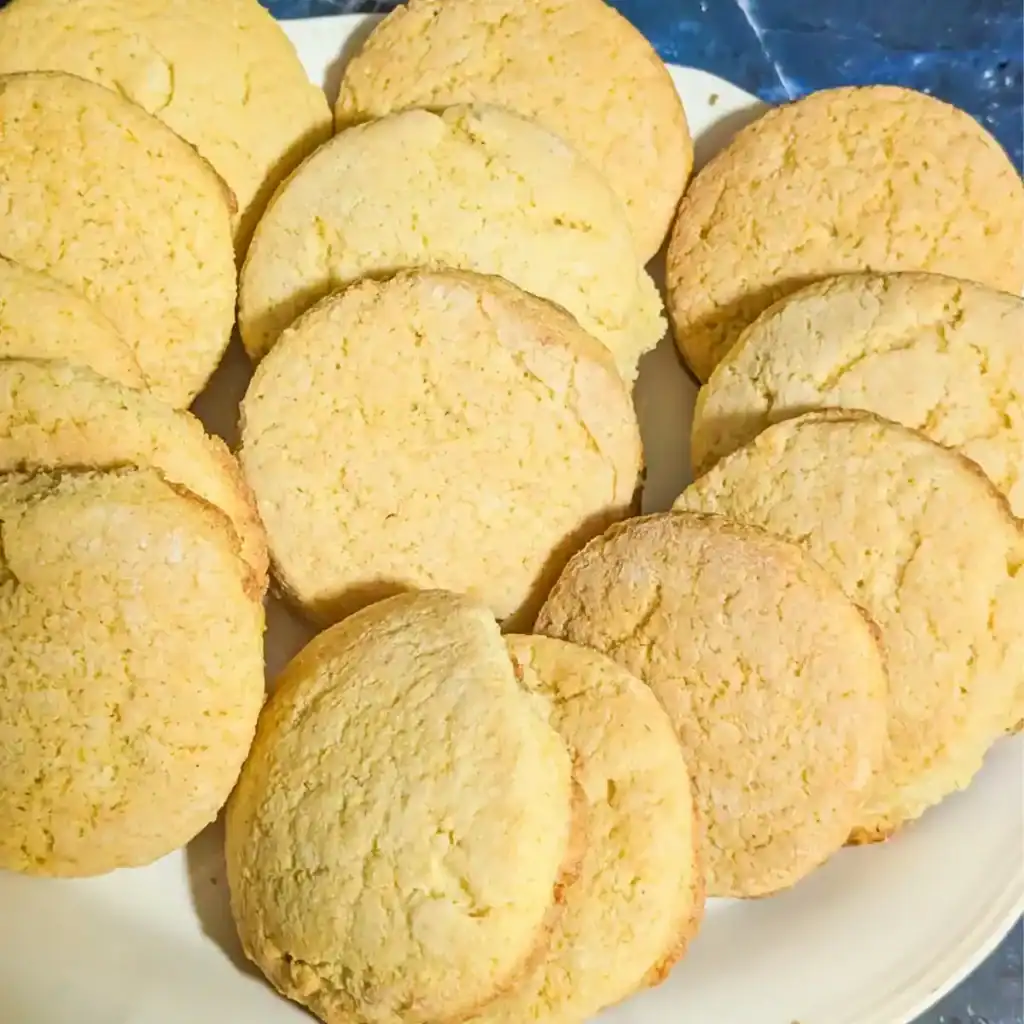

A pot of inexpensive soup served with homemade biscuits, bread or another filling homemade side felt much more complete. The soup stretched the meat and vegetables, while the bread helped fill hungry stomachs.
This was especially useful when my children were small and money was tight.
I did the same thing between meals.
When fresh fruit and packaged snacks weren’t always readily available, I baked things like:
- Muffins
- Bread
- Biscuits
- Cookies
Those simple foods gave the kids something familiar to eat and helped make the groceries last.


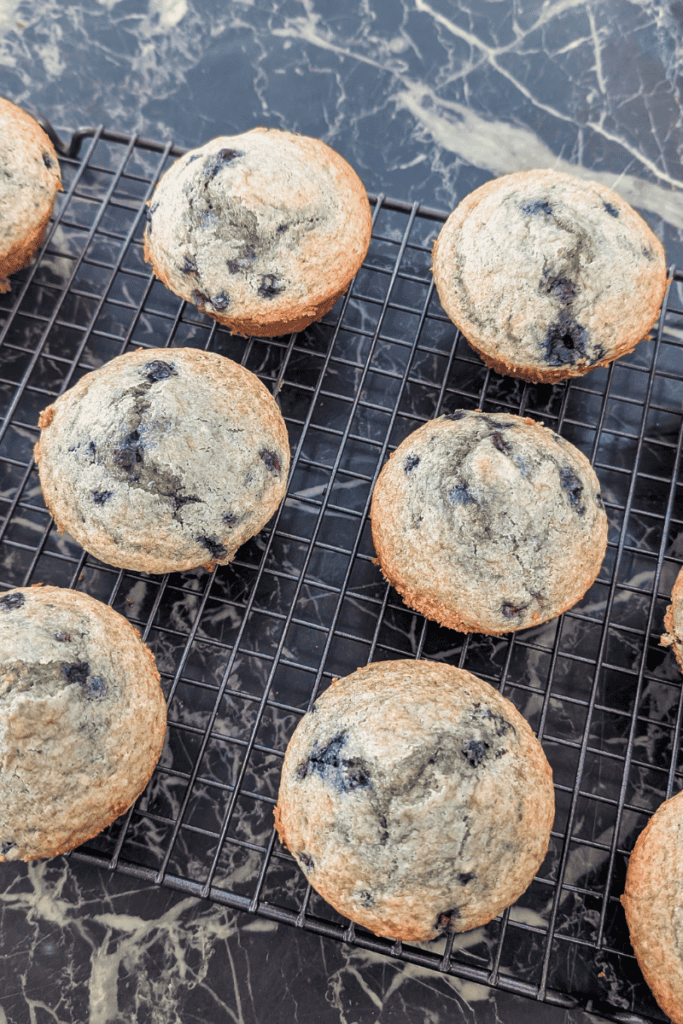
We didn’t buy many convenience foods when they were growing up. I would still make room occasionally for a favourite, such as Goldfish crackers every couple of weeks, but convenience foods weren’t the basis of the grocery shop.
Cook Once and Plan to Eat Twice
I am a big believer in making more food in less time.
When my kids were younger, my ex-husband worked away and I was homeschooling. I didn’t want every day’s meals to require a full cooking session.
Making something like lasagna that could feed us again the next day—or be frozen for another meal—was a lifesaver.
I still think this way.
When I cook something that lends itself to a second use, I ask:


What can tomorrow’s meal be before I finish today’s?
It might be:
Taco meat tonight → lunch wraps tomorrow.
Steak strips with rice tonight → steak sandwiches tomorrow.
Roasted or cooked chicken tonight → soup or pasta tomorrow.
Large pasta dish tonight → leftovers for lunch.
Lasagna tonight → another dinner or freezer meal.
The second meal doesn’t always have to look like the first one.
Batch Cook Ingredients, Not Just Complete Meals
Cooking once and eating twice doesn’t always mean making an enormous casserole and serving exactly the same dinner again tomorrow.
Sometimes I cook more of one useful ingredient and change what surrounds it.
For example:
Rice: Serve it with dinner, then use the extra for fried rice or add it to soup.
Taco meat: Tacos for dinner can become wraps or another lunch the following day.
Steak strips: Serve them with rice and vegetables first, then use what remains in sandwiches or wraps.
Chicken: Serve it as part of dinner, then use a smaller leftover portion in soup, pasta or a casserole.
Pasta sauce: Make enough for the meal you are cooking and freeze some as a head start on a future dinner.
I find this much less tiring than starting every meal from zero.
It also gives the family some variety because the second meal doesn’t have to look like the first one.
Save Leftovers Even When They Aren’t a Full Portion
I think almost every leftover is worth considering before throwing it away.
Not every leftover needs its own container and its own reheated meal.
Small amounts can be combined.
Leftover vegetables can go into an omelet.
Cooked meat can go into soup.
Rice can become fried rice.
Potatoes can become hash.
Vegetables of a similar type can be collected for a later stew or soup.
I’ll stop short of promising that every leftover belongs with eggs—I haven’t committed to a meatball omelet yet—but the general principle works.
A leftover can be useful even when it isn’t a serving.
That one idea can eliminate quite a bit of food waste over time.
Keep a Freezer Bag for Future Soup or Stew
One practical system is to collect compatible leftovers rather than freezing every tiny amount separately.
If I have little amounts of similar vegetables or other appropriate cooked ingredients, I can add them to a freezer container or bag intended for a future soup or stew.
Label and date what you freeze.
That prevents the freezer from becoming a collection of mystery bags that nobody recognizes six months later.
Learn What a Good Price Looks Like
I started paying attention to grocery prices when I was very young. My mother taught me how to read the flyers, compare prices and recognize when something was actually a good deal instead of simply being advertised as one.
When we shopped together, I had a job. She would look at the products higher up on the shelves while I searched the lower shelves for a better price. Even as a kid, I understood that the product placed right in front of you wasn’t necessarily the least expensive choice.
There was a well-to-do entrepreneurial relative named Jones in our family history, and my mother used to tease me that I was “Jonesing for the good prices” when I went hunting through the shelves for a bargain. It stuck with me.
That early habit became especially useful later when I had my own household and there were periods when money was very tight. I learned the usual price of the foods we bought regularly, so I could tell when an 8-kilogram bag of rice, a 10-pound bag of potatoes or several bags of pasta were genuinely worth buying ahead.
You don’t need to memorize the price of everything in the grocery store. Start with the foods your household buys repeatedly. Watch their prices for a while, compare the unit price when package sizes differ, and you’ll gradually learn what a good price actually looks like.
A sale sign can get your attention. Knowing the normal price tells you whether it is really a deal.
Know What Every Ingredient Is Going to Do Before You Buy It

When money was especially tight, a good shopping list mattered.
I didn’t want to buy something simply because I had a vague idea that we might use it.
I wanted to know what I was going to do with it.
I still think about groceries that way.
For example, if I buy beets with the greens attached, I don’t see one vegetable.
I see:
Tonight: Cook and eat the beet greens.
Tomorrow: Use the beet roots for another dish.
One purchase has now contributed to two meals.
This is very different from filling a cart with inexpensive foods because they’re labelled “budget friendly.” Cheap food isn’t cheap if you don’t use it.
Train Yourself to Shop in Meals, Not Ingredients
This way of shopping takes practice, especially if you are used to choosing food first and deciding what to make with it later.
Before an ingredient goes into my cart, I try to answer at least two questions:
What am I using this for first?
What else can I do with it?
That second question is where a lot of the savings happen.
If I buy ground beef, I might already know that part is for dinner and another portion is being saved for a second meal.
If I buy a large bag of potatoes, I’m thinking beyond tonight’s side dish. Those potatoes might also become soup, breakfast hash or baked potatoes.
It doesn’t have to be a detailed seven-day meal plan.
You are simply giving the food a job before you spend money on it.
Try the Tonight-Tomorrow-Later Test
When you are shopping, mentally put an ingredient into one of these three places:
Tonight: What am I definitely doing with it?
Tomorrow: Can any of it help make another meal?
Later: Can it be stored, frozen or turned into something else before it is wasted?
The more often you do this, the easier it becomes to look at groceries as several possible meals instead of individual purchases.
Look for Ingredients That Can Cross Between Meals
The foods that helped me most were usually foods that didn’t belong to only one recipe.
Potatoes could be dinner tonight and breakfast tomorrow.
Rice could go under stir-fry and become fried rice later.

Ground beef could become tacos and wraps.
Apples could be eaten fresh, but they could also become sauce, baking, desserts or preserves.
That crossover is one of the things I think matters most when you’re shopping with very little room in the budget.
Ask:
How many different jobs can I give this ingredient?
Stretch Fresh Fruit by Using It in Different Ways
When the kids were younger, fresh fruit wasn’t always something I could freely replenish whenever we ran out.
Apples were particularly useful because there were so many things I could do with them.
Instead of thinking every apple needed to be handed out whole as a snack, I could make apples into different foods such as:
- Applesauce
- Desserts
- Baked goods
- Cooked fruit
- Preserves



If you live somewhere that people have backyard fruit trees, it can also be worth keeping an eye out for neighbours or local growers offering surplus sound fruit they cannot use.
Even crabapples can be useful.
My mother was famous in our family for a spiced crabapple pickle the kids would nibble. That is one of those old practical recipes that made use of fruit people sometimes overlook.
Change the Meal Instead of Constantly Changing the Ingredients
One thing I worried about when the children were younger was whether everybody would get sick of eating the same basic inexpensive foods.
Looking back, I don’t think I needed to worry as much as I did. In fact, now that they’re young adults, they tell me they don’t remember feeling that way at all.
Rice doesn’t have to taste the same every time.


Potatoes don’t have to look the same every time.
Apples don’t have to be served the same way.
Ground beef doesn’t have to become the same dinner.
Sometimes the answer isn’t buying something different. It is using the same affordable ingredient differently.
Soup with homemade biscuits feels different from stew over potatoes.
Rice with stir-fried vegetables feels different from rice underneath chili.
An apple muffin feels different from applesauce.
Changing flavour, texture and how the food is served can make a limited group of affordable ingredients go much further without making meals feel identical.
If I had to pick one hard-times food lesson that made the biggest difference, it would probably be this one.
Meat doesn’t always need to sit separately on the plate.
A small quantity of ground beef mixed through potatoes, rice and vegetables can feed more people than individual burgers.
Some steak cut into thin strips and cooked with vegetables can stretch further than individual steaks.
A little chicken in soup can contribute to several bowls instead of becoming one or two portions.
This isn’t about pretending the meat isn’t there.
It’s about making it work harder.
Pantry Staples That Help Meals Stretch
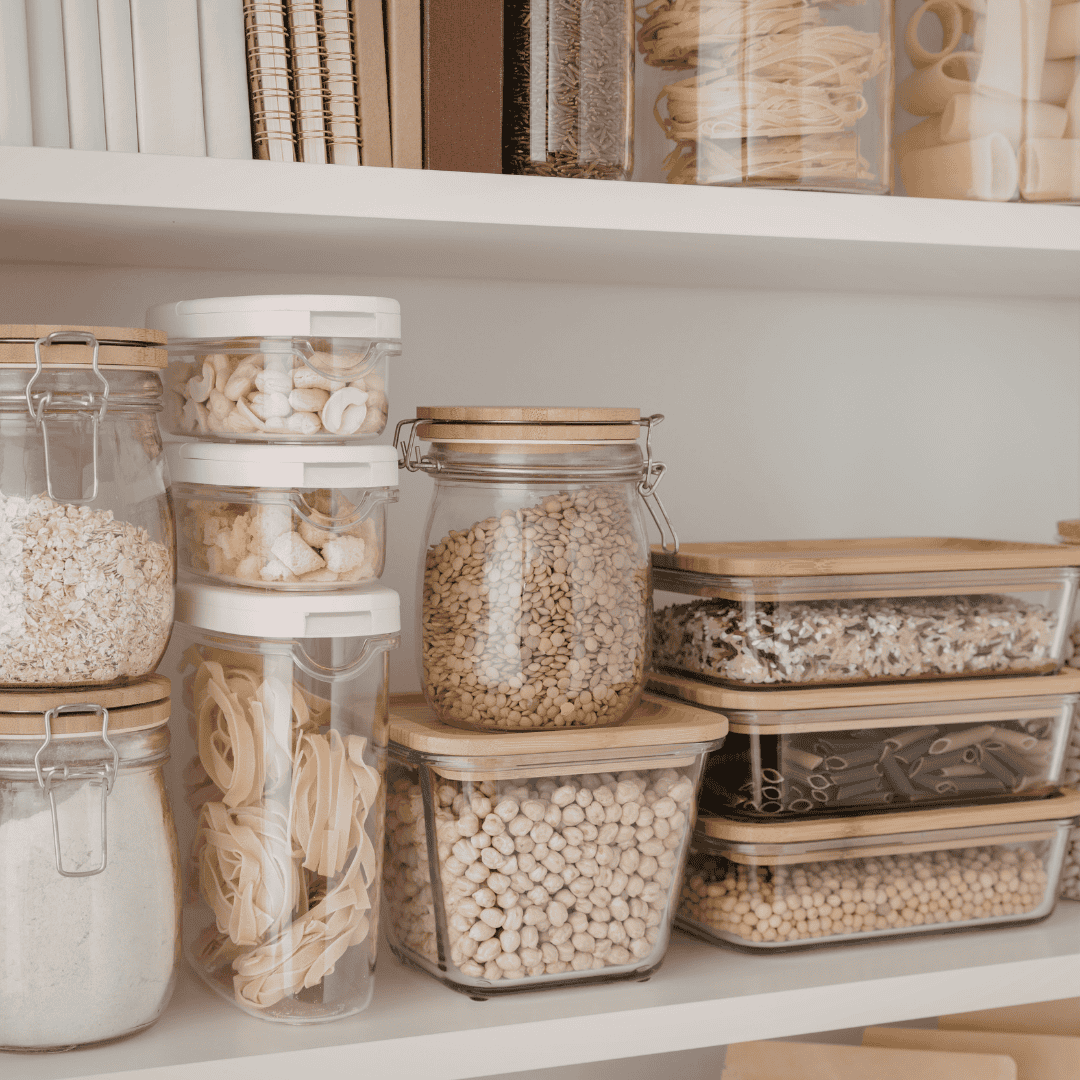
I already have a separate guide about building a pantry and the basic staples worth keeping, so I don’t want to repeat the entire list here.

For actual meal stretching, however, the foods I repeatedly come back to are:
Rice: A filling base for meat, beans, vegetables and leftovers.
Potatoes: Useful across breakfast, lunch, dinner, soups and sides.
Pasta: Shelf-stable and particularly useful for distributing small amounts of meat or vegetables through an entire dish.
Dried beans: An inexpensive protein source that works especially well in soups and stews.
Flour: Useful for biscuits, breads, muffins, dumplings and other foods that can round out a simple meal.
These staples work because they aren’t tied to one dinner.
They give you options.
Don’t Spend Money Building the Perfect “Budget Pantry”
If money is already tight, I wouldn’t recommend going out and buying a cart full of food because somebody’s budget-pantry checklist tells you that you should have it.
Start with what you actually eat.
If your family eats rice, buying a large bag at a good price can make sense.
If nobody will eat dried lentils, buying six bags because they’re inexpensive isn’t saving anything.
If you already have pasta, don’t buy more simply because pasta appears on every frugal-food list.
Look at what you have first.
Then fill genuine gaps as prices and your budget allow.
What Actually Helped Me When Money Was Tight
Looking back at the years when we had very little wiggle room, I don’t think one magic cheap food got us through.
It was a collection of habits.
I portioned expensive ingredients.
I bought basics when the price was genuinely good.
I cooked food that could feed us twice.
I saved leftovers.
I froze food before we lost it.
I baked inexpensive foods to go alongside lighter meals.
I kept a shopping list.
And I tried to know what I was going to do with every ingredient I bought.
Most importantly, I learned to be creative with repetition instead of worrying that the family had seen potatoes, rice or apples too many times.
You can do a surprising number of things with ordinary food.

What I Do When the Food Has to Last Until Payday
When there isn’t much room left in the grocery budget, I start in the kitchen rather than at the store.
First, find what needs to be eaten. Check the refrigerator for produce, open packages and leftovers that won’t keep indefinitely.
Next, find your filling foods. Look for rice, potatoes, pasta, beans, flour, bread or other basics already in the house.
Then look at your more expensive ingredients. Meat, cheese and other higher-cost foods don’t automatically determine the size of the meal. I decide how much I actually need and what I can combine with them.
Find something that connects everything. Broth, canned tomatoes, eggs, gravy, sauce and seasonings can help turn several unrelated ingredients into soup, pasta, fried rice, a skillet meal or a casserole.
Finally, think about tomorrow before using everything tonight. If part of an ingredient can give tomorrow’s meal a head start, I try not to use all of it just because it is available.
This isn’t about creating a perfect meal plan.
When money is genuinely tight, sometimes you are simply trying to get from the food you have today to the next time there is money available for groceries.
Having a simple order for looking at the food makes that much easier.
Types of Meals That Stretch Well
Some kinds of meals make stretching ingredients much easier because everything is mixed together instead of portioned separately.
Soups and stews: A small amount of meat can flavour a much larger meal when you add broth, vegetables, potatoes, rice, noodles or beans. Homemade biscuits or bread can make a simple soup dinner much more filling.
Pasta meals: Pasta gives a small amount of meat, vegetables or sauce enough volume to feed several people.
Rice meals: Stir-fries, rice bowls and fried rice are particularly useful for making small quantities of meat and vegetables go farther.
Chili and bean dishes: Beans can provide part of the protein and bulk instead of relying entirely on meat.
Casseroles and lasagna: These are useful when you want to cook once and have another meal available for the next day or freezer.
Loaded potatoes: A baked potato can turn small portions of chili, meat, vegetables, beans or cheese into toppings for a full meal.
Breakfast-for-dinner meals: Eggs, potatoes, pancakes, biscuits and other basic ingredients can give you another option when the meat supply is running low.
You don’t need a completely different collection of “budget recipes.” Often the meals you already make can stretch further once you change the proportions and start treating leftovers as ingredients for the next meal.
FAQ About Meals That Stretch
A Final Thought About Feeding a Family During Hard Times
There is a lot of budget-food advice that starts from the assumption that you have enough money to completely reorganize your pantry, shop several stores or buy an entirely different set of ingredients.
Sometimes you don’t.
Sometimes you need to figure out what you can make from half a package of meat, some potatoes, three tired carrots and whatever is sitting in the cupboard.
I’ve been there.
What helped me most wasn’t trying to create endlessly different inexpensive meals. It was learning how to look at ordinary ingredients differently.
A small leftover became an ingredient.
One cooking session became two meals.
An inexpensive bag of rice became the base of many dinners.
A pot of soup became enough when I added homemade biscuits.
And the same foods could keep showing up without every meal feeling exactly the same.
If you’ve had a period when you really needed to make groceries stretch, what food or trick helped your household the most? I’d love to hear the practical things that actually worked for you.