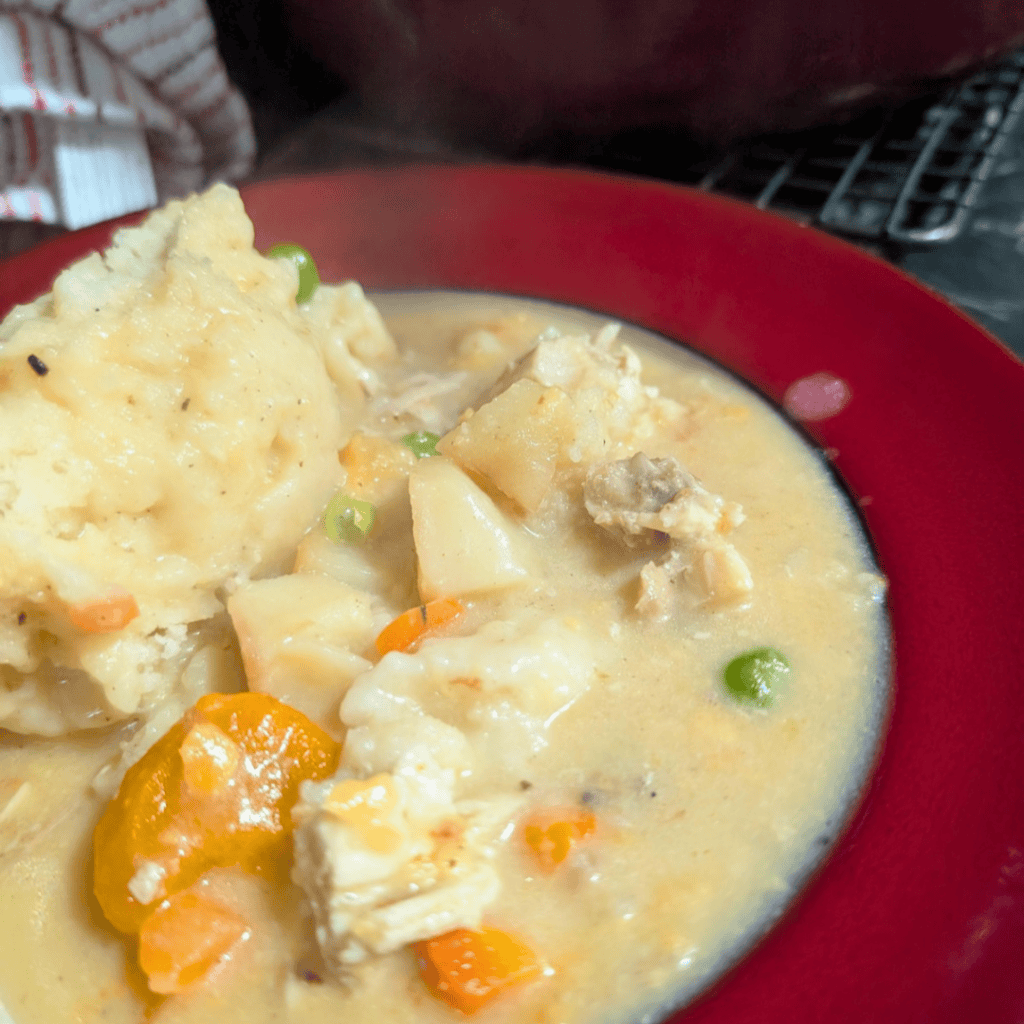
One-Pot Leftover Turkey and Dumplings
This leftover turkey and dumplings recipe is one of my favourite ways to use up what remains after a big Thanksgiving or Christmas dinner. It isn’t just the turkey that gets used. Leftover gravy, cooked potatoes, and vegetable side dishes can all go into the same Dutch oven.
The filling is thick and hearty, with homemade baking powder dumplings steamed right on top. Most of the ingredients have already been cooked, so once the dumpling dough is mixed and the onion is sautéed, it’s largely a matter of adding everything to the pot and heating it through.
I made this batch using leftover turkey, gravy, oven-baked cubed potatoes, carrots, and even some of my leftover turnip puff. You don’t need those exact vegetables, though. The idea is to use what you have rather than prepare a whole new dinner from scratch.
The dumplings are the part I’ve been making for over 40 years. They’re soft and fluffy, almost like little clouds of biscuit dough, and require just four basic ingredients.
Quick Answer
Leftover turkey and dumplings is a one-pot dinner made with cooked turkey, gravy, potatoes, and leftover vegetables. A simple baking powder dumpling dough is dropped over the hot filling and covered so the dumplings steam until light and fluffy.
Prep Time:
15 minutes
Cook Time:
Approximately 30 minutes, including heating the filling and steaming the dumplings
Cooking Method:
Stovetop, Dutch oven
Servings:
6 Generous
Dumpling Texture:
Soft, fluffy, steamed biscuit-style dumplings
Best For:
Thanksgiving and Christmas leftovers
I’ve Been Making These Dumplings for Over 40 Years
I first started making this style of baking powder dumpling when I was a child in the 1980s. We lived off-grid and cooked on a wood-burning cookstove, and these were something we made regularly.
Back then, we often made them as a dessert rather than part of a savoury dinner. We would have a pot of fruit simmering on the stove and drop the dumpling dough over the top. A fruit compote with fluffy dumplings was an inexpensive dessert made with a few pantry staples, and as kids, we always wanted more.
I still make them with fruit today. My Apple Blackberry Cinnamon Dumplings use the same basic steaming method, although I’ve adjusted that recipe to make smaller dumplings with cinnamon added to the dough. It’s the same inexpensive fruit-and-dumpling dessert I grew up making on our wood-burning cookstove.
For this turkey dinner, I use the plain version I’ve been making for decades.
There’s no need for eggs, butter, or shortening in this dumpling dough. I find that the flour, baking powder, salt, and milk give me the soft, light texture I want without making the dumplings heavy.
I’ve had baking powder dumplings where you can taste too much salt or baking powder, but that isn’t something I notice with this version. They’re ideal to take on the flavour of whatever they’re cooked over, whether it’s fruit or a savoury turkey gravy.
Cost Rating: 🍳 Low Cost — 6 hearty servings
The cost of this recipe depends on how much turkey, gravy, and cooked vegetables you already have left from your holiday dinner. Because most of the filling has already been prepared, you may need very few additional groceries to make it.
The homemade baking powder dumplings are particularly inexpensive. They use flour, baking powder, salt, and milk, without needing eggs, butter, or shortening.
Using Canadian grocery prices from October 2026, the basic flour, baking powder, milk, frozen peas and carrots, onion, and cooking oil amount to approximately $2.50–$3.50 for the quantities used here. This doesn’t include the original cost of the cooked turkey, gravy, potatoes, or other leftover vegetables.
Rather than buying ingredients just to recreate my exact filling, use whatever suitable leftovers are already in your refrigerator. That’s where this recipe offers the greatest savings.
Why You’ll Love This Leftover Turkey and Dumplings Recipe
Uses Holiday Leftovers: Turkey, gravy, potatoes, and cooked vegetable side dishes can all be used together.
Flexible Ingredients: You can increase the turkey, change the vegetables, or leave out the potatoes if you don’t have any.
Four-Ingredient Dumplings: No eggs, butter, or shortening are needed to make the soft baking powder dumplings.
Family-Style Serving: The finished dinner can be brought straight to the table in the Dutch oven.
Budget Tip:
Before buying more ingredients for a leftover turkey dinner, take a look at what is already in your refrigerator. A small portion of cooked carrots, some mashed potatoes, or an extra serving of vegetables might not seem like enough for another meal on its own, but together they can help make a filling pot of turkey and dumplings.
How to Make Leftover Turkey and Dumplings
Start by making your baking powder dumpling dough before you begin cooking the turkey filling. This might seem a little backward since the dumplings are the last thing to go into the pot, but there’s a good reason for doing it this way. Once the turkey, gravy, and milk are heating, you’ll need to stir them regularly to prevent anything from sticking to the bottom and burning. Having your dumpling dough ready means you won’t have to stop stirring to prepare it later.
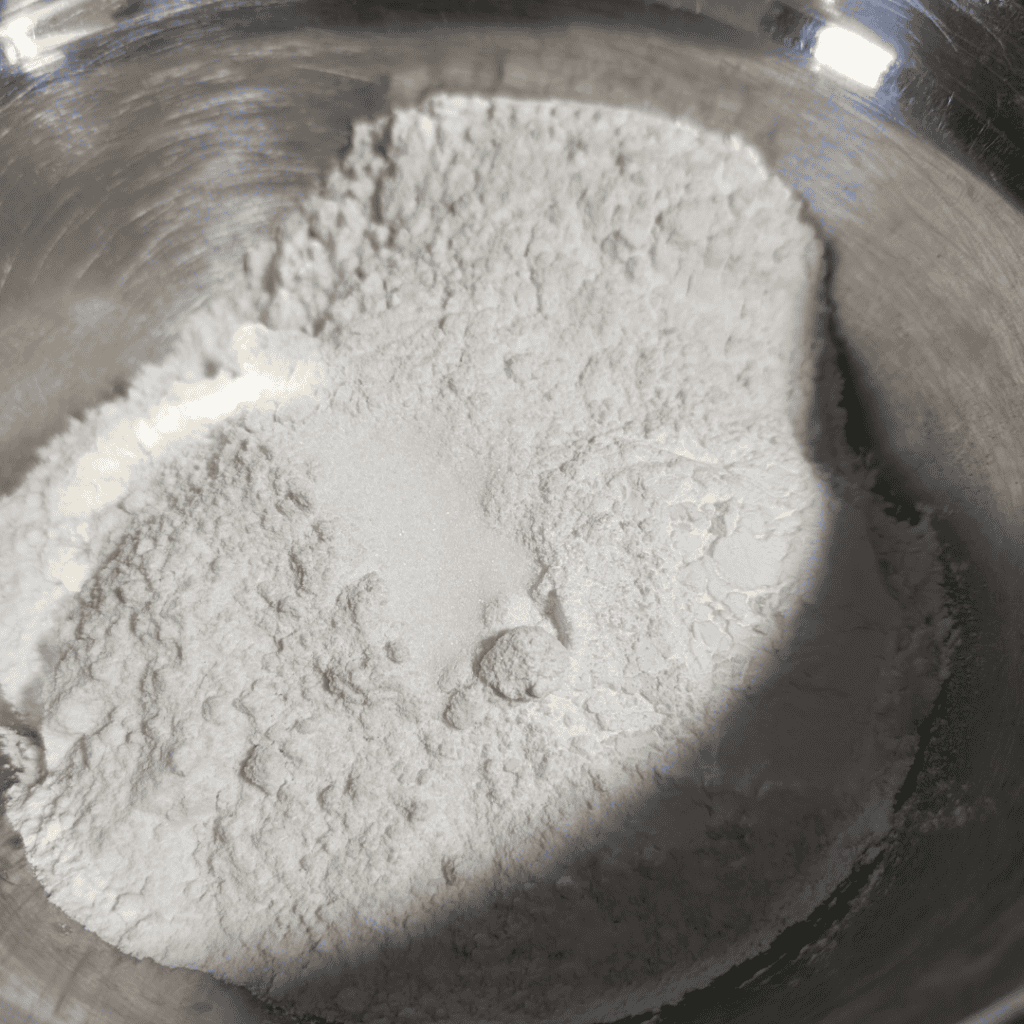
In a medium mixing bowl, add your flour, baking powder, and salt. Use a fork to mix the dry ingredients together so the baking powder and salt are evenly distributed throughout the flour. This is important because the baking powder helps the dumplings rise, and you don’t want it concentrated in one area.
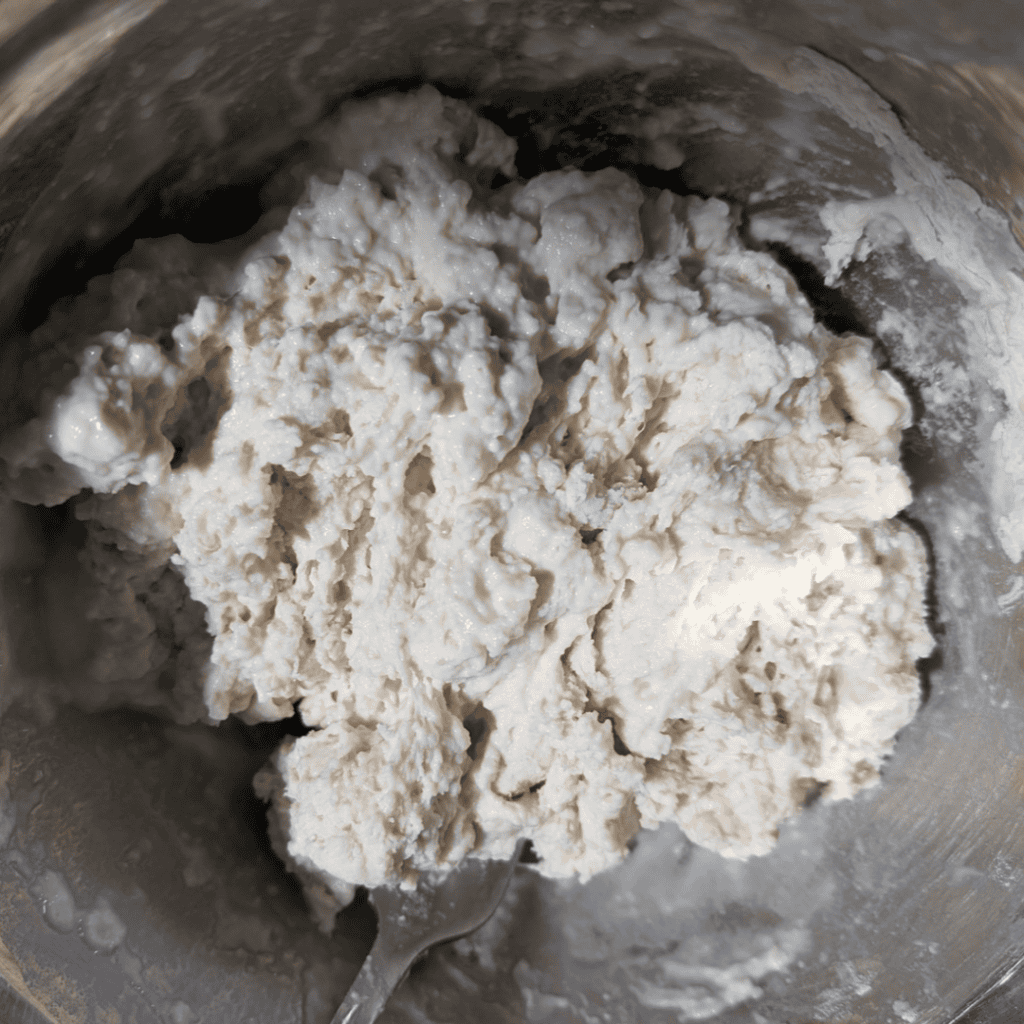
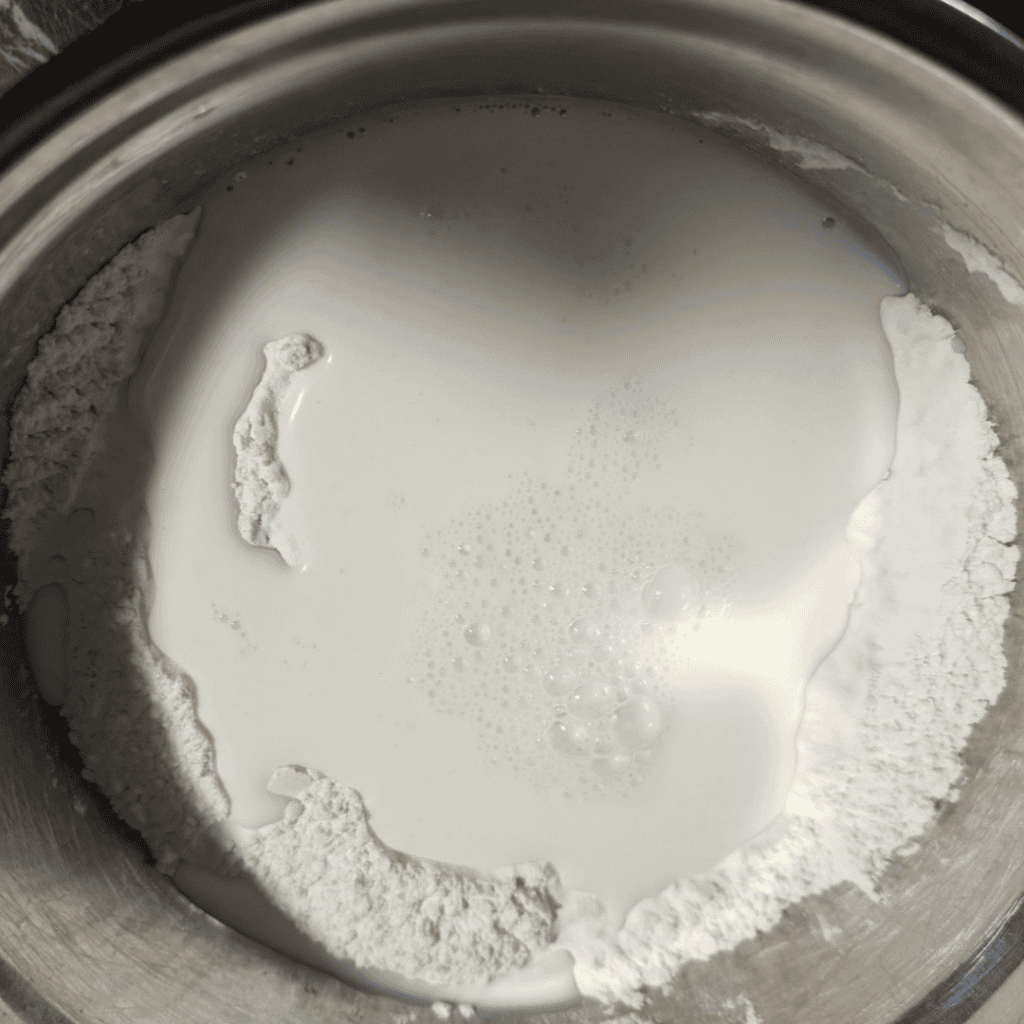
Pour in your milk and continue stirring with the fork until the ingredients come together into a soft, slightly sticky dough. You don’t need to knead the dough, which means working it repeatedly with your hands, or beat it until perfectly smooth. Just stir until the flour is incorporated. Too much mixing can develop the gluten in the flour, making your dumplings tougher instead of soft and fluffy. Set the bowl aside while you prepare the turkey filling. The flour will have a little time to absorb the milk, and the baking powder will begin reacting with the liquid.
Next, prepare your leftover turkey by removing any skin, bones, fat, and gristle. Gristle is the tough, chewy connective tissue you sometimes find attached to meat. You don’t want any of that ending up in someone’s bowl. Cut the remaining turkey into bite-sized pieces so it’s easy to eat with the vegetables and dumplings. I used approximately two cups of turkey, but if you have more to use up, you can certainly add it.
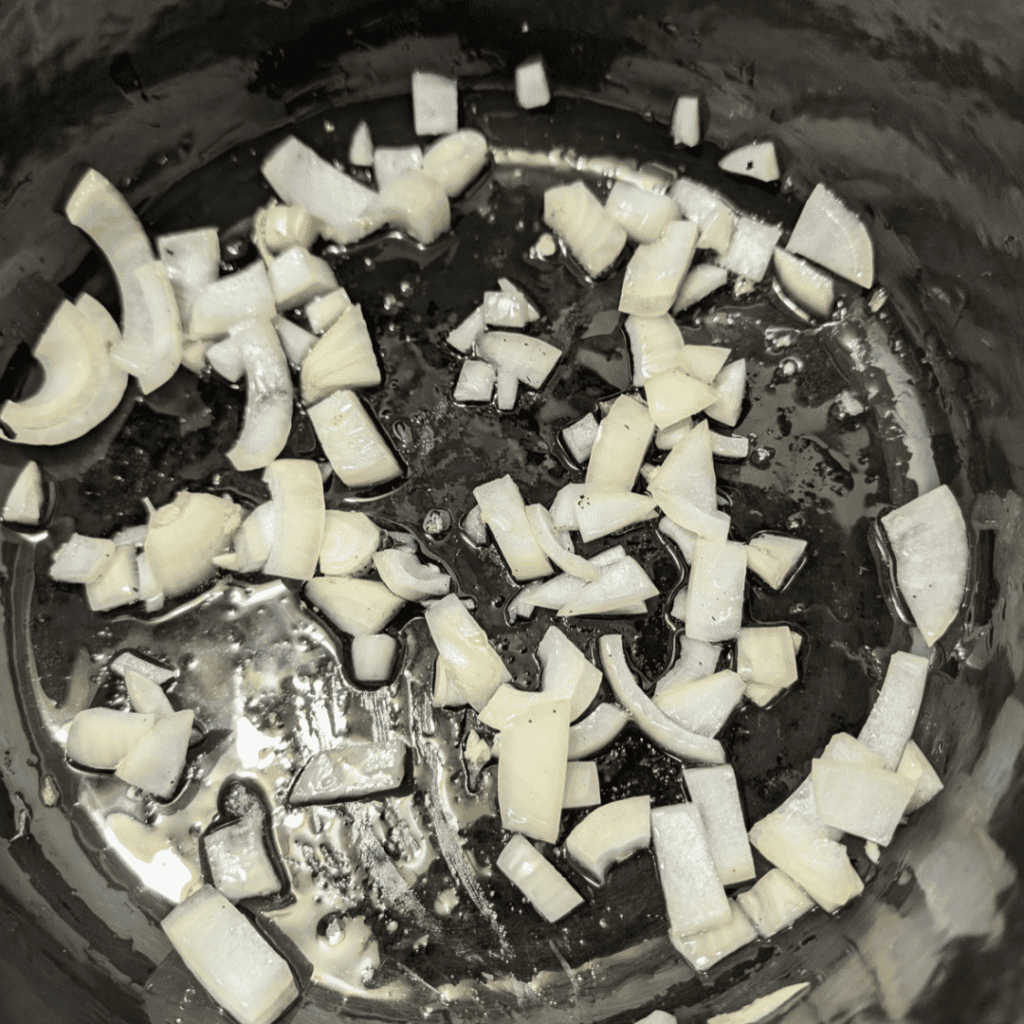
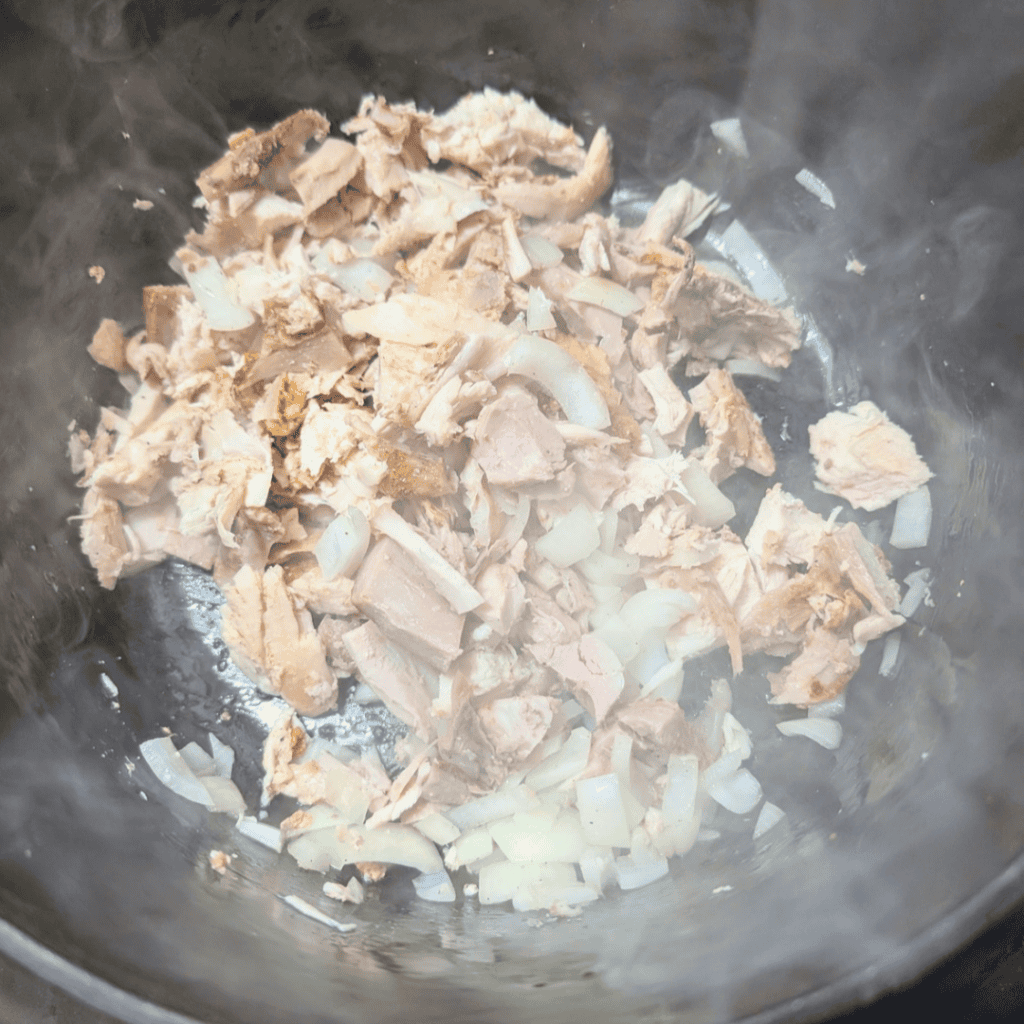
Place your Dutch oven on the stovetop over medium heat and add three tablespoons of cooking oil. A Dutch oven is a large, heavy pot with a fitted lid. If you don’t have one, another large pot with a good-fitting lid will work. Add your chopped onion and sauté it, which means cooking it in the oil while stirring occasionally until it begins to soften. You’re not trying to brown or crisp the onion; you just want to take away some of its raw firmness before adding the cooked turkey.
Add the chopped turkey to the softened onion and stir for approximately one minute. This gives the cooked turkey a chance to begin warming through and mix with the onion before the remaining ingredients are added. Next, add the frozen peas and carrots directly to the pot and give everything a stir. There’s no need to thaw them beforehand because they’ll heat through as the filling cooks.
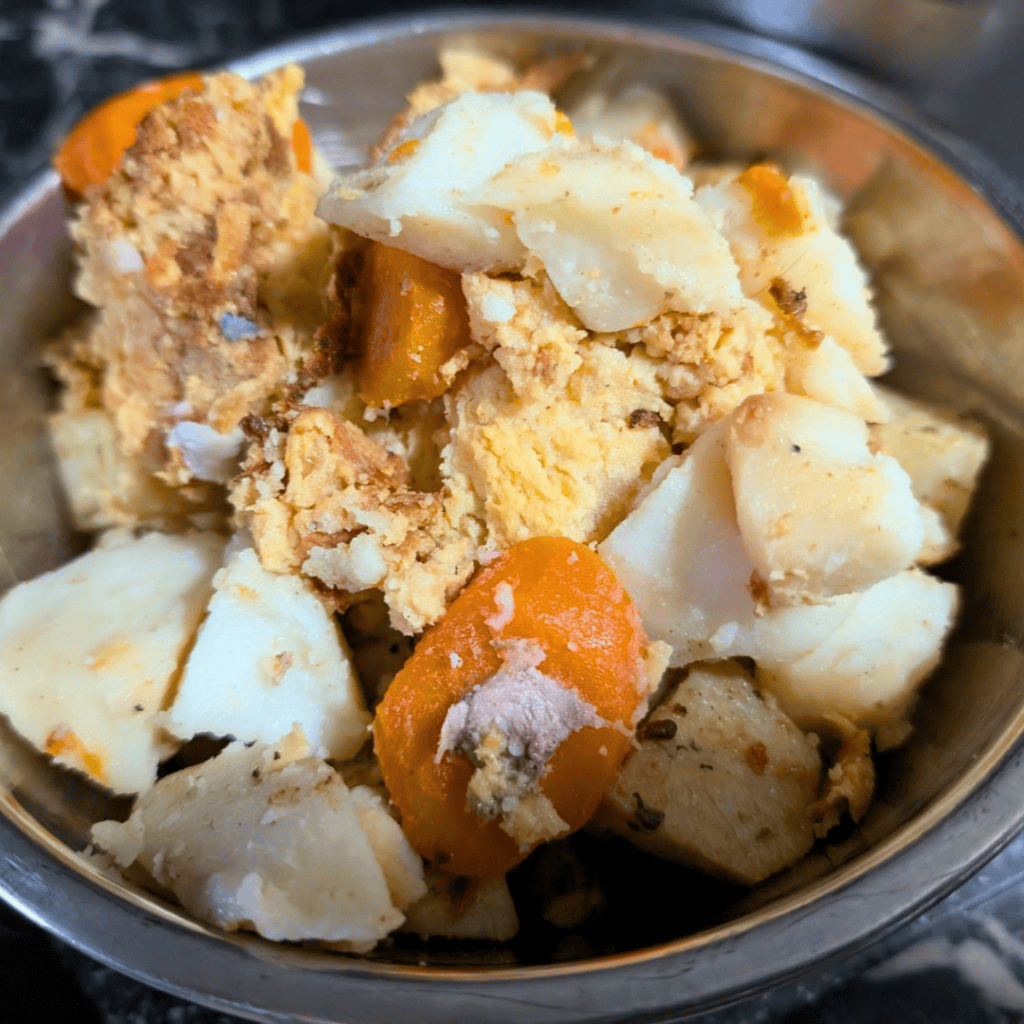
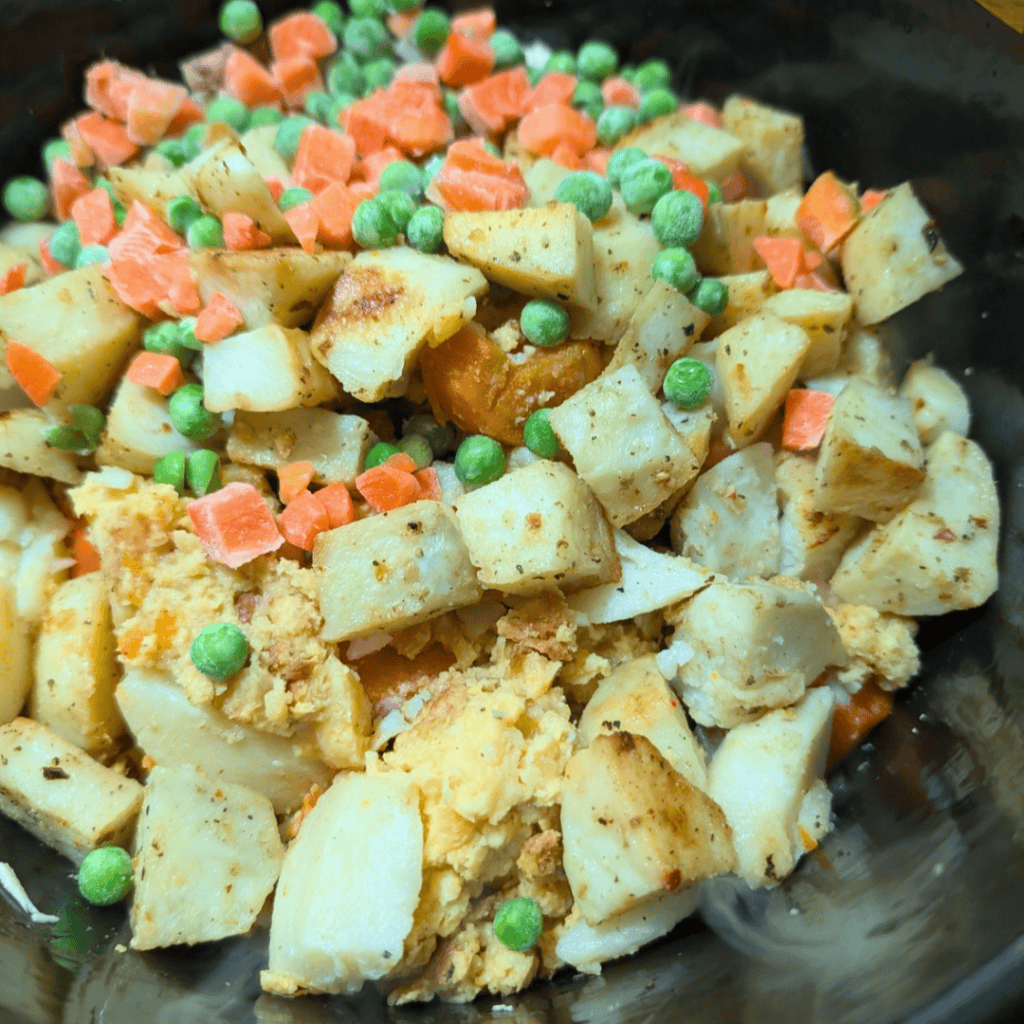
Now add your cooked potatoes, leftover vegetables, and turkey gravy. Stir everything together so the gravy begins coating the other ingredients. This is where the recipe becomes a dump-style dinner because almost everything you’re adding has already been cooked. For my batch, I used leftover oven-baked cubed potatoes, carrots, and some of my homemade turnip puff. The turnip puff is made with mashed rutabaga, so it blends into the gravy rather than staying in separate pieces. It’s a good way to use up a small portion that might otherwise be left sitting in the refrigerator. You can use other cooked vegetables depending on what you have available, and if you don’t have leftover potatoes, simply leave them out.

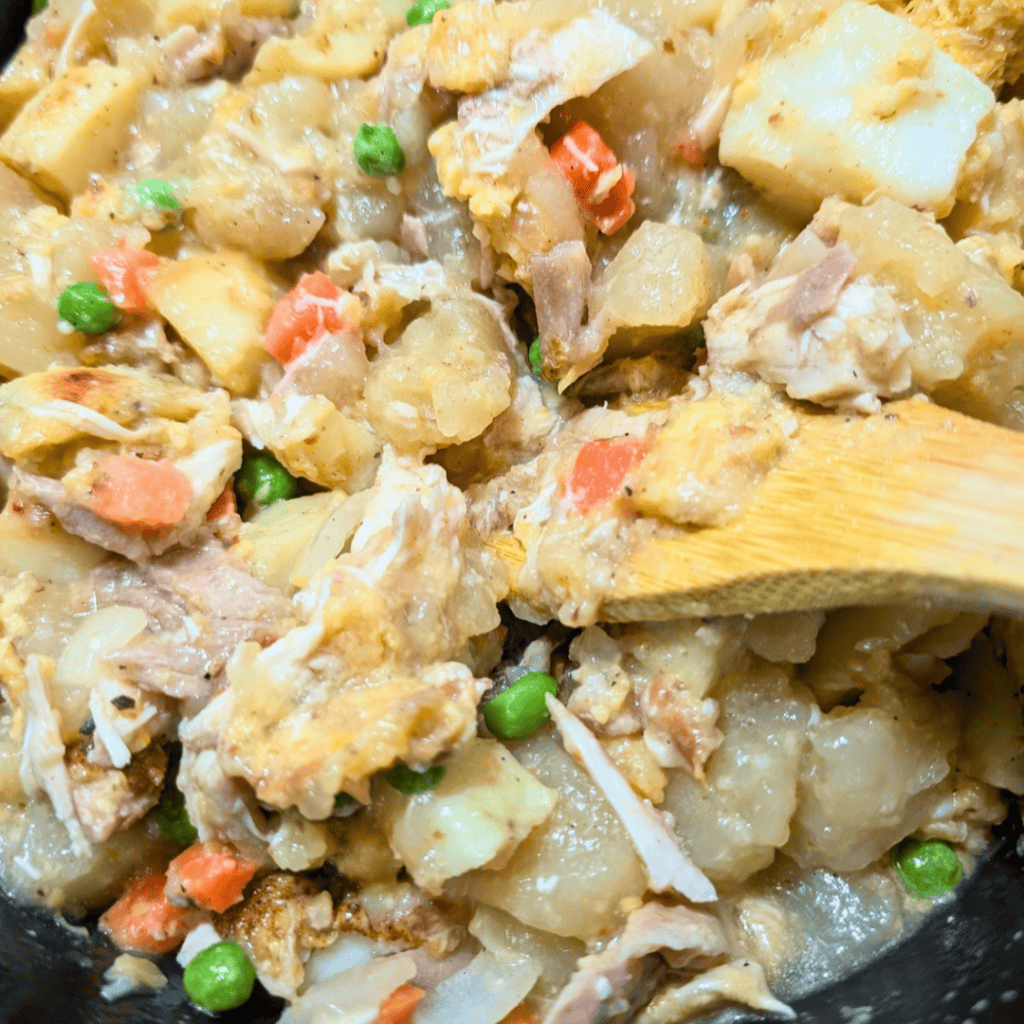
Pour in one cup of milk and half a cup of water, then stir everything together. Take a look at the consistency before continuing. You want a thick mixture with enough liquid to move around the turkey and vegetables when you stir it. It shouldn’t look like a thin soup with everything floating around, but it shouldn’t be so thick that you can barely move your spoon through it either. If your leftover gravy is particularly thick, or you’ve added mashed potatoes that have thickened the filling, add up to half a cup of water as needed to loosen it.
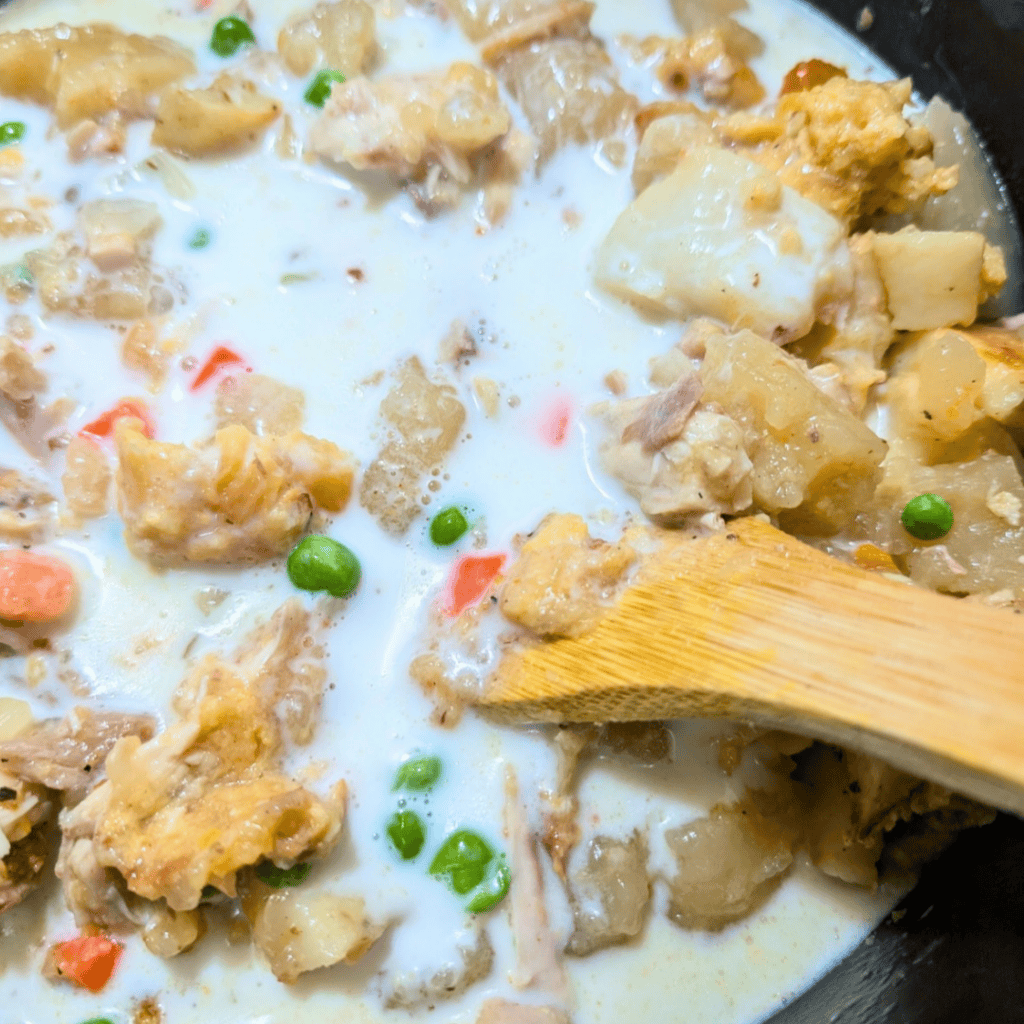
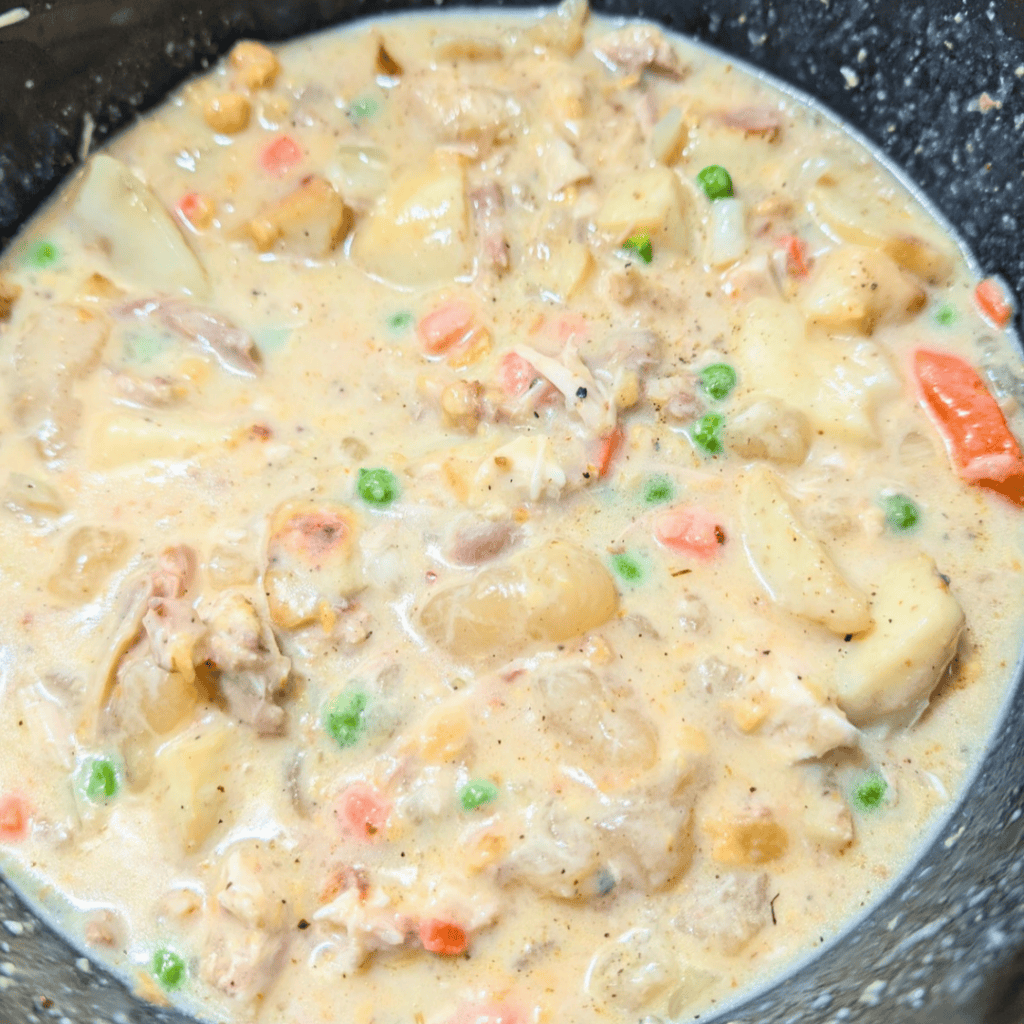
Continue heating the mixture, stirring regularly and making sure to move your spoon across the bottom of the Dutch oven. This is especially important because you’re using milk and gravy, which can scorch if they sit against the hot bottom of the pot for too long. Scorching happens when food overheats and begins sticking or burning against the cooking surface. You might notice a brown layer forming on the bottom or smell something beginning to burn. Keeping the mixture moving while it heats helps prevent this. If you notice it sticking, reduce the heat.
Allow the filling to come to a gentle boil before adding the dumplings. You’ll know it’s ready when bubbles begin rising and breaking through the surface, including around the vegetables. You don’t want an aggressive rolling boil that splashes or threatens to overflow the pot. The reason for getting the filling hot first is that the dumplings need heat and steam to begin cooking. Dropping them onto a mixture that’s only lukewarm means they’ll sit there while the pot slowly comes up to temperature, adding unnecessary cooking time.
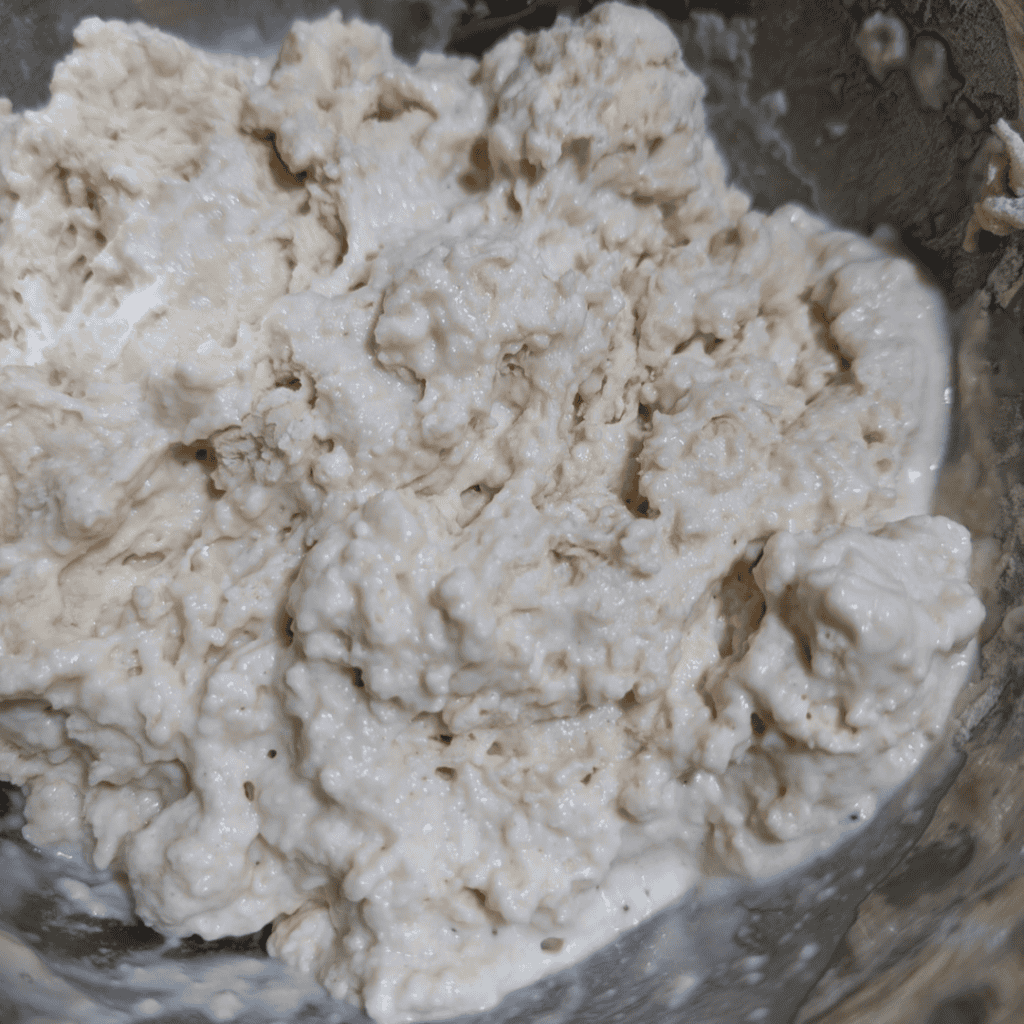
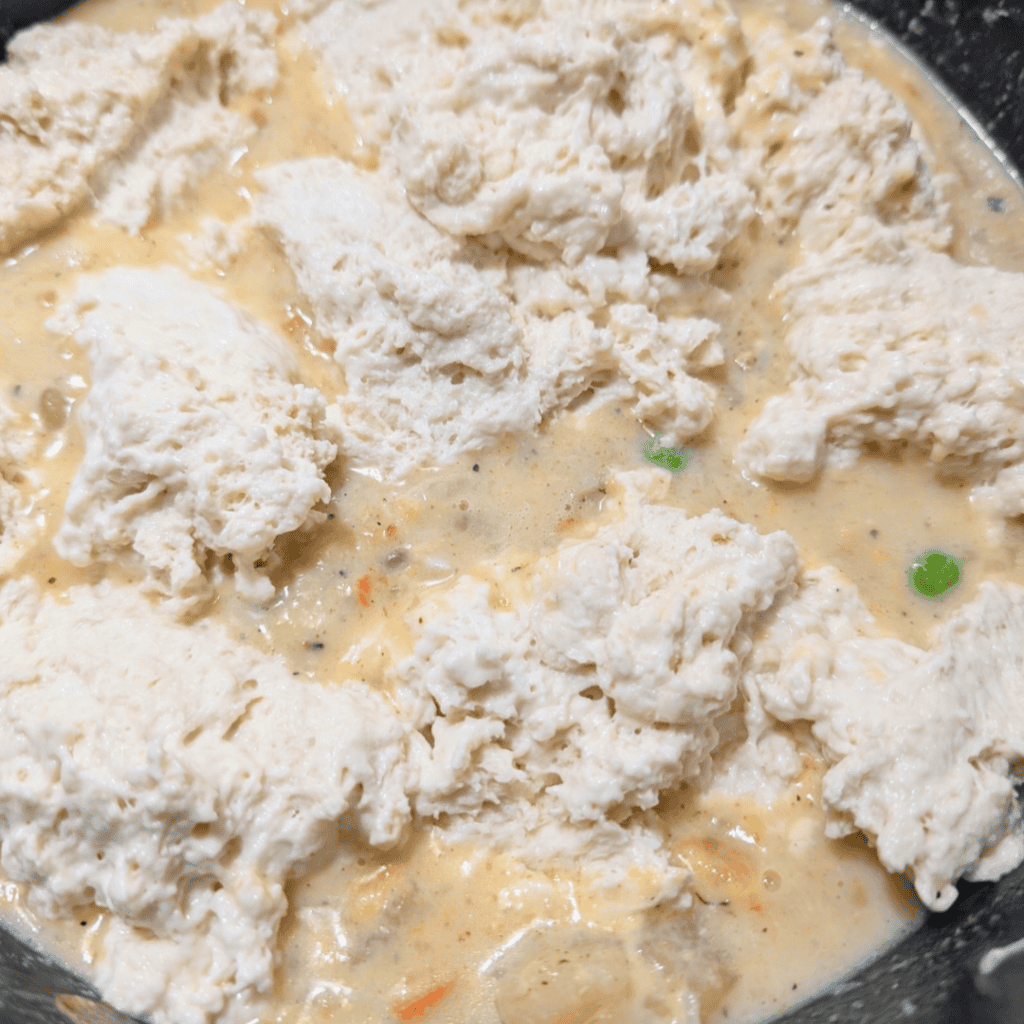
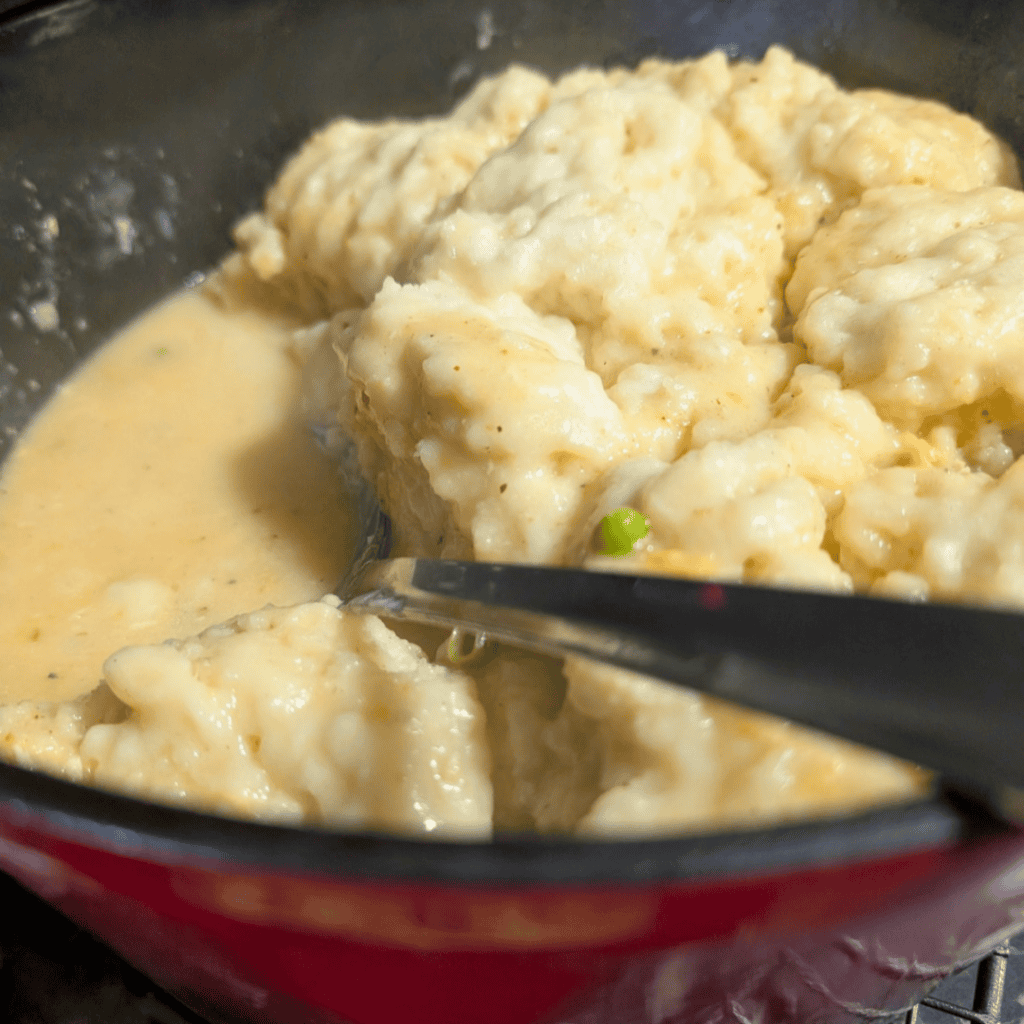
Once the filling is gently boiling, take a large dinner tablespoon and scoop up a heaping spoonful of your prepared dumpling dough. Drop it directly onto the surface of the turkey filling. Continue doing this around the pot, leaving a small space between each spoonful. By the time you’ve used all the dough, the dumplings should cover the entire surface of your Dutch oven, with just a little room between them. Don’t worry about making perfectly shaped dumplings. They’re meant to be rustic, and they’ll expand as they cook.
Reduce the heat until the filling is gently simmering, which means small bubbles are continuing to rise without the liquid boiling vigorously. Cover the Dutch oven with its lid. This is one of the most important parts of making fluffy baking powder dumplings because the lid traps steam inside the pot. That steam surrounds the dough, helping it heat through and expand while the baking powder also contributes to the rise.
Leave the lid on while the dumplings cook. Every time you lift it, some of that trapped steam escapes, and the pot needs to build it up again. These large spoon-dropped dumplings generally take about 15–20 minutes. I usually give mine the full 20 minutes because I want to be certain the centres are cooked. Keep the heat low enough to maintain a gentle simmer underneath them, especially since the milk and gravy can burn if the bottom of the Dutch oven gets too hot.
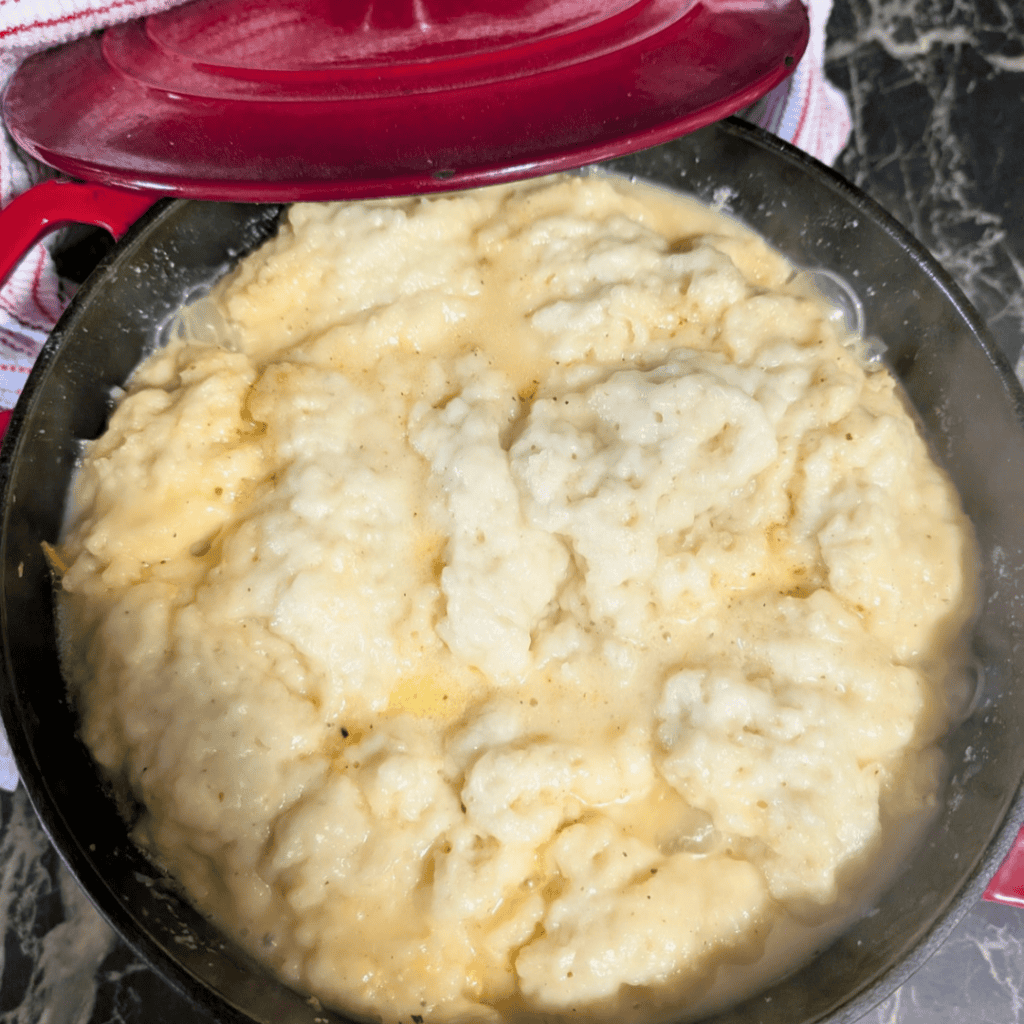
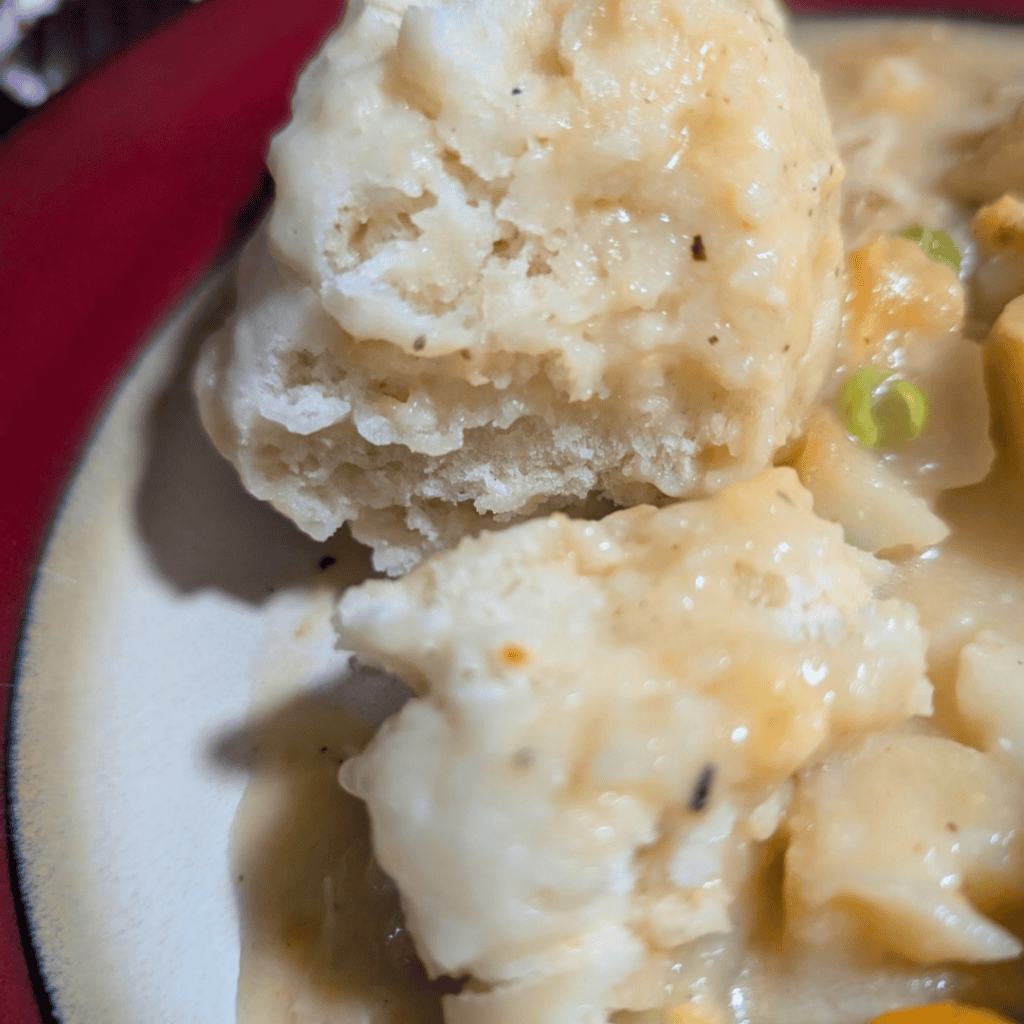
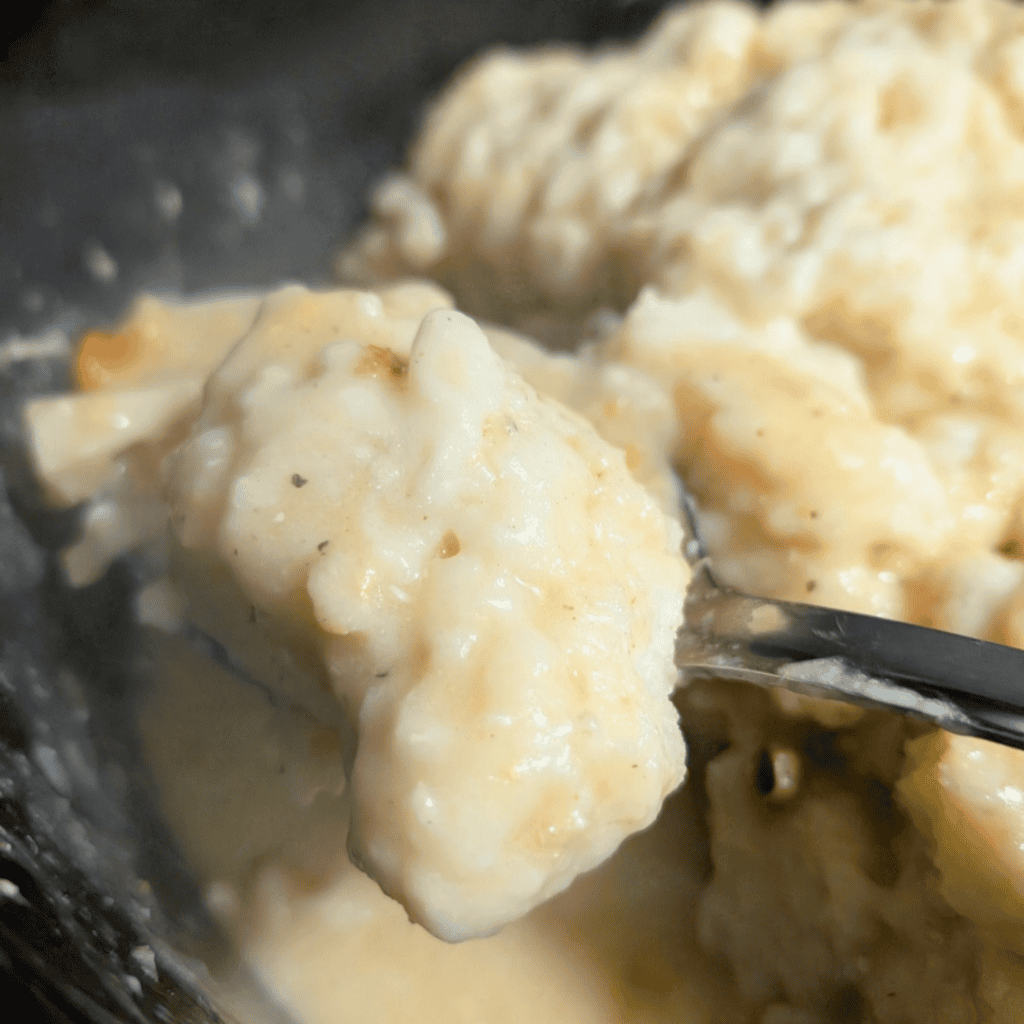
Near the end of cooking, briefly remove the lid to check the dumplings. They should be noticeably larger and fluffier than when you first dropped them into the pot. The outside should look wet and moist from the steam and gravy, which is perfectly normal for this style of dumpling. To check whether they’re cooked through, use a fork to open one of the larger dumplings. The inside should be light and airy, almost like a soft biscuit, with no wet, doughy centre. If you find uncooked dough inside, replace the lid and allow the dumplings to steam for a few more minutes.
Once they’re done, remove the Dutch oven from the heat. I like to bring the whole pot to the table and serve it family style, spooning some turkey, vegetables, and gravy into each bowl along with one or two fluffy dumplings. The outside of the dumplings will be moist from the gravy, while the inside should remain light and soft.
Ingredients:
Most of the filling ingredients are flexible because the recipe is designed around food you’ve already cooked. The dumpling ingredients are more specific because their proportions affect how the dough rises and steams.
For the Turkey and Vegetable Filling
Cooked Turkey: Use approximately two cups of leftover turkey meat, removing the bones, skin, fat, and gristle before cutting it into pieces. More turkey can be added if you have it.
Turkey Gravy: Two cups of leftover gravy provide both flavour and much of the moisture for the filling. The thickness will depend on how your original gravy was made.
Frozen Peas and Carrots: One cup adds vegetables without requiring additional chopping or cooking beforehand.
Cooked Potatoes: Two cups of leftover cubed oven-baked potatoes went into my batch. Other cooked potatoes work as well, and this ingredient is optional. For this batch, I used leftover cubed oven-baked potatoes, but other cooked potatoes will work just as well. They need to be cooked before going into the Dutch oven because the filling only needs reheating before the dumplings are added.
Leftover Vegetables: Use approximately two cups of cooked vegetables from your holiday meal. I used a combination that included turnip puff and cooked carrots.
Onion: Half a cup of chopped onion, approximately one small onion, is sautéed before adding the remaining ingredients.
Cooking Oil: Three tablespoons of cooking oil are used to sauté the chopped onion and begin warming the leftover turkey before adding the remaining ingredients.
Milk: One additional cup helps loosen the gravy and create enough moisture for the dumplings to cook over.
Water: Half a cup is added along with the milk when using the two cups of leftover gravy.
For the Baking Powder Dumplings
All-Purpose Flour: Two cups form the main structure of the dumplings.
Baking Powder: Four teaspoons provide the leavening that helps the dumplings expand as they steam.
Salt: Half a teaspoon gives the dough a mild seasoning without leaving a noticeable salty taste.
Milk: One cup of milk brings the dry ingredients together into a soft dough. I prefer milk because it makes the dumplings softer and fluffier.
Substitutions and Add-Ins for Turkey and Dumplings
This recipe is flexible enough to use whatever holiday leftovers you have available. The most important thing is to maintain enough liquid in the Dutch oven for the dumplings to steam properly, especially when adding mashed potatoes or other ingredients that thicken the gravy.
Cooked Turkey: You can use leftover cooked chicken instead of turkey. Remove any bones, skin, fat, and gristle before cutting the meat into bite-sized pieces.
Turkey Gravy: If you don’t have leftover gravy, replace it with two cups of milk. Because milk is thinner and doesn’t have the same flavour as turkey gravy, the filling will be milder and less thick. Adjust the additional milk and water as needed to keep the mixture moist without making it watery.
Frozen Peas and Carrots: You can replace these with other frozen mixed vegetables or an equivalent amount of cooked vegetables. Frozen vegetables can go directly into the pot without thawing.
Cooked Potatoes: Leftover mashed potatoes can replace the cubed potatoes, although they will blend into the gravy and make the filling thicker. Add a little extra liquid if necessary. You can also leave the potatoes out entirely.
Leftover Cooked Vegetables: Use whichever vegetables you have remaining from your holiday dinner. Carrots, peas, green beans, corn, rutabaga, and parsnips are all reasonable options. Cut larger vegetables into bite-sized pieces before adding them.
Onion: If you don’t have a fresh onion, you could use dried minced onion or onion powder for flavour. These won’t provide the same texture as sautéed fresh onion.
Cooking Oil: Butter can be used instead of oil to sauté the onion.
Milk: For the dumplings, you can replace the one cup of milk with half a cup of water. I prefer the milk version because I find it makes softer, fluffier dumplings.
All-Purpose Flour: Regular all-purpose flour is recommended for these baking powder dumplings. Other flours may absorb liquid differently and change their texture, so I wouldn’t substitute them without adjusting the recipe.
Baking Powder: Keep the four teaspoons of baking powder in the dumpling recipe. It’s responsible for helping the dough rise and become fluffy during steaming.
Salt: The half teaspoon of salt gives the dumplings a mild flavour without making them noticeably salty. You can reduce it slightly if you’re watching your salt intake, although I wouldn’t increase it.
Optional Add-Ins
Extra Turkey: If you have more than two cups of cooked turkey, go ahead and add it. You may need a little additional liquid depending on how much extra meat you use.
Brussels Sprouts: Finely chop leftover cooked Brussels sprouts before adding them. Their stronger flavour and firmer texture can stand out in the filling, so I would use them sparingly.
Roasted Squash: Leftover cooked squash is another possibility. If you’ve made my roasted buttercup squash with butter and sage, remove the skin and chop the cooked flesh into smaller pieces before adding it. Soft squash can break apart when stirred into the gravy, so add it gently.
Turnip Puff: This is what I used in my original batch. Because turnip puff is already mashed and cooked, it blends into the filling rather than remaining in distinct pieces. It can also make the gravy thicker.
Extra Gravy: If you have additional turkey gravy, you can use some to loosen the mixture if that’s become too thick. Keep in mind that leftover gravy may already be well seasoned, so taste before adding any extra salt.
Fresh Herbs: A little chopped parsley or thyme could be added for extra flavour if you have some available. These weren’t part of my original batch.
Expert Tips, Serving & Storing for Light and Fluffy Dumplings
Tip #1: Prepare the Dough First: Mixing the dumplings before starting the turkey filling means you can stir the gravy and milk regularly while they heat. It also gives the dough a short resting period before cooking.
Tip #2: Use a Large Dinner Tablespoon: A heaping spoonful gives you substantial, rustic dumplings. Leave a little space between each one, even though they should cover the surface of the Dutch oven.
Tip #3: Bring the Filling to a Boil Before Adding the Dough: The dumplings need heat and steam to cook properly. Once the dough is added, reduce the heat to a gentle simmer so the milk-based filling doesn’t burn.
Tip #4: Keep the Lid On: Steam is important for making these baking powder dumplings rise and cook through. Avoid repeatedly lifting the lid, particularly early in the cooking process.
Serving Suggestions
This is a complete dinner on its own, especially when you’ve added cooked potatoes and several vegetable side dishes.
I usually serve it straight from the Dutch oven, with turkey and vegetables spooned into each bowl and one or two large dumplings on top.
Because the meal already contains turkey, potatoes, vegetables, and dumplings, there’s no need to prepare another elaborate side dish.
How to Store Leftovers
Allow the remaining turkey and dumplings to cool promptly, then transfer them to shallow, covered containers in the refrigerator.
Since this dish is made using turkey and vegetables that were cooked previously, their original storage time still matters. Health Canada recommends using refrigerated leftovers within two to three days or freezing them for later. You can find more information in their holiday food safety guidelines. I recommend making this recipe early in your leftover period rather than waiting until the turkey and vegetables have already been sitting in the refrigerator for several days.
For best food safety, use refrigerated cooked turkey and other leftovers within approximately two to three days of their original preparation.
How to Reheat
When reheating leftover turkey and dumplings, make sure the food reaches an internal temperature of 74°C (165°F), as recommended in Health Canada’s safe cooking temperature guidelines. Use a food thermometer to check rather than relying on how hot the food feels. Add a little milk or water if the dumplings have absorbed some of the gravy during storage.
The dumplings may absorb some of the gravy while refrigerated, so the filling can become thicker. A small amount of additional liquid may help loosen it when reheating.
I prefer these dumplings freshly steamed, when their texture is at its lightest.
FAQ
A Practical Way to Use Your Holiday Leftovers
The nice thing about this recipe is that you don’t need to have the same leftovers I did. Whether you’ve got extra turkey, a little gravy, leftover mashed potatoes, or a mixture of cooked vegetables, you can adjust the filling to make use of them.
And once those big, fluffy dumplings have steamed over the top, you’ve got a completely different dinner from the holiday meal you started with.
If you still have turkey left after making this dinner, my hot turkey sandwich with homemade gravy is another way to turn it into a meal. It’s particularly handy when you have enough turkey for sandwiches but don’t want to cook another full dinner. For cold turkey sandwiches, I also make my great-grandmother’s old-fashioned cooked mayonnaise. It’s the tangy brown mayonnaise my family traditionally served with turkey at Thanksgiving and Christmas.
And if you’re planning your next Thanksgiving or Christmas dinner, my cranberry orange chutney is worth making alongside the turkey. It’s an alternative to traditional cranberry sauce, and any chutney you have left can also be used with cold turkey sandwiches the following day.
What vegetables do you usually have left after Thanksgiving or Christmas dinner? I’d be interested to hear which combinations you’ve tried in a turkey and dumplings filling.
One-Pot Leftover Turkey and Dumplings

Equipment
- Large Dutch oven with lid
- mixing bowl
- Fork
- Tablespoon From dinnerware
- knife
- Cutting board
Ingredients
Turkey filling
- 2 Cup Turkey Cooked, cut up, bones, gristle removed
- 2 Cup Turkey gravy Homemade only *can be subbed
- 2 Cups Potatoes Cubed and cooked *optional
- 2 Cups Leftover cooked vegetables
- 1 Cup Frozen peas and carrots
- ½ Cup Onion Chopped
- 3 Tbsp Oil
- 1 Cup Milk
- ½ Cup Water If needed to loosen mixture
Baking Powder Dumplings
- 2 Cups White All Purpose Flour
- 4 Tsp Baking powder
- ½ Tsp Salt
- 1 Cup Milk
Instructions
Baking Powder Dumplings
- In a mixing bowl, combine the flour, baking powder, and salt with a fork.2 Cups White All Purpose Flour, 4 Tsp Baking powder, ½ Tsp Salt
- Add the cup of milk and stir with the fork until a soft dough forms.1 Cup Milk
- Set aside while preparing the filling.
Turkey & Dumplings
- Remove all skin, bones, fat, and gristle from the cooked turkey.
- Cut the meat into bite-sized pieces.
- Add cooking oil to a large Dutch oven.3 Tbsp Oil
- Sauté the chopped onion until it begins to soften.½ Cup Onion
- Add the turkey and heat for one minute.2 Cup Turkey
- Add the frozen peas and carrots as well as the cooked potatoes and any leftover vegetables,2 Cups Potatoes, 1 Cup Frozen peas and carrots, 2 Cups Leftover cooked vegetables
- Add cold turkey gravy followed by milk and stir.2 Cup Turkey gravy , 1 Cup Milk, ½ Cup Water
- Stir regularly as the mixture heats to prevent the gravy and milk from scorching.
- Bring the turkey filling to a gentle boil.
- Using a large dinner tablespoon, drop heaping spoonfuls of dumpling dough over the surface, leaving a small space between each. Continue until the surface of the Dutch oven is covered.
- Reduce the heat to a gentle simmer and cover with the Dutch oven lid.
- Steam for 15–20 minutes without repeatedly lifting the lid.
- Check a dumpling near the end of cooking to ensure its centre is cooked through. Dumplings should be wet outside, noticeably larger and fluffier, inside not doughy.
- Remove from the heat and serve directly from the Dutch oven.
Notes