Easy Cranberry Chutney Recipe with Orange
Bright, tangy, and just the right touch of sweet, this easy cranberry chutney recipe with orange brings something special to your holiday table. Fresh cranberries, orange juice, red onion, brown sugar, and warm spices come together in a simple stovetop chutney that’s slightly savory, beautifully glossy, and thickens naturally as it cools.
I chose to make this version more savory and less sweet, with a bit of a bite from the red onion and spice. When you get to be my age, a shake-up of the traditional is in order — and frankly, that classic cranberry sauce isn’t always eaten by everyone in my family. This chutney, though, was unique enough to pique everyone’s curiosity, and once they tried it, they loved it.
Whether you serve it alongside roast turkey at Thanksgiving or spoon it over leftover turkey sandwiches the next day, this cranberry orange chutney is a delicious alternative to traditional cranberry sauce.
Quick Answer: How Do You Make Cranberry Orange Chutney?
To make cranberry orange chutney, simmer coarsely chopped fresh cranberries with orange juice, finely chopped red onion, brown sugar, ginger, and allspice for about 8–10 minutes, until the berries soften and the mixture becomes glossy and spoonable. Stir in fresh orange zest at the end for a bright citrus flavour. The chutney thickens as it cools and can be served warm or chilled.
Why You’ll Love This Cranberry Orange Chutney
Easy stovetop recipe: This cranberry chutney comes together with a quick simmer and thickens naturally as it cools.
Perfect accompaniment: Delicious with roast turkey, baked ham, or spooned over a warm wheel of brie.
Holiday-ready: Make it ahead for Thanksgiving or serve it alongside your Christmas dinner spread.
Versatile year-round: Enjoy this small-batch cranberry condiment with roast chicken, pork, or leftover turkey sandwiches.

Let’s Make Our Cranberry Orange Chutney
Start by getting your space ready — grab a medium saucepan, a cutting board, and a good knife. Rinse the fresh cranberries in a colander and pick out any squishy or shriveled ones. Let them drain for a minute.
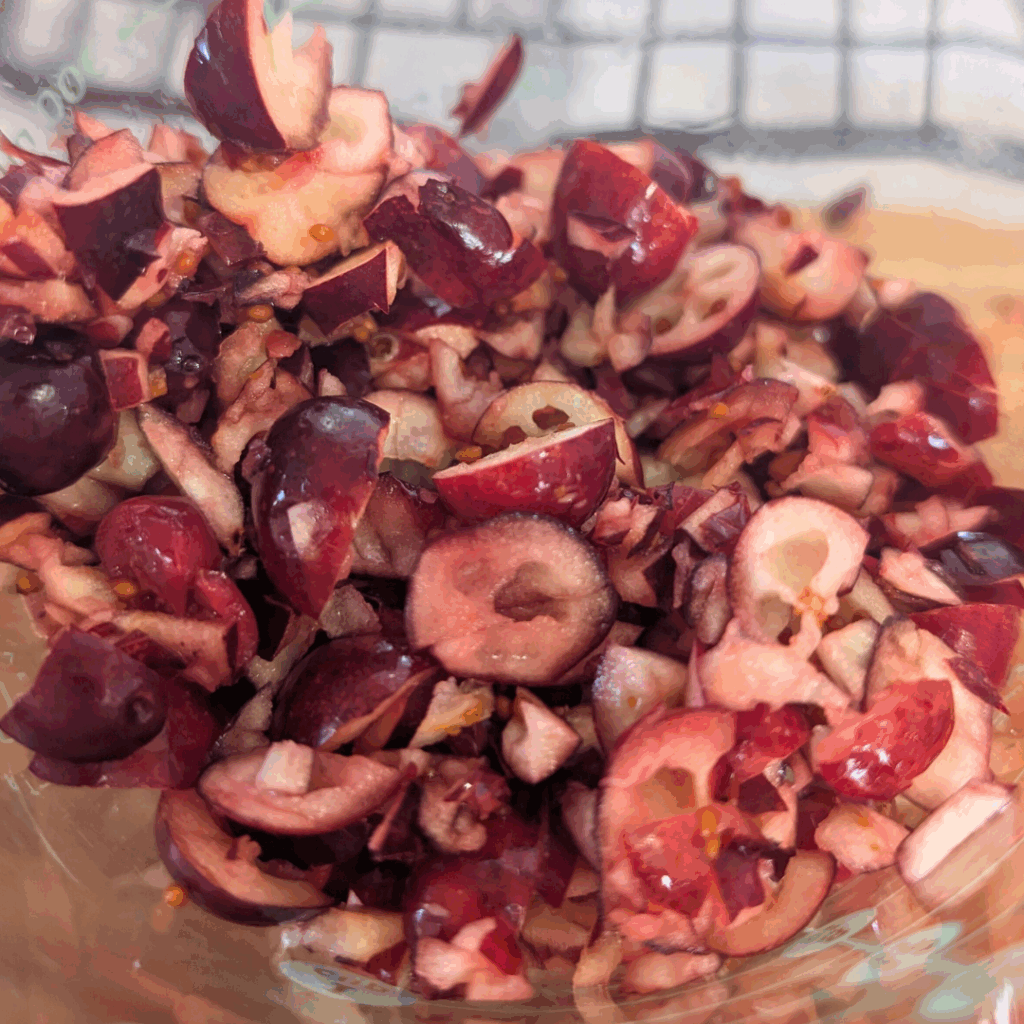
Now, instead of tossing the whole cranberries in, coarsely chop the fresh fruit on the cutting board. You don’t have to make them tiny — we want them in rough pieces so the chutney has texture and the berries cook evenly. Think “still chunky, but not whole.” Slide the chopped cranberries into a bowl and set aside.
Next, zest your orange first (it’s easier while it’s whole). You only need about 2 tablespoons of orange zest. Then cut the orange and squeeze out the juice into a measuring cup — enough to give the chutney brightness. If you’re a tiny bit short, top it up with bottled orange juice.
Take a piece of red onion and finely chop it — smaller pieces work better here, so the onion softens and doesn’t overpower the chutney. You want that nice savory bite, not big onion chunks.
Now you can build the chutney. Combine cranberries, fresh orange juice, orange zest, chopped red onion, brown sugar, and a small pinch of ginger and allspice in your saucepan. Give it a stir so everything is coated and the sugar isn’t sitting in one spot.

Put your pot on the stove over medium heat. As it warms, the brown sugar will melt and the cranberries will start to release juice. Stir every minute or so — this keeps the sugar from sticking to the bottom.
After a few minutes, you’ll see it getting juicy, and you may hear little pops even though we pre-chopped — that’s fine. Once it’s looking saucy, turn the heat down to low and let it simmer gently for about 10 minutes. You’re looking for the onion to soften and the liquid to reduce.
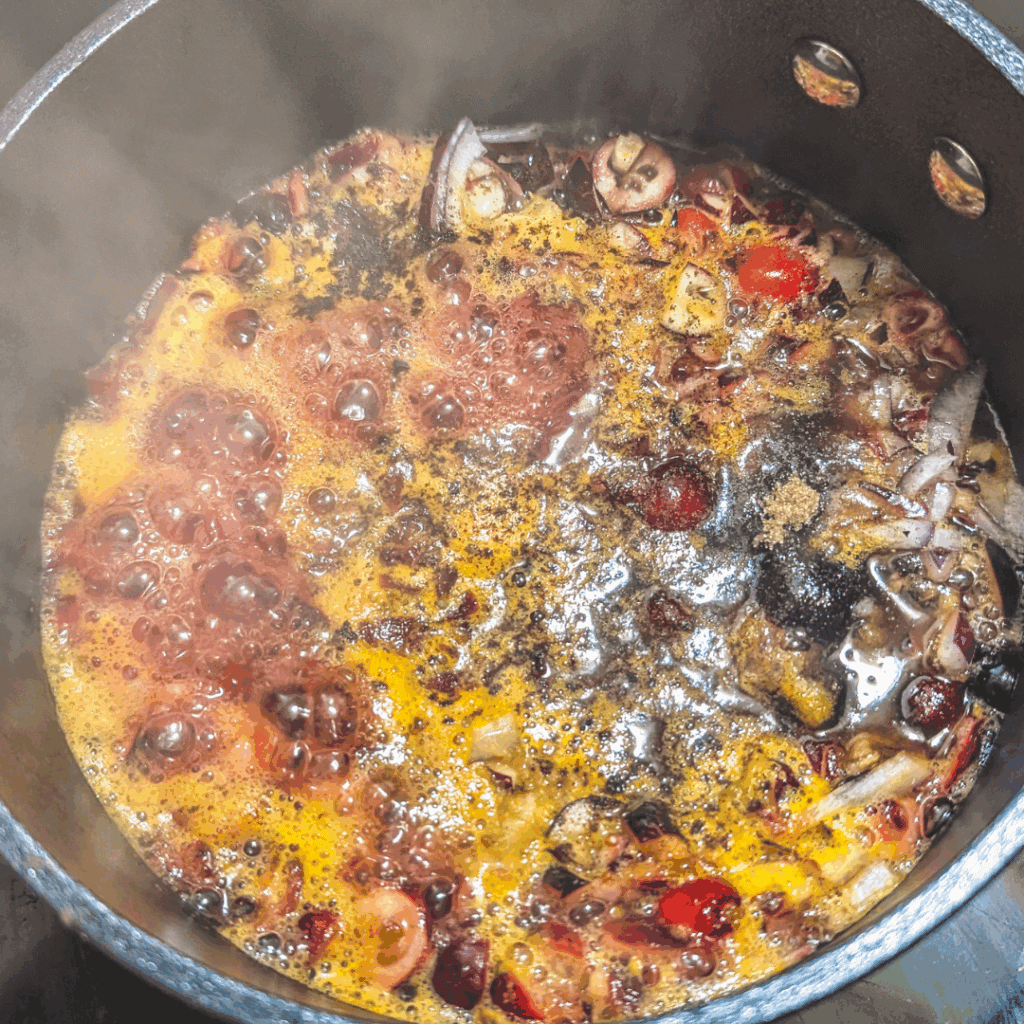
When it looks thick, glossy, and spoonable, turn off the heat. Remember: the sauce will thicken more as it cools, so don’t cook it until it’s stiff.
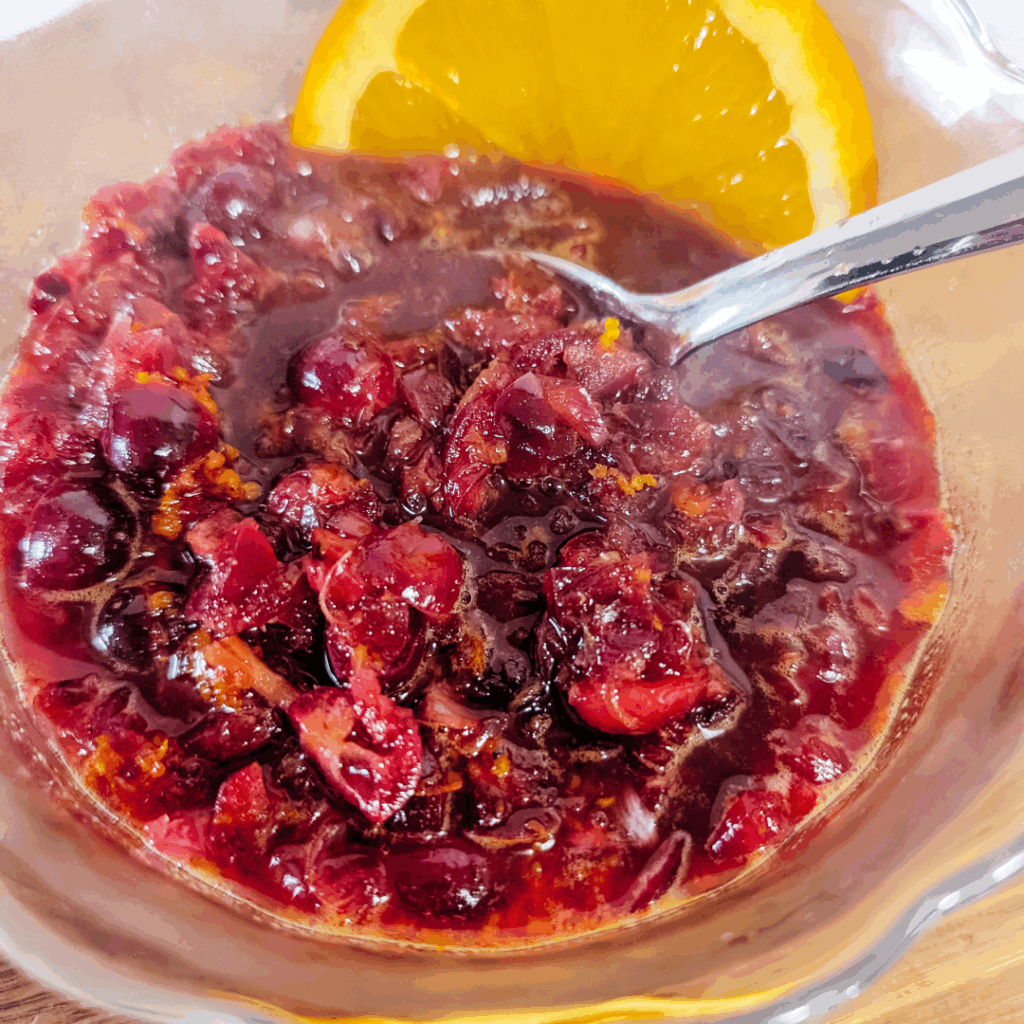
Let it cool, then transfer to a serving bowl or jar. Serve it warm or chilled beside roast turkey on your holiday table, and save some for turkey sandwiches the next day — it’s the perfect accompaniment.

Ingredients:
Fresh Cranberries: Rinse and coarsely chop the berries before cooking. This gives the homemade cranberry chutney its chunky, rustic texture.
Brown Sugar: Balances the tart cranberries with gentle sweetness and helps create a glossy, spoonable chutney.
Fresh Orange Juice: Adds citrus brightness and natural sweetness that complements the cranberries and warm spices.
Orange Zest: Adds concentrated orange flavour and a fresh citrus aroma. Stir it in toward the end of cooking to preserve its brightness.
Red Onion: Gives this cranberry chutney a slightly savory flavour. Finely chopping the onion helps it soften during the short cooking time.
Ground Ginger: Adds gentle warmth and a subtle spicy note without overpowering the cranberry and orange flavours.
Ground Allspice: Brings a warm, aromatic flavour that complements the sweet and savory ingredients.
Substitutions And Add-Ins For This Easy Cranberry Chutney
Fresh Cranberries: If fresh cranberries aren’t in season, you can use frozen cranberries just as well — no need to thaw first.
Brown Sugar: Swap in dark brown sugar for a deeper molasses flavor, or use maple syrup.
Fresh Orange Juice: Store-bought orange juice can work if you don’t have fresh, or try a splash of apple juice for a milder twist.
Orange Zest: If you’re out of oranges, substitute a little lemon zest or even dried orange peel from the spice shelf.
Red Onion: Use shallots for a milder flavor, or yellow onion if that’s what you have on hand.
Ground Ginger: Freshly grated ginger can also work, although it has a different flavour and intensity. Add a little at a time and adjust to taste.
Ground Allspice: Replace with a pinch of cinnamon or nutmeg if needed — go light to keep the balance.
Pinch of Salt (optional): Can be skipped if you’re watching sodium — the chutney will still shine on its own.
Looking to use up more of that fruit in your cupboard? Add a handful of Sultanas or Golden Raisins, or dice a bit of apple, for a cranberry apple chutney. If you enjoy making homemade condiments, my quick tomato and onion chutney is another easy small-batch recipe worth trying.
Expert Tips, Serving And Storing Suggestions For This Cranberry Chutney Recipe
Tip #1: Don’t overcook: Cranberries naturally thicken as they cool, so remove the chutney from the heat while it still looks slightly loose. If you cook it until it’s fully thickened in the pot, it’ll firm up too much once chilled.
Tip #2: Taste before cooling: The balance of sweet and tangy can vary depending on your cranberries and orange juice. If it’s too tart, add a touch more brown sugar; if it’s too sweet, a small splash of vinegar or lemon juice brings it back into balance.
Tip #3: Make ahead: Let the chutney rest overnight in the fridge before serving if you can. The flavors deepen and the texture becomes glossy and jam-like — perfect for your holiday table.
This cranberry chutney can be served warm or chilled, depending on your preference. It’s delicious beside roast turkey or my orange cranberry baked turkey breast at your Thanksgiving dinner or Christmas table, baked Easter ham, or even air fryer roast chicken for a smaller gathering. Try spooning it over a wheel of baked brie or sharp cheddar as an easy appetizer — the sweet-tart bite pairs perfectly with creamy cheese. It also makes a fantastic spread on turkey sandwiches or leftover sliders, and it adds a surprising pop of flavor to pork chops or grilled sausage if you want to take it beyond the holidays. For another delicious way to use up Thanksgiving leftovers, try my hot turkey sandwich with homemade gravy.
Once the chutney has cooled, transfer it to a clean glass jar or airtight container and refrigerate promptly. For best results, enjoy it within a week. You can also freeze it for up to 2 months for the best quality. Thaw overnight in the refrigerator and stir before serving, as the texture may soften slightly after freezing.
What’s your favorite way to reinvent holiday leftovers? This cranberry condiment met turkey sandwiches here — what about at your house?
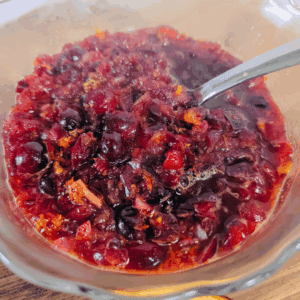
Easy Cranberry Orange Chutney Recipe for Holiday Table

Equipment
- Small Saucepan
- Cutting board
- Colander
- Zester
- knife
- Teaspoon
Ingredients
- 1 Cup Cranberries Fresh, coarsely chopped
- ½ Cup Orange Juice Freshly squeezed
- ¼ Cup Red Onion Minced
- 1 Tsp Ginger Powder
- ⅛ Tsp Allspice
- 4 Tbsp Brown Sugar
- 2 Tbsp Orange Zest
Instructions
- Rinse and discard any shriveled cranberries. Then coarsely chop and add to the saucepan. Don't heat it just yet.1 Cup Cranberries
- Wash orange, remove zest. Set aside.2 Tbsp Orange Zest
- Juice orange and add to cranberries in saucepan.½ Cup Orange Juice
- Dice the red onion fine and add to pot with cranberries and juice.¼ Cup Red Onion
- Measure and add spices and start to heat over medium heat to reach a boil.1 Tsp Ginger Powder, ⅛ Tsp Allspice
- Once fruit is boiling add the brown sugar to dissolve. Cook for a few minutes to reduce the orange juice and soften the berries. (3-4mins)4 Tbsp Brown Sugar
- Remove from heat and stir in the orange zest.2 Tbsp Orange Zest
- Let cool in pot and then transfer to jar in fridge. Can also serve right away hot.
Notes
Amber’s Tips for Success
Add the orange zest last. Stir it in toward the end of cooking to keep its fresh, citrusy flavor. Adding it too early can cause the oils to turn slightly bitter as they simmer. Watch the texture. Cranberries thicken naturally as they cool, so take the chutney off the heat when it still looks a little loose. It’ll firm up to the perfect consistency as it rests. Taste and adjust. Before cooling, taste for balance — a bit more brown sugar if it’s too tart, or a tiny splash of lemon juice or apple cider vinegar if it needs brightness. Make it ahead. This chutney is even better the next day after the flavors have mingled and mellowed. Perfect for prepping before Thanksgiving or Christmas dinner. Serve creatively. Beyond turkey, try it on baked brie, pork tenderloin, or even grilled chicken. It’s one of those recipes that turns simple leftovers into something special.Nutrition
🍁 A Little Canadian Cranberry History
Cranberries are one of the few native North American fruits still widely grown today — and Canada has played a big part in keeping them on the holiday table. Long before they appeared beside roast turkey, cranberries were prized by Indigenous peoples for both their medicinal properties and their role in preserving meat through the winter, often mixed into pemmican.
Commercial cranberry growing in Canada took off in the 19th century, especially in regions with cool, wet conditions and acidic bog soil that provided ideal growing conditions. The harvest season runs from late September to early November, just in time for Thanksgiving, which aligns neatly with Canadian Thanksgiving in early October. It’s no wonder the bright, tart berries became synonymous with the holidays — one of the few fresh fruits available at that time of year.
That timing made cranberries a natural feature on both sides of the border — one of the few fresh fruits available during the cooler months and a bright, tart symbol of the harvest season. Today, they remain a staple of Canadian fall cooking, showing up in loaves, sauces, and recipes like this warm-spiced cranberry-orange chutney that bridges tradition with a modern, savory twist.
Canadian cranberries are harvested in the fall, just as Thanksgiving arrives — a celebration of the season’s last burst of color and flavor before winter settles in.
Bog Cranberries vs. Highbush Cranberries
Not all cranberries are created equal, and in Canada, you’ll actually find two very different kinds — bog cranberries and highbush cranberries.
Bog cranberries are the type most of us think of around Thanksgiving. They grow in low, wet bogs on creeping vines and are part of the Vaccinium family, the same as blueberries. These are the classic bright red berries used in commercial cranberry farms across Canada and the U.S. They’re firm, tart, and glossy. They hold their shape beautifully when cooked — perfect for sauces, chutneys, and baking.
Highbush cranberries, on the other hand, aren’t true cranberries at all. They belong to the Viburnum family, closer to ornamental shrubs than bog fruit. Their berries grow in clusters on tall bushes. They are softer, thinner-skinned, and more pungent — with an aroma some people find musky or even a little funky when raw. Despite that, when cooked and sweetened, highbush cranberries make excellent jellies and preserves, especially in rural or foraged recipes.
In short, bog cranberries are what you’ll buy in the produce aisle each fall. In contrast, highbush cranberries are often wild-harvested and used in small-batch, old-fashioned recipes. Both carry that tart brightness Canadians associate with the season — one cultivated, one wild — and both are deeply rooted in our food history.
If you’re cooking with grocery-store cranberries, you’re using bog cranberries. If you’re out walking in the woods and spot clusters hanging from a bush after frost, that’s highbush — nature’s more rustic cousin.