Oven Roasted Cubed Potatoes
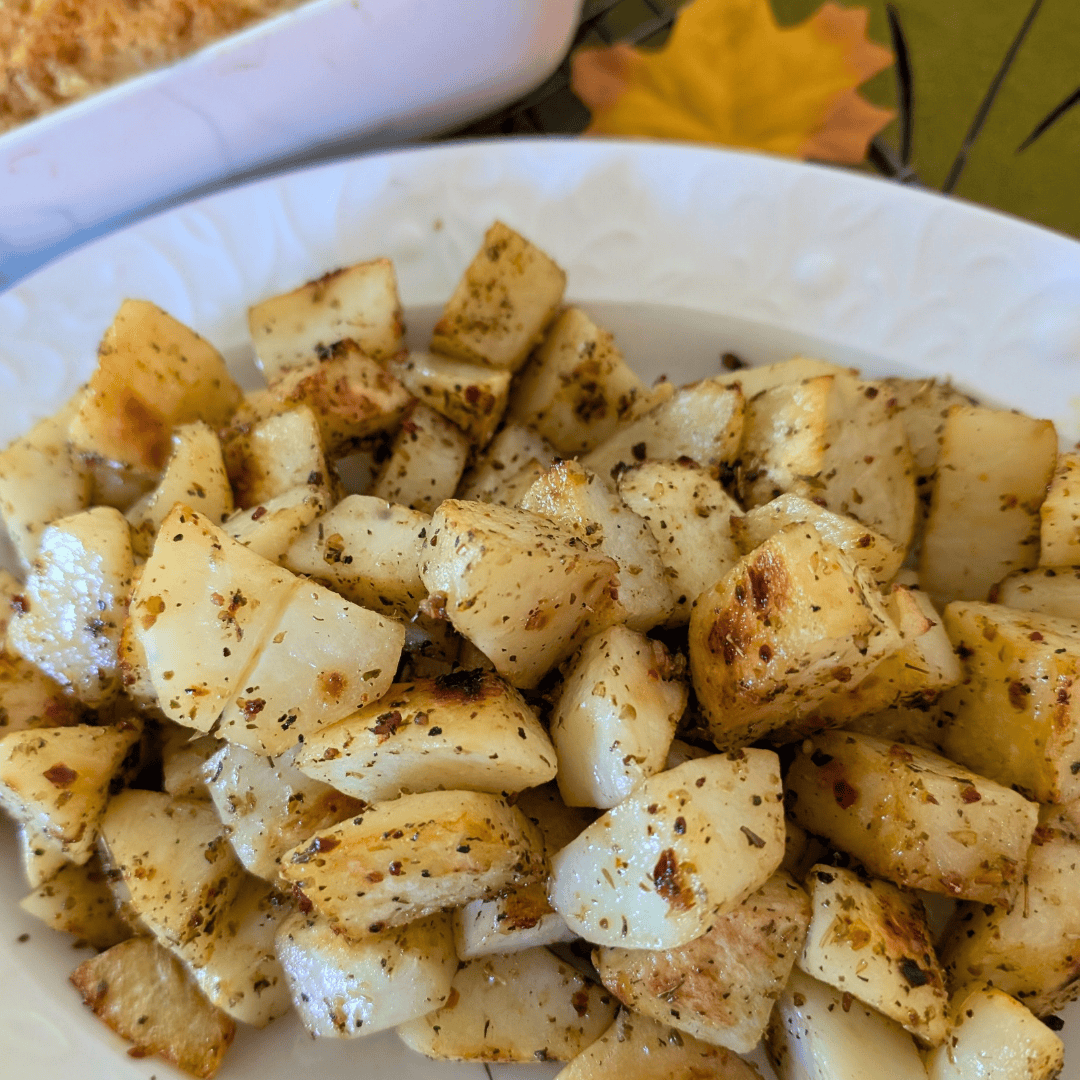
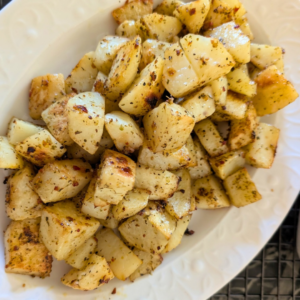
These oven roasted cubed potatoes are an inexpensive side dish that I like to make in large batches so we can enjoy them for more than one meal. They’re soft and tender inside, with lightly crispy, golden edges and plenty of flavour from olive oil, Greek or Italian seasoning, onion powder, salt, and pepper.
You can serve these seasoned roasted potatoes straight from the oven with dinner, but I often make extra to use as breakfast potatoes the following morning. The cooked potato cubes can also be frozen and reheated as homemade home fries, similar to the cubed hash browns you’d get at a restaurant.
I especially like making roasted cubed potatoes in autumn when fresh white and red potatoes are available from PEI and local Ontario farmers. I’ve found these varieties hold their texture better after freezing and reheating than Yukon Gold potatoes, which sometimes become a little mealy for me.
The method is straightforward. Peel and cube the potatoes, rinse and dry them thoroughly, then toss with oil and seasonings before spreading them across a baking sheet. Roast uncovered at 400°F, turning halfway through, until the centres are soft and the edges are as golden as you prefer.
Quick Answer
Roasted cubed potatoes are small pieces of potato coated in cooking oil and seasonings, then baked in a 400°F oven until tender inside and lightly crisp outside. They can be served as a dinner side dish or cooled and frozen for future breakfast potatoes.
Prep Time:
Approximately 15–20 minutes, depending on how many potatoes you’re cutting.
Roasting Time:
Approximately 40–60 minutes.
Oven Temperature:
400°F (204°C).
Cooking Method:
Uncovered on a large baking sheet, turning halfway through the initial roasting time.
Texture:
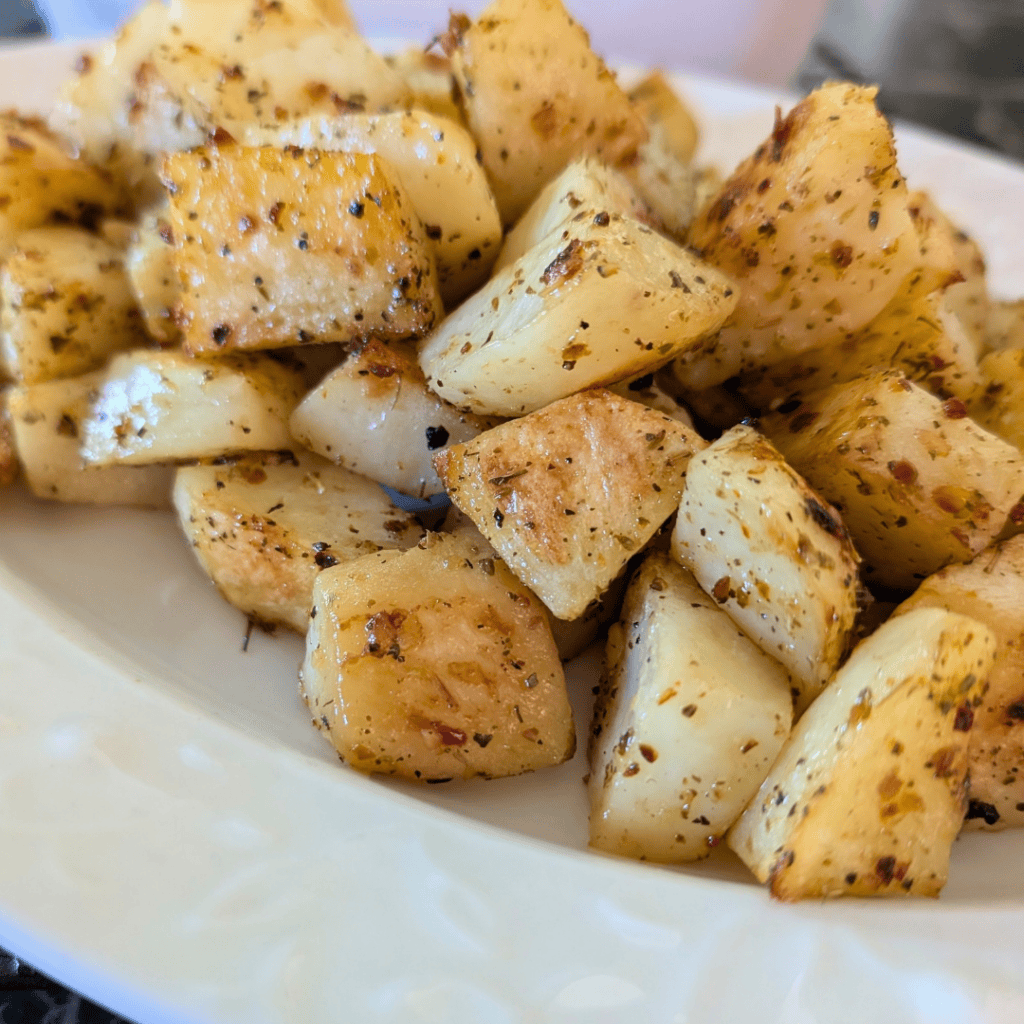
Soft and tender centres with lightly crisp, seasoned edges.
Best For:
Dinner sides, homemade breakfast potatoes, and make-ahead freezer portions.
Why I Prefer White or Red Potatoes for Roasting and Freezing
I like buying new-season potatoes in autumn, especially when PEI potatoes and locally grown potatoes are plentiful. Fresh white or red potatoes work well for this recipe, and I find they’re generally easy to peel while still having the lighter-coloured flesh I prefer.
I’ve tried using Yukon Gold potatoes, but I find they can become a little mealy after freezing and reheating. That’s why I generally choose white or red potatoes when I know I’ll be making a large batch to use again later.
You can leave the skins on if you have beautiful new potatoes with thin skins. Just give them a good scrubbing first. For this version, I usually peel them because I want the finished potatoes to resemble the small cubed breakfast potatoes you get in a restaurant.
The other thing I pay attention to is how dry the potatoes are before seasoning. I rinse them after cutting, but I don’t add the oil while they’re still dripping wet. Drying the cubes helps the oil and herbs coat their surfaces and gives the potatoes a better chance to brown in the oven.
Storage Tip: Keep raw potatoes in a cool, dark, dry, well-ventilated place, away from direct heat. If you’ve bought potatoes in a dampish feeling paper bag, transfer them to a clean, dry, breathable container. I learned the hard way not to store potatoes beside a heating vent after losing a bag that way one winter.
Cost Rating: 🍳 1 Pan — Low Cost
Cost guideline:
Cost Per Batch: ~$3.00–$6.00 CAD
Cost Per Serving: ~$0.50–$1.00 CAD (based on 6 side servings)
Provisional estimate using Canadian grocery prices in 2026. Actual cost depends on potato prices, the seasoning blend, and the type of oil used.
Potatoes are often inexpensive when bought in larger bags, particularly during autumn sales. Buying from a local farmer can also be worthwhile when fresh potatoes are available in season.
Olive oil is the more expensive ingredient in this recipe, but you don’t need to use it. A regular neutral cooking oil is a practical alternative if you’re trying to keep grocery costs down.
Making enough potatoes for dinner and another breakfast can also save preparation time the following morning. Instead of peeling and cutting more potatoes, you already have cooked ones ready to heat.
Why You’ll Love These Roasted Cubed Potatoes
Two Meals From One Batch: Serve the potatoes alongside dinner and save the remaining cooked potatoes for breakfast.
Freezer-Friendly Preparation: Once cooled, the roasted potatoes can go directly into a freezer bag without needing to freeze them individually first.
Flexible Seasoning: Greek or Italian seasoning works with the olive oil, onion powder, salt, and pepper.
Soft With Lightly Crisp Edges: The potatoes are roasted until tender inside, with enough browning to give them some texture without making them hard or overly crunchy.
Budget Tip:
If you’re buying a large bag of potatoes, go through it when you get home. Remove any spoiled potatoes and move the rest to a clean, dry, breathable bag if the original packaging is damp. Store them somewhere cool and dark, away from heat. Keeping the potatoes in good condition helps you use more of the bag instead of throwing away spoiled ones later.
How to Make Oven Roasted Cubed Potatoes
Start by preheating your oven to 400°F. Get out a large baking sheet with enough room to spread approximately six cups of cubed potatoes in a single layer. You can line the sheet with oven-safe parchment paper to make cleanup easier, or roast the potatoes directly on the baking sheet. Don’t use wax paper in the oven because its wax coating isn’t intended for this kind of baking.
Wash your potatoes thoroughly before you begin cutting them. Even when I’m planning to peel potatoes, I like to clean them first so dirt from the skin doesn’t get transferred to the freshly cut flesh. A vegetable brush is particularly helpful if you’re leaving the thin skins on new potatoes.
Take a moment to inspect each potato. Look for sprouts, eyes, green patches, and damage that may have happened during harvesting or storage. Cut away minor damaged areas and the surrounding affected flesh. If a potato is badly sprouted, extensively green, rotten, or unusually soft, discard it.
Peel the potatoes if you’re removing the skins. To make the cubes, I cut each potato lengthwise through the middle first. Then I cut those halves lengthwise again, place the pieces flat-side down on the cutting board, and continue cutting them into smaller sections until I have reasonably even cubes.
Don’t worry if every piece isn’t perfectly square. Potatoes have rounded ends, so some pieces will always be a little irregular. What matters more is keeping the pieces reasonably similar in size so the smaller ones don’t burn while the larger ones are still cooking.
Once you’ve cut approximately six cups of potatoes, place them into a large mixing bowl and rinse them with cold water. Drain them thoroughly, then use paper towels to dry off the excess moisture. You don’t want water pooling at the bottom of the bowl when you start adding your oil and seasonings.
Add three to four tablespoons of olive oil to the dried potato cubes. Start with the smaller amount, toss the potatoes, and add more only if needed to coat everything. The potatoes should have a light coating of oil rather than sitting in a puddle. Too much oil can leave them greasy instead of lightly crisp.
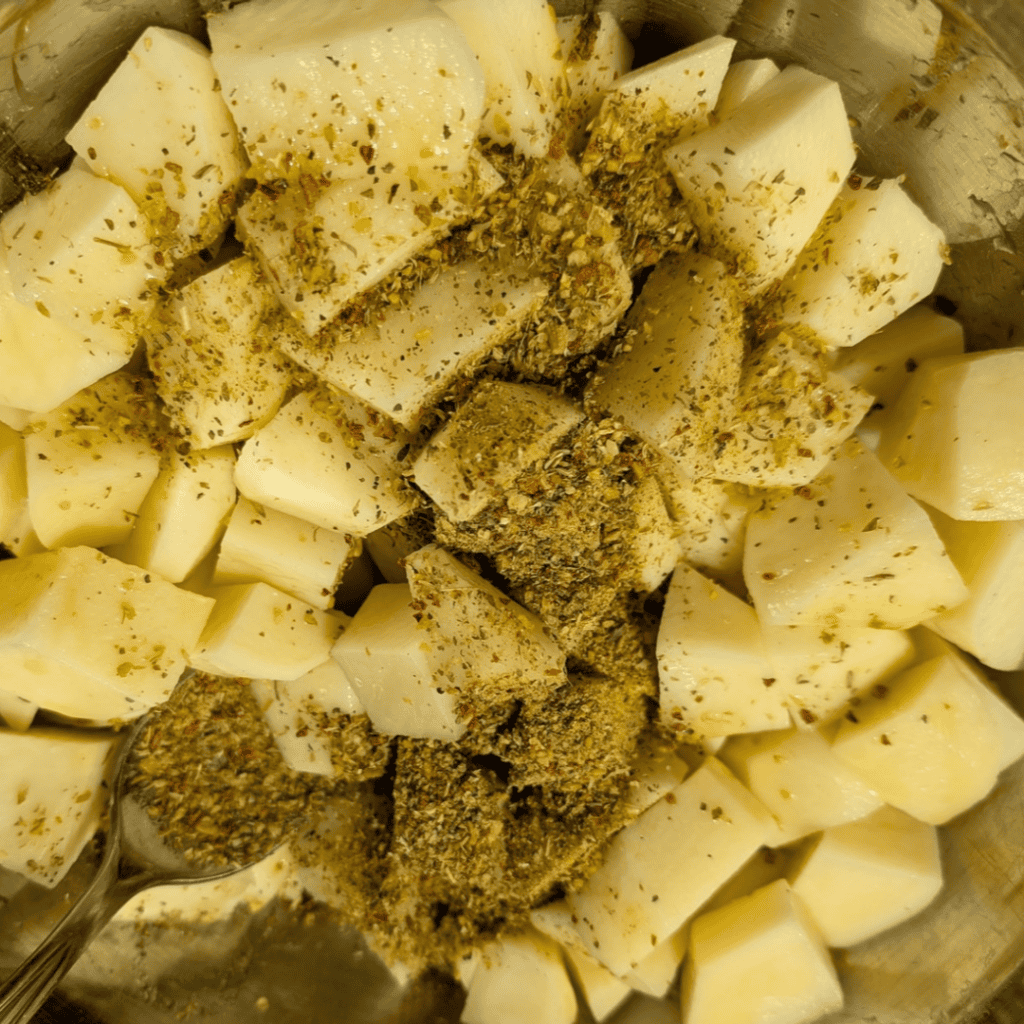
Add the Greek or Italian seasoning, onion powder, half a teaspoon of salt, and black pepper. Stir or toss everything together until the oil and seasonings are distributed over the potatoes. I like using either Greek or Italian seasoning because both give the potatoes plenty of flavour without needing a long list of individual herbs.
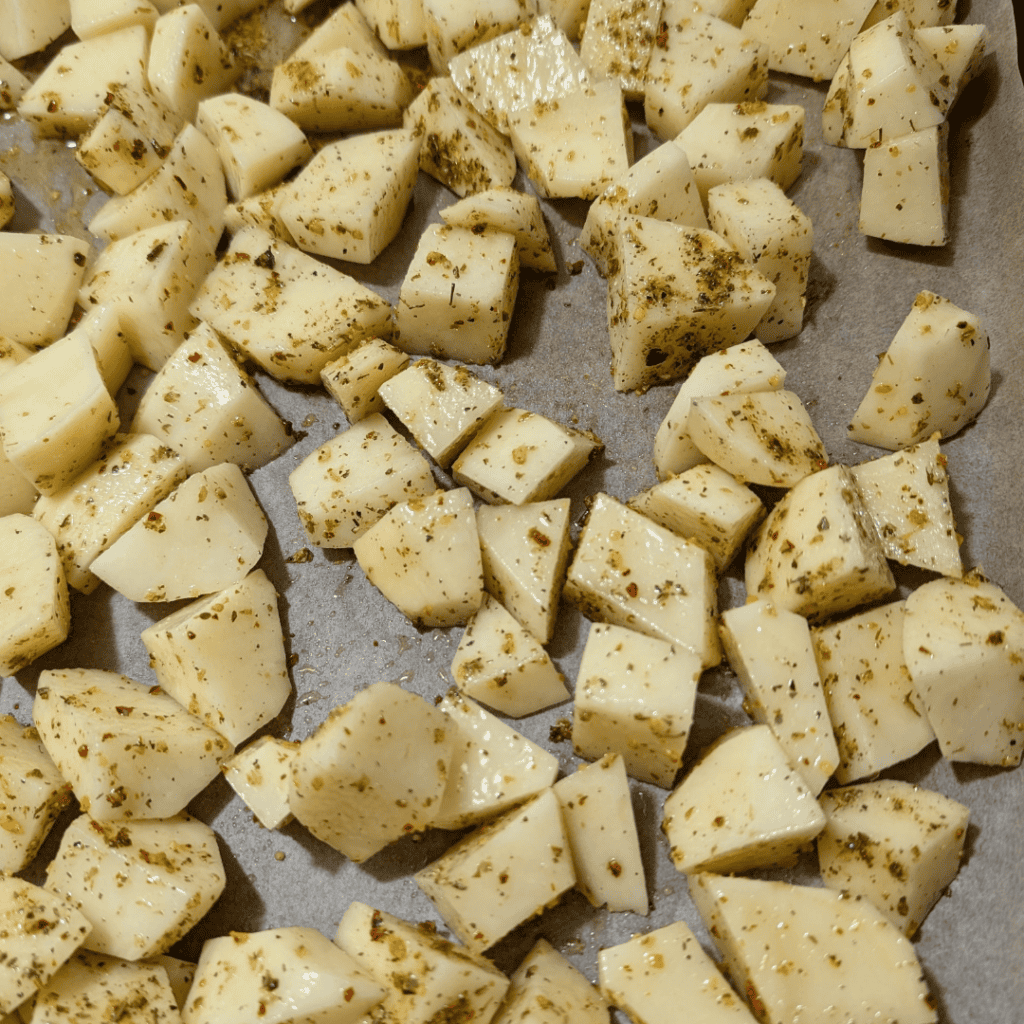
Spread the seasoned cubes onto your prepared baking sheet. Arrange them as evenly as possible, leaving a little room around the pieces so the hot oven air can reach their surfaces. If the sheet is overcrowded, the potatoes are more likely to steam against each other than brown. If your baking sheet is too small, use a second one rather than piling the potatoes up.
Before putting the tray in the oven, give the potatoes another light sprinkling of salt. You can use a salt shaker or hold a small pinch of salt higher above the baking sheet and sprinkle it across the potatoes. You aren’t adding a heavy second layer of salt; just a light finishing sprinkle over the exposed surfaces.
Place the baking sheet in the preheated oven and roast the potatoes uncovered. After approximately 20 minutes, remove the sheet carefully and flip or stir the cubes so different sides come into contact with the baking sheet. Spread them back out in an even layer before returning them to the oven.
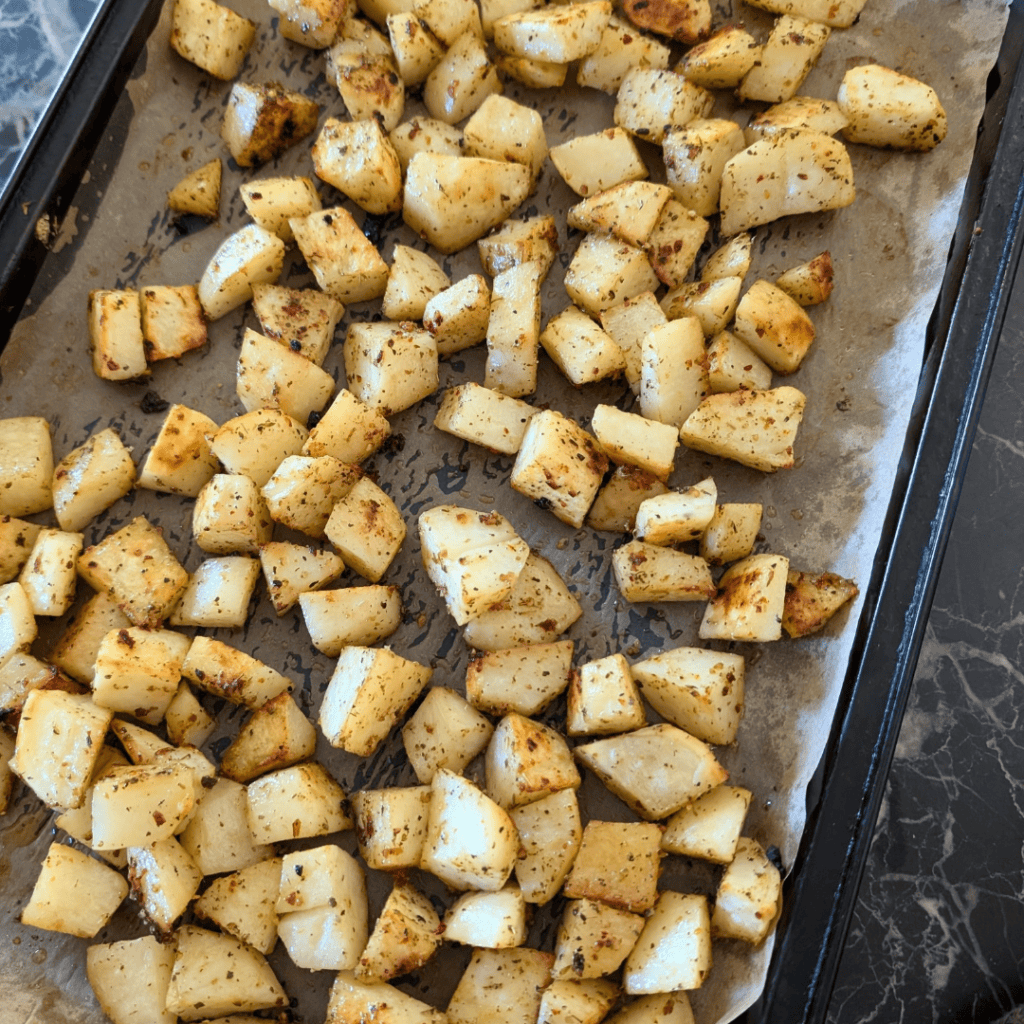
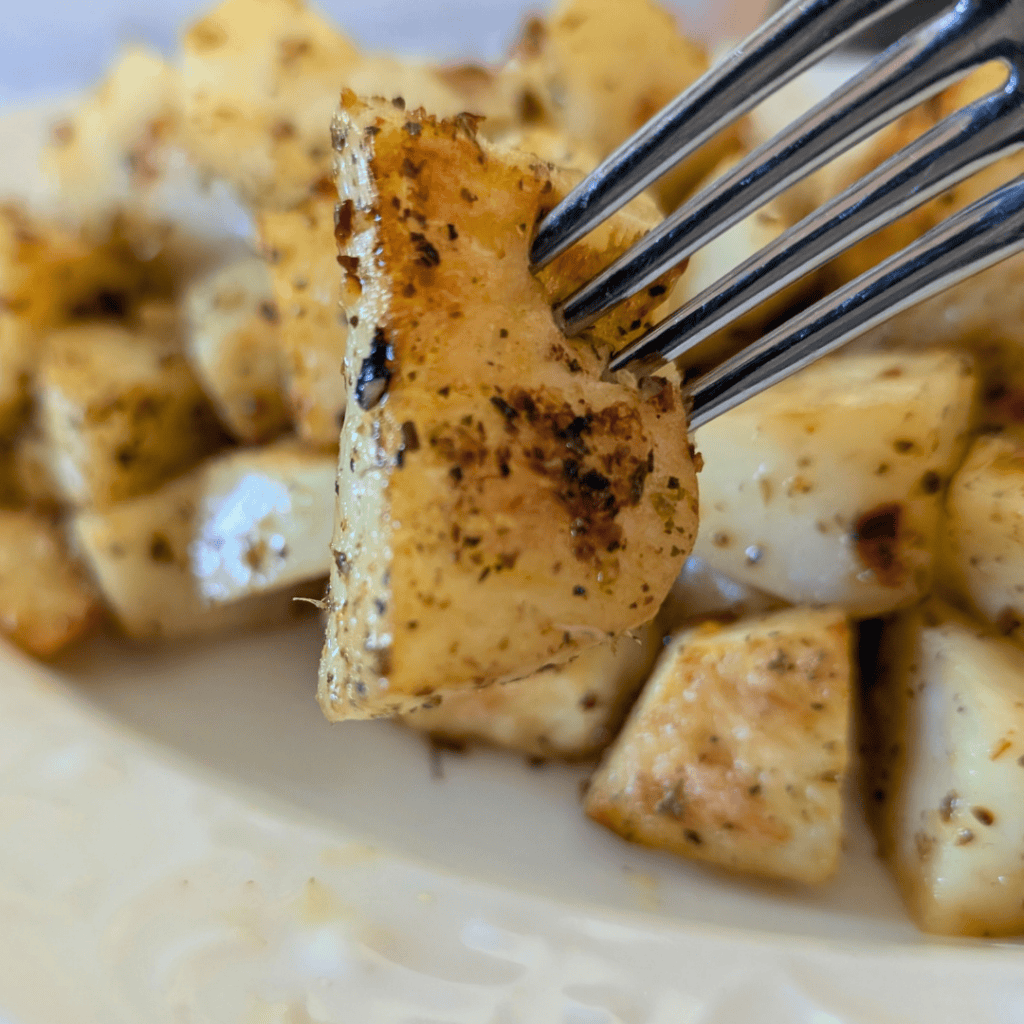
Continue roasting for another 20 minutes without disturbing them. At around 40 minutes, check their colour and texture. The potatoes should be tender when pierced with a fork, with some golden colour and lightly crisp edges. If they’re cooked through but still paler than you prefer, you can leave them in the oven longer.
I sometimes roast mine for closer to an hour when I want a deeper golden colour. If you’re extending the baking time, check them periodically and flip them again if one side is becoming too dark. The extra roasting time should develop more colour, not leave you with badly burned bottoms.
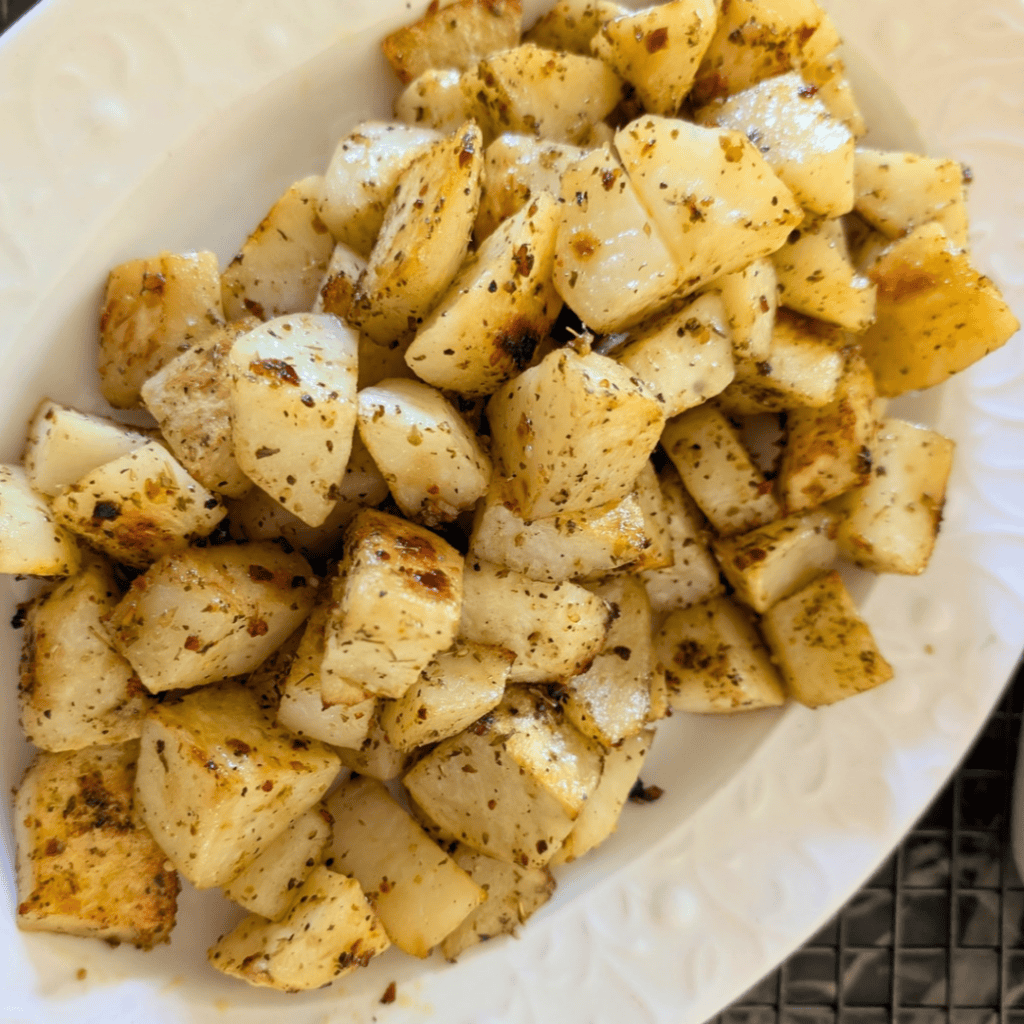
Once the potatoes are cooked to your liking, remove the baking sheet from the oven. Serve the amount you need with dinner, then set aside the remaining potatoes for another meal. If you’re saving them for the freezer, let the steam escape and cool them promptly before bagging.
Ingredients for Roasted Cubed Potatoes
Most of these ingredients are ordinary pantry staples. The main things to pay attention to are choosing firm potatoes, using enough oil to coat them without making them greasy, and checking whether your seasoning mix already contains salt.
White or Red Potatoes: Approximately six cups of peeled, cubed potatoes. I prefer firm, fresh white or red potatoes because I like their texture after roasting and reheating. Thin-skinned new potatoes can also be left unpeeled if they’re cleaned thoroughly.
Olive Oil: Three to four tablespoons coat the potato cubes and help them brown in the oven. The exact amount depends on the surface area of your cubes and how many potatoes you’re preparing.
Greek or Italian Seasoning: Approximately three tablespoons provide the main herb flavour. Some Greek seasoning blends contain salt, while many Italian herb mixes do not. Check your particular blend before adding the separate salt and final sprinkling so the potatoes don’t become overly salty.
Onion Powder: One teaspoon adds onion flavour without needing to chop fresh onions.
Salt: Half a teaspoon for the initial seasoning, plus a very light sprinkling over the potatoes once they’re spread on the baking sheet.
Black Pepper: One-quarter teaspoon adds a little background seasoning without making the potatoes spicy.
Substitutions and Add-Ins for Roasted Cubed Potatoes
This is a flexible potato recipe, although changing the potato variety, oil, or seasoning can affect the finished texture and flavour.
White or Red Potatoes: Either variety works well for this recipe. You can also use Yukon Gold potatoes, although I find they become a little mealier after freezing and reheating. If you aren’t planning to freeze the potatoes, that may be less of a concern. If you prefer cooking smaller whole potatoes instead of cubes, my air-fryer herbed baby potatoes are another way to prepare a seasoned potato side dish without using the oven.
Olive Oil: Substitute a regular neutral cooking oil, such as vegetable or canola oil. This can make the recipe less expensive without changing the basic method.
Greek or Italian Seasoning: Use whichever blend you prefer. Different commercial blends contain different herbs and amounts of salt, so check the package before adding the full seasoning quantities.
Onion Powder: You can reduce the onion powder if your chosen seasoning blend already contains onion. I wouldn’t replace it with a large amount of fresh chopped onion because that would change how the mixture roasts.
Salt: Adjust the seasoning to account for any salt already present in your Greek or Italian blend. The light sprinkling before roasting is optional if the potatoes already taste sufficiently seasoned.
Black Pepper: You can reduce or omit it if you prefer a milder seasoning.
Expert Tips, Serving & Storing for Roasted Cubed Potatoes
Tip #1: Dry the Potatoes Before Seasoning: After rinsing the cubed potatoes, use paper towels to remove as much surface moisture as possible. Wet potatoes won’t coat as evenly with the oil and seasonings, and excess water can interfere with browning.
Tip #2: Give the Potatoes Room to Roast: Spread the cubes in a single layer with a little space between them. Overcrowding the baking sheet traps moisture and makes it harder for the potatoes to develop lightly crisp edges.
Tip #3: Turn the Potatoes During Roasting: Flip or stir the potatoes after approximately 20 minutes, then leave them undisturbed for the remainder of the initial 40-minute baking time. If you’re roasting them longer for a deeper golden colour, check periodically and turn them again if one side is getting too dark.
Tip #4: Watch the Salt in Your Seasoning Blend: Greek and Italian seasoning mixes vary, and some contain quite a bit of salt. Check the ingredients before adding the separate half teaspoon and final light sprinkling.
Serving Suggestions
These oven-roasted cubed potatoes work well as a side dish for dinner, especially alongside my spice-rubbed whole roast turkey, roasted chicken, pork, or beef. I like making a full baking sheet. For a regular family dinner, I also like the idea of pairing these potatoes with spice-rubbed oven-baked chicken drumsticks. Both use simple pantry seasonings, making them a practical combination when you’re planning meals around what you already have.g sheet because we can eat some that evening and use whatever remains for another meal.
They’re also handy for breakfast. Instead of peeling and cutting more potatoes the following morning, you can warm the leftover cubes in a frying pan with a little oil, turning them occasionally until they’re heated through and lightly browned. They’re similar to the cubed home fries you might order at a restaurant. For a breakfast you can prepare ahead, serve the warmed potatoes alongside my oven-baked egg bites with spinach and tomato. They’re a handy option when you want eggs and potatoes without making everything from scratch in the morning.
I have an older recipe for hamburger patties with potato hash and a sunny-side-up egg that shows another way to use cooked potatoes in a complete meal.
I also used two cups of these roasted potatoes in my one-pot leftover turkey and dumplings. Because the potatoes were already cooked, I could add them directly to the turkey, gravy, and leftover vegetables before steaming the dumplings.
When I want potatoes to cook right along with the meat, I make my Air Fryer Chicken and Potatoes. The potatoes sit underneath bone-in, skin-on chicken breasts and pick up flavour from the rendered fat as everything cooks together.
How to Store and Freeze Roasted Cubed Potatoes
Allow the roasted potatoes to cool promptly after cooking. If you’re planning to use them for breakfast the following morning, transfer them to a covered container and refrigerate. Use refrigerated leftovers within two to three days.
For longer storage, you can freeze the potatoes. Once they’ve cooled and are no longer giving off steam, transfer them directly into a freezer bag, press out the excess air, seal it, and label the bag with the date.
There’s no need to spread the potatoes on a separate baking sheet and freeze them individually first. I simply put the cooled cubes into the freezer bag. Some pieces may stick together once frozen, but they can be separated when you’re ready to use them.
For best quality, aim to use frozen roasted potatoes within approximately two to three months. Their texture may soften slightly after freezing, but they’re still useful for breakfast potatoes, hash, or another cooked dish.
How to Reheat Roasted Cubed Potatoes
Because these potatoes are already fully cooked, they don’t need to roast for another 40 minutes.
For breakfast, add the refrigerated or frozen potatoes to a frying pan with a little oil over medium heat. Turn them occasionally as they warm so the outsides can brown without burning before the centres are hot.
You can also reheat them in the oven by spreading them across a baking sheet and warming them until heated through. The oven or frying pan helps restore some of their surface crispness.
Frozen potatoes may need a little longer than refrigerated ones. Whichever method you choose, make sure they’re thoroughly reheated before serving.
FAQ
Make Dinner Tonight and Breakfast Tomorrow
I usually make enough roasted potatoes to cover a large baking sheet because they’re useful well beyond the meal I’m preparing. Some go on the dinner table, and the rest can be refrigerated or frozen for breakfast or added to another recipe.
You don’t need perfectly shaped cubes or expensive olive oil to make them. Good potatoes, a light coating of oil, seasonings, and enough room on the baking sheet are what matter.
Do you prefer your roasted potatoes lightly golden and soft inside, or do you leave them in the oven longer for darker, crispier edges?
Oven Roasted Cubed Potatoes

Equipment
- Large Baking Sheet
- Large Mixing Bowl
- Sharp knife
- Cutting board
- Vegetable peeler
- Colander
- Paper Towels
- Spatula
- Oven-safe parchment paper *optional
Ingredients
- 6 Cups Potatoes White or red, cubed and peeled
- 3-4 Tbsp Olive oil Or other neutral oil
- 3 Tbsp Greek or Italian seasoning
- 1 Tsp Onion powder
- ½ Tsp Salt Plus light sprinkle after
- ¼ Tsp Black pepper
Instructions
- Preheat the oven to 400°F (204°C). Line a large baking sheet with oven-safe parchment paper if desired.
- Wash the potatoes thoroughly and inspect them for sprouts, eyes, green patches, and damage. Trim away minor affected areas. Discard any potatoes showing extensive greening or spoilage.
- Peel the potatoes if desired. Cut each potato lengthwise, cut the sections lengthwise again, and slice across to form reasonably even small cubes.6 Cups Potatoes
- Place approximately 6 cups of cubed potatoes in a large bowl. Rinse with cold water, in colander, drain thoroughly, and pat dry with paper towels.
- Add 3 tablespoons of olive oil and toss to coat. Add the remaining tablespoon only if needed to coat all the potatoes lightly.3-4 Tbsp Olive oil
- Add the Greek or Italian seasoning, onion powder, salt, and black pepper. Toss until the potatoes are evenly coated.3 Tbsp Greek or Italian seasoning, 1 Tsp Onion powder, ¼ Tsp Black pepper, ½ Tsp Salt
- Spread the potatoes across the baking sheet in a single layer, leaving space between the pieces. Sprinkle lightly with additional salt.
- Roast uncovered for 20 minutes. Remove the sheet from the oven, flip or stir the potatoes, and spread them out evenly again.
- Return to the oven for approximately 20 minutes, until the potatoes are fork-tender with lightly crisp, golden edges.
- For deeper browning, continue roasting, checking periodically and flipping again as needed to prevent burning. Total roasting time may be 40–60 minutes or longer, depending on cube size and desired colour.
- Remove the potatoes from the oven and serve hot. Cool any potatoes intended for refrigeration or freezing promptly before storing.
Notes
Nutrition