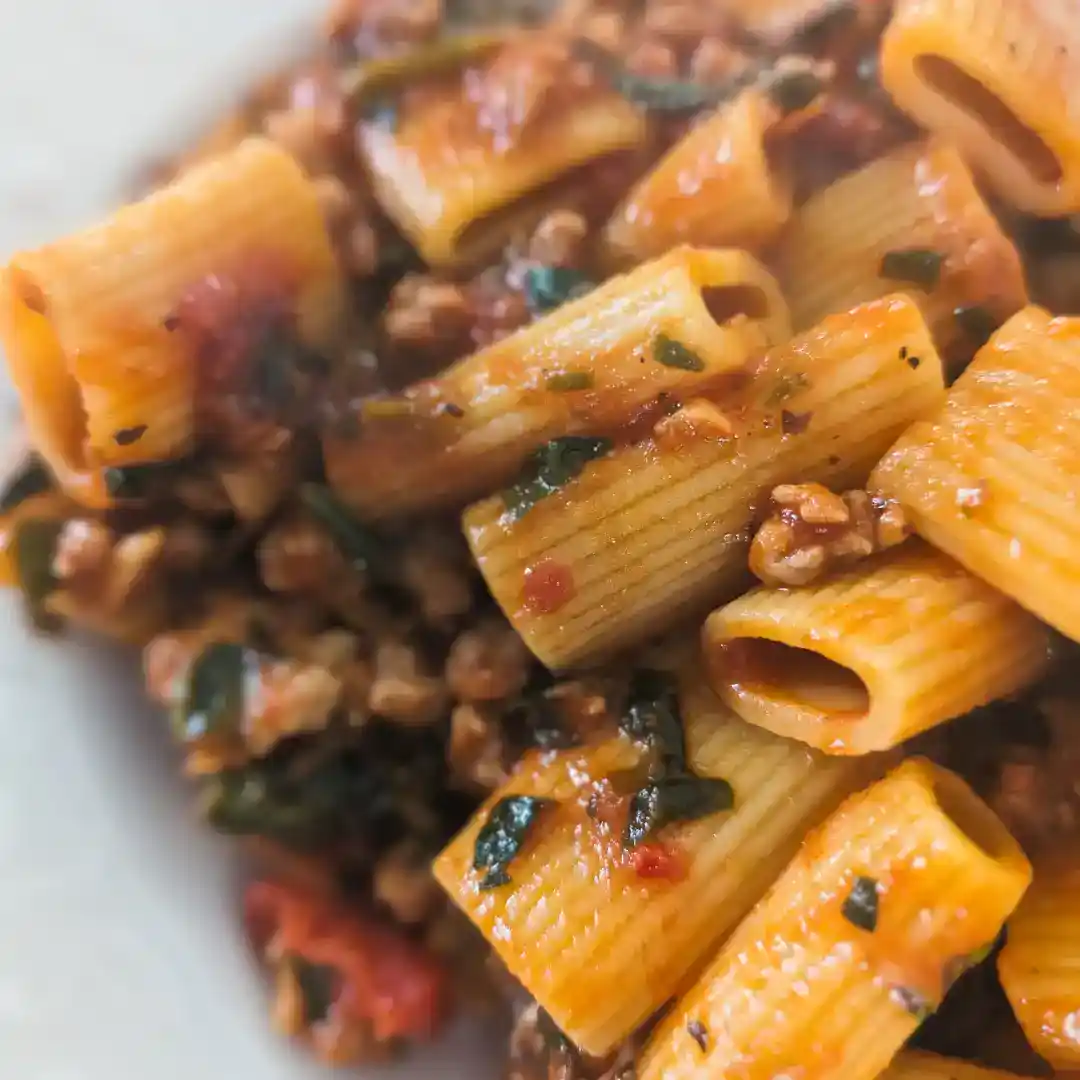
Homemade Roasted Tomato Sauce From Fresh Tomatoes
When ripe summer tomatoes are inexpensive by the case, abundant at the farmers’ market, or your garden suddenly gives you more than you can reasonably eat fresh, making sauce is one way to preserve the harvest for later. This homemade roasted tomato sauce from fresh tomatoes starts with 25 pounds of Roma tomatoes and turns them into freezer portions that can be used for pasta and other meals throughout the year.
The tomatoes are roasted uncovered at 350°F with fresh basil, yellow onion and garlic. Instead of trying to fit all 25 pounds into the roasting pan at once, I add more tomatoes as the first ones soften and cook down. The sauce spends about six hours in the oven, with an additional stovetop reduction when needed to remove enough moisture.
This roasted tomato sauce is meant to be a fairly simply seasoned base sauce with a thick texture and full-bodied, concentrated tomato flavor. There is only one tablespoon of added salt in the entire batch, so when I thaw a bag I can use it as it is or add mushrooms, red pepper flakes, more herbs, Parmesan, Romano or whatever suits that particular meal.
I make tomato sauce like this every year. One reason is simply cost. A jar of sauce I actually want to buy is getting close to $4, while tomato season gives me the opportunity to buy a large amount of fresh tomatoes inexpensively and keep the ingredient list very simple.
Quick Answer
This roasted tomato sauce is made by slowly cooking fresh tomatoes uncovered in the oven until much of their moisture evaporates, then reducing them further on the stovetop if needed and blending the finished sauce. It is a large-batch, make-ahead freezer tomato sauce designed for ripe summer tomatoes, homegrown tomatoes, or an end-of-season garden harvest.
Have fresh garden tomatoes? Want to enjoy in a great salad? Try one of these, Cucumber tomato salad with marinated bocchini, or Tomato cucumber salad with fresh basil.
Flavor
Thick, blended tomato basil sauce that clings to pasta
Best For:
A 25-pound tomato box or large garden harvest
Method:
Uncovered oven roasting followed by stovetop reduction
Yield:
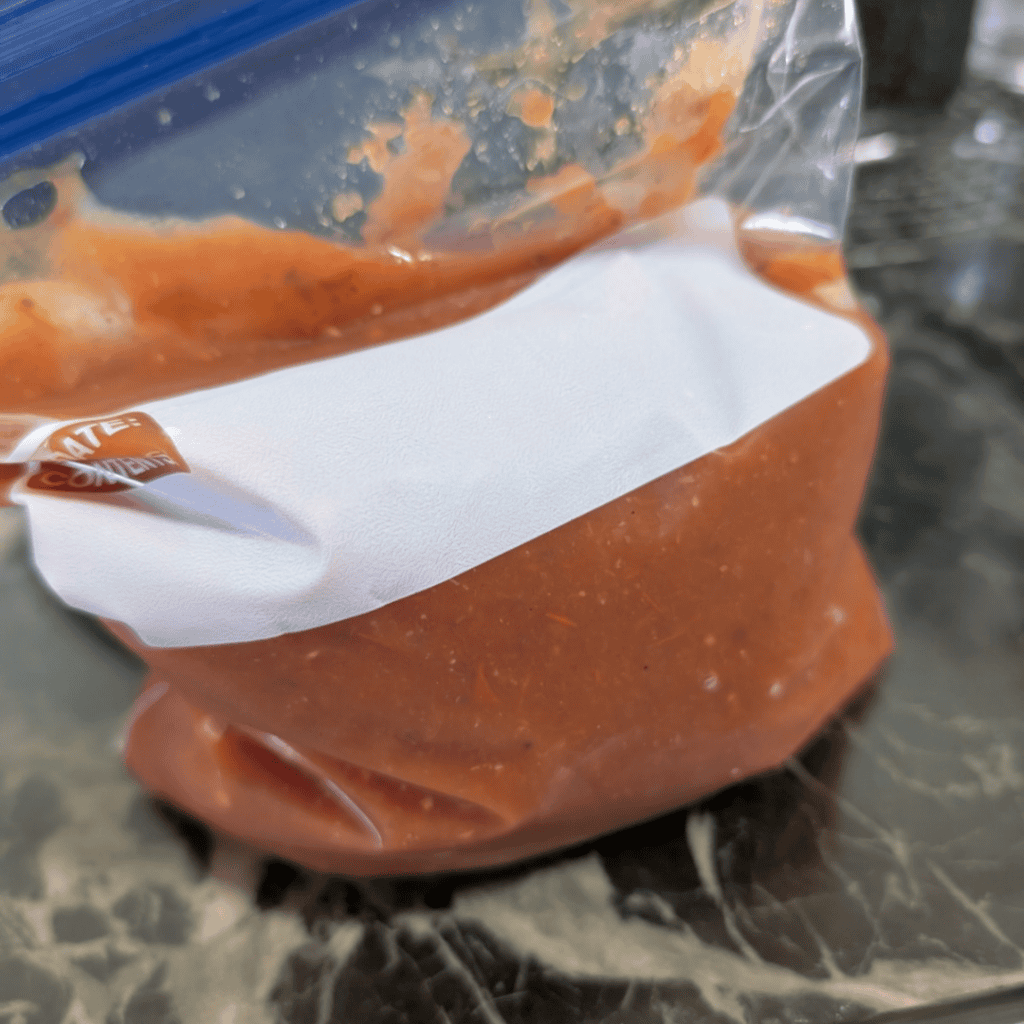
9 large freezer portions plus 4 smaller portions
Cook Time:
About 6 hours in the oven, plus variable stovetop reduction
Freezer Friendly:
Yes; this freezer-friendly tomato sauce is chilled, portioned and frozen for future meals.
My Experience Making Large Batches of Tomato Sauce
I make this when tomatoes are at their best price because it turns one inexpensive box into a surprising number of future meals. This batch gave me nine hefty freezer bags with about six ladles in each, plus four smaller bags.
The larger bags are enough for a pasta night in my house. I make the smaller portions because sometimes you don’t need a full bag of sauce. My daughter will use one when she wants to make something for herself after work, and they’re also useful when I need a little tomato sauce for another recipe or a dip.
The long cooking time is mostly hands-off. What matters is allowing the moisture to escape instead of trying to rush a huge volume of fresh tomatoes into a thick sauce all at once.
Cost Rating: 🍳 Low Cost | High Yield
Cost guideline:
Cost Per Batch: ~$22.50–$26.00
Cost Per Freezer Portion: ~$1.75–$2.00 (13 portions)
For this batch, the 25-pound box of Roma tomatoes was on sale for $10.99. The large basil plant was $6.99, a 2-pound bag of yellow onions was $2.99, and five heads of garlic were $1.49. The regular tomato and garlic prices would bring the batch closer to $26.
Fresh basil is actually one of the larger costs here. If you grow basil or have a large plant already producing, the batch becomes even less expensive.
The important comparison for me is not the cost of one jar of homemade sauce against one jar from the store. It is that one large cooking session produces nine substantial pasta portions plus four smaller freezer portions. For me, one long cooking day is also a practical way to stock the freezer with sauce for future pasta meals.
Why You’ll Love This Roasted Tomato Sauce
Simple Ingredient List: Tomatoes, yellow onion, fresh basil, garlic and salt make up the base sauce.
Flexible Seasoning: The mild base can be changed later depending on the meal rather than committing the entire batch to one flavor profile.
Freezer Practical: The sauce is portioned according to how much you actually use for full pasta meals and smaller recipes.
Budget Tip:
Watch for case or bushel pricing during peak tomato season, whether you’re buying from a grocery store, produce stand or farmers’ market, rather than purchasing the same quantity by the pound. Roma tomatoes worked particularly well for this batch because they were inexpensive and naturally fairly meaty, but if your garden is producing heavily, using what you already have is the lowest-cost option.
How to Make Homemade Roasted Tomato Sauce From Fresh Tomatoes
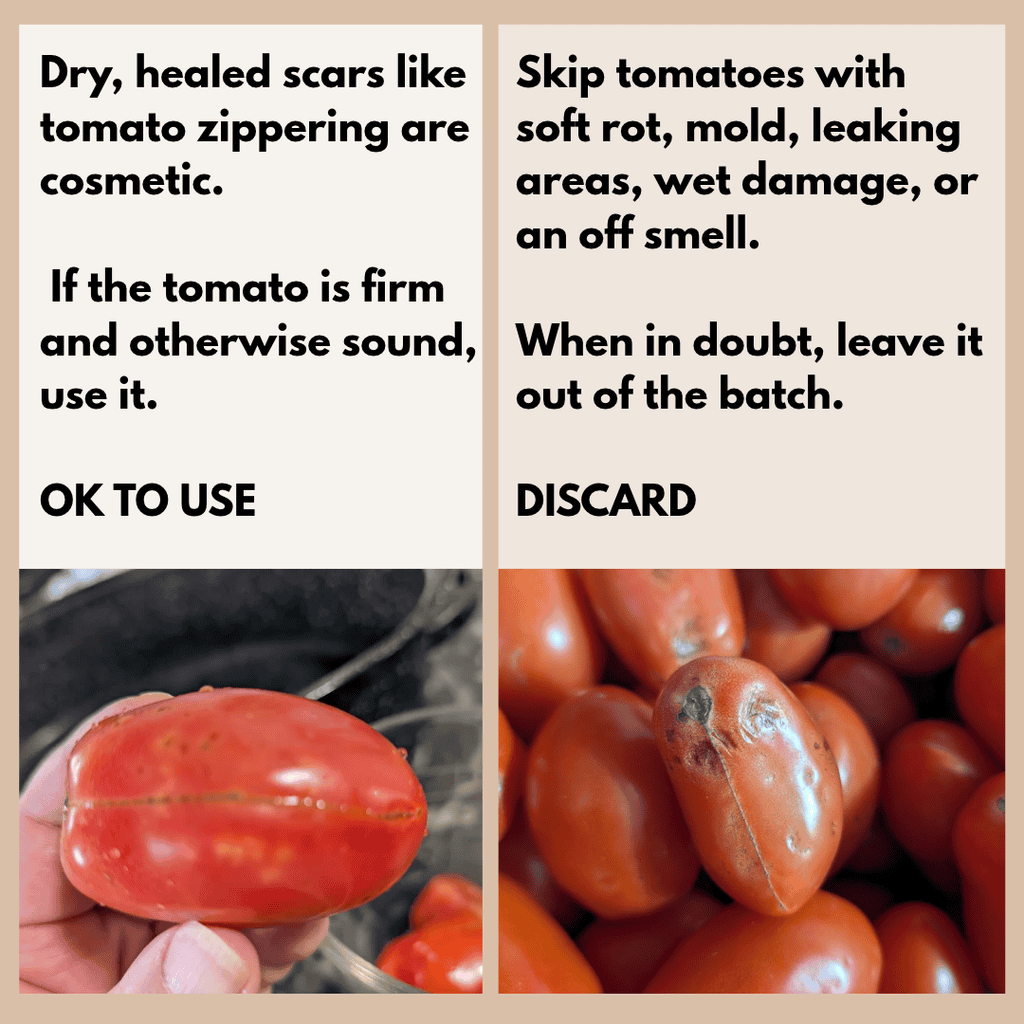
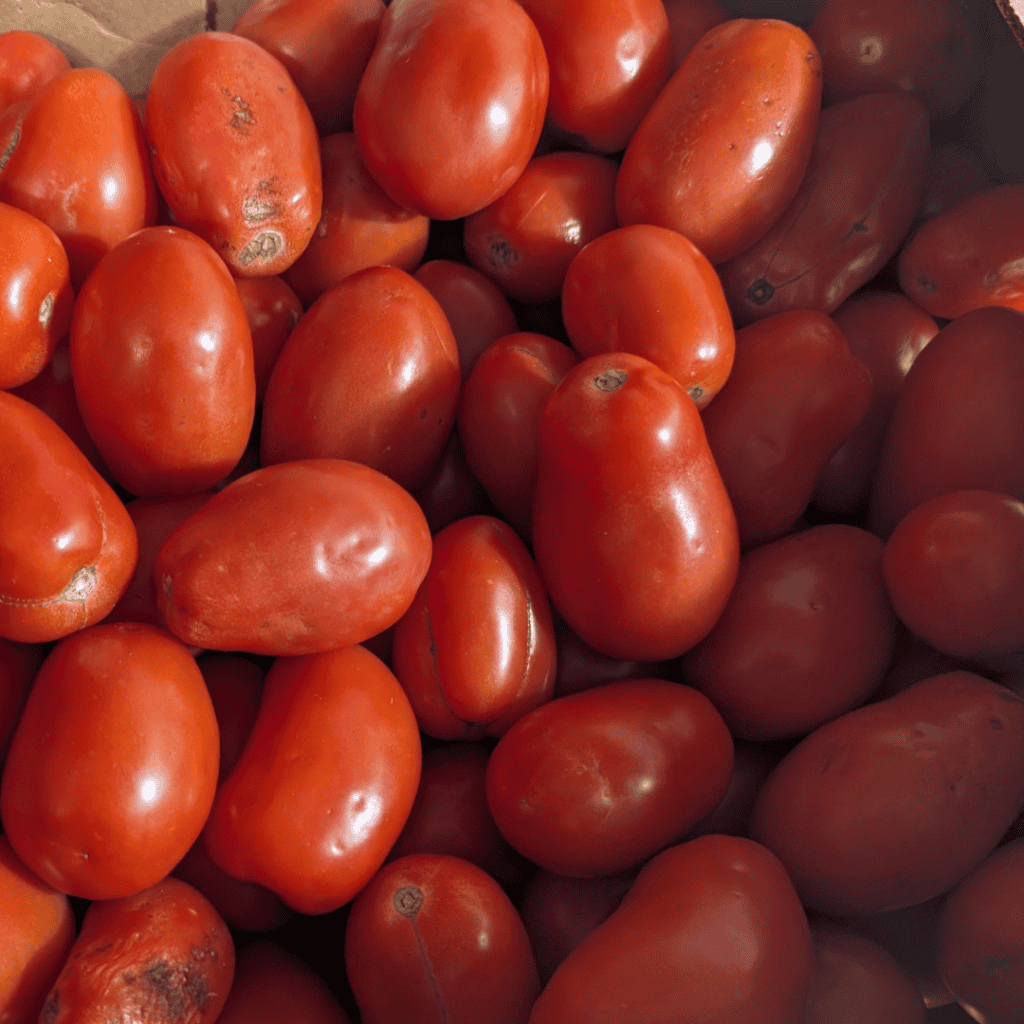
Set the oven rack just below center so there is enough room for the roasting pan, then heat the oven to 350°F. Wash the tomatoes in a colander under cold running water before cutting. This is also the best time to sort through a large box and decide which tomatoes are suitable for sauce. Dry, healed scars and cosmetic blemishes are fine to use. A long, narrow scar running down the side of a tomato can be caused by zippering, a cosmetic growth defect that develops while the fruit is forming. If the tomato is still firm and the scar is dry and completely healed, I use it. Discard any tomatoes with soft or rotten areas, mold, leaking spots, wet damaged tissue or an off smell. With a 25-pound batch, there is no reason to risk the whole sauce trying to save one questionable tomato.
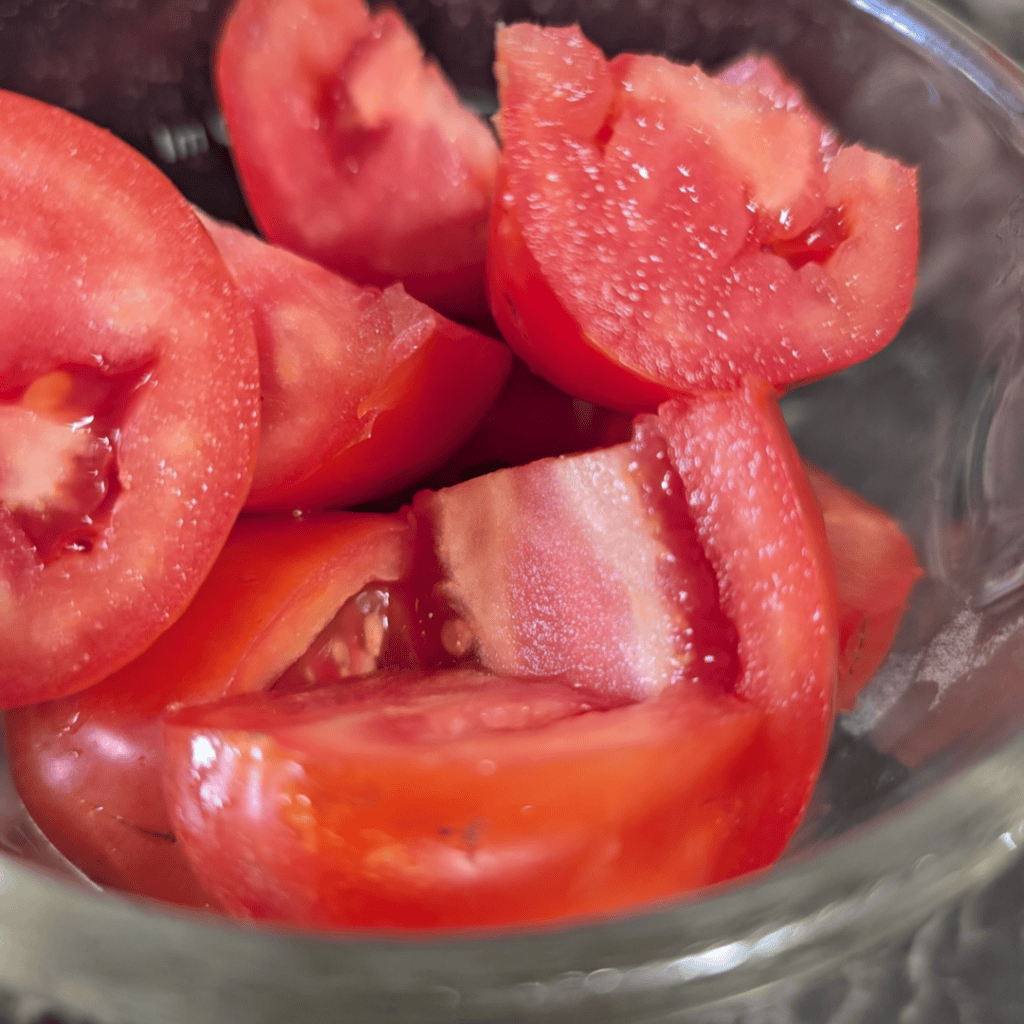
Quarter enough tomatoes to fill the roasting pan. There is no need to peel or seed the tomatoes before roasting. The long cook softens the skins and seeds, and everything is blended with an immersion blender after the final reduction. You will not fit the full 25-pound box into the pan at once, and that is part of the method.
Roast the tomatoes uncovered so the moisture they release can evaporate instead of becoming trapped in the pan. Roma tomatoes are meatier than many slicing tomatoes, but they still release plenty of juice as they cook. If you’re using homegrown tomatoes or a mixed end-of-season harvest, expect the amount of liquid—and therefore the reduction time—to vary.
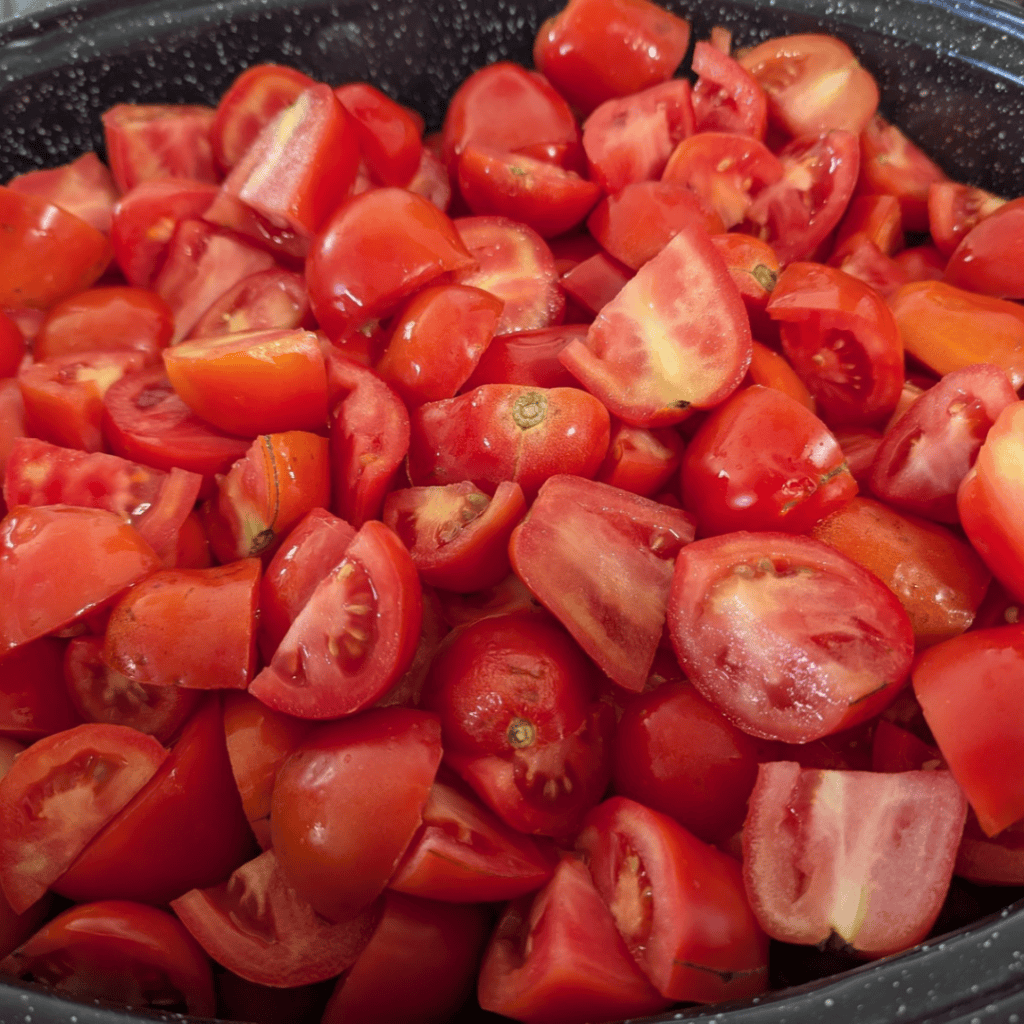
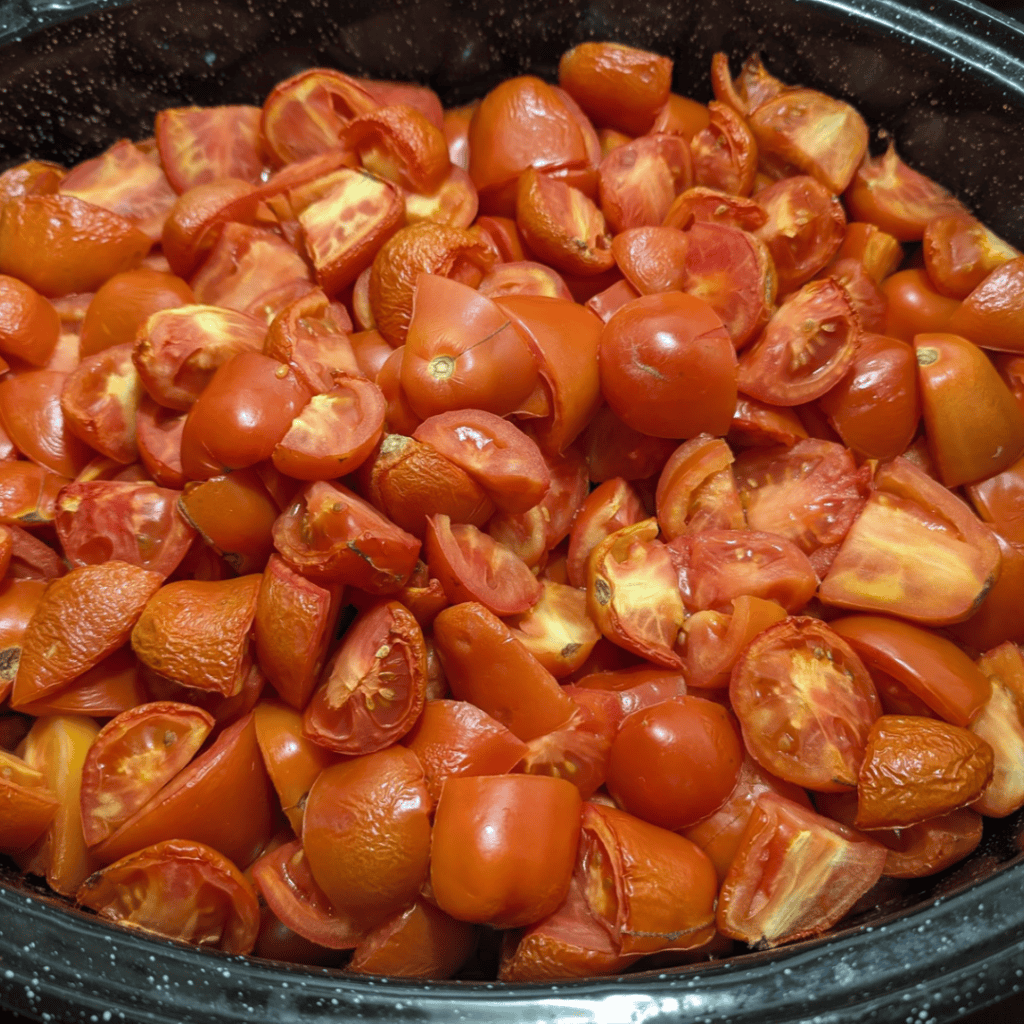
As the first tomatoes soften, wrinkle and collapse, more room will open in the roaster. Add another round of quartered tomatoes and return the pan to the oven. Continue adding tomatoes this way as the previous ones cook down until the entire box has been worked into the roasting pan. About once an hour, carefully remove the pan and stir well. Tomato juice can collect underneath the softened tomatoes even when the surface looks fairly dry, so bring the wetter mixture from the bottom toward the surface where more moisture can evaporate.
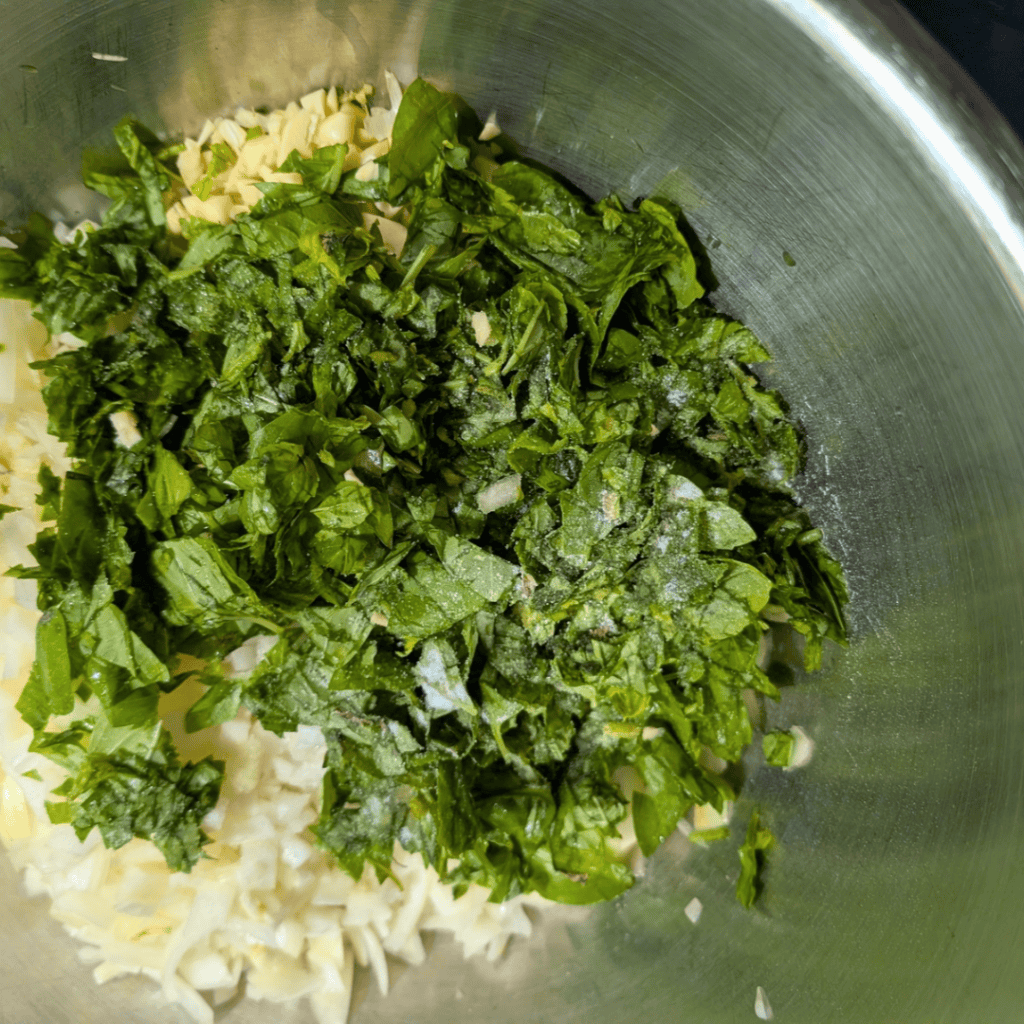
Remove the leaves from the fresh basil plant and rinse them under cool running water before mincing. Once the tomatoes have reduced enough to leave room in the roasting pan, stir in the chopped yellow onions, minced garlic, about 2 cups minced fresh basil, and 1 tablespoon salt.
Continue roasting uncovered until the onions are soft and the tomatoes are thoroughly broken down. The entire oven-roasting process takes about 6 hours from start to finish. That long uncovered roast is what removes much of the water and concentrates the tomato flavor before the final stovetop reduction.
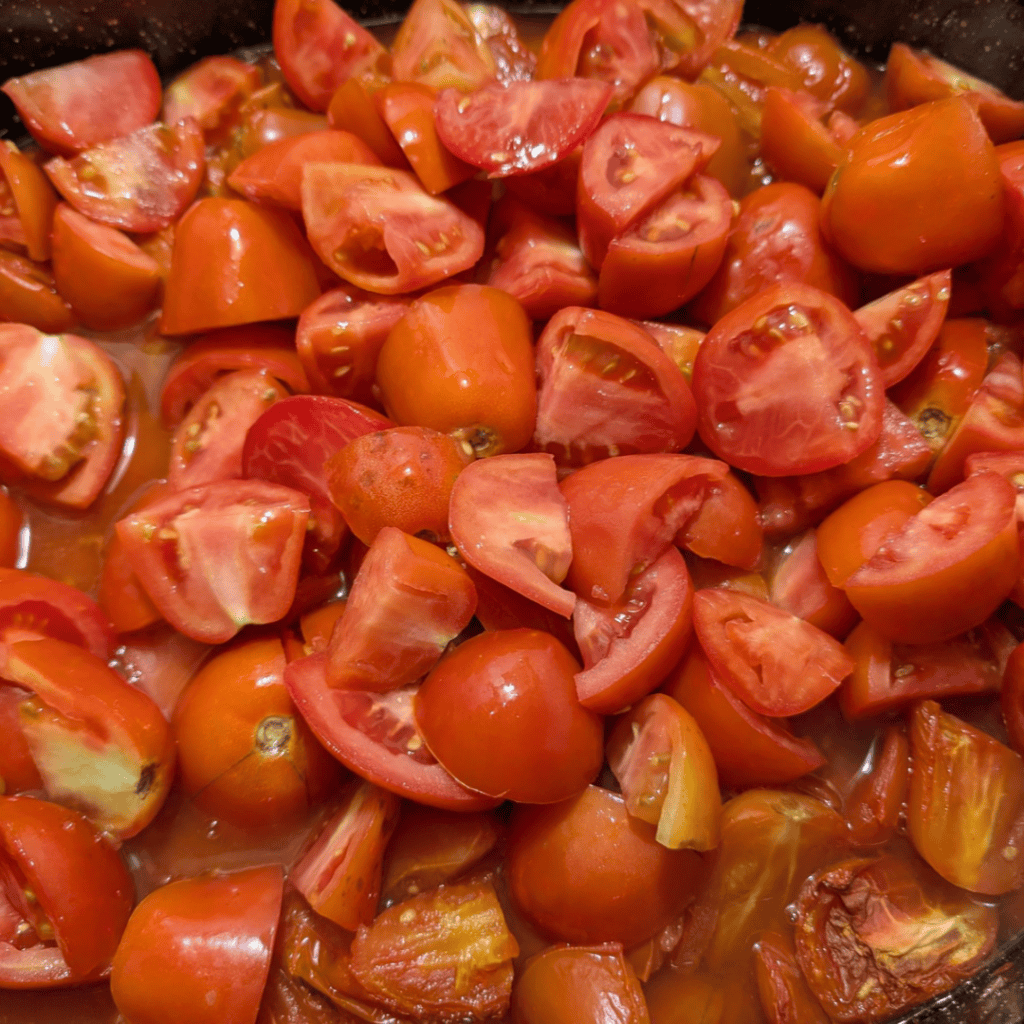
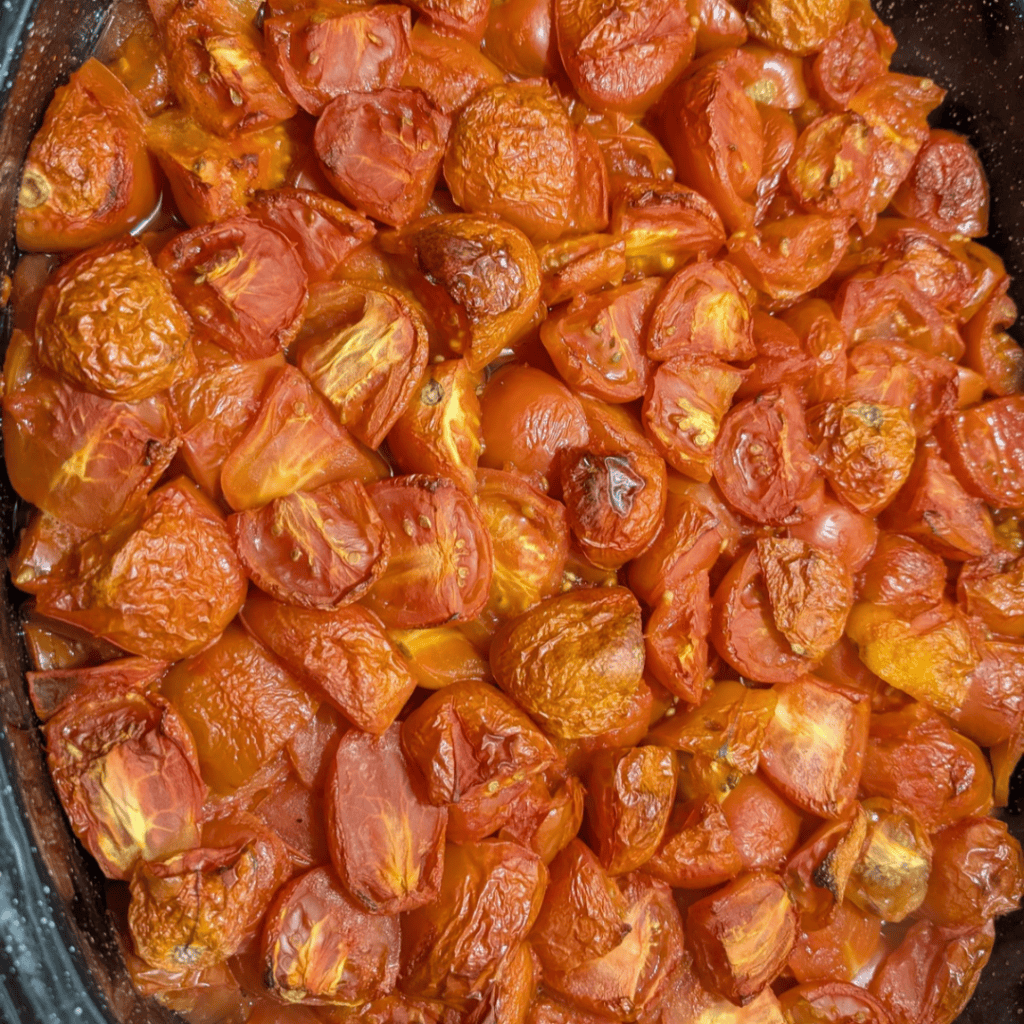
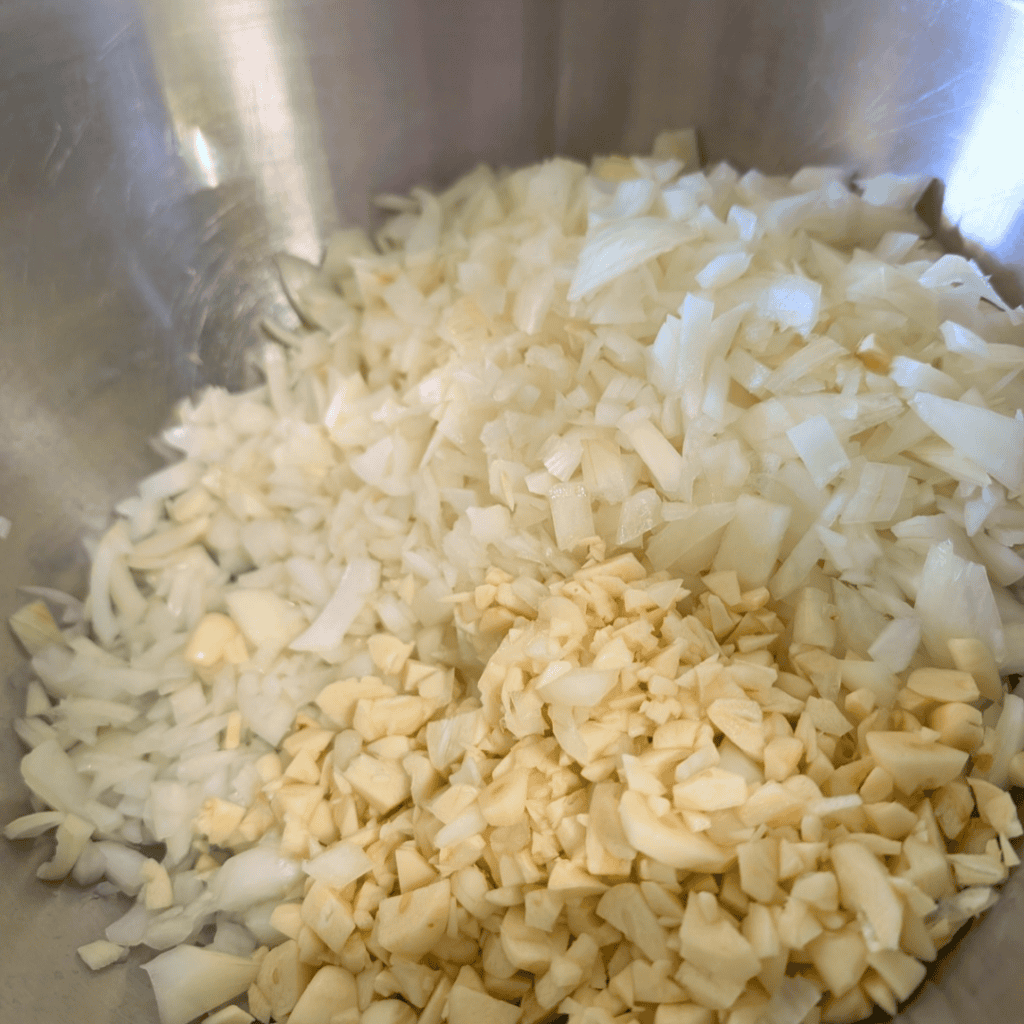
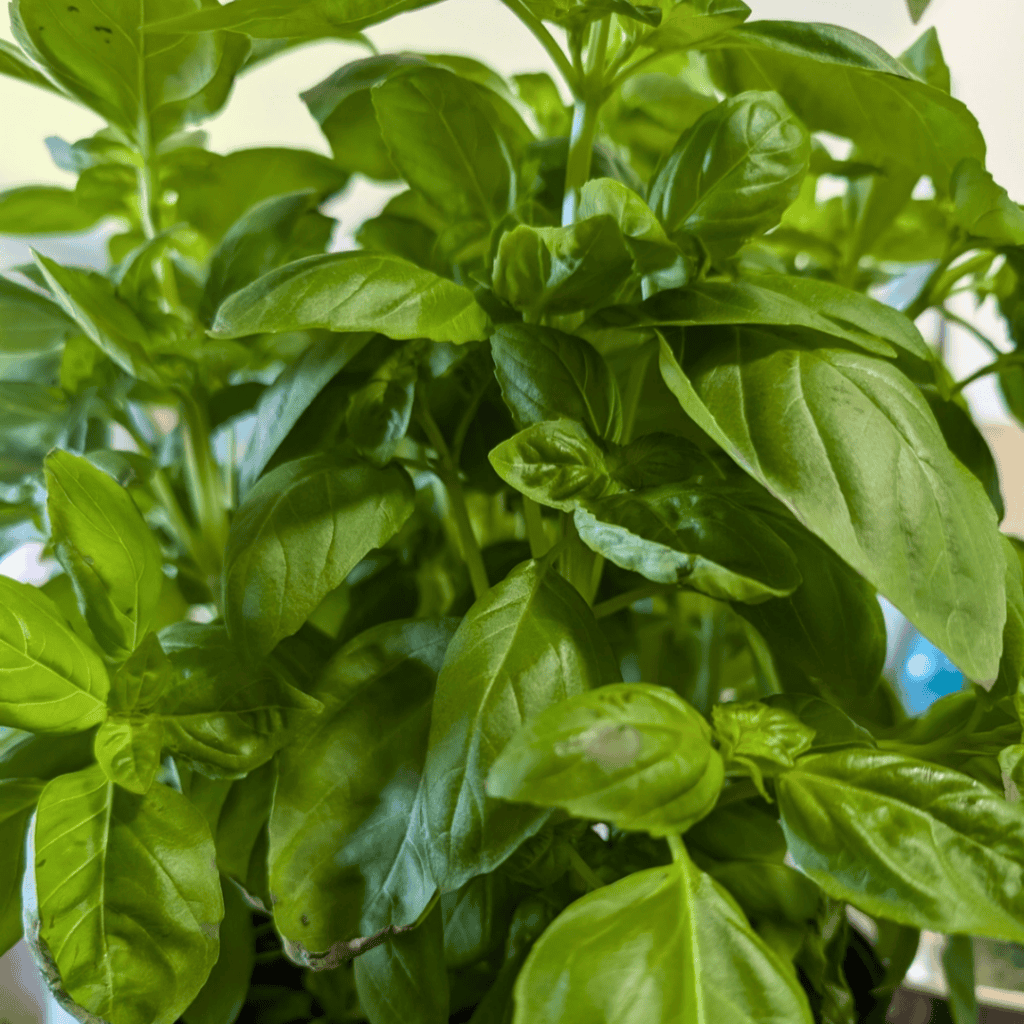
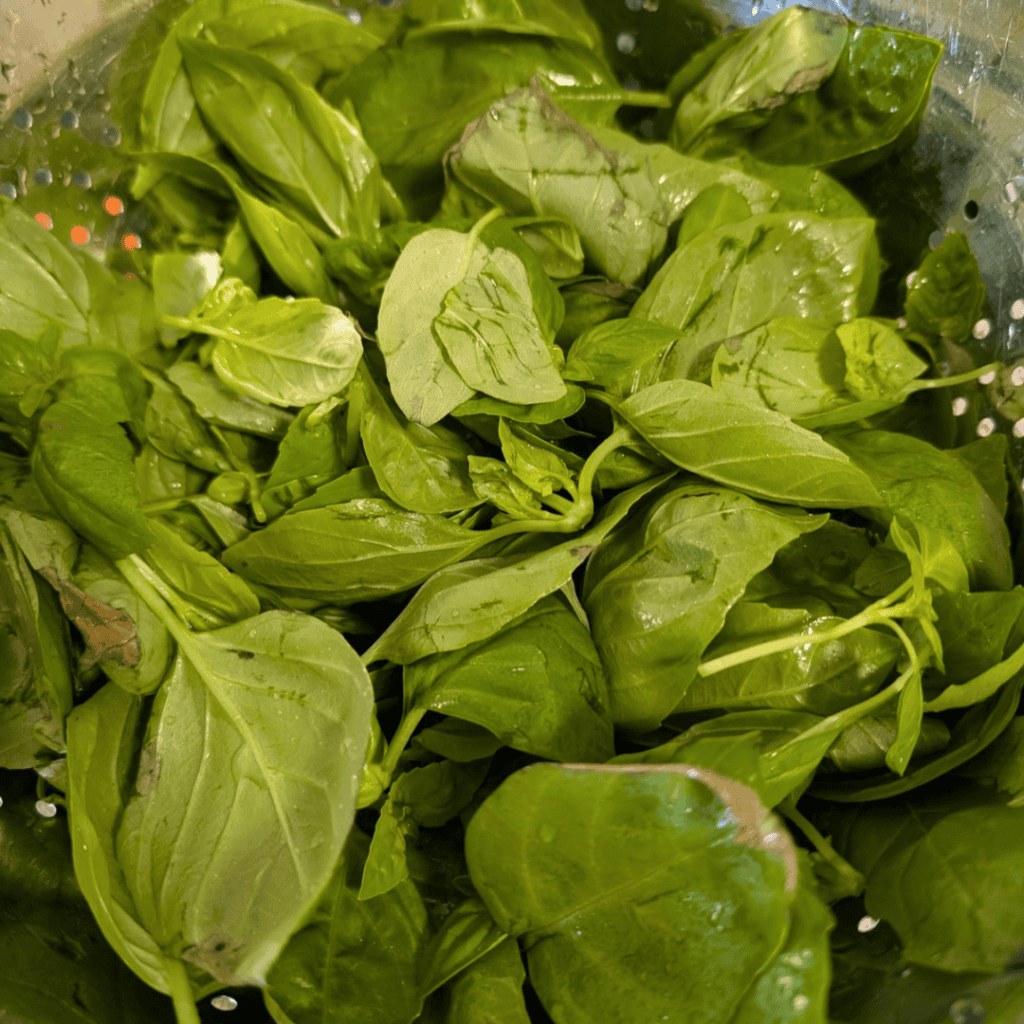
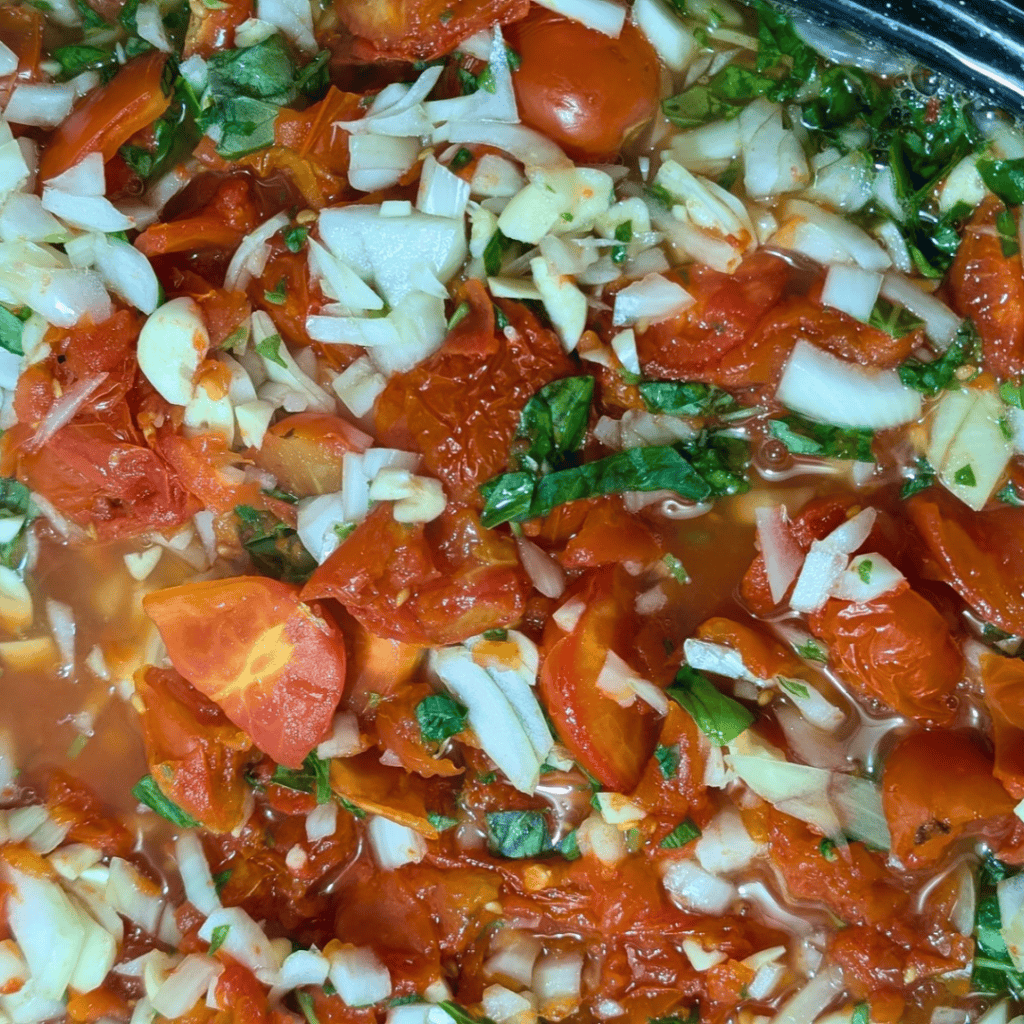
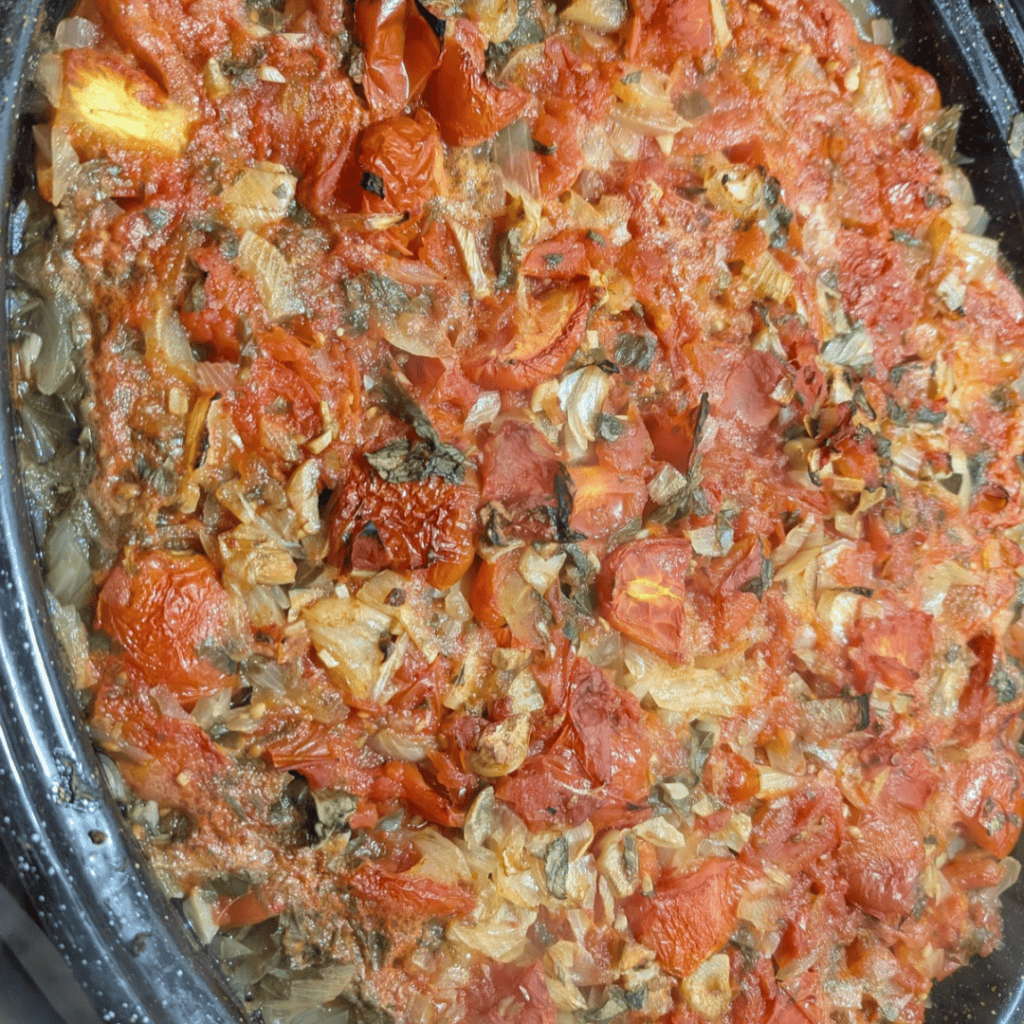
At the end of the oven time, the tomatoes may still contain more liquid than you want in a thick pasta sauce. I usually move my stovetop-safe carbon-steel roaster directly from the oven to my ceramic cooktop and set it over medium-high heat to finish reducing the sauce. Only do this if your roasting pan is approved for direct stovetop heat. Otherwise, transfer the tomato mixture to a large heavy-bottomed pot.
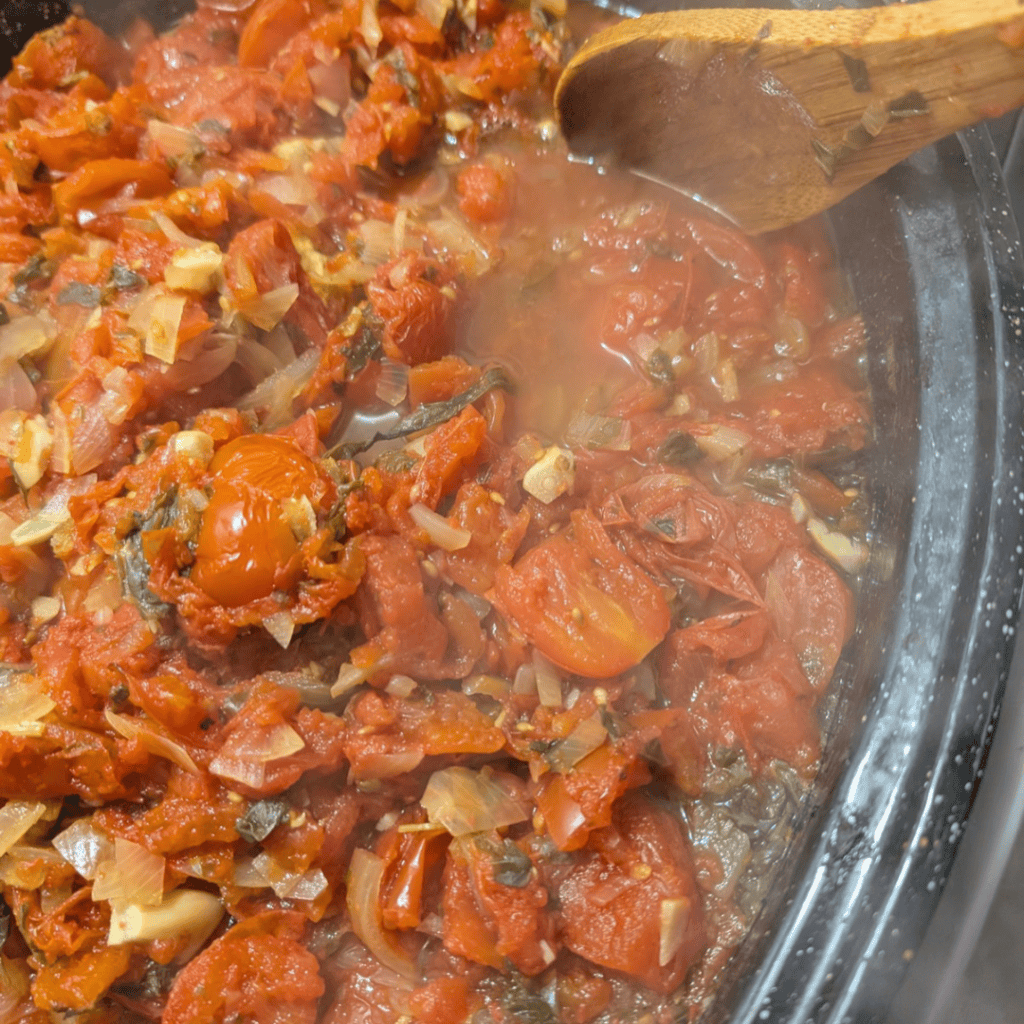
Bring the tomato mixture to a strong simmer or boil and stir constantly. At this stage, the sauce is becoming much more concentrated, so it can catch and burn on the bottom if it is left sitting. Stir from the bottom of the pan and continually bring the wetter mixture toward the surface. This helps release more steam while keeping the thickening tomatoes moving.
There is no exact cooktop time for the final reduction because the amount of liquid will depend on the tomatoes you use. Roma tomatoes generally contain less water than many garden varieties, while a mixed harvest of slicing tomatoes may need considerably more time. Judge this stage by thickness rather than the clock. The loose tomato water should be mostly gone and the mixture should look concentrated rather than like cooked tomatoes sitting in liquid.
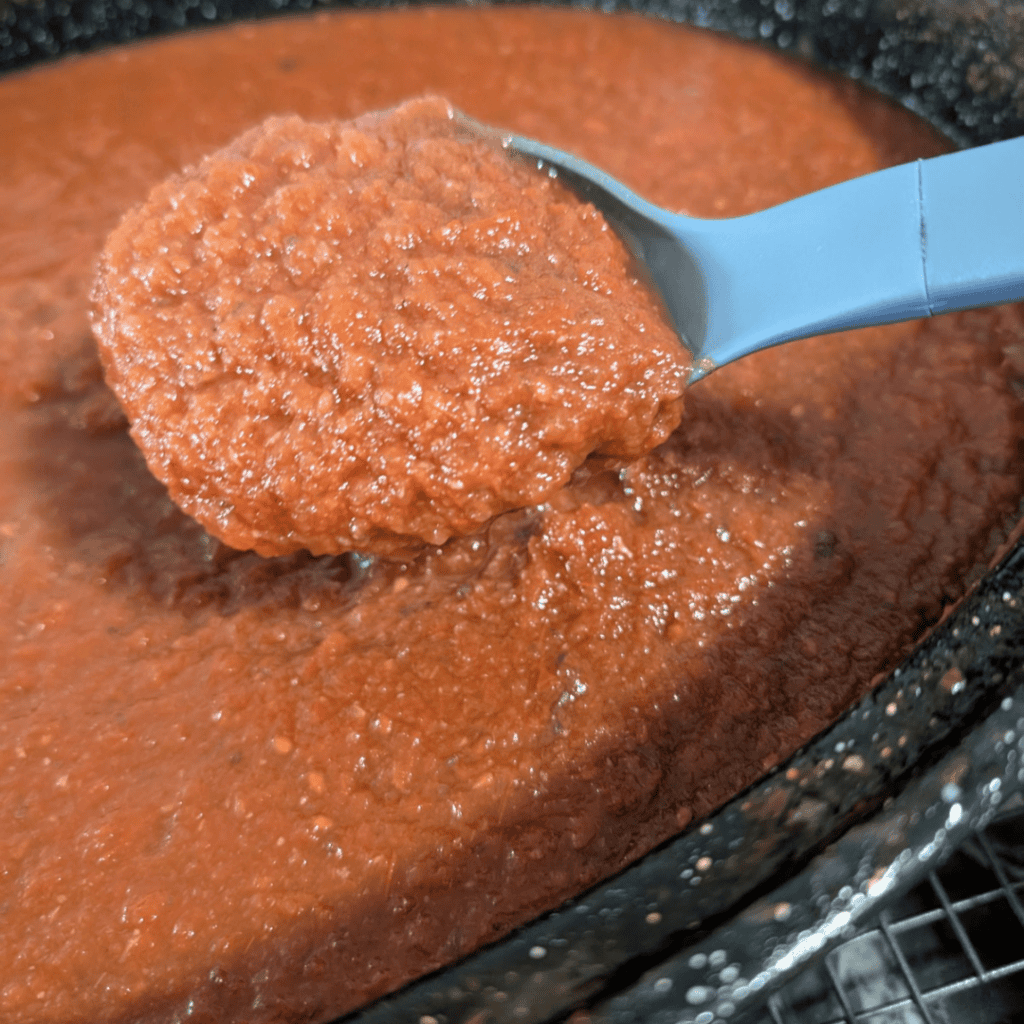
Once the sauce has reached the thickness you want, remove it from the heat and use an immersion blender directly in the roasting pan to blend the tomatoes, onions, basil and garlic until smooth. I reduce the sauce before blending because it is easier to boil off the extra moisture while the tomatoes are still chunky than it is to reduce a smooth tomato purée that can splatter as it boils.
The finished roasted tomato pasta sauce should be thick enough to sit on a ladle and cling to pasta rather than immediately running off into a watery puddle. Let the sauce cool in the roasting pan, then refrigerate it overnight before portioning it into freezer bags. Chilling it first means you are not trying to bag and freeze hot sauce, and it also makes the thick sauce easier to portion the following day.
Ingredients:
This is a short ingredient list for such a large batch, which leaves plenty of room to season individual freezer portions differently later.
Roma Tomatoes: I used a 25-pound box because Roma tomatoes were particularly inexpensive. Their fleshier texture is useful for sauce, but they are not required for this method.
Yellow Onions: Ten yellow onions, about one 2-pound bag, cook down into the tomatoes and add background flavor without turning the sauce into an onion-heavy sauce.
Fresh Garlic: Five full heads of minced garlic go into this large batch. With 25 pounds of tomatoes, that amount is spread through a considerable volume of sauce.
Fresh Basil: About 2 cups of minced fresh basil gives the sauce its tomato-basil flavor. A large basil plant supplied enough for this batch.
Salt: One tablespoon seasons the entire 25-pound batch. I intentionally keep the base lightly seasoned because individual bags can be adjusted when they are used.
Substitutions and Add-Ins for Roasted Tomato Sauce
This sauce is intentionally simple, and most of the flexibility comes from the tomatoes you use and what you add after thawing.
Tomatoes: Roma tomatoes are what I used, but the method works with other ripe tomato varieties or a mixture of garden tomatoes. Juicier tomatoes will simply need more reduction time.
Yellow Onions: Yellow onions are used in this batch. A similar quantity of another standard cooking onion can be used, although the finished flavor may vary somewhat.
Fresh Garlic: Fresh minced garlic is part of the base flavor. The amount can be adjusted to suit your preference, but reducing it will naturally give the sauce a less pronounced garlic flavor.
Fresh Basil: This is what gives this version its tomato-basil flavor. Dried basil will not give exactly the same result because the flavor is more concentrated and different from a large quantity of fresh leaves.
Salt: The one tablespoon used here keeps the entire batch lightly seasoned. It is easier to add more salt to an individual thawed portion later than to correct an overly salty 25-pound batch.
Add-Ins After Thawing: Once the base sauce is thawed and reheated, you can customize it for the meal by adding cooked mushrooms, red pepper flakes for heat, extra herbs or seasonings, or grated Parmesan or Romano cheese. This keeps the freezer batch simple while giving you room to change the flavor each time you use it. Use this sauce instead of jarred when enjoying rigatoni with sausage.
Expert Tips, Serving and Storing Suggestions
Tip #1: Keep the Roaster Uncovered: The goal is not only to cook the tomatoes but also to remove their water. Covering the pan would trap much of the steam you are trying to get rid of.
Tip #2: Stir From the Bottom: The upper tomatoes can look dry while a surprising amount of juice is hiding underneath. An hourly stir redistributes the wetter mixture and gives that liquid a better chance to evaporate.
Tip #3: Watch Thickness, Not the Clock: The final stovetop reduction depends on the tomatoes. Roma tomatoes, garden slicing tomatoes and mixed varieties can all release different amounts of moisture.
Tip #4: Never Walk Away During the Final Reduction: Once the pan is over direct medium-high heat and the sauce is concentrated, stir constantly. Thick tomato sauce can catch on the bottom much faster than the wetter mixture you had earlier in the day.
The large freezer bags are sized for pasta nights, and the sauce is already flavorful enough to use on its own. I love to enjoy this sauce with a fresh homemade pull apart garlic bread. My pizza dough version is just the thing.
Because I treat it as a base sauce, I can also change it when it is reheated. Mushrooms, red pepper flakes, additional herbs, Parmesan or Romano can turn the same frozen base into something a little different each time.
The smaller freezer bags work well when you only need a little tomato sauce, want to make a dip, or are preparing a meal for one person.
How to Freeze Homemade Roasted Tomato Sauce
Freezing homemade tomato sauce is an easy way to preserve a large summer harvest without having to can the sauce. I let this batch cool and refrigerate it overnight before filling the freezer bags. If you are looking for another way to use fresh summer tomatoes my roasted tomato salsa with cilantro is a great snack.
I do not put hot sauce directly into freezer bags.
Once the finished sauce has cooled enough to refrigerate safely, I chill it overnight before portioning it. Because this is an unusually large batch, make sure it chills promptly; if your refrigerator cannot cool the deep roasting pan efficiently, divide the sauce between shallower containers for chilling.
Once completely cold, portion the freezer tomato sauce into bags according to the amounts you normally use. I made nine larger pasta-night portions and four smaller bags, which lets me stock the freezer without having to thaw a full family-size portion every time.
Flattening the bags also makes them easier to stack once frozen.
When you want a bag, thaw it in the refrigerator. I put the freezer bag inside a bowl while it thaws. The bowl supports the bag once the sauce softens and catches the condensation that forms on the outside instead of leaving moisture on the refrigerator shelf.
This recipe is intended for freezer storage, making it a practical way to preserve fresh garden tomatoes without using a shelf-stable canning method. In fact you could use a bag of this to make my tomato chicken soup.
FAQ
Homemade Roasted Tomato Sauce From Fresh Tomatoes

Equipment
- Colander
- Roasting Pan
- Wooden Spoon Or other stirring implement
- Immersion Blender
- knife
- Tablespoon
- Cutting board
Ingredients
- 56 Cups Roma Tomatoes Washed and quartered
- 1 Tbsp Salt
- 2 Cups Fresh Basil Leaves Washed and cut fine, stems removed
- 5 Cups Yellow Onion Diced fine
- 1 Cup Garlic Minced
Instructions
- Wash and sort the tomatoes. Place the tomatoes in a colander and rinse well under cold running water. As you wash them, sort out any tomatoes with mold, soft rot, leaking areas, wet damaged tissue, or an off smell. Dry healed scars and cosmetic blemishes can still be used.
- Prepare the oven and tomatoes. Lower the oven rack to just below center so the roasting pan will fit. Preheat the oven to 350°F. Quarter enough tomatoes to completely fill the roasting pan.
- Begin roasting. Roast the tomatoes uncovered so the moisture they release can evaporate. As the tomatoes soften, collapse, and create more room in the pan, add another batch of quartered tomatoes.
- Continue adding tomatoes. Repeat the roasting and adding process until the entire 25-pound box has been worked into the roasting pan. Remove the pan approximately once an hour and stir well, bringing the wetter tomatoes and juices from the bottom toward the surface.
- Prepare the basil. Remove the basil leaves from the plant, discard the stems, rinse the leaves under cool running water, drain, and mince. You will need about 2 cups minced fresh basil.
- Add the aromatics. Once the tomatoes have reduced enough to make room, stir in the chopped yellow onions, minced garlic, basil, and salt. Continue roasting uncovered. The full oven-roasting process takes about 6 hours from start to finish.
- Reduce on the stovetop. If the tomatoes still contain more liquid than you want, place the stovetop-safe roasting pan over medium-high heat. If your roaster is not approved for direct stovetop use, transfer the mixture to a large heavy-bottomed pot.
- Cook until thick. Bring the tomato mixture to a strong simmer or boil and stir constantly, scraping and lifting the wetter mixture from the bottom toward the surface. Continue until most of the loose tomato liquid has evaporated and the sauce has reached the thickness you prefer. The time will vary according to the moisture content of the tomatoes.
- Blend. Remove the thickened tomato mixture from the heat. Use an immersion blender directly in the roasting pan to blend until smooth. The finished sauce should be thick enough to cling to pasta rather than run off like a thin tomato liquid.
- Cool and refrigerate. Allow the sauce to cool, then refrigerate it in the roasting pan overnight before portioning. If needed for faster, safer cooling, divide the sauce among shallower containers before refrigerating.
- Portion and freeze. Divide the cold sauce into freezer bags. This batch produced 9 large bags of approximately 6 ladles each and 4 smaller bags. Freeze for later meals.
Notes
- Stir the tomatoes about once an hour during roasting. This brings trapped tomato liquid up from the bottom so it can evaporate and also helps keep the tomatoes from catching or burning against the roasting pan.
- This recipe is intended for freezing, not shelf-stable canning.
Nutrition