
How to Choose Tomatoes for Every Recipe
Walking into the produce department used to be simple. You might have had a choice between a few tomatoes, but today you’ll find everything from Roma and beefsteak to cherry, grape, cocktail, Campari, heirloom, hothouse, organic, and tomatoes sold on the vine. If you’ve ever stood in front of the display wondering which one you’re actually supposed to buy, you’re not alone.
Growing up in Northern Ontario, tomatoes were a huge part of our summers. As the first fall frost approached, our hallway would be lined with cardboard boxes filled with tomatoes picked before the cold could damage the plants. Some became sauce, others ended up in salads or sandwiches, and plenty disappeared with nothing more than a sprinkle of salt before they ever made it to the kitchen. Those early lessons taught me that choosing the right tomato wasn’t about buying the most expensive one—it was about understanding what each tomato brought to the recipe.
Today, choosing tomatoes can feel more confusing than ever. Grocery stores are filled with marketing labels that sound like tomato varieties, while actual varieties often have unfamiliar names. Add in higher grocery prices, and it’s understandable why many home cooks wonder whether they’re making the right choice or spending more than they need to.
The good news is that you don’t need to memorize dozens of tomato varieties to become a confident shopper. Once you understand what different tomatoes contribute—whether it’s sweetness, water content, texture, or size—you can make smart substitutions based on your recipe, your budget, and what’s available at the store.
In this guide, I’ll explain what common tomato labels really mean, how to pick ripe tomatoes, when it’s worth paying more, and which tomatoes work best for sauces, salads, sandwiches, soups, salsa, roasting, and more. By the end, you’ll know how to confidently choose tomatoes for almost any recipe without feeling overwhelmed in the produce aisle.
Quick Answer
The best tomato for your recipe depends on how you plan to use it. Roma tomatoes are ideal for sauces because they contain less water, while beefsteak tomatoes are great for sandwiches thanks to their large slices. Cherry and cocktail tomatoes are naturally sweet, making them excellent for salads and snacking, and most vine-ripened tomatoes are versatile enough for everyday cooking.
Don’t worry if your grocery store doesn’t have the exact tomato a recipe calls for. In many cases, you can substitute another variety successfully once you understand what the recipe is trying to achieve. A juicier tomato may need a little extra cooking time, while a sweeter tomato can slightly change the flavour, but the recipe will usually still turn out well.
The key is to choose tomatoes based on your recipe, your budget, and what’s fresh at the store—not simply because the recipe lists a specific variety. Throughout this guide, you’ll learn what common tomato labels mean, how to recognize a ripe tomato, when premium tomatoes are worth the extra cost, and how to confidently substitute one variety for another.
Best For:
Grocery shopping & home cooks
Reading Time:
12 Minutes
Covers:
12 Different tomato labels
Learn:
Choosing, substituting, storing, and buying tomatoes
Skill Level:
Beginner to intermediate
Includes:
Recipe recommendation chart, Best tomatoes to use chart + more!
Why Are There So Many Tomatoes at the Grocery Store?
If it feels like there are far more tomatoes to choose from than there used to be, you’re not imagining it. Years ago, most grocery stores carried just a few familiar options. Today, you’ll likely see everything from Roma, beefsteak, cherry, grape, cocktail, Campari, heirloom, hothouse, organic, and tomatoes sold on the vine—all sitting side by side in the produce department.
Part of that increase comes from changing consumer tastes. More people are cooking at home, trying recipes from around the world, and looking for tomatoes with different flavours, textures, colours, and sizes. Grocery stores have also expanded their selection to offer tomatoes that work well for everything from fresh salads and sandwiches to sauces, soups, roasting, and entertaining.
The labels themselves can also be confusing because they don’t all describe the same thing. Some names identify an actual tomato variety, while others describe how the tomato was grown, harvested, packaged, or marketed. For example, “Roma” and “Beefsteak” refer to tomato types, while “Hothouse” describes where a tomato was grown, “On the Vine” refers to how it’s sold, and “Organic” refers to the production standards used to grow it.
The good news is that you don’t need to memorize every tomato on the shelf. Once you understand what the labels actually mean and how different tomatoes perform in recipes, choosing the right one becomes much simpler. Instead of asking, “Which tomato am I supposed to buy?” you’ll start asking, “What am I making?”—and that question usually leads you to the right choice.
Understanding Common Tomato Labels
One reason shopping for tomatoes feels confusing is that grocery store labels don’t all describe the same thing. Some tell you what type of tomato you’re buying, while others describe how it was grown, how it’s packaged, or the production methods used on the farm.
Once you understand these categories, the produce department becomes much easier to navigate.
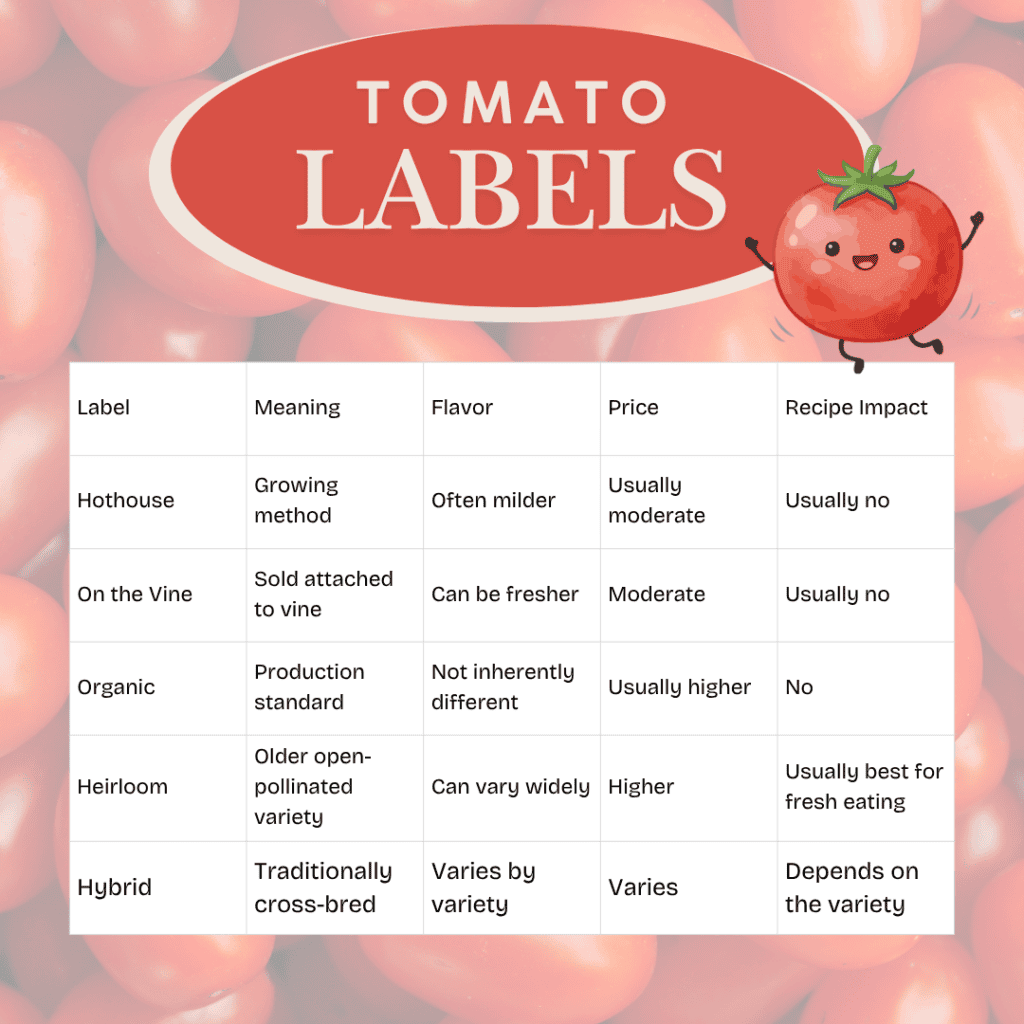
Generally, tomato labels fall into five groups:
- Tomato types and varieties such as Roma, Beefsteak, Cherry, Grape, Cocktail, and Campari.
- Growing methods like Hothouse, which tells you the tomatoes were grown in a greenhouse rather than outdoors.
- Packaging or selling methods such as On the Vine, meaning the tomatoes are sold attached to part of the vine.
- Production standards such as Organic, which refers to how the tomatoes were grown rather than how they’ll taste.
- Breeding categories such as Hybrid and Heirloom, which describe how the variety was developed.
The important thing to remember is that these labels answer different questions. A tomato can be a hybrid variety, grown organically in a greenhouse, and sold on the vine all at the same time. Those labels aren’t competing with one another—they’re simply describing different characteristics of the same tomato.
Now let’s look at what each of the most common labels actually means and, more importantly, when each one makes sense for your cooking.
Roma Tomatoes
Roma tomatoes are one of the most popular cooking tomatoes because they contain less water and fewer seeds than many slicing tomatoes. Their firm flesh cooks down quickly, making them an excellent choice for pasta sauces, homemade salsa, tomato paste, soups, and roasting.
If a recipe specifically recommends Roma tomatoes, it’s usually because the author wants a thicker finished dish without spending extra time reducing excess liquid. That doesn’t mean another tomato won’t work—it simply means you may need to simmer a little longer or drain off some of the extra juice.
I reach for Roma tomatoes whenever I’m making tomato sauce, but I’ve also experimented with other varieties. When I made my roasted tomato salsa using vine-ripened tomatoes instead of Roma, the salsa still turned out beautifully. The vine-ripened tomatoes roasted more quickly because they were larger and closer to the broiler, but they also released more juice. Understanding those differences made it easy to adjust the recipe rather than abandoning it because I didn’t have the exact tomato it originally called for.
Beefsteak Tomatoes
Beefsteak tomatoes are large slicing tomatoes prized for their size, juicy flesh, and broad, even slices. They’re one of the best choices for sandwiches, burgers, and fresh tomato salads where you want each slice to cover more of the bread or serving plate.
Because beefsteak tomatoes contain more juice and seeds than Roma tomatoes, they’re usually not the first choice for thick sauces. They certainly can be cooked, but you’ll often need to simmer them longer to reduce the extra liquid.
If I’m making sandwiches, I almost always reach for a large tomato. One generous slice covers far more of the bread than several small tomatoes, making every bite more satisfying without needing half the tomato on one sandwich.
Cherry Tomatoes
Cherry tomatoes are small, naturally sweet tomatoes that are perfect for fresh eating. Their bite-sized shape makes them ideal for salads, lunch boxes, vegetable trays, pasta salads, roasting, and quick appetizers.
Although they’re often associated with salads, cherry tomatoes are surprisingly versatile. Roasting concentrates their natural sugars, creating a rich, slightly caramelized flavour that’s wonderful in pasta dishes, sheet pan meals, or blended into sauces like my eggs in purgatory breakfast dish.
One of my favourite varieties to grow has always been Sweet Million. The name is fitting because a healthy plant produces an incredible number of tomatoes throughout the season. One summer I had so many that I froze them whole in freezer bags. Once thawed, they became perfect additions to soups, stews, and sauces where their softened texture didn’t matter but their sweet flavour certainly did.
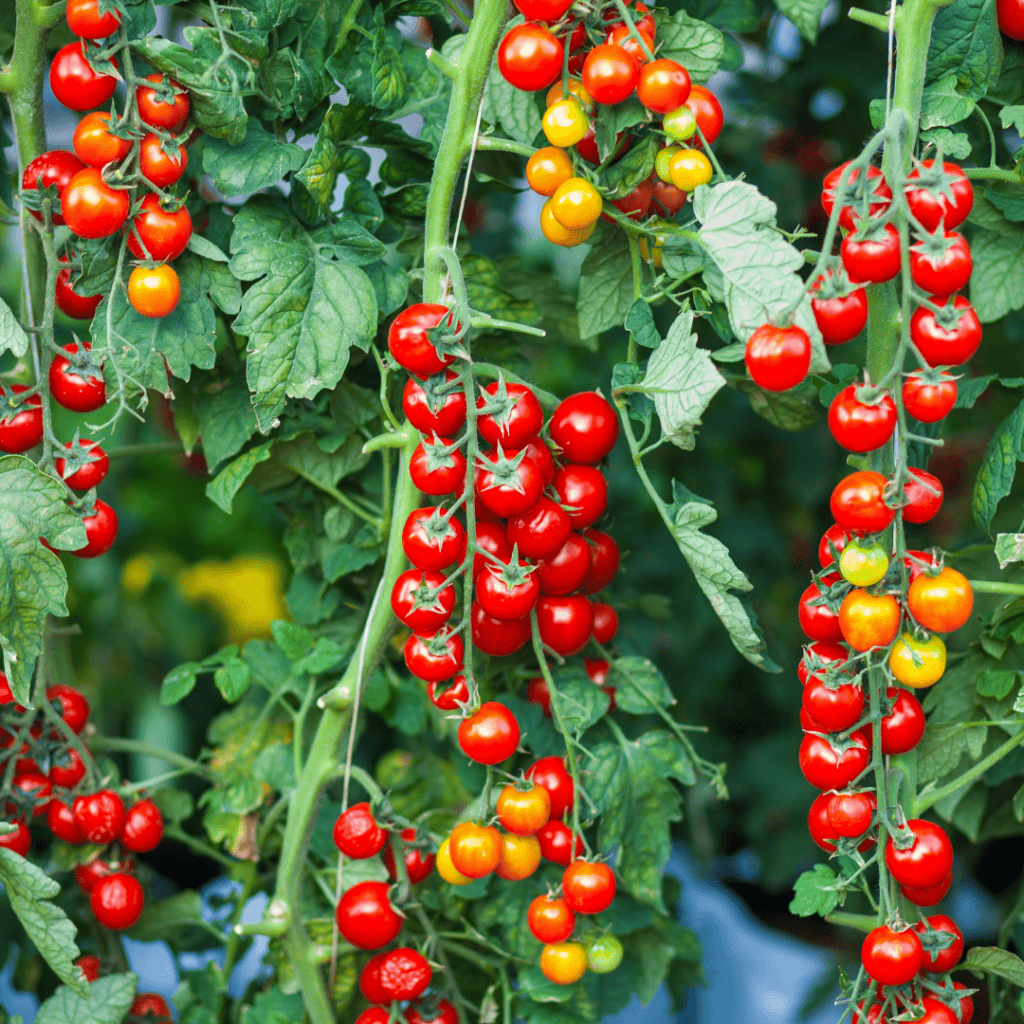
If a recipe calls for cherry tomatoes and you only have cocktail tomatoes, don’t hesitate to substitute them. Simply cut them into smaller pieces and continue with the recipe.
Grape Tomatoes
Grape tomatoes look similar to cherry tomatoes but are generally more oval in shape with firmer flesh and slightly less juice. Their thicker texture helps them hold up well in lunch boxes, pasta salads, roasting, and sheet pan dinners.
Not all grape tomatoes are created equal, however. I’ve purchased some with surprisingly tough skins that remained chewy even after cooking. When you find a variety your family enjoys, make a mental note of the brand or variety name. Grocery stores often carry several different grape tomatoes throughout the year, and they don’t all perform the same.
If you’re deciding between grape and cherry tomatoes for fresh salads, it often comes down to personal preference. Cherry tomatoes are usually a little sweeter and juicier, while grape tomatoes tend to be firmer and slightly meatier.
Cocktail Tomatoes
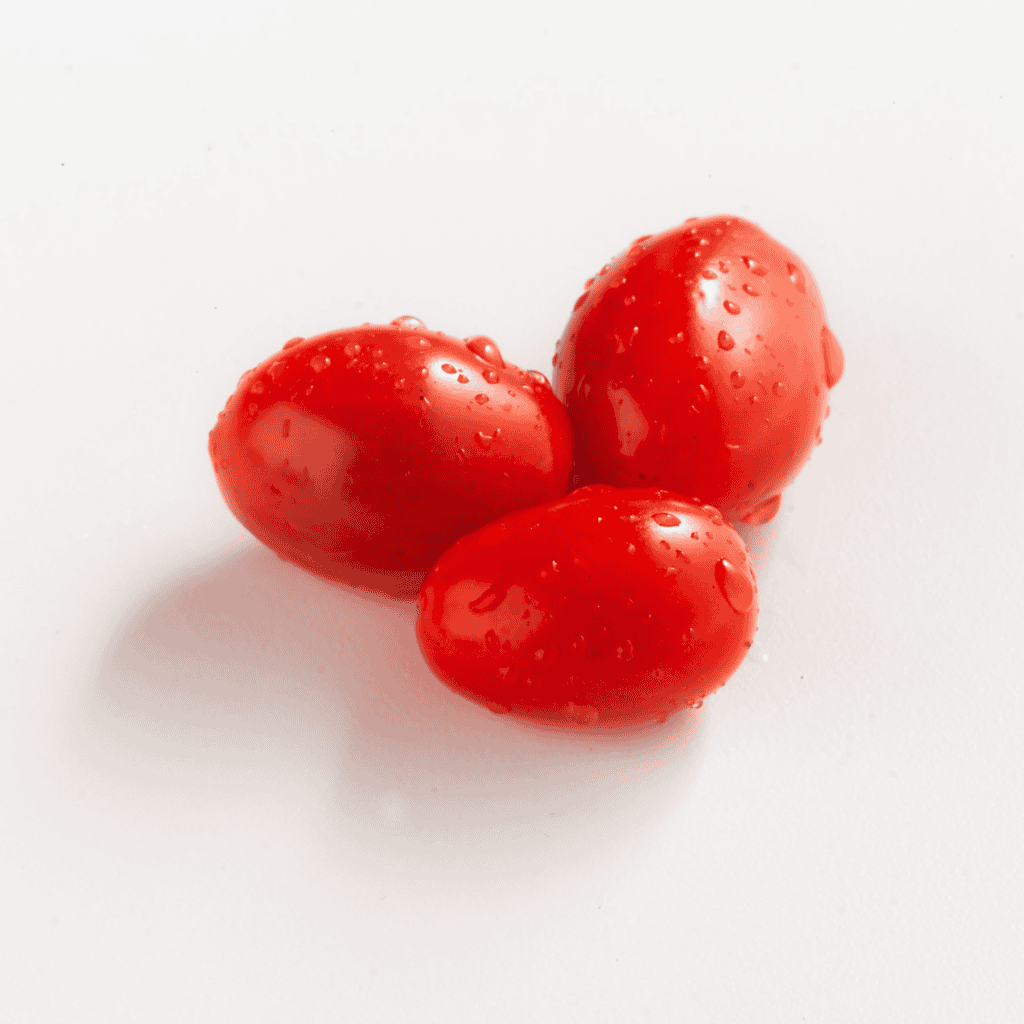
Cocktail tomatoes sit comfortably between cherry tomatoes and full-sized slicing tomatoes. They’re larger than cherry tomatoes but smaller than beefsteak tomatoes, offering an excellent balance of sweetness, juiciness, and firm flesh.
They’re one of my favourite all-purpose tomatoes because they work well in salads, roast beautifully, and are just the right size for stuffing with cheese, herbs, or other appetizers. They also quarter neatly without falling apart, making them easy to serve when entertaining. I love these in my egg bites.
If I could only recommend one fresh-eating tomato for most home cooks, cocktail tomatoes would be near the top of the list because they’re so versatile.
Campari Tomatoes
Campari is a specific variety of cocktail tomato rather than a separate tomato category. They’re known for their balanced sweetness, low acidity, smooth texture, and consistent size, making them a favourite for fresh salads, sandwiches, and snacking.
Many people see the Campari name and assume it’s a completely different type of tomato, but it’s simply one well-known variety within the cocktail tomato family. If you enjoy their flavour, they’re an excellent choice whenever tomatoes are one of the main ingredients rather than simply supporting the recipe.
Heirloom Tomatoes
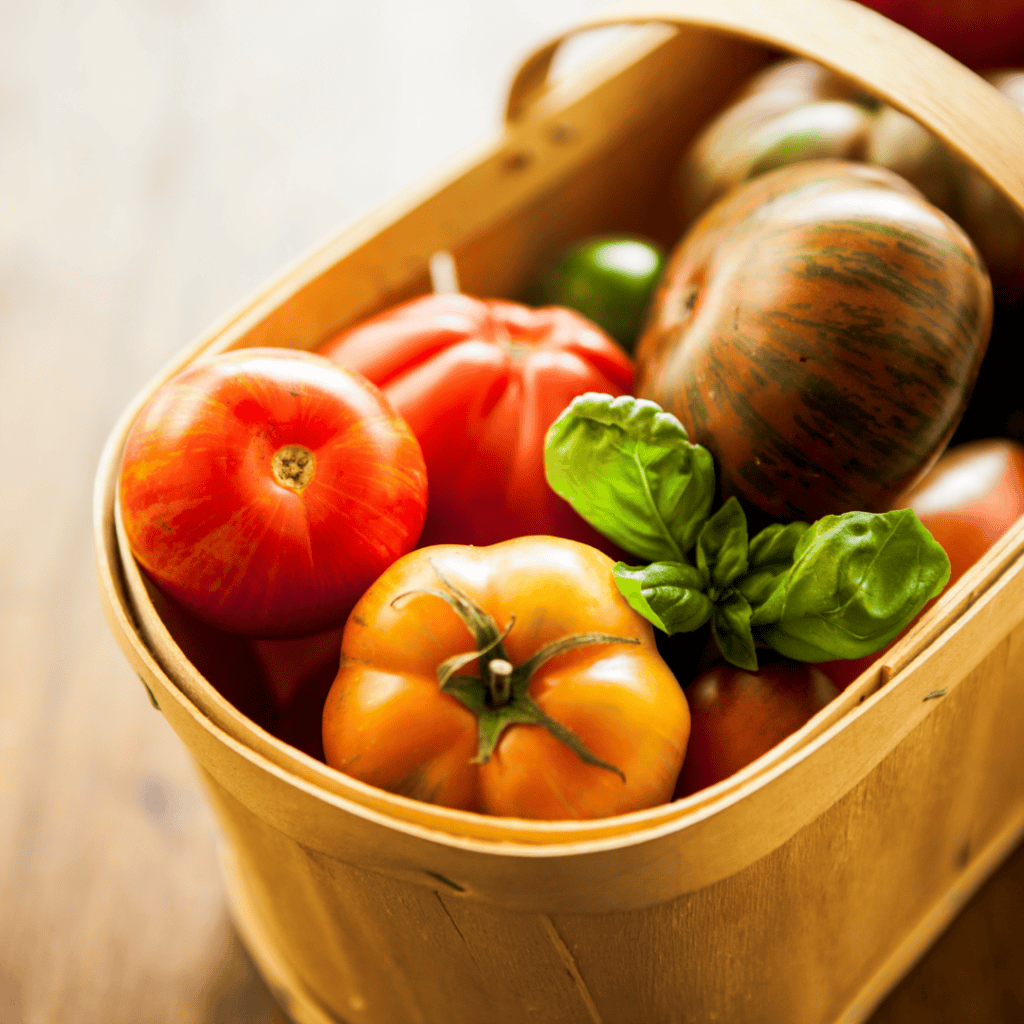
Heirloom tomatoes are older, open-pollinated varieties that have been passed down over generations. They’re often prized for their unique colours, shapes, and complex flavours rather than their uniform appearance.
Because heirloom tomatoes are usually more expensive and can be softer or more delicate, I like to save them for recipes where their flavour really shines, such as fresh salads, tomato platters, or Caprese salad. Once a tomato is simmered for an hour in a sauce, many of those subtle flavour differences become far less noticeable.
Beautiful doesn’t always mean better for every recipe. Sometimes the tomato that’s on sale is the smarter choice, especially if you’re cooking it.
Hybrid Tomatoes
Hybrid tomatoes are created by crossing two tomato varieties through traditional plant breeding to combine desirable traits such as flavour, disease resistance, yield, or shelf life.
Many people confuse hybrids with genetically modified organisms (GMOs), but they’re not the same thing. Hybrid tomatoes are developed through conventional breeding methods that gardeners and farmers have used for generations.
Whether a hybrid tomato is the right choice depends on the variety itself rather than the word “hybrid” on the label.
Organic Tomatoes
Organic tomatoes are grown according to certified organic production standards. One common misconception is that organic means no pesticides or crop protection products are ever used. In reality, organic growers may use approved products that meet organic certification requirements.
For most home cooks, choosing between organic and conventionally grown tomatoes is a personal decision based on budget, availability, and preference. Organic tomatoes don’t automatically perform differently in recipes simply because they’re organic. Freshness, ripeness, and choosing the right tomato for your recipe usually have a greater impact on the finished dish.
Hothouse Tomatoes
A hothouse tomato isn’t a variety—it’s a tomato grown in a greenhouse. That greenhouse may produce several different tomato varieties throughout the year.
Hothouse tomatoes are valuable because they provide fresh tomatoes when outdoor growing seasons are limited. While some people find they have a milder flavour than locally grown summer tomatoes, they can still work very well in everyday cooking.
If hothouse tomatoes are reasonably priced and your recipe involves roasting, simmering, or making soup, they can be an excellent budget-friendly choice.
On-the-Vine Tomatoes
On-the-vine tomatoes are sold while still attached to part of the vine. The name describes how they’re marketed rather than identifying a specific tomato variety.
Many shoppers associate vine-ripened tomatoes with freshness, and they often do have good flavour. I’ve used them successfully in my roasted tomato salsa when Roma tomatoes weren’t available. They roasted more quickly because of their larger size but released more juice than Roma tomatoes, reminding me once again that understanding why a recipe recommends a particular tomato is far more useful than treating every ingredient list as a strict rule.
How to Pick a Good Tomato
Even if you choose the right type of tomato for your recipe, the quality of the tomato itself still matters. A perfectly ripe tomato will almost always produce better flavour than the “correct” variety that’s overripe, bruised, or picked too early.
Fortunately, you don’t need years of gardening experience to recognize a good tomato. A few simple checks will tell you most of what you need to know.
Start With Your Eyes
Look over the tomato before you pick it up. The skin should be smooth, fairly even in colour for that variety, and free from large bruises, mold, or deep cracks. Small surface imperfections are usually nothing to worry about, but avoid tomatoes with leaking juice, sunken spots, or fuzzy mold.
Don’t be surprised if heirloom tomatoes look a little different. Many heirloom varieties naturally have unusual colours, ridges, or shapes, which are part of their character rather than signs they’ve gone bad.
Give It a Gentle Squeeze
A ripe tomato should feel firm but have a slight amount of give when you gently press it with your fingers.
If it’s rock hard, it probably needs more time to ripen.
If your fingers easily sink into it, it’s likely overripe and may not have much shelf life left.
After years of picking tomatoes in the garden, you’ll quickly recognize the difference between a ripe tomato and one that’s beginning to spoil. Once you’ve accidentally pushed your finger into a rotten tomato while harvesting, it’s a feeling you won’t forget!
Smell the Stem End
One of the easiest ways to judge freshness is by smell.
A ripe tomato often has a pleasant, slightly sweet tomato aroma near the stem. If it has very little smell, it may have been picked before fully ripening. If it smells sour or fermented, it’s time to leave it at the store.
Consider What You’re Making
This is where many shoppers make the biggest mistake.
Instead of asking,
“Which tomato is best?”
ask,
“What am I making tonight?”
If you’re simmering a sauce for an hour, a slightly imperfect tomato that’s on sale may be an excellent choice.
If you’re serving sliced tomatoes in a sandwich or salad where they’re the star of the meal, it’s worth taking a little extra time to choose tomatoes with great flavour and texture.
Don’t Shop by Price Alone
Expensive tomatoes aren’t automatically better.
Sometimes a premium heirloom tomato is worth every penny because its fresh flavour is the highlight of the dish.
Other times, especially for soups, sauces, chili, or roasting, a less expensive tomato can produce an equally satisfying meal.
The best tomato isn’t always the most expensive one—it’s the one that’s fresh, ripe, and well suited to the recipe you’re making.
Quick Shopping Checklist
Before adding tomatoes to your cart, ask yourself:
- Is the tomato firm with just a slight amount of give?
- Is the skin free from mold, deep bruises, or leaking spots?
- Does it smell fresh near the stem?
- Am I choosing it for the recipe I’m making?
- Is there a better value that will work just as well?
If you can answer “yes” to those questions, you’re already making smarter tomato choices than most shoppers.
How to Choose Tomatoes for Every Recipe
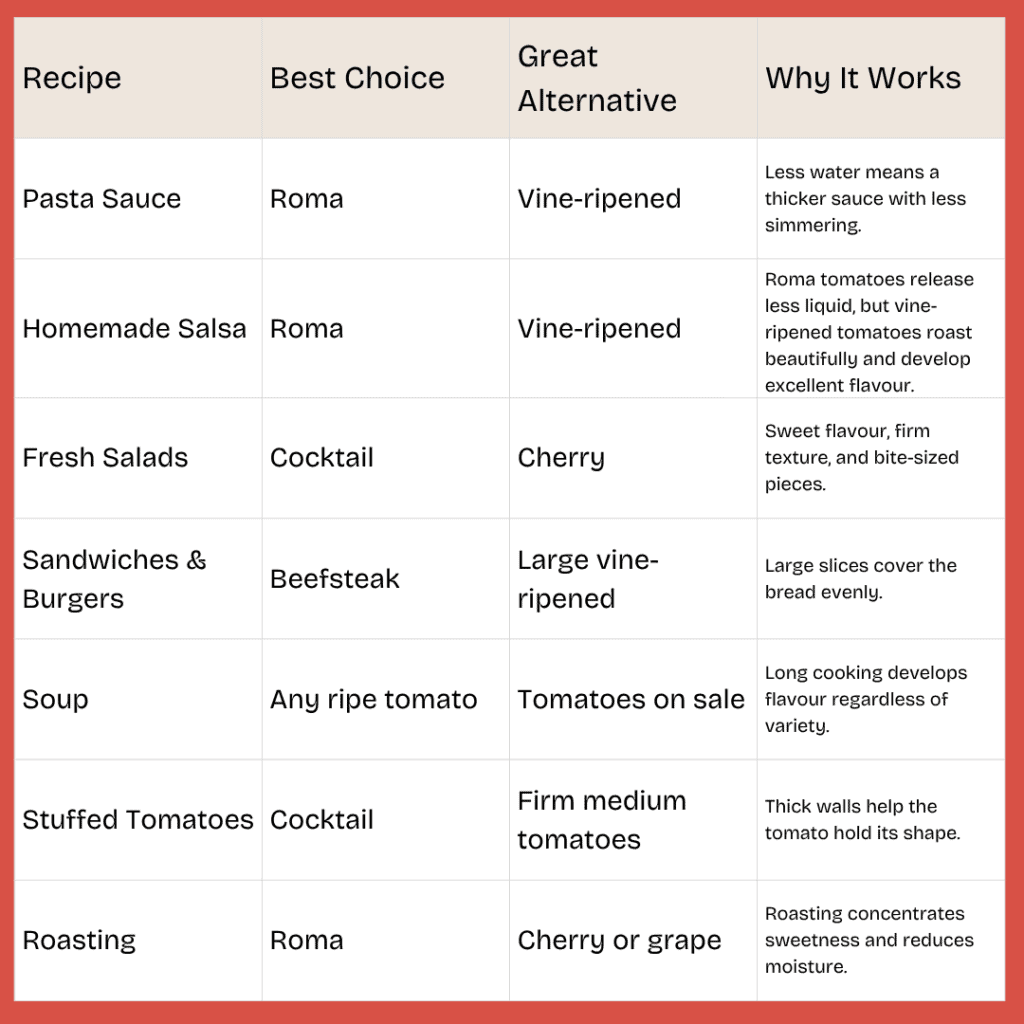
The best tomato isn’t always the fanciest or the most expensive—it’s the one that matches what you’re cooking. Every tomato has strengths, and once you understand those strengths, you’ll be able to choose confidently even if the grocery store doesn’t have the exact variety your recipe recommends.
The table below is a quick reference, but don’t worry if your tomatoes don’t perfectly match the recipe. Understanding why a tomato is recommended is far more useful than simply following the ingredient list.
For Fresh Salads
When tomatoes are one of the main ingredients, flavour becomes your biggest priority. Cocktail tomatoes are one of my favourites because they’re naturally sweet, easy to cut, and hold their shape well in salads. Cherry tomatoes are another excellent choice, while larger slicing tomatoes work beautifully when diced.
Don’t be afraid to mix varieties, either. I often buy whatever looks freshest or happens to be on sale. A combination of colours, sizes, and flavours can make a simple salad even more interesting.
For Homemade Sauce
Roma tomatoes earned their reputation for a reason. Their lower water content means they cook down faster into a rich, thick sauce.
That doesn’t mean you can’t make wonderful tomato sauce with other tomatoes. If vine-ripened or garden tomatoes are what you have available, simply expect a little more liquid and allow extra simmering time. Some of the best homemade sauces come from using a mixture of tomatoes rather than relying on a single variety.
For Homemade Salsa
Many salsa recipes recommend Roma tomatoes because they’re less watery, but don’t let that stop you from experimenting.
I originally developed my roasted tomato salsa using Roma tomatoes. Later, I made it again using vine-ripened tomatoes because that’s what I had on hand. The larger tomatoes roasted more quickly under the broiler and produced a slightly juicier salsa, but the flavour was every bit as delicious.
That experience reinforced one of the biggest lessons I’ve learned in the kitchen: recipes explain what worked well for the author—they’re not the only way to cook.
For Sandwiches
A large tomato is often worth choosing simply because of its size.
Instead of covering your sandwich with several small pieces, one or two slices of a beefsteak tomato create better coverage, making every bite more balanced. Firm, ripe vine-ripened tomatoes also work well when beefsteak tomatoes aren’t available.
For Soup
Soup is one of the most forgiving ways to use tomatoes.
Since the tomatoes break down during cooking, almost any ripe tomato can produce excellent results. This is one of the first recipes where I’ll happily buy tomatoes that are on sale, provided they’re still fresh and free from spoilage.
For Roasting
Roasting transforms tomatoes.
As moisture evaporates, their natural sugars become more concentrated, creating a sweeter, richer flavour.
This means even tomatoes that taste a little bland fresh can become wonderfully flavourful after roasting. If greenhouse or hothouse tomatoes are the best value during the winter, roasting is one of my favourite ways to bring out their best qualities.
Can You Substitute Different Tomatoes?
One of the biggest misconceptions in cooking is that every recipe requires one exact variety of tomato. While recipe developers usually recommend a specific tomato for a reason, that doesn’t mean another variety won’t work just as well.
The key is understanding why that tomato was recommended in the first place.
For example, Roma tomatoes are often chosen because they contain less water. If you substitute a juicier tomato, your sauce or salsa may simply need a little more cooking time to evaporate the extra liquid. Likewise, replacing cherry tomatoes with cocktail tomatoes usually changes the size of the pieces more than the flavour of the finished dish.
Instead of asking, “Can I substitute this tomato?”, try asking, “What job is this tomato doing in the recipe?”
Once you answer that question, choosing a substitute becomes much easier.
If You’re Replacing Roma Tomatoes
Roma tomatoes are valued because they’re meaty, contain fewer seeds, and have less water than many slicing tomatoes.
Good substitutes include:
- Vine-ripened tomatoes
- Firm garden tomatoes
- Beefsteak tomatoes (allow extra cooking time)
What changes?
Expect a little more liquid, especially in sauces and salsa. Simmering or roasting slightly longer is usually all that’s needed.
If You’re Replacing Cherry Tomatoes
Cherry tomatoes are chosen for their sweetness, small size, and convenience.
Good substitutes include:
- Cocktail tomatoes
- Grape tomatoes
- Diced slicing tomatoes
What changes?
Mostly the appearance and texture. Cutting larger tomatoes into bite-sized pieces usually produces a very similar flavour.
If You’re Replacing Beefsteak Tomatoes
Beefsteak tomatoes are popular because of their large slices.
Good substitutes include:
- Large vine-ripened tomatoes
- Large heirloom tomatoes
- Any firm slicing tomato
What changes?
Mostly the size of each slice. You may need two smaller tomatoes where one beefsteak would have been enough.
If You’re Replacing Heirloom Tomatoes
Heirloom tomatoes are usually selected for their unique flavour and appearance.
Good substitutes include:
- Vine-ripened tomatoes
- Cocktail tomatoes
- Quality local tomatoes
What changes?
Fresh dishes may lose some of the heirloom tomato’s unique flavour characteristics, but cooked recipes are often much less affected.
When Substitutions Matter Most
Some recipes are more forgiving than others.
Substitutions usually matter less in:
Substitutions matter more in:
- Caprese salad
- Tomato sandwiches
- Fresh salsa
- Charcuterie boards
- Fresh tomato platters
When tomatoes are the star of the meal, their flavour and texture become much more important. When they’re cooked for an hour with herbs, onions, garlic, and other ingredients, those differences become much smaller.
Recipes Are Guides, Not Rules
One of the biggest lessons I’ve learned over the years is that recipes recommend ingredients for a reason—but that doesn’t mean they’re the only ingredients that will work.
Once you understand what a tomato contributes to a recipe, whether that’s lower water content, sweetness, firmness, or size, you can make confident substitutions based on what’s available, what’s in season, or what fits your grocery budget.
That’s one of the reasons I enjoy experimenting in my own kitchen. Some of my favourite recipes have come from using what I had on hand rather than making another trip to the grocery store. More often than not, the meal turned out just as well, and occasionally it turned out even better.
Learning why a recipe recommends a particular tomato gives you the confidence to adapt, experiment, and cook with less stress.
Which Tomatoes Are Worth Paying More For?
Tomatoes can range from inexpensive sale items to premium heirloom varieties that cost several times as much per pound. While it’s tempting to assume the most expensive tomato is automatically the best, that’s not always true.
The smartest purchase depends on how you’re planning to use them.
Worth Spending More On
There are times when premium tomatoes can make a noticeable difference.
If tomatoes are one of the main flavours in the dish, paying a little more for ripe, flavourful tomatoes can be worthwhile.
Examples include:
- Fresh tomato salads
- Caprese salad
- BLT sandwiches
- Tomato platters
- Bruschetta
- Fresh salsa
- Charcuterie boards
In these recipes, the tomatoes aren’t hidden behind hours of cooking. Their flavour, texture, and appearance are front and centre.
Save Your Money Here
For many cooked recipes, spending extra often provides very little benefit.
Long cooking changes tomatoes dramatically. As they simmer or roast, moisture evaporates, sugars concentrate, and the flavours blend with onions, garlic, herbs, and seasonings.
For recipes like these, I usually buy whichever tomatoes are fresh and reasonably priced.
Examples include:
- Pasta sauce
- Tomato soup
- Chili
- Roasted tomato salsa
- Slow cooker recipes
- Braised dishes
Freshness is usually more important than buying the most expensive variety.
Buy the Best Tomato You Can Afford
Grocery prices have changed dramatically over the past few years, and many families are watching every dollar they spend.
That’s one reason I don’t believe home cooks should feel pressured to buy premium tomatoes for every recipe.
If beautiful local tomatoes fit your budget, enjoy them.
If hothouse tomatoes are on sale in the middle of winter, they can still make a delicious soup or pasta sauce.
If Roma tomatoes aren’t available but vine-ripened tomatoes are, you can almost always make a small adjustment and continue cooking.
The goal isn’t to buy the “perfect” tomato every time.
It’s to choose the tomato that gives you the best value for the meal you’re making.
Remember What You’re Paying For
Sometimes you’re paying for exceptional flavour.
Sometimes you’re paying for appearance.
Sometimes you’re paying because the growing season is short.
And sometimes you’re simply paying because the tomatoes had to travel farther to reach your grocery store.
Knowing the difference helps you decide when the extra cost is worthwhile—and when your money is better spent somewhere else on the meal.
Common Tomato Shopping Mistakes (and How to Avoid Them)
Choosing tomatoes gets easier with experience, but almost every home cook has brought home tomatoes that looked great in the store only to be disappointed once dinner was on the table. The good news is that most of these mistakes are easy to avoid once you know what to look for.
Buying Tomatoes by Price Alone
It’s easy to assume the most expensive tomatoes must be the best, but price doesn’t always reflect how well a tomato will perform in your recipe.
A premium heirloom tomato may be wonderful sliced onto a sandwich, but if you’re simmering pasta sauce for an hour, a less expensive tomato can often produce an equally satisfying result.
Choose tomatoes based on how you’re cooking them, not simply on the price tag.
Assuming Every Recipe Requires One Exact Tomato
This is one of the biggest myths in home cooking.
Recipes usually recommend a tomato because of its characteristics—not because it’s the only tomato that works.
If you understand whether the recipe benefits from lower water content, sweetness, or large slices, you’ll be able to make smart substitutions whenever your grocery store has limited selection.
Ignoring Ripeness
A perfectly ripe tomato that’s slightly different from what your recipe suggests will almost always taste better than the “correct” variety that’s underripe or beginning to spoil.
Take a few extra seconds to look, gently squeeze, and smell your tomatoes before putting them in your cart.
Believing Every Tomato Has One Perfect Use
One of the biggest lessons I’ve learned over the years is that tomatoes are often more versatile than we give them credit for.
I’ve intentionally switched tomato varieties in recipes simply because one type was on sale or looked better that week. Sometimes I needed to simmer a sauce a little longer or accept a slightly juicier salsa, but the finished meal was still delicious.
The best cooks don’t succeed because they always buy the exact ingredients.
They succeed because they understand how ingredients behave and know how to adapt when needed.
Forgetting to Buy for the Season
Tomatoes naturally taste different throughout the year.
In the middle of summer, locally grown field tomatoes are often bursting with flavour. During the winter months, greenhouse-grown tomatoes may be your best option.
Rather than expecting every tomato to taste like an August garden tomato, adjust your expectations and your recipes. Roasting, slow simmering, and seasoning can transform even ordinary tomatoes into something delicious.
How to Store Fresh Tomatoes
Proper storage helps tomatoes stay fresh longer and preserves both their flavour and texture. While there isn’t one perfect storage method for every tomato, a few simple guidelines will help you get the most from your purchase.
Store Unripe Tomatoes on the Counter
If your tomatoes still feel firm and aren’t fully ripe, leave them at room temperature out of direct sunlight.
As they ripen, they’ll become softer, develop more flavour, and often have a stronger tomato aroma near the stem.
Turning them every day or two can help prevent flat spots from developing where they’re resting on the counter.
Should You Refrigerate Tomatoes?
Once tomatoes are fully ripe, refrigeration can help extend their life if you aren’t planning to use them right away.
Cold temperatures may slightly affect the texture of fresh tomatoes, particularly if they’re stored for several days, but that’s often a worthwhile trade-off if it prevents them from spoiling.
If you refrigerate tomatoes, let them sit at room temperature for 20 to 30 minutes before serving. This allows some of their flavour to return before eating them fresh.
Use the Ripest Tomatoes First
Tomatoes don’t all ripen at exactly the same speed.
Whenever I bring home several tomatoes, I take a quick look every day and use the ripest ones first. That simple habit helps reduce food waste and means I’m less likely to discover an overripe tomato hiding at the bottom of the bowl.
Don’t Throw Away Slightly Soft Tomatoes
A tomato that’s a little too soft for slicing isn’t necessarily ready for the compost.
Slightly overripe tomatoes are often perfect for:
- Homemade soup
- Pasta sauce
- Chili
- Salsa
- Roasting
As long as the tomato isn’t moldy or spoiled, cooking can be a great way to use it before it goes to waste.
Freezing Tomatoes
If you suddenly find yourself with more tomatoes than you can use, freezing is one of the easiest ways to preserve them.
One year my Sweet Million cherry tomatoes produced far more than my family could eat fresh. I simply washed them, dried them, and froze them whole in freezer bags. Once thawed, they were too soft for salads, but they worked beautifully in soups, stews, sauces, and other cooked recipes.
Large tomatoes can also be frozen, although many people prefer to core them first. Once thawed, expect the texture to soften considerably, making frozen tomatoes best suited for cooked dishes rather than fresh eating.
When to Throw Tomatoes Away
No one likes wasting food, but some tomatoes are no longer safe to eat.
Discard tomatoes that have:
- Fuzzy mold
- Large areas of decay
- Leaking liquid
- A sour or fermented smell
- Extensive soft spots that have begun breaking down
When in doubt, it’s better to replace one tomato than risk spoiling an entire meal.
A Simple Habit That Saves Money
One of the easiest ways to reduce food waste is to decide how you’ll use your tomatoes before they become overripe.
Fresh tomatoes are wonderful for salads and sandwiches during the first few days. As they soften, they’re perfect for cooking. Thinking ahead like this means fewer tomatoes end up in the compost and more end up on the dinner table.
FAQ
Final Thoughts
The next time you find yourself standing in front of a display filled with Roma, cherry, grape, beefsteak, cocktail, heirloom, and vine-ripened tomatoes, remember that you don’t need to know everything about every tomato to make a good choice.
Instead of asking, “Which tomato am I supposed to buy?”, start by asking yourself, “What am I making?”
That one question changes everything.
Once you understand what different tomatoes contribute to a recipe—whether it’s sweetness, water content, texture, or size—you’ll be able to choose confidently based on what’s fresh, what’s available, and what fits your grocery budget. Sometimes that means buying premium tomatoes for a fresh summer salad. Other times it means grabbing the tomatoes on sale because they’re headed into a pot of soup or a long-simmered pasta sauce.
Some of the best meals I’ve made didn’t come from having the exact ingredients listed in a recipe. They came from understanding why those ingredients were chosen in the first place and making thoughtful substitutions when I needed to.
Recipes are wonderful guides, but your own experience in the kitchen is just as valuable. The more you cook, the more you’ll discover that confidence doesn’t come from memorizing ingredient lists—it comes from understanding how ingredients work together.
So the next time tomatoes are on your shopping list, trust what you’ve learned here, choose the tomatoes that make the most sense for your recipe, and enjoy the process of cooking.
Put Your New Tomato Knowledge to Good Use
Now that you know how to choose the right tomatoes for different recipes, why not put that knowledge into practice?
If you’re looking for inspiration, try making a rich Roma Tomato Sauce, a flavourful Roasted Tomato Salsa, or a comforting bowl of Tomato Chicken Soup. Each recipe showcases tomatoes in a different way and gives you another opportunity to build confidence in the kitchen.
The more you cook with different tomato varieties, the easier it becomes to recognize which ones you enjoy most and when it’s worth making substitutions based on what’s available at the grocery store.
Which tomato label confuses you the most at the grocery store? If there’s one I didn’t cover, let me know and I’ll add it to the guide.


