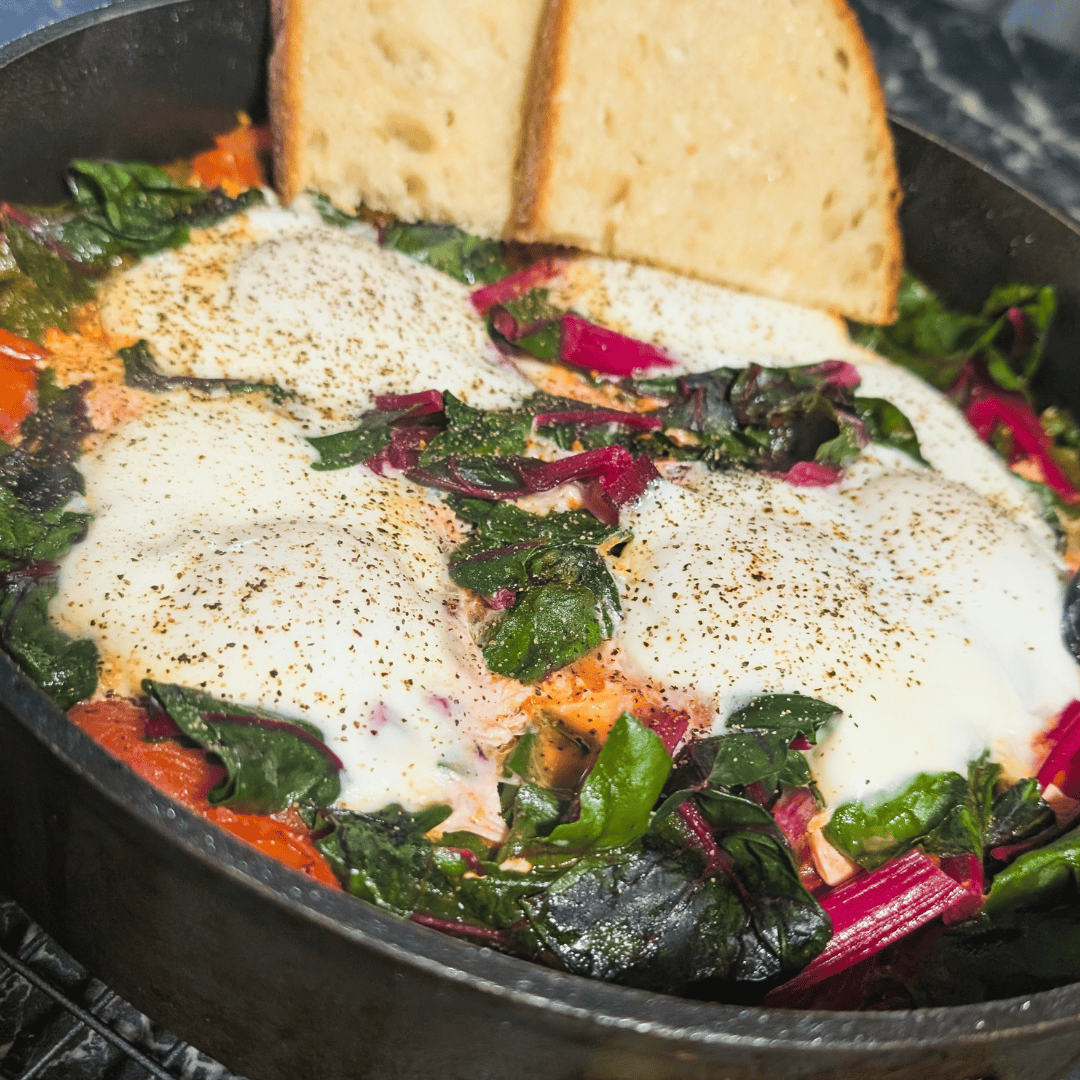
Eggs in Purgatory (Italian Eggs in Tomato Sauce)
Eggs in purgatory is a simple Italian dish made by simmering eggs in a tomato sauce until the whites are set and the yolks remain soft. This version uses fresh tomatoes, garlic, olive oil, and Swiss chard to build a straightforward skillet meal with a balanced texture. The result is a flavorful tomato sauce with soft-cooked eggs and runny yolks, all prepared in a single large skillet.
It’s typically served as a quick lunch, light dinner, or brunch dish, especially when you want something warm and a little different from the usual bacon and eggs. Because everything cooks in one pan, it’s easy to bring straight from the stove to the table, which also makes it a practical option for relaxed weekend meals or holiday brunch.
Traditional versions of eggs in purgatory are very simple, built from garlic, olive oil, tomatoes, and eggs cooked together in one pan. This version includes Swiss chard, which adds color and a bit more nutritional value while cooking down directly into the sauce without changing how the dish works.
Red Swiss chard is used here for its color and softer texture once cooked, though green chard can be used depending on availability.
Cost Rating: 🍳🍳 2 Pan — Moderate Cost
Cost guideline:
Cost Per Batch: ~$10–$14
Cost Per Serving: ~$2.50–$3.50
Swiss chard is the main variable here. Red Swiss chard tends to run around $5 per bundle, while green Swiss chard is usually closer to $3.99. The red cooks down nicely and adds color to the dish, which is why it’s used here. The green variety can be used as well, though it may be slightly tougher depending on the batch.
Eggs are one of the more flexible cost components. An 18-pack is often a better value than a dozen, usually around $6.98. If you’re cooking for a larger household, a 30-pack for around $10 can be more cost effective. Buying in bulk through wholesale suppliers can reduce cost further if you have the storage and will use them in time.
Cherry or grape tomatoes typically run around $3.79 per pack, and you’ll need enough to reach about 4 cups. Grape tomatoes work just as well as cherry tomatoes and are often easier to find. The smaller size is important because they hold their shape and burst into the sauce rather than breaking down too quickly.
Why You’ll Love This Eggs in Purgatory Recipe
Simple ingredients: Uses a short list of eggs, tomatoes, garlic, olive oil, and Swiss chard.
Balanced texture: Soft-cooked eggs with runny yolks sit in a robust, flavorful tomato sauce that holds its structure.
One pan meal: Everything cooks in a single large skillet, making it easy to manage and bring straight to the table.

Budget Tips
Buying eggs in larger packs can help reduce the overall cost per serving, especially if you’re cooking for more than one person.
Swiss chard can be swapped for what’s available, like baby spinach, or on sale, but it’s also a good option for container growing since it produces well in small spaces.
Tomatoes are one of the easiest ingredients to grow at home in a planter, especially smaller varieties like cherry or grape tomatoes, which work directly in this recipe.
Using what you already have on hand, especially for greens and tomatoes, is one of the easiest ways to keep this great dish affordable without changing how it cooks.
How to Make Eggs in Purgatory
Before you start cooking, take a few minutes to prep the ingredients so everything is ready to go into the pan. Rinse the tomatoes and Swiss chard well, especially the chard leaves, which can hold onto dirt. Trim any dried ends from the stems and cut or tear the leaves into manageable pieces.


Peel and lightly crush or chop the garlic so it’s ready to cook right away. Once the pan is heated, the process moves quickly, so having everything prepped ahead of time helps keep the tomatoes from overcooking and the garlic from browning too fast.
Start by heating olive oil in a large skillet over medium heat. Add the fresh garlic and cook for about 1 to 1½ minutes, just until it softens and becomes fragrant. You’re not trying to brown it—just take the edge off so it blends into the sauce.
Add the cherry or grape tomatoes and increase the heat slightly. Let them cook for about 2–3 minutes, stirring and rolling them around the pan so they heat evenly. As they cook, you’ll start to see the skins split. Once several of them have burst, use a potato masher or the back of a spoon to gently press them down. This creates a chunkier sauce rather than a fully smooth tomato base.


Don’t fully mash the tomatoes into a smooth sauce. You’re looking for a chunky consistency where some pieces are broken down and others still hold their shape. This gives the final dish more texture and keeps it from turning into a fully blended tomato sauce.
Let the tomatoes continue to cook for another couple of minutes, then reduce the heat to medium-low and allow the mixture to simmer. As it thickens slightly, add the chopped Swiss chard (about 6 cups).


Place a lid on the pan and let the chard sit for 1–2 minutes so it starts to wilt from the steam. Remove the lid and stir the chard into the tomato mixture so it combines fully. This helps it cook down more evenly instead of sitting on top and drying out.
Once the chard is mixed in and softened, create small spaces in the mixture using the back of a spoon, or simply place the eggs directly into open spots in the pan. You don’t need perfect wells—just enough space for each egg to settle into the sauce.


Reduce the heat slightly, cover the pan again, and let the eggs cook gently. Keeping the lid on is important here because it helps the tops of the eggs set evenly through retained heat.


Cook until the whites of the eggs are set and no longer translucent, while the yolks remain soft and runny. Remove the lid, bring the pan to the table, and finish with black pepper if desired.
Overall cook time is fifteen minutes start to finish.

Ingredients:
This eggs in purgatory recipe uses a short list of fresh ingredients that cook down together into a chunky tomato base with soft eggs set directly in the pan.
Eggs: Large eggs are used so the whites set properly while the yolks stay soft. They cook directly in the tomato mixture, so spacing them evenly in the pan helps them set at the same rate.
Cherry or grape tomatoes (about 4 cups): These form the base of the dish. Their small size allows them to soften and burst quickly, creating a chunky mixture instead of a fully blended sauce. Grape tomatoes work just as well as cherry tomatoes.
Swiss chard (about 6 cups, chopped): Red Swiss chard is used here because it cooks down well and adds color to the dish. It softens directly into the tomato mixture and doesn’t need to be cooked separately. The volume looks large at first but reduces significantly as it wilts. Removing the Swiss chard stems is often recommended, but I leave them in to reduce food waste. They soften as the dish cooks and don’t detract from the flavor. If you prefer a more tender texture, you can remove them. Either way, wash the chard well and cut or tear it into pieces.
Garlic: Fresh garlic builds a garlicky tomato sauce and balances the acidity of the tomatoes as they cook down. It should be softened gently in olive oil without browning so it blends into the sauce. Reducing the amount too much will leave the dish tasting flat, since the garlic carries a lot of the overall flavor.
Olive oil: Used to cook the garlic and start the base of the dish. It helps carry the flavor through the tomatoes and greens.
Black pepper: Used as a finishing element rather than cooked into the sauce. A sprinkle across the eggs is all you need.
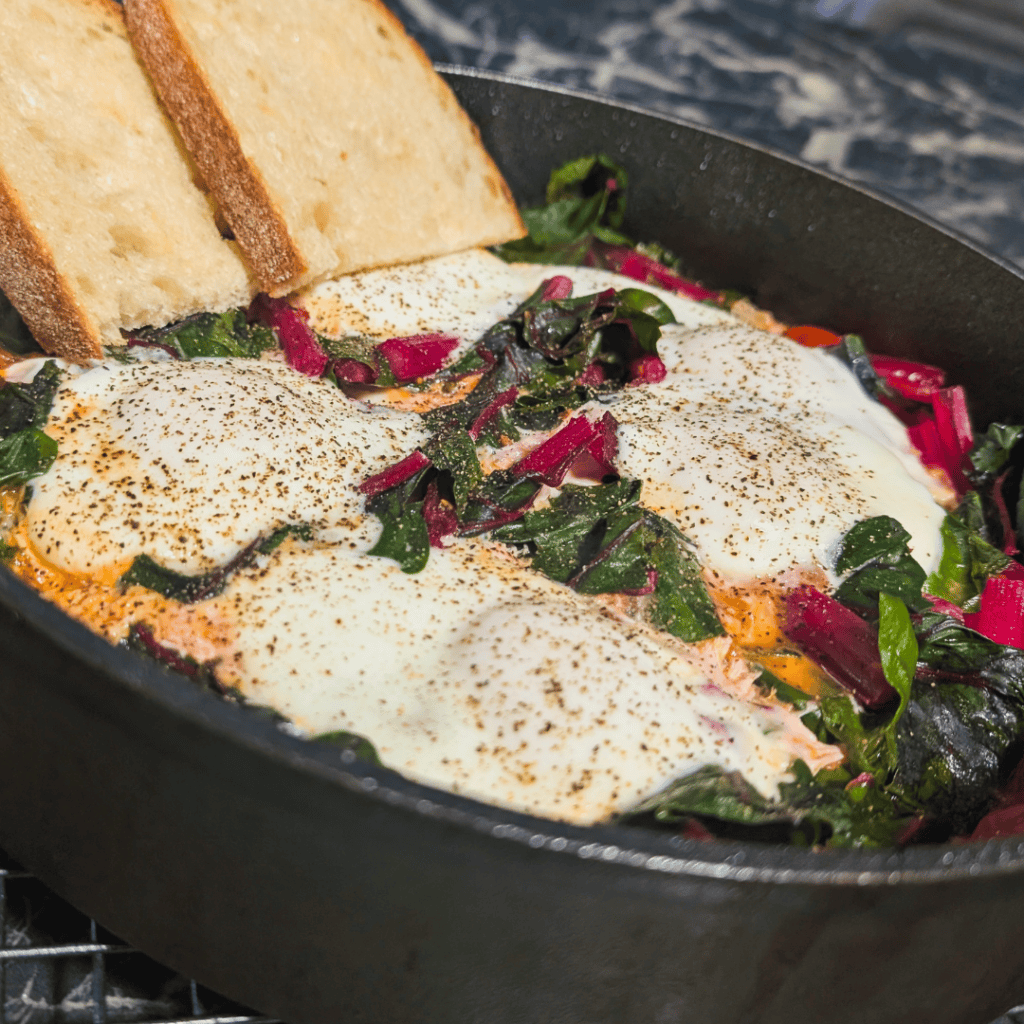
Substitutions and Add-Ins for Eggs in Purgatory
This eggs in purgatory recipe is flexible with a few ingredients, but the overall result depends on how the tomatoes and greens cook together in the pan.
Eggs: The eggs are what turn this into a complete meal, especially for breakfast or brunch, by adding protein and richness to the tomato base. Removing them would change the dish entirely rather than act as a substitution.
Cherry or grape tomatoes: Other small tomato varieties work well, including garden tomatoes of a similar size. Larger tomatoes behave differently because they’re usually chopped before cooking. Once cut, they release their liquid quickly and break down much faster, which turns the mixture into a softer, more sauce-like base instead of the chunkier texture this recipe is built around.
Swiss chard: Spinach is the closest alternative and cooks down more quickly into a softer texture. Heartier greens will take longer to soften and may need a bit more time in the pan to fully integrate into the sauce.
Garlic: Fresh garlic gives the strongest flavor and blends into the tomato base as it softens. Pre-minced versions are milder and won’t carry through the dish in quite the same way.
Olive oil: A neutral cooking oil works if needed, though olive oil pairs naturally with the tomatoes and helps round out the overall flavor.
Black pepper: Added at the end, so the amount is easy to adjust based on preference without affecting how the dish cooks.
Optional heat (not part of base recipe): A pinch of red pepper flakes or chili flakes can create a slightly spicy red sauce if preferred, but the base recipe is not built around spice. If you want an even more fiery tomato sauce stir in a tsp of Calabrian chili paste.

Expert Tips, Serving and Storing Suggestions
Tip #1: Create space for the eggs. Use the back of a spoon or look for natural gaps in the tomato mixture so each egg has room to sit and cook evenly without spreading too far.
Tip #2: Let the chard steam first. After adding the Swiss chard, cover the pan for a minute or two so it starts to wilt before stirring it into the tomatoes.
Tip #3: Don’t overwork the tomatoes. Once the skins split, press them just enough to release their juices while keeping some pieces intact for texture.
Tip #4: Keep the lid on for the eggs. Covering the pan helps the tops of the eggs set through retained heat so the whites cook evenly.
Tip #5: Watch the egg whites. The egg whites should turn opaque and set on top before removing the pan, while the yolks stay soft.
Serve eggs in purgatory with crusty bread to soak up the remaining sauce. It works well as a simple brunch dish when you need something warm that can go straight from the stove to the table without much prep.
This eggs in purgatory recipe is best eaten right away. As it sits or is reheated, the eggs continue to cook and firm up, and the Swiss chard softens further into the sauce. That changes the texture and takes away from the contrast that makes the dish work.
If needed, small portions can be reheated gently, but expect a firmer egg and a softer overall texture.
If you’re looking for other simple skillet-style or brunch meals, recipes like a breakfast pastry pocket made from leftovers or a breakfast burrito with eggs and hot sauce follow a similar approach of building a full meal from basic ingredients. Dishes like a spinach feta frittata or a cheesy zucchini breakfast casserole also work well when you want an easy eggs-based option that can be made in one pan.
FAQ

Eggs in Purgatory (Italian Eggs in Tomato Sauce)

Equipment
- 1 Cast Iron Skillet Or other 12" Skillet/Frying Pan that is deep sided.
Ingredients
- 4 Cups Cherry Tomatoes Washed, whole
- 6 Cups Rainbow Swiss Chard Washed, stem end removed, and cut or torn
- 5 Cloves Fresh Garlic Sliced or smashed
- 4 Tbsp Olive Oil
- Dash Black Pepper
- 6 Lrg Eggs Add more if wished
Instructions
- In your heated cast iron skillet add the olive oil and garlic. Allow to sauté one minute.4 Tbsp Olive Oil, 5 Cloves Fresh Garlic
- Add in the whole cherry tomatoes and stir while heating until they start to blister.4 Cups Cherry Tomatoes
- Once they start blistering use a tool (masher) to press down to release the juice. Try to keep some of the tomatoes looking like a tomato-not just tomato pulp.
- Add to the pan wash and cut Swiss chard and cover.6 Cups Rainbow Swiss Chard
- Crack eggs on the surface of the Swiss chard tomato dish.6 Lrg Eggs
- Return cover to pan and allow eggs to cook until set to desire doneness.
- Remove lid and a dash of black pepper before serving immediately.Dash Black Pepper
- Optional* Serve with sourdough toast
Notes
Notes
- Swiss chard stems can be left in and will soften during cooking, or removed for a more tender texture.
- This dish is best served immediately.
Nutrition