Homemade Roasted Tomato Sauce From Fresh Tomatoes

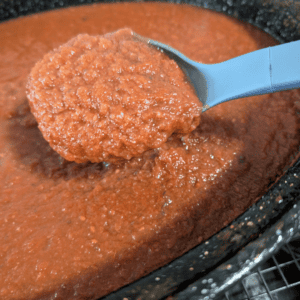
A large-batch roasted tomato sauce made with fresh tomatoes, basil, garlic, and yellow onion. The tomatoes roast uncovered at 350°F for about 6 hours, with more added as they cook down, then the sauce is reduced on the stovetop, blended, chilled, and portioned for the freezer.
Equipment
- Colander
- Roasting Pan
- Wooden Spoon Or other stirring implement
- Immersion Blender
- knife
- Tablespoon
- Cutting board
Ingredients
- 56 Cups Roma Tomatoes Washed and quartered
- 1 Tbsp Salt
- 2 Cups Fresh Basil Leaves Washed and cut fine, stems removed
- 5 Cups Yellow Onion Diced fine
- 1 Cup Garlic Minced
Instructions
- Wash and sort the tomatoes. Place the tomatoes in a colander and rinse well under cold running water. As you wash them, sort out any tomatoes with mold, soft rot, leaking areas, wet damaged tissue, or an off smell. Dry healed scars and cosmetic blemishes can still be used.
- Prepare the oven and tomatoes. Lower the oven rack to just below center so the roasting pan will fit. Preheat the oven to 350°F. Quarter enough tomatoes to completely fill the roasting pan.
- Begin roasting. Roast the tomatoes uncovered so the moisture they release can evaporate. As the tomatoes soften, collapse, and create more room in the pan, add another batch of quartered tomatoes.
- Continue adding tomatoes. Repeat the roasting and adding process until the entire 25-pound box has been worked into the roasting pan. Remove the pan approximately once an hour and stir well, bringing the wetter tomatoes and juices from the bottom toward the surface.
- Prepare the basil. Remove the basil leaves from the plant, discard the stems, rinse the leaves under cool running water, drain, and mince. You will need about 2 cups minced fresh basil.
- Add the aromatics. Once the tomatoes have reduced enough to make room, stir in the chopped yellow onions, minced garlic, basil, and salt. Continue roasting uncovered. The full oven-roasting process takes about 6 hours from start to finish.
- Reduce on the stovetop. If the tomatoes still contain more liquid than you want, place the stovetop-safe roasting pan over medium-high heat. If your roaster is not approved for direct stovetop use, transfer the mixture to a large heavy-bottomed pot.
- Cook until thick. Bring the tomato mixture to a strong simmer or boil and stir constantly, scraping and lifting the wetter mixture from the bottom toward the surface. Continue until most of the loose tomato liquid has evaporated and the sauce has reached the thickness you prefer. The time will vary according to the moisture content of the tomatoes.
- Blend. Remove the thickened tomato mixture from the heat. Use an immersion blender directly in the roasting pan to blend until smooth. The finished sauce should be thick enough to cling to pasta rather than run off like a thin tomato liquid.
- Cool and refrigerate. Allow the sauce to cool, then refrigerate it in the roasting pan overnight before portioning. If needed for faster, safer cooling, divide the sauce among shallower containers before refrigerating.
- Portion and freeze. Divide the cold sauce into freezer bags. This batch produced 9 large bags of approximately 6 ladles each and 4 smaller bags. Freeze for later meals.
Notes
- Stir the tomatoes about once an hour during roasting. This brings trapped tomato liquid up from the bottom so it can evaporate and also helps keep the tomatoes from catching or burning against the roasting pan.
- This recipe is intended for freezing, not shelf-stable canning.
Nutrition
Calories: 224kcalCarbohydrates: 49gProtein: 10gFat: 2gSaturated Fat: 0.3gPolyunsaturated Fat: 1gMonounsaturated Fat: 0.3gSodium: 592mgPotassium: 2558mgFiber: 14gSugar: 30gVitamin A: 8686IUVitamin C: 148mgCalcium: 142mgIron: 3mg
Tried this recipe?Let us know how it was!