Omelet vs. Omelette vs. Frittata: What’s the Difference?
A conversation in my family recently made me realize that when people say omelette, they may not all be picturing the same thing.
I grew up making a larger, covered skillet omelette with vegetables cooked throughout the eggs. There was no folding involved. One of my daughters, on the other hand, pictured the thinner restaurant-style version where the eggs cook first, the filling is added, and everything is folded over.
That raised another question: if the vegetables are mixed through the eggs and the omelette stays flat, isn’t that really a frittata?
Not necessarily. Part of the confusion comes from mixing together three different things: spelling, omelette style and cooking method.
Quick Answer
Omelet and omelette are two spellings of the same egg dish. Omelet is particularly common in American English, while omelette is widely used elsewhere. Both spellings are found in Canadian English.
An omelette and a frittata are related but distinct egg dishes. Omelettes can be folded or left flat, while frittatas are generally thicker dishes cooked with the other ingredients incorporated throughout. Thickness, cooking method, texture and serving style are more useful distinctions than folding alone.
Omelet vs. Omelette vs. Frittata at a Glance

The word usually matters here. These dishes overlap more than many short definitions suggest.
Is It Omelet or Omelette?
If you have wondered whether to write omelet or omelette, you are not choosing between two different foods.
They are alternate spellings of the same word. The pronunciation does not change with the spelling. Omelet and omelette are pronounced the same way.
Omelet is especially common in American English, while omelette is the spelling generally seen in British English. Canadian usage includes both forms.

I use omelette on A Cents For Cookery because that is the spelling that comes naturally to me as a Canadian cook.
The spelling does not tell you how the eggs will be cooked. An omelet is not automatically folded because it uses the American spelling, and an omelette is not automatically a different style because it uses the longer spelling.
Does an Omelette Have to Be Folded?
No.
The folded version many of us know from restaurants and diners is certainly an omelette, but folding is a cooking style rather than the definition of the dish.
A thinner egg layer may be cooked in the pan, topped with cheese, vegetables or meat, and folded before serving. Other omelettes are cooked flat or have ingredients distributed directly through the eggs. Spanish omelette, or tortilla española, is another familiar example of an egg dish that is cooked and served flat rather than folded, although it is its own distinct preparation.
That was the important part of our family discussion. My daughter was picturing one familiar style, while I was picturing another.
Neither description requires us to redefine the other one.
French Omelette vs. American-Style Omelette
Even folded omelettes can be quite different from one another.
A classic French omelette is generally thin and delicate, with little browning and a soft, almost custardy interior. The eggs are stirred and moved as they cook, and fillings are usually kept minimal before the omelette is folded or rolled into a neat shape.
An American diner-style omelet is commonly thicker, fluffier and more browned. The eggs are allowed to set more fully, with generous fillings such as cheese, meat or vegetables added before it is folded over.
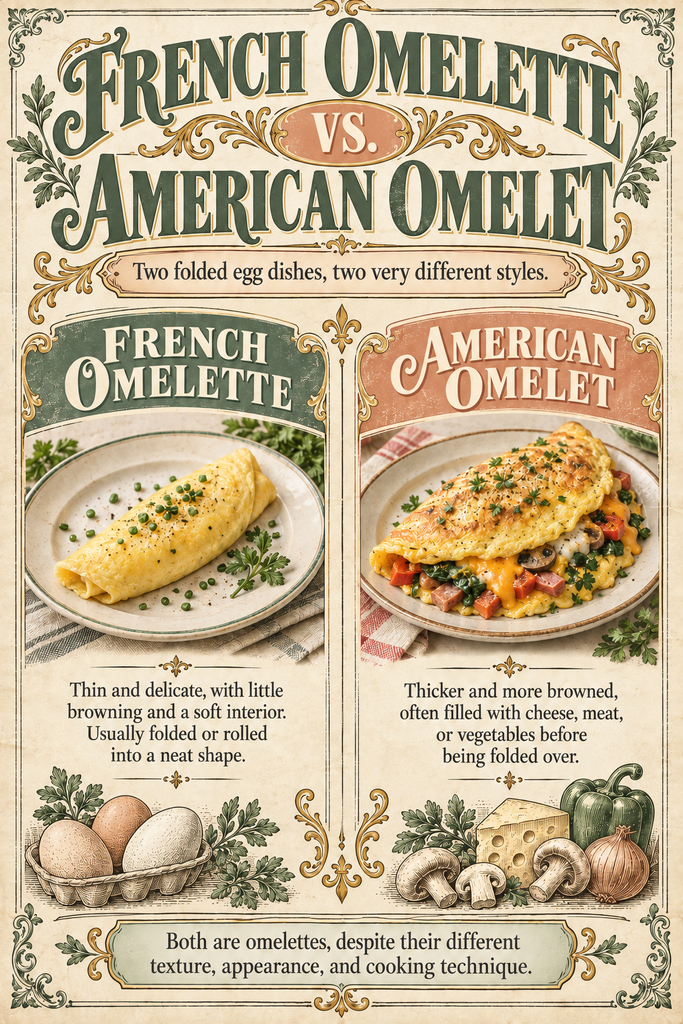
Both are omelettes, despite their different texture, appearance and cooking technique.
That helps explain why the word itself cannot tell us exactly what the finished eggs should look like.
Where My Farm-Style Omelette Fits
The Farm-Style Vegetable Omelette Recipe I grew up making is different again.
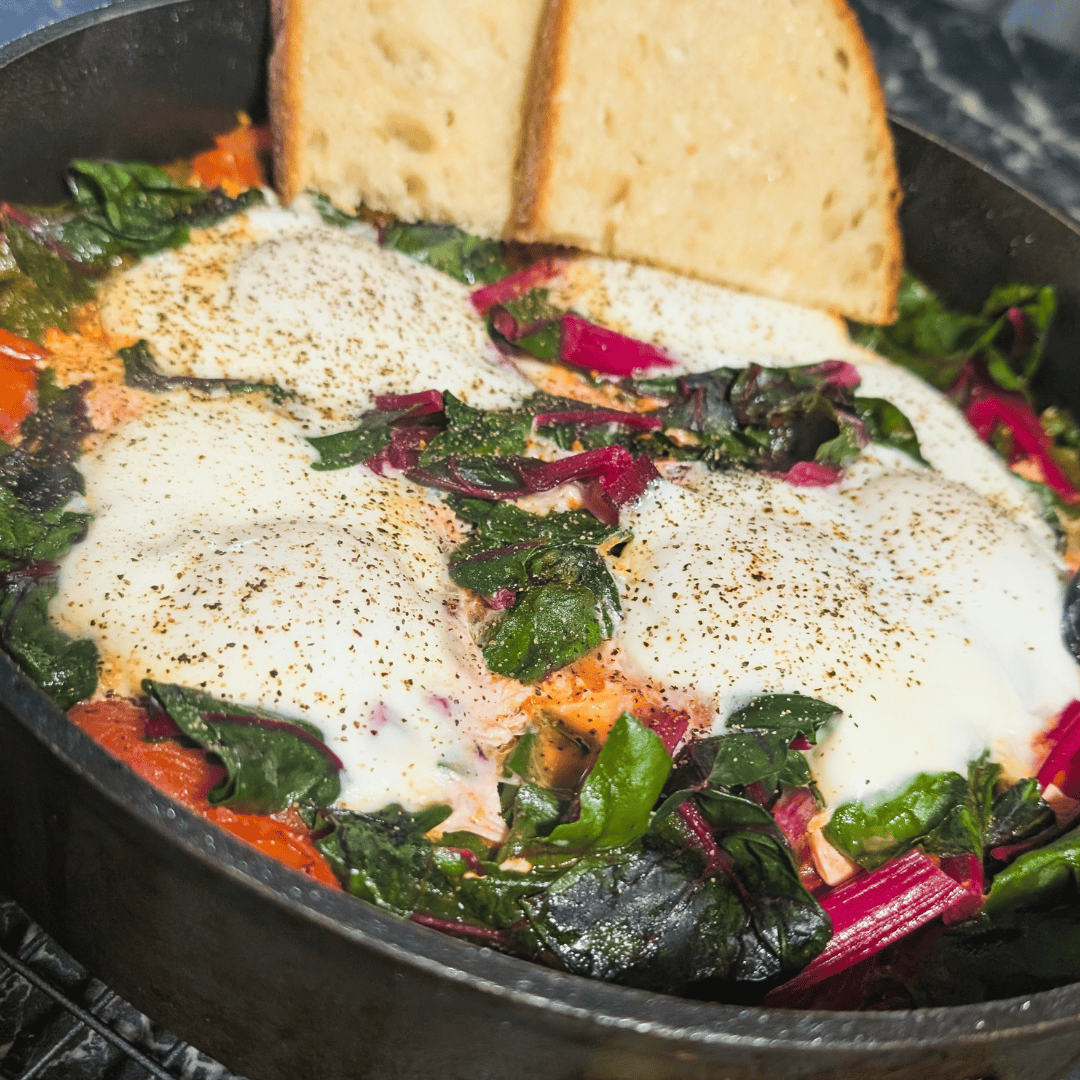
The vegetables are sautéed briefly first, then the egg and milk mixture is poured over them. The vegetables remain distributed throughout the skillet rather than becoming a separate filling.
The pan is covered and the heat is reduced to low. Heat from the pan cooks the bottom while the steam trapped beneath the lid helps the deeper centre and top set.

There is no flipping and no folding.
In our house, the vegetables weren’t something you put inside the omelette. They were part of the omelette.
That distinction matters because simply seeing vegetables throughout the eggs does not tell us that a dish is a frittata.
What Is a Frittata?
A frittata is an Italian egg dish; the name comes from the Italian verb friggere, meaning “to fry.” Eggs and other ingredients such as vegetables, cheese, herbs or meat are generally cooked together as one thicker mixture. You will sometimes see a frittata described as an open-faced omelette or compared with a crustless quiche. Those descriptions can help someone picture the finished dish, but neither one completely defines how a frittata is made.
A common method starts the frittata on the stovetop and finishes it in the oven or under the broiler. Other versions are cooked entirely on the stovetop.

Frittatas also tend to be firmer and more structured than many omelettes. Instead of being folded and served as one portion, a frittata is commonly cooked as a larger round and cut into wedges.
So while an oven finish is common, going into the oven is not what makes a frittata a frittata. Baked omelettes also exist, which is another reason the use of an oven by itself is not a reliable dividing line between an omelette and a frittata.
Omelette vs. Frittata: What Actually Separates Them?
There is no single test that works for every recipe.
It makes more sense to look at several characteristics together.
An omelette is generally a quicker skillet egg dish. It may be thin or somewhat thicker, folded or flat, and the fillings may be added separately or cooked directly into the eggs.
A frittata is usually deeper and cooked more gradually. The other ingredients are commonly incorporated throughout, and the finished dish normally has enough structure to be sliced into portions.
Serving style is another practical difference. An omelette is commonly made for one person and eaten shortly after cooking, while a larger frittata can be divided into several portions and served hot, warm or at room temperature.
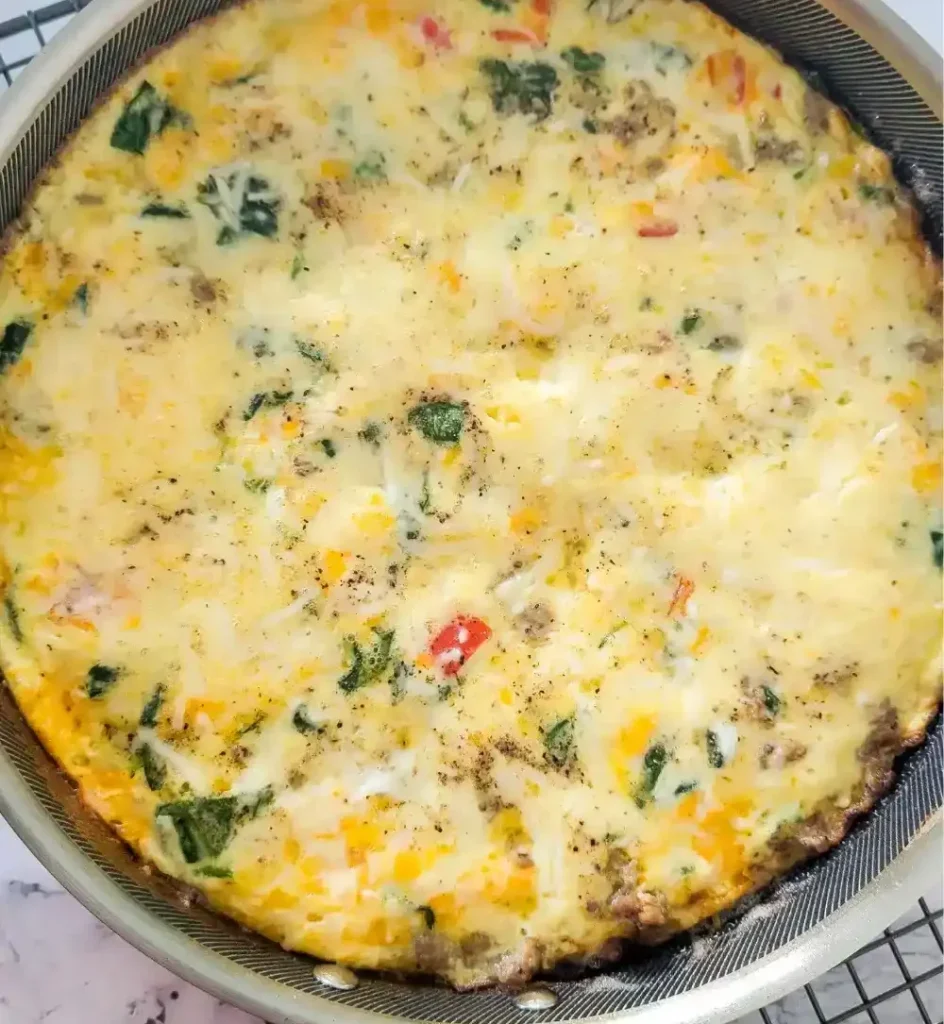
Texture is another clue. A French omelette may be soft and almost custardy inside. An American-style omelette may be fluffier and more browned. My covered vegetable omelette remains tender because it cooks gently under a lid.
A frittata is generally firmer and more sliceable.
Rather than asking only “Is it folded?” or “Are the vegetables mixed in?”, look at the thickness, cooking technique, finished texture and how the dish is served.
If the Vegetables Are Mixed Into the Eggs, Is It a Frittata?
Not by itself.
Mixing vegetables or other ingredients throughout the eggs is common in a frittata, but omelettes can also be cooked with additions incorporated into the egg mixture.
This is where overly simple definitions can become confusing.
My covered vegetable omelette and my frittata both have ingredients distributed through the eggs, but they are cooked differently and produce different finished dishes.
My Farm-Style Omelette vs. My Spinach Feta Frittata
Putting the two side by side makes the distinction easier to see.
My Farm-Style Vegetable Omelette cooks gently on the stovetop under a lid. It is made as one tender omelette and served shortly after cooking.
My Spinach Feta Frittata With Sun-Dried Tomato is a thicker, more structured egg dish designed to cook as a whole and then be divided into portions.
Both contain ingredients throughout the eggs.
That is a similarity between them, not the feature that determines what they are called.
Where Steamed Eggs Fit
There are other egg dishes that share individual characteristics with omelettes and frittatas without belonging to either group.
My Easy Microwave Korean Steamed Eggs (Gyeran Jjim) use added liquid and gentle cooking to create a much softer, custard-like egg dish.
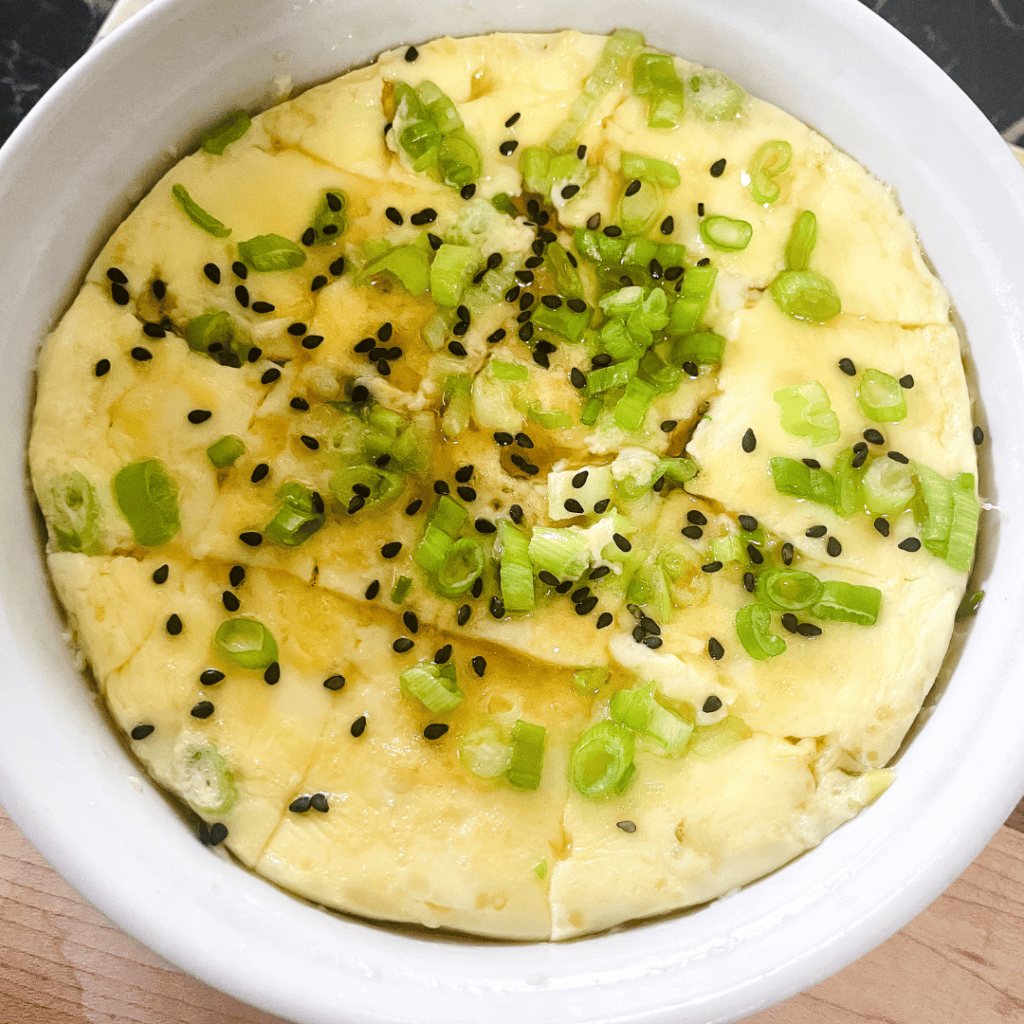
The similarity to my covered omelette is the gentle steamed quality, not the identity of the dish.
Eggs can produce very different results depending on the amount of liquid, depth of the mixture, cooking temperature and way the heat reaches them.
FAQ
So, Omelette or Frittata?
What I like most about this question is that nobody in our family really had to be wrong.
The thin, folded restaurant-style omelette my daughter was picturing is an omelette. So is the covered skillet version my mother taught me to make when I was young.
A frittata is closely related, and there are certainly places where the techniques overlap, but that doesn’t mean every thick, flat or vegetable-filled omelette has been misnamed.
Sometimes the way we define a familiar food comes from the kitchen where we first learned to make it.
What did an omelette look like in your family—folded around the filling, or cooked with everything together in the pan?