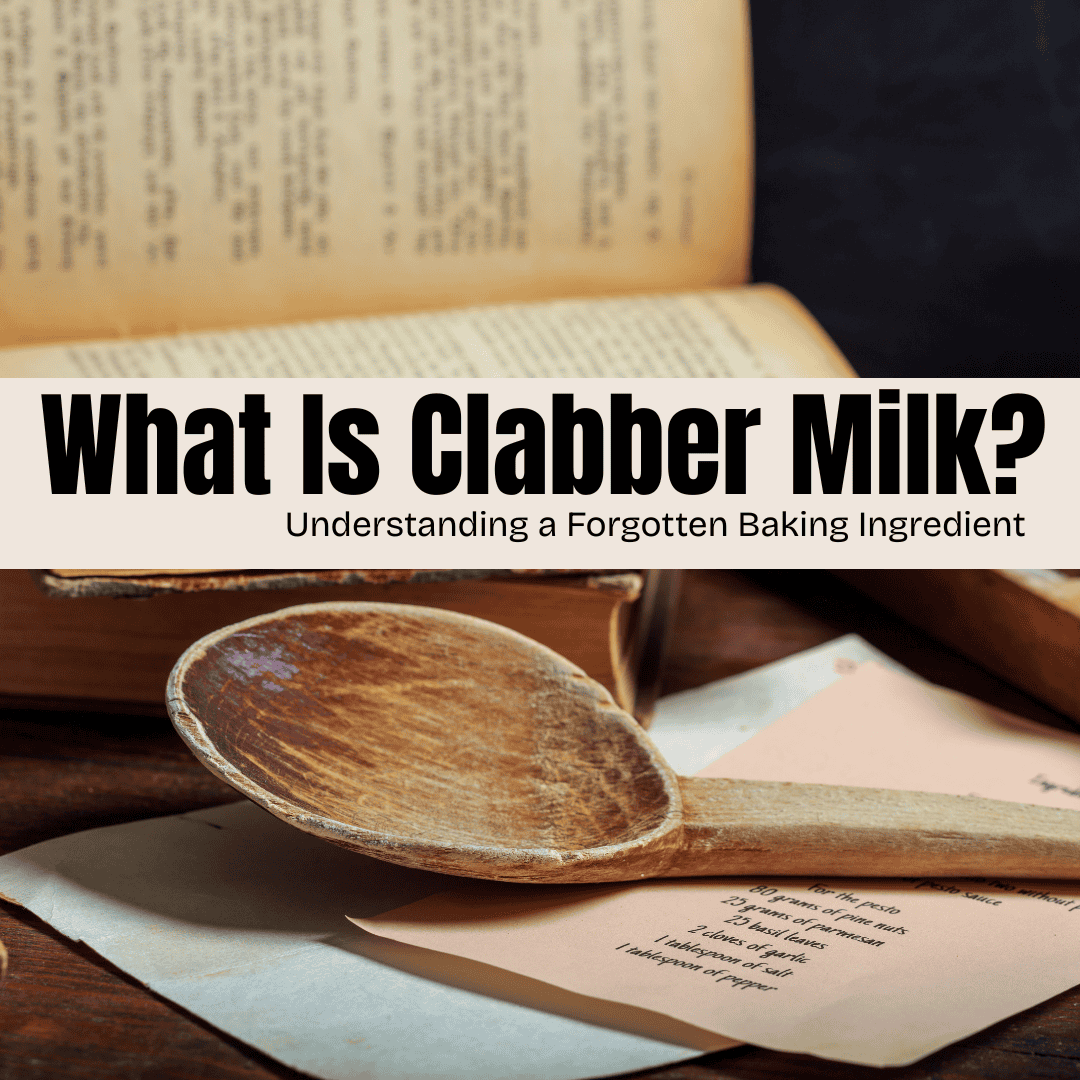
What Is Clabber Milk and Is It the Same as Buttermilk?
Understanding a Forgotten Baking Ingredient
If you’ve spent any time reading older cookbooks, you’ve probably come across ingredients that sound familiar but don’t quite mean what you think they mean. Clabber milk is one of the most common examples.
Many modern recipes explain clabber milk as milk mixed with vinegar or lemon juice. While that substitute can work in baking, traditional clabber milk was actually a naturally fermented dairy product. The two ingredients can serve a similar purpose in recipes, but they are not the same thing.
What is clabber milk and is it the same as buttermilk? Clabber milk is naturally fermented sour milk created by lactic acid bacteria. Traditional buttermilk was the liquid left behind after churning butter, while modern cultured buttermilk is a fermented dairy product that shares some similarities with clabber milk.
The confusion surrounding clabber milk highlights a larger issue in food history. Many old baking terms have changed meaning over time, making historic recipes seem more mysterious than they really are.
Quick Answer
Clabber milk is naturally fermented sour milk. It is not the same thing as milk mixed with vinegar, although vinegar milk can perform a similar role in baking by providing acidity.
What Is Clabber Milk?
Clabber milk is milk that has naturally soured through fermentation. As naturally occurring lactic acid bacteria consume the milk sugars, they produce acid that thickens the milk and gives it a tangy flavor.
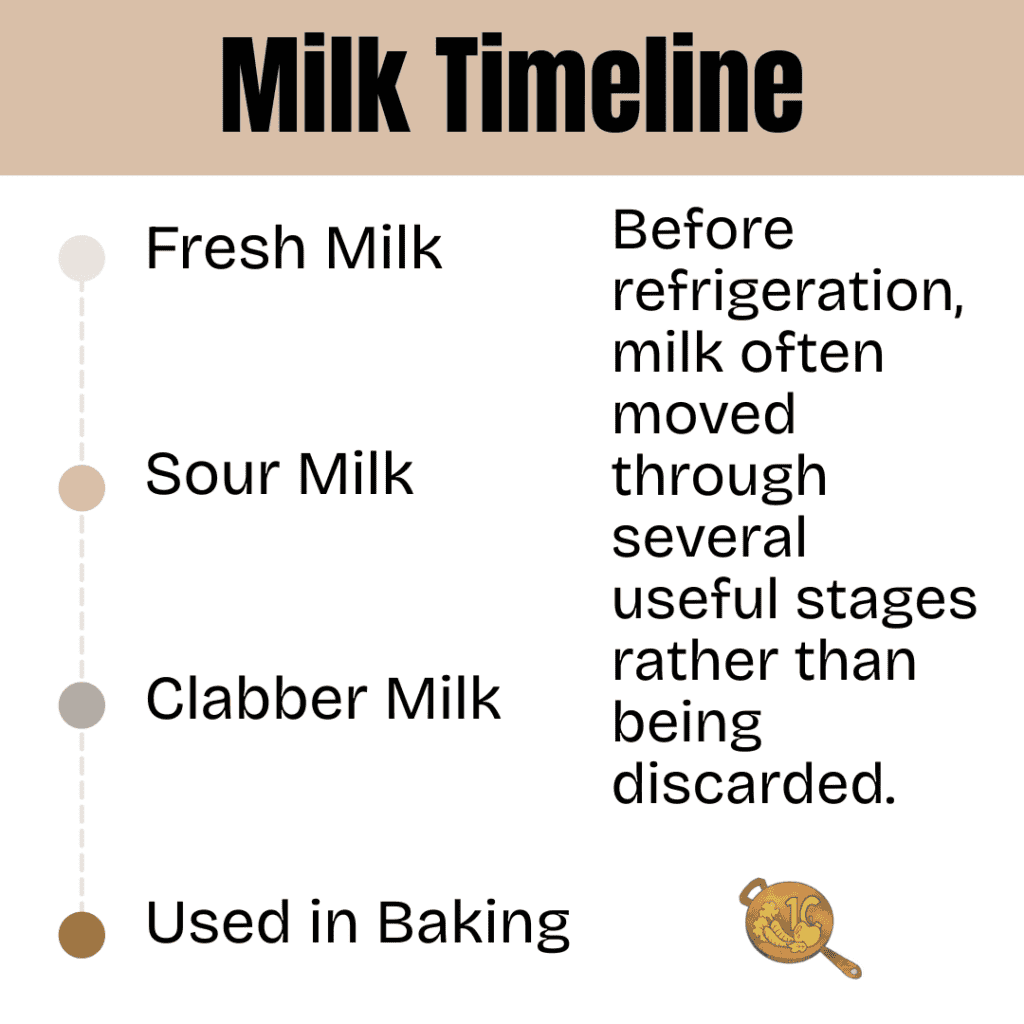
Before refrigeration became common, clabber milk was a normal part of many households. Fresh milk was highly perishable, and families often found practical ways to use it as it aged. Rather than throwing milk away once it soured, it was frequently used in baking, cooking, and cheesemaking.
Traditional clabbered milk was often made from fresh raw milk left at room temperature. As the fermentation process continued, the milk thickened and developed the characteristic tang associated with cultured dairy products.
Today, many people compare clabber milk to cultured buttermilk, kefir, or yogurt because all of these products rely on beneficial bacteria and natural fermentation.
For many modern readers, however, raw milk is something they’ve never experienced. Growing up, powdered milk was common in our house. The first time I tasted fresh raw milk, it hardly seemed like the same food. A friend of my sister sent home a litre, and because it had to be used, my mother encouraged the three of us girls to drink it. We happily obliged.
The richness was unforgettable. So was the stomach ache that followed.
Looking back, that experience helps explain why old recipes can sometimes feel confusing. The word milk has meant very different things to different families and different generations. Fresh farm milk, powdered milk, evaporated milk, buttermilk, clabber milk, and kefir all served practical purposes depending on what was available and affordable.
Understanding clabber milk begins with understanding that historical cooks worked with the ingredients they had, not necessarily the ingredients we keep in our refrigerators today.
How Does Milk Become Clabbered?
Unlike modern cultured dairy products, traditional clabber milk did not require a packet of starter culture or special equipment. In fact traditional clabber milk often developed when fresh cow’s milk was left at room temperature in a warm spot. The ambient temperature influenced how quickly natural bacteria multiplied and transformed the milk into a naturally fermented milk product.
Fresh raw milk naturally contained bacteria that could begin the fermentation process when conditions were right. As the milk sat, those bacteria consumed milk sugars and produced lactic acid. Over time, the milk thickened and developed a pleasantly sour taste.
How quickly this happened depended on several factors, including the temperature of the room, the richness of the milk, and the types of bacteria present.
For many families, clabber milk was not something they intentionally set out to make. It was simply one stage in the life of fresh milk.
A household might drink the milk while it was fresh, skim cream from the top for butter making, and later use the soured milk for biscuits, pancakes, cakes, or cheesemaking. Before refrigeration, ingredients were expected to be used at every stage rather than discarded the moment they changed.
That practical mindset is one reason clabber milk appeared so frequently in older recipes. What modern readers sometimes view as a specialty ingredient was often simply the milk that happened to be available that day.
Can You Make Homemade Clabber Milk Today?
Historically, homemade clabber milk was not considered a special project. It was simply what happened when fresh cow’s milk was left at room temperature and naturally fermented.
The process relied on naturally occurring bacteria already present in the milk. As these natural bacteria multiplied, they began the culturing process that transformed fresh milk into a tangy, naturally fermented milk product.
This is one reason old cookbooks often mention clabber milk so casually. Many households already had it on hand.
Today, the situation is different. Most store-bought milk is pasteurized, which changes the bacterial population and makes traditional clabbering less predictable than it once was. Refrigeration has also dramatically extended the shelf life of milk, reducing the need to use soured milk in everyday cooking.
Some modern homesteaders still make homemade clabber using fresh raw milk, often placing a jar of milk in a warm spot at room temperature and allowing natural fermentation to occur. The exact culturing process depends on factors such as ambient temperature, the milk itself, and the specific cultures present.
Most modern cooks, however, are more likely to reach for kefir, cultured buttermilk, or yogurt when they want a fermented dairy product for baking. These products provide similar acidity and tang while offering more consistent results.
In many ways, homemade clabber milk serves as a reminder of how much kitchen life has changed. What was once an ordinary ingredient found in countless households has become something most people encounter only when reading an old cookbook.
Why Some Homesteaders Still Use Clabber Milk
Although clabber milk largely disappeared from everyday kitchens, some homesteaders, traditional food enthusiasts, and fermentation hobbyists continue to use it today.
Part of the appeal is historical. Clabber milk offers a glimpse into how previous generations worked with fresh milk before refrigeration and commercial dairy products became commonplace.
Others appreciate clabber milk because it is part of a broader tradition of fermented foods. Like kefir, yogurt, cultured buttermilk, and sourdough starter, clabber milk relies on beneficial bacteria and natural fermentation.
For many people interested in traditional foods, learning about clabber milk is less about replacing modern dairy products and more about understanding the food traditions that shaped earlier kitchens.
Even those who never make homemade clabber milk can gain a better appreciation for old cookbooks by understanding how commonly it appeared in everyday cooking and baking.
Many of these same traditions continue around the world today in the form of kefir, cultured buttermilk, and other fermented milk products.
Why Did Clabber Milk Disappear?
Clabber milk largely faded from everyday kitchens as refrigeration, pasteurization, and commercial dairy production became widespread.
Historically, many households worked with fresh unpasteurized milk that came directly from a family cow or a nearby dairy farm. Because the milk contained naturally occurring bacteria, fermentation could occur naturally under the right conditions.
Modern store-bought milk is typically pasteurized and refrigerated, dramatically extending its shelf life while also changing the bacterial environment that once allowed clabber milk to develop so easily.
Food safety standards also changed. While traditional clabber milk relied on naturally occurring bacteria, modern dairy production focuses on consistency, predictability, and reducing the risk of foodborne illness. Commercial dairy processors generally prefer
controlled fermentation using specific bacterial cultures rather than relying on whatever microorganisms may be present in raw milk.
As a result, consumers today are far more likely to purchase cultured products such as buttermilk, kefir, or yogurt. These products provide many of the same benefits as clabber milk while offering a more standardized and regulated production process.
In many ways, clabber milk disappeared not because it stopped working, but because the dairy industry changed. Refrigeration, pasteurization, and modern food safety practices made naturally soured milk less necessary in everyday kitchens.
Why Did Old Recipes Call for Sour Milk?
Readers are often surprised by how many old cookbooks call for sour milk. Before refrigeration became widespread, milk naturally moved through several stages during its usable life. Rather than viewing soured milk as waste, home cooks treated it as a valuable baking ingredient.
As milk soured, the resulting milk became more acidic and developed the tangy flavor that bakers valued. Sour milk added moisture, acidity, and flavor to baked goods, and when paired with baking soda or saleratus, the acid helped create leavening and a lighter texture. What appears unusual in a nineteenth-century recipe was often simply a practical way to use an ingredient already available in the kitchen.
In many households, sour milk wasn’t a specialty ingredient. It was simply today’s milk.
Is Clabber Milk the Same as Buttermilk?
Not exactly.
Traditional buttermilk was the liquid left behind after butter was churned from cream. It contained less fat than cream but retained a tangy flavor from the natural fermentation that often occurred before churning.
Modern cultured buttermilk is produced differently. Manufacturers add specific bacterial cultures to pasteurized milk to create a thick, tangy dairy product.
Because both clabber milk and cultured buttermilk are fermented dairy products, they share many characteristics. Both contain lactic acid, both have a tangy flavor, and both can react with baking soda in recipes.
Texture-wise, cultured buttermilk and kefir are often closer to traditional clabber milk than milk mixed with vinegar.
What Is The Closest Modern Substitute For Clabber Milk?
If you’re trying to understand what traditional clabber milk was like, kefir is often one of the closest modern comparisons.
Traditional clabber milk formed when naturally occurring lactic acid bacteria fermented fresh milk. The result was a thickened, tangy dairy product that could be used for drinking, baking, and cooking.
Modern kefir is also a fermented milk product. While kefir uses a more complex combination of bacteria and yeasts, it shares many of the characteristics that made clabber milk useful in the kitchen.
If I were ranking modern products by similarity to traditional clabber milk, the list would look something like this:
- Homemade kefir
- Plain kefir
- Cultured buttermilk
- Plain yogurt thinned with milk
- Milk mixed with vinegar or lemon juice
Kefir and cultured buttermilk both provide real fermentation, lactic acid, and the tangy flavor associated with cultured dairy products. Milk mixed with vinegar provides acidity but does not undergo fermentation.
For baking, kefir is often one of the best stand-ins for old-fashioned clabber milk because it contributes acidity, moisture, and a similar interaction with baking soda.
From a practical standpoint, it may be helpful to think of these products like this:
- Clabber milk = naturally fermented milk
- Kefir = intentionally fermented milk
- Cultured buttermilk = commercially fermented milk
- Milk and vinegar = chemically acidified milk
Only the last option skips fermentation entirely.
That doesn’t mean vinegar milk is a poor baking ingredient. In fact, generations of home cooks successfully used it as a buttermilk substitute. It simply serves a different role in food history than traditional clabber milk.

Is Clabber Milk the Same as Milk and Vinegar?
Technically, no.
Traditional clabber milk is a naturally fermented dairy product. Milk mixed with vinegar is simply acidified milk. One develops through fermentation while the other relies on adding acid directly.
From a food history perspective, the distinction matters because clabber milk and vinegar milk are not the same ingredient.
From a home baker’s perspective, however, the answer becomes a little more complicated.
Growing up, buttermilk was not something we kept in the refrigerator. If a recipe called for buttermilk, we often used reconstituted powdered milk with a splash of vinegar. Sometimes lemon juice was used instead. The goal wasn’t to recreate traditional clabber
milk. The goal was to make biscuits, pancakes, muffins, and cakes turn out properly.
And it worked.
That’s one reason the vinegar-milk method has survived for generations. Most baking recipes are surprisingly forgiving. When baking soda is involved, the acid is often doing much of the heavy lifting. Vinegar milk provides that acidity without requiring a special trip to the grocery store.
Many families relied on whatever dairy products they had available. Reconstituted powdered milk, evaporated milk diluted with water, sour milk, vinegar milk, and lemon milk all found their way into mixing bowls because they were practical, affordable, and already in the house.
In many kitchens, authenticity came second to function.
A grandmother who once baked with naturally soured farm milk might later use canned milk. Her daughter might use powdered milk and vinegar. The ingredient changed, but the purpose remained the same.
This is where many modern discussions about clabber milk become confusing. A blogger may write:
“Make clabbered milk by adding vinegar to milk.”
Historically, that isn’t quite accurate. What they are really doing is creating a substitute that performs a similar role in baking.
The vinegar-and-milk mixture provides acidity for baking soda, helps create a tender crumb, and adds moisture to the batter. It performs many of the same jobs as clabber milk even though it is not the same food.
In many ways, this reflects how home cooks have always adapted recipes. The question was rarely whether an ingredient was perfectly authentic. The question was whether it worked with the ingredients available in the pantry.
If the biscuits rose, the cake baked properly, and nobody went hungry, most cooks considered that a success.
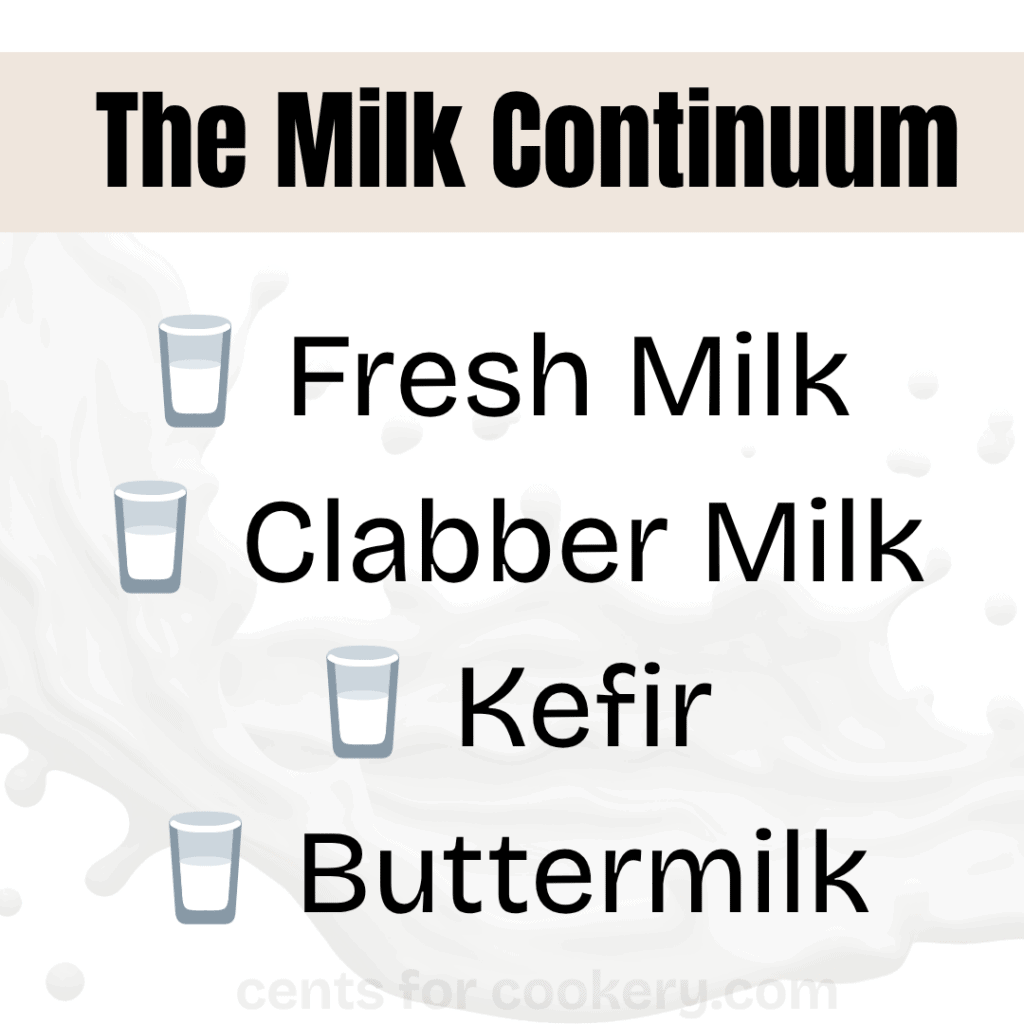
The Milk You Had Was The Milk You Used
Modern recipes often assume every ingredient is available at a moment’s notice. Historically, many households worked differently.
Fresh milk might come from a family cow.
Powdered milk might be purchased because it stored well and stretched the grocery budget.
Evaporated milk could sit in the pantry for months until needed.
Sour milk might be baked into biscuits rather than thrown away.
Clabber milk might develop naturally before refrigeration became common.
The goal wasn’t authenticity. The goal was feeding a family without wasting food.
That’s one reason old recipes often seem flexible by modern standards. Home cooks learned to adapt to whatever ingredients were available.
You Say Buttermilk, Grandma Said Clabber
Clabber milk is not the only old food term that causes confusion. Many ingredients and kitchen terms have changed meaning over time.
| Historical Term | What It Often Meant Then | What People Assume Now |
|---|---|---|
| Clabber Milk | Naturally fermented sour milk | Milk mixed with vinegar |
| Sweet Milk | Fresh milk that had not soured | Sweetened or flavored milk |
| Cream | Rich milk or separated cream depending on era and location | Heavy cream |
| Shortening | Any fat used to shorten gluten strands | Vegetable shortening |
| Receipt | Recipe | Store receipt |
| Pudding | Many different cooked desserts | Instant pudding mix |
A cook reading a cookbook in 1890 would have understood these differences immediately. Modern readers often need additional context.
When Milk Didn’t Always Mean The Same Thing
One reason old baking terms can be confusing is that even the word milk did not always mean the same thing from one household to another.
Some families drank fresh farm milk. Others relied on powdered milk because it was affordable, shelf-stable, and practical. Evaporated milk frequently found its way into tea, baking, soups, and casseroles because it could sit in the pantry for months until needed.
Growing up, powdered milk was common in our house, and if a recipe called for buttermilk, vinegar was often added to reconstituted milk instead. We weren’t trying to recreate traditional clabber milk. We were doing what generations of home cooks had always done: using what was available.
I still remember a friend of my sister sending home a litre of fresh raw milk. We didn’t have refrigeration available for it, so my mother made a practical decision that many households would have recognized immediately: the milk had to be used.
The three of us girls were instructed to drink it.
I had never tasted anything so rich in my life. Compared to the reconstituted powdered milk I was accustomed to, it hardly seemed like the same food. The creaminess was remarkable. So was the stomach ache that followed after enthusiastically drinking far more rich milk than my young digestive system was prepared for.

Looking back, that memory illustrates an important point. Historically, families often used whatever form of milk was available. Fresh milk, powdered milk, evaporated milk, sour milk, clabber milk, cultured buttermilk, and even kefir all served a purpose at different times and in different households.
The question was rarely which milk was best. The question was usually which milk was in the house.
For families without reliable refrigeration, milk often had three possible futures. It could be consumed quickly, used in cooking and baking, or allowed to sour and become clabber milk for later use. Waste was expensive, and home cooks became skilled at finding a use for milk at every stage of its life cycle.
Understanding old recipes becomes much easier when viewed through that lens. Historical cooks were not necessarily searching for the perfect ingredient. More often, they were making practical use of the ingredients they already had.
What Job Was The Ingredient Doing?
Many readers assume that if an old cookbook specifically calls for clabber milk, then clabber milk must be the only ingredient that will work.
In reality, historic recipes were often more flexible than modern readers expect. The important question is not always which ingredient was used, but what job that ingredient was performing in the recipe.
Clabber milk was not necessarily the only ingredient capable of providing acidity and moisture. Depending on the recipe, buttermilk, sour milk, kefir, yogurt, or even milk mixed with vinegar could often perform a similar function.
Understanding the role of the ingredient helps explain why so many traditional recipes survived across generations. Families adapted recipes to use the ingredients they had available while still achieving similar results.
One of the easiest ways to understand old recipes is to stop asking:
“What ingredient is this?”
and start asking:
“What job was this ingredient doing?”
This approach makes many historic recipes much easier to understand.
- Clabber milk provided acidity.
- Buttermilk provided acidity and moisture.
- Cream provided richness.
- Shortening created tenderness.
- Saleratus provided leavening.
Once you understand the purpose behind the ingredient, modern substitutions become easier to evaluate.
The vinegar-and-milk substitute works because it performs the same chemical job as clabber milk, even though it is not the same food.
From Clabber to Kefir: Fermented Milk Around the World
While clabber milk may sound like a forgotten ingredient today, naturally fermented milk remains an important part of many food traditions around the world.
Unlike kefir and yogurt, which are made using specific cultures or starter cultures, traditional clabber milk relied largely on the natural bacteria already present in the milk.
In parts of Eastern Europe and the Caucasus region, kefir has been enjoyed for centuries. Like clabber milk, kefir is a cultured product that relies on good bacteria to transform fresh milk into a tangy fermented food.
In fact, if a modern reader wants to understand what traditional clabber milk may have tasted and felt like, kefir is often one of the closest readily available comparisons. While kefir contains a more complex mix of bacteria and yeasts than traditional clabber milk,
both are fermented dairy products with a tangy flavor, natural acidity, and many of the same baking applications.
Scandinavian countries have their own cultured dairy products, including filmjölk and other fermented milks that are commonly enjoyed at breakfast or as snacks.
Throughout Africa, many traditional foods rely on naturally fermented milk products, some of which have been enjoyed for generations as a way to preserve fresh cow’s milk and extend its shelf life.
Even modern cultured buttermilk continues this tradition. Although it is produced using specific bacterial cultures rather than naturally occurring bacteria, it serves many of the same culinary purposes that clabber milk once did.
Looking at these foods together reveals something interesting. Clabber milk was never really an oddity or a forgotten kitchen mistake. It was part of a much larger global tradition of preserving milk through fermentation.
The names, specific cultures, and culturing methods may change from one culture to another, but the idea remains remarkably consistent. For centuries, people have relied on beneficial bacteria to turn fresh milk into nutritious, flavorful foods with a longer shelf life.
In that sense, clabber milk is less a relic of the past and more one chapter in a worldwide story of practical home cooking.
Other Old Baking Terms Worth Knowing
Clabber milk is only one example of how food language evolves over time.
If you enjoy reading historic cookbooks, you may also encounter:
Sweet Milk
Sweet milk simply meant fresh milk that had not soured. It had nothing to do with added sugar.
Saleratus
Before modern baking powder became common, many bakers used saleratus as a leavening agent. The term is unfamiliar to many modern home cooks.
Pearlash
Pearlash was an early chemical leavener used before baking soda became widely available.
Receipt
Many older cookbooks used the word receipt where modern readers would expect the word recipe.
Scalded Milk
Scalded milk was once a common instruction in baking and bread making. Understanding why recipes called for scalded milk can help modern cooks better interpret historic instructions.
Final Thoughts
Clabber milk is more than an old-fashioned dairy product. It is a reminder that ingredients, language, and cooking practices evolve over time.
The next time you encounter an unfamiliar ingredient in an old cookbook, try asking what purpose it served in the recipe. Often the ingredient itself is less mysterious than the language surrounding it.
Understanding the role of clabber milk, buttermilk, sweet milk, and other historic ingredients can make old recipes easier to interpret and help modern cooks appreciate the practical wisdom behind traditional kitchens.