How to Choose the Best Pumpkin for Cooking
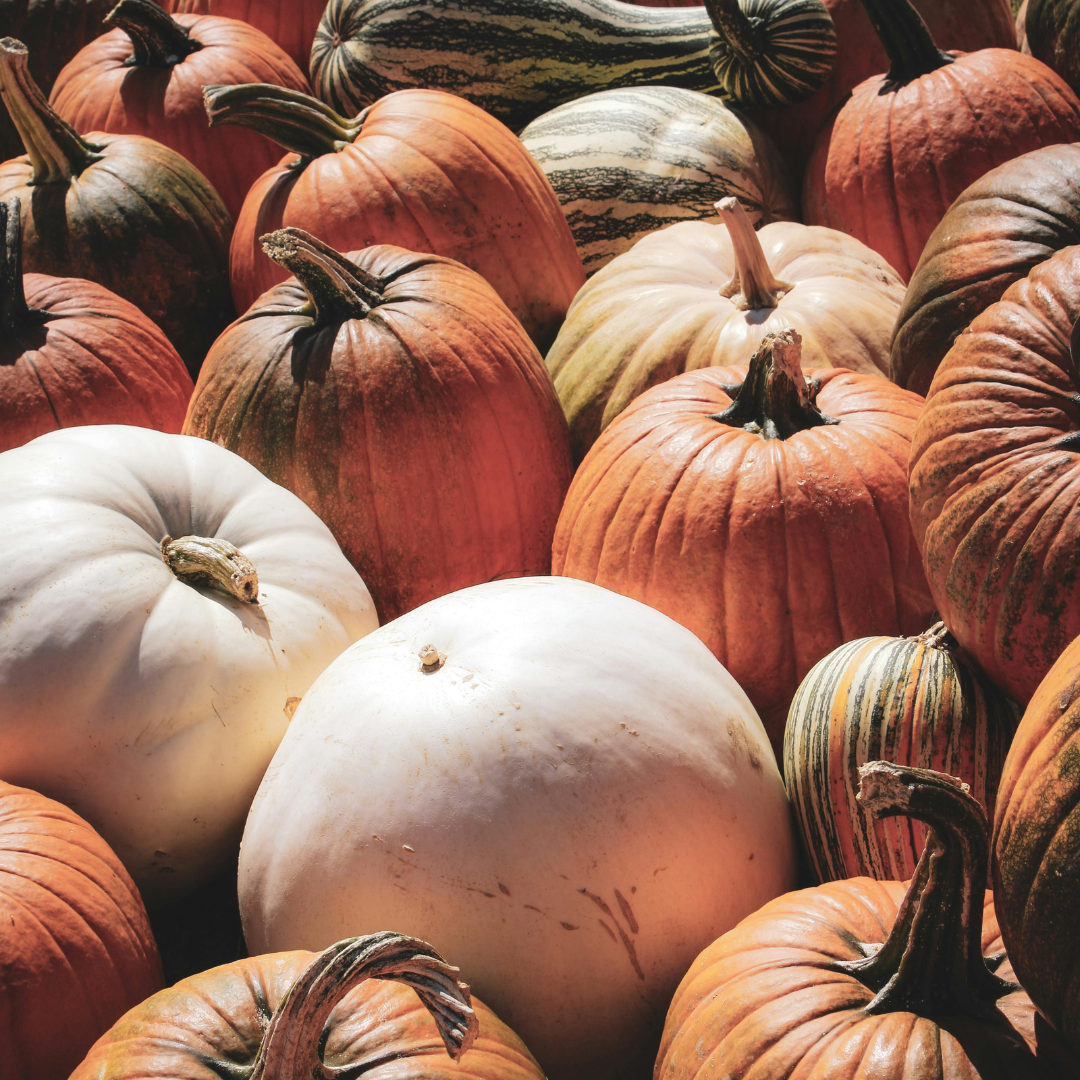
Not every pumpkin at the pumpkin patch is going to give you the same results in the kitchen. Some pumpkins are grown for their smooth shape and size so they make good jack-o’-lanterns, while others have denser, sweeter flesh that is better suited to cooking.
Growing up off-grid, we grew pumpkins when we could, and when the crop was successful, we used what we had. You don’t necessarily need a pumpkin labelled specifically as a “pie pumpkin” to make homemade pumpkin puree, soup, muffins or other pumpkin recipes. A regular field pumpkin can still be cooked.
The bigger question is whether it is a good pumpkin for cooking. Size, variety, condition and what the flesh is like all matter. Once you get into really large pumpkins, you can end up with flesh that is much more pulpy, watery or fibrous than what you want for baking.
Quick Answer
The best pumpkin for cooking is firm, heavy for its size and free of soft spots, cuts or cracks. Smaller pie or sweet pumpkins generally have smoother, sweeter, less watery flesh, but a good regular pumpkin can also be roasted and used for pumpkin puree.
Best For:
Roasting, homemade pumpkin puree, soups and baking
Ideal Size:
Small to medium rather than extremely large
Feel:
Firm with a hard outer rind

Weight:
Heavy for its size
Condition:
No soft spots, deep cuts, cracks or signs of rot
Season:
Fall
Best Pumpkin Varieties for Cooking
If you’re buying a pumpkin specifically for cooking, the variety can tell you more than the size or colour alone. Some pumpkins are bred for smooth, dense flesh, while others are grown primarily for carving, decorating or simply becoming enormous.
Small Sugar or Pie Pumpkin: This is the classic place to start if you want a pumpkin for homemade puree or baking. Ontario Seed Company describes it as having finely grained, meaty, bright orange flesh and classifies it specifically as a baking type.
Winter Luxury: This is another true pie pumpkin. West Coast Seeds notes that Winter Luxury has high dry matter, which helps give it the smooth texture it is known for in pumpkin pies. The fruit generally weighs about 5 to 7 pounds.
Touch of Autumn: Veseys lists this variety specifically with its pie pumpkins. The fruit are around 3 pounds and are suitable for baking as well as fall decorating.
Vendetta: Another pie variety available through Veseys, Vendetta produces pumpkins around 3 to 5 pounds and is recommended for pies and tarts.
Lumina: This is a good example of why you shouldn’t judge a pumpkin only by its appearance. Lumina has the familiar ghostly white rind often used for decorating and carving, but Ontario Seed Company describes the orange flesh inside as sweet and fine-grained and suitable for pies, muffins and soups.
Fairytale: Not every good cooking pumpkin is small. Fairytale pumpkins can reach around 20 pounds, but Ontario Seed Company classifies them as a baking type and describes their deep orange, fine-grained flesh as suitable for soups, pies, tarts, dumplings and gnocchi.
Jarrahdale: This blue-grey pumpkin is another example of why colour and size don’t tell you whether a pumpkin is good for cooking. Jarrahdale pumpkins from Halifax Seed have sweet orange flesh and are suitable for both fall displays and eating. The pumpkins generally reach about 12 to 18 pounds.
Rouge Vif d’Etampes: Often recognized for its flattened, deeply ribbed Cinderella-style appearance, Rouge Vif d’Etampes from West Coast Seeds is a French heirloom pumpkin that can reach around 20 pounds. Despite its decorative appearance and larger size, it is also grown for eating and works well for winter meals and cooking.
So:
These examples are a good reminder that the best pumpkin for cooking isn’t determined by size or colour alone. Variety matters. A small pie pumpkin is an easy choice, but some larger or unusual-looking pumpkins are also grown specifically for good eating.
What I Look for in a Pumpkin I Plan to Cook
I’m not particularly concerned about whether a pumpkin is perfectly round or looks like the pumpkin you would put on a fall postcard.
If I’m planning to eat it, I’m more interested in the condition of the pumpkin and how practical it is going to be once I get it into my kitchen.
A slightly lopsided pumpkin is perfectly fine. Shape matters much more when you’re looking for a pumpkin to carve. For cooking, look for a pumpkin that feels solid and has an intact rind without soft areas or obvious damage. Illinois Extension also recommends choosing one that feels heavy for its size.
I generally prefer a smaller or medium pumpkin when I don’t know the variety, simply because many pumpkins sold specifically for cooking fall into that range. But size by itself doesn’t tell you whether a pumpkin will be good to eat.
A big pumpkin gives you more flesh, but more pumpkin isn’t automatically better pumpkin. There are exceptions, too. A variety such as Fairytale pumpkin can reach around 20 pounds and is still specifically grown as a baking pumpkin with fine-grained flesh.
That is why I would look at variety first, then size whenever the variety is known.
How Much Pumpkin Should I Buy?
A useful starting point is about 1 pound (454 g) of fresh pumpkin for roughly 1 cup of cooked, mashed or pureed pumpkin. Canadian Food Focus gives the same general conversion and notes that a pound of fresh pumpkin also works out to about 4 cups when peeled and cubed before cooking.
That means a 3-pound pumpkin may give you roughly 3 cups of puree, while a 5-pound pumpkin may give you around 5 cups. Treat that as an estimate rather than an exact yield because pumpkin varieties differ in the size of the seed cavity, rind thickness and how much moisture is in the flesh.
If you only need a cup or two of puree for baking, you probably don’t need to bring home a 10-pound pumpkin unless you already have plans for the rest.
What Size Pumpkin Is Best for Cooking?
Many pumpkins sold specifically for pies and baking are relatively small. Small Sugar pumpkins, for example, are roughly 20–25 cm across, while Veseys lists Touch of Autumn at about 3 pounds and Vendetta at about 3–5 pounds. OSC Seeds That makes a smaller pumpkin a very reasonable choice when you don’t know much else about it, but size should not override variety.
I wouldn’t treat 8 pounds as some hard cutoff, though.
If you have a healthy regular pumpkin that’s somewhat larger, you can still cook it. I’ve used the regular pumpkins we grew rather than wasting them simply because they weren’t the little pumpkins sold specifically for pie.
Where I wouldn’t go is to the other extreme.

Very large pumpkins are usually being selected for characteristics other than eating quality. An Atlantic Giant is a good example. Those pumpkins are bred to become enormous, and Oregon State University Extension specifically notes that the flesh isn’t ideal for eating.
In my experience, as you get into those really oversized pumpkins, you’re much more likely to end up with flesh that is pulpy or fibrous and doesn’t have the flavour I want.
So don’t assume the biggest pumpkin is the best value simply because you’re getting more pounds of pumpkin.
What to Look for When Choosing a Pumpkin for Cooking
Start with the outside.
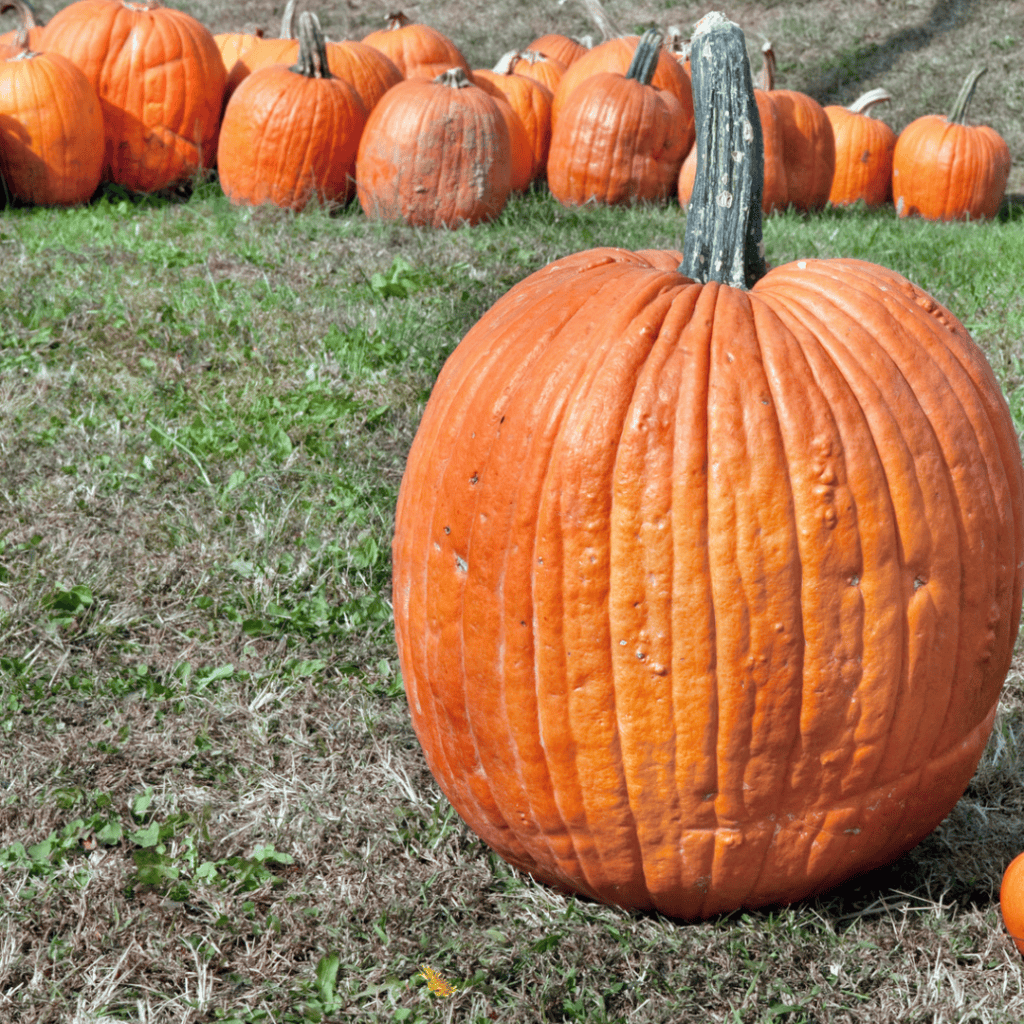
The pumpkin should feel firm all the way around. Check the bottom as well as the sides because that’s an easy place to miss a soft spot when pumpkins are sitting in a bin or on the ground.
Avoid pumpkins with soft areas, mold, cracks, deep cuts or holes. Damage gives decay an easy place to start.
Look at the stem, too. An intact stem helps protect the pumpkin, particularly if you aren’t going to cook it right away. Don’t use the stem as a handle when carrying the pumpkin. Breaking it off leaves an opening where the pumpkin can begin to deteriorate.
Finally, pick it up.
A pumpkin that feels surprisingly heavy for its size is usually a better choice than one that feels unusually light.
Budget Tip:
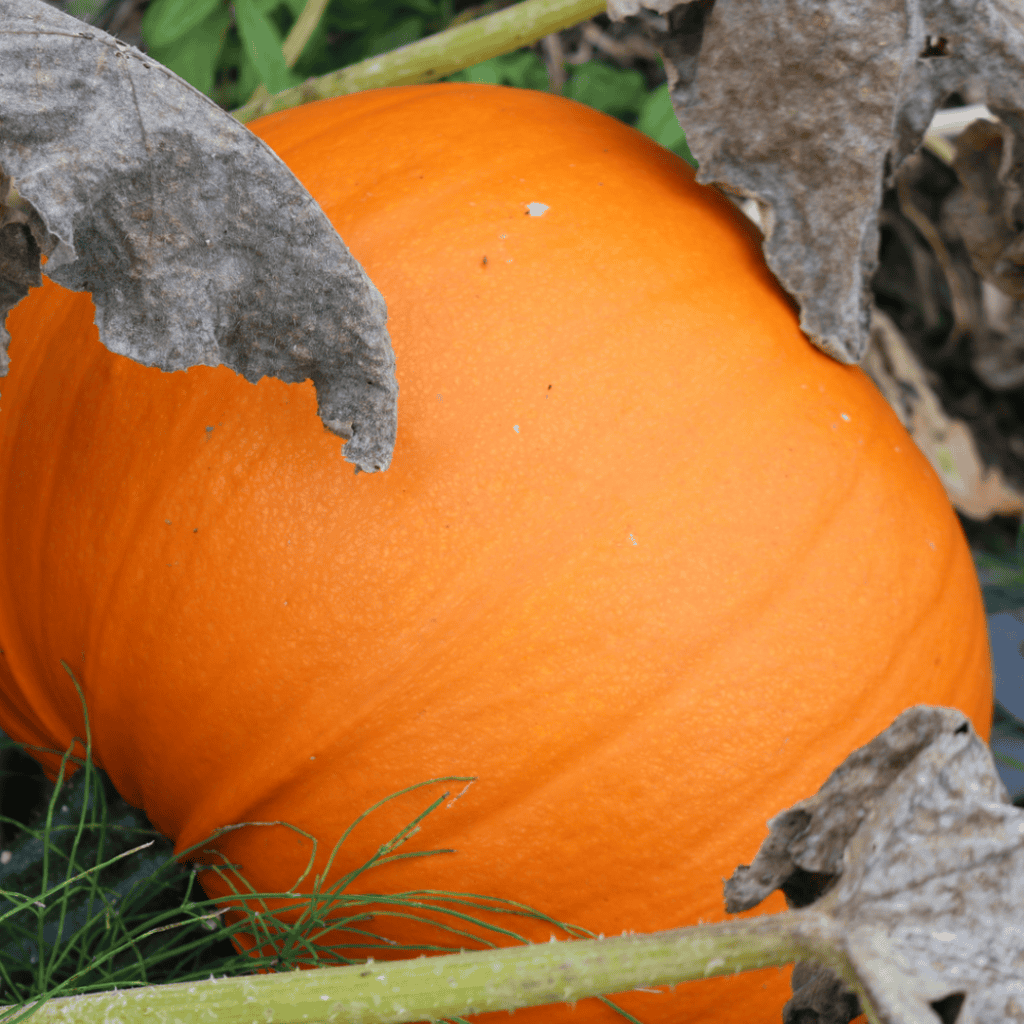
If you already have a fresh, intact regular pumpkin, use what you have before buying another pumpkin just because it has been labelled as a pie pumpkin.
You may get slightly different texture or moisture from a regular field pumpkin, but it can still be roasted and used. This is particularly useful if you bought pumpkins for an autumn display and deliberately kept some whole rather than carving them.
The exception is a pumpkin that’s badly damaged, beginning to spoil or one you can’t confidently identify as food. Saving a few dollars isn’t worth using questionable produce.
Pie Pumpkin vs Regular Pumpkin for Cooking
A pie pumpkin, sometimes called a sweet or sugar pumpkin, is a pumpkin variety selected more for eating quality than for carving. Small Sugar or Pie Pumpkin, for example, is a traditional baking pumpkin with finely grained, meaty flesh, while Canadian seed catalogues also classify varieties such as Touch of Autumn and Vendetta specifically as pie pumpkins.
This doesn’t mean there is only one kind of pie pumpkin. It is a useful category for pumpkins selected for cooking qualities rather than the name of one specific variety.
They’re generally smaller, and the flesh tends to be sweeter, smoother and less watery than the flesh of a typical jack-o’-lantern pumpkin.
That doesn’t mean a regular orange pumpkin suddenly becomes inedible because it was sold beside the Halloween decorations.
It simply means the texture and flavour may be different.
If I had a choice between a good pie pumpkin and a very large carving pumpkin and my only goal was making pumpkin puree, I would choose the pie pumpkin.
If I already had a good regular field pumpkin sitting on my counter, though, I wouldn’t throw it away and go buy another pumpkin just because mine didn’t have “pie pumpkin” written on the sign.
Can You Cook a Regular Halloween Pumpkin?
Yes, a regular Halloween or jack-o’-lantern pumpkin can be cooked as long as it is fresh and in good condition.
What you may notice is that the flesh tends to be more watery and stringy than the flesh of a pumpkin grown specifically for cooking. That’s one of the reasons pie pumpkins are usually recommended when you’re buying a pumpkin specifically to bake with.
If you use a carving pumpkin to make puree for baking, you may need to drain some of that extra liquid before using it. The Institute of Culinary Education recommends straining particularly watery carving-pumpkin puree because excess moisture can affect baked goods. That extra moisture is much less of a problem when you’re using the pumpkin in something like soup.
There is an important difference, though, between a pumpkin sold for Halloween and a pumpkin that has already been carved and sitting outside as a Halloween decoration.
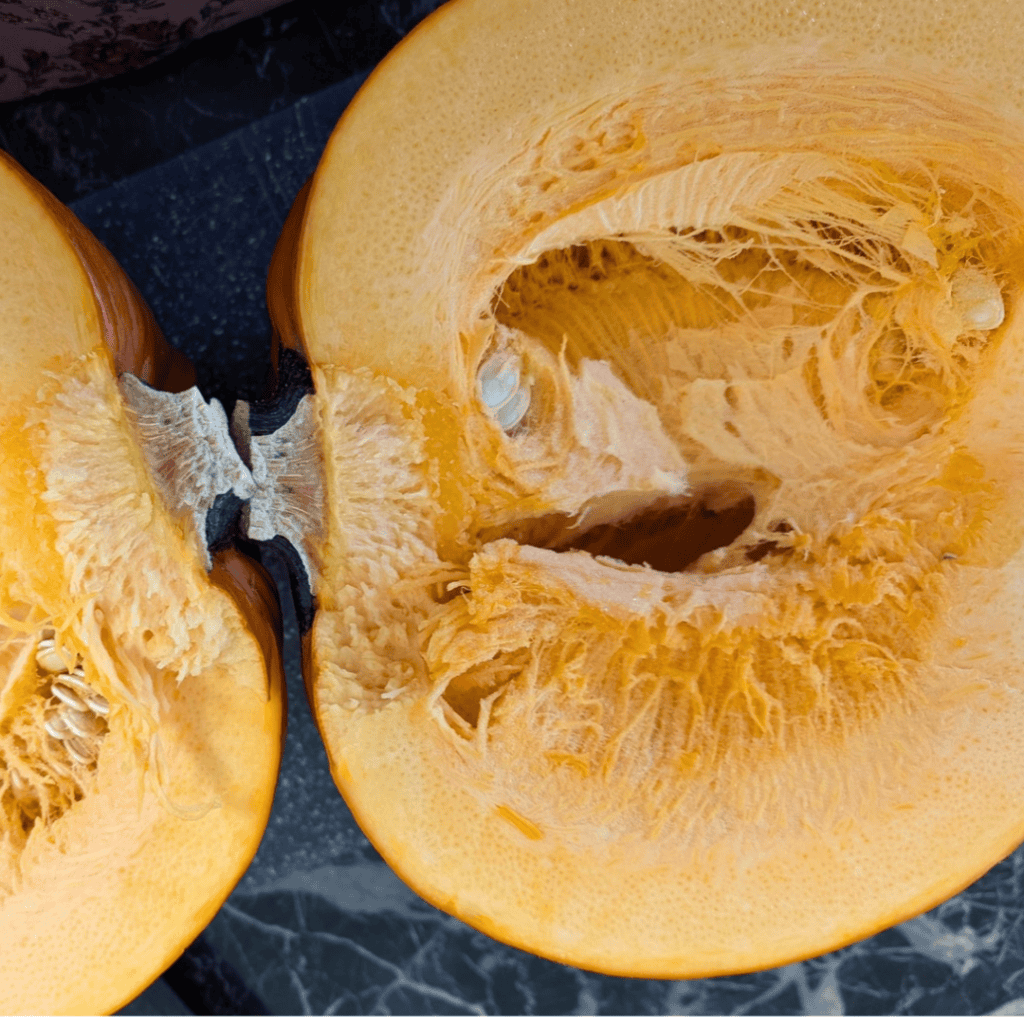
Once you’ve carved a pumpkin, you’ve exposed the flesh and created plenty of opportunity for deterioration and contamination. If a pumpkin has already spent days outside as a jack-o’-lantern, I would compost it rather than trying to turn it into dinner. Carved pumpkins break down much more quickly than intact pumpkins.
If you want to use one pumpkin for both purposes, cook it while it is still whole and fresh rather than waiting until after you’ve carved it.
Are White or Ghost Pumpkins Edible?
White pumpkins are one of those pumpkins that can make you wonder whether you’re looking at food or something grown strictly for decorating.
White or “ghost” pumpkins can be edible. Penn State Extension specifically identifies white ghost pumpkins as edible, with orange flesh inside that can be cooked. Lumina is a particularly good example. Ontario Seed Company actually classifies it as a display pumpkin because of its white rind and usefulness for decorating and carving, but describes the orange flesh inside as sweet and fine-grained and suitable for pies, muffins and soups.
The same rule applies here as it does with orange pumpkins: being edible doesn’t necessarily mean every variety has the same eating quality.
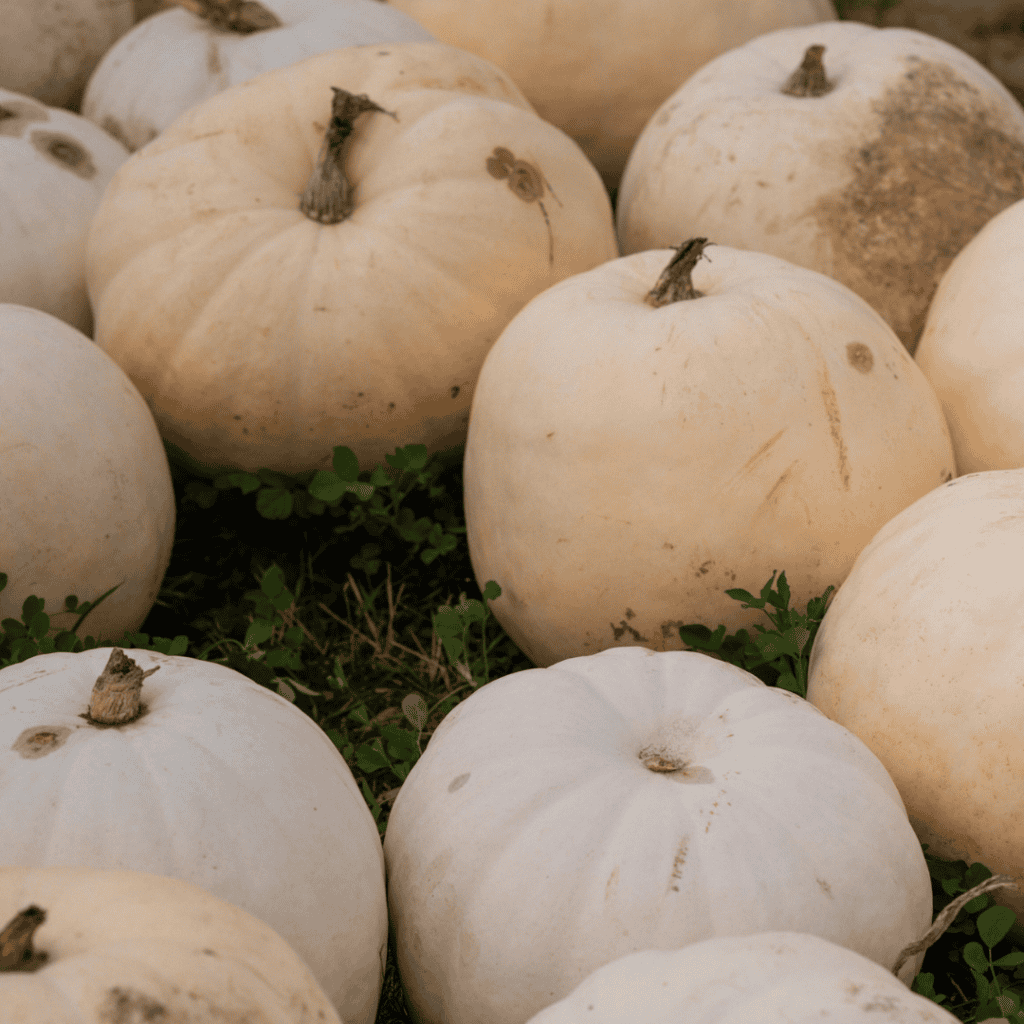
Some pumpkin varieties have been selected mainly because they’re attractive, unusual or useful for decorating. Others have better flavour and texture for cooking.
Utah State University Extension, for example, lists white Lumina pumpkins among pumpkin varieties that can be used in soups and desserts.
So don’t reject a pumpkin simply because it is white, blue-grey, tan or another colour you don’t associate with a traditional pumpkin.
Identify what it is first.
What About Decorative Pumpkins and Gourds?
This is where I would be much more cautious.
A pumpkin being decorative doesn’t automatically make the pumpkin inedible. Plenty of edible pumpkins and winter squash are attractive enough to use in a fall display before you cook them.
That does not mean you should start eating unidentified ornamental gourds.
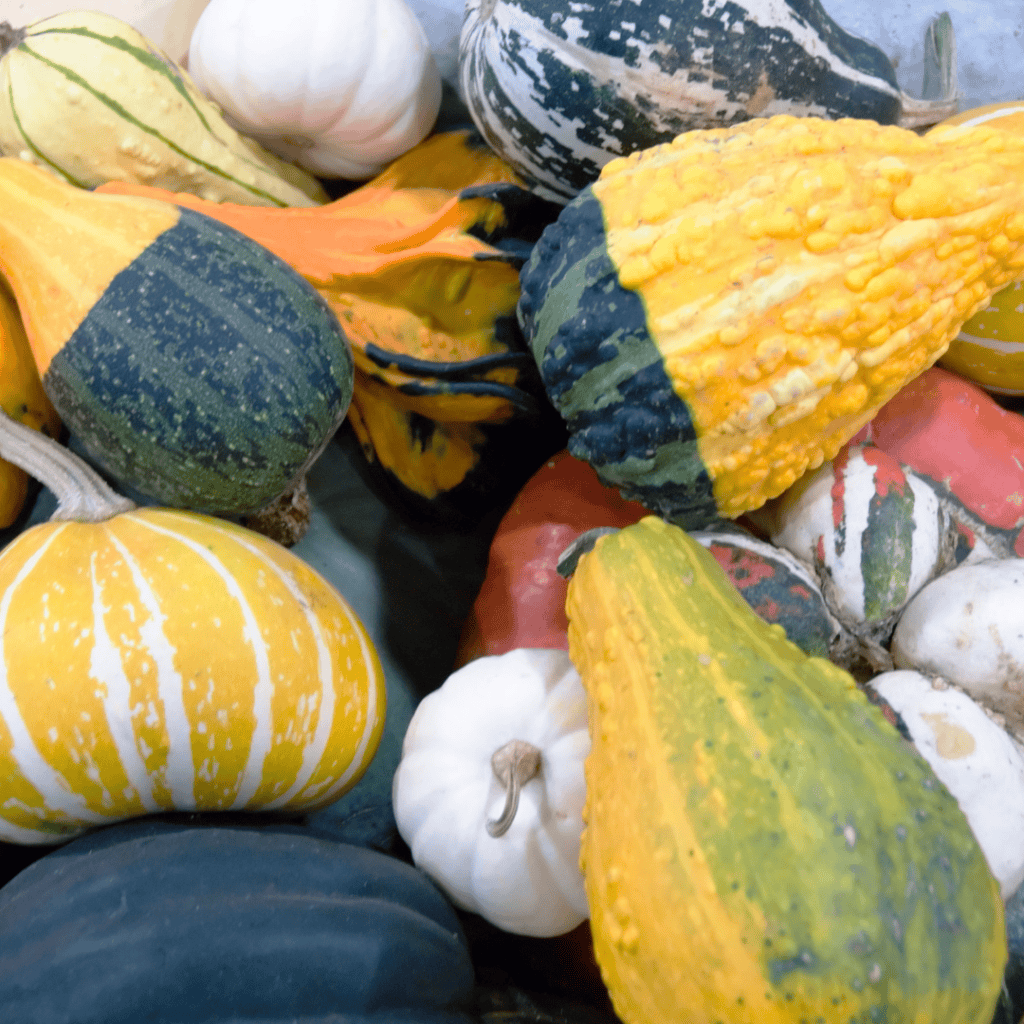
Pumpkins, winter squash and ornamental gourds can all end up together in the same autumn displays, and it isn’t always obvious to someone unfamiliar with the varieties what they’re looking at. Some gourds are grown specifically as ornamental or hard-shell gourds rather than as food.
My rule is simple:
If you can’t confidently identify it as an edible pumpkin or winter squash, don’t eat it.
There are enough good pumpkins available in the fall that there is no reason to gamble on an unidentified decorative gourd.
Does Pumpkin Colour Tell You Whether It Is Good for Cooking?
Not by itself.
We’re used to seeing bright orange pumpkins, but edible pumpkins and winter squash come in white, tan, green, blue-grey and other colours.
Colour is more useful when you already know what variety you’re looking at and know what that pumpkin is supposed to look like when mature.
I wouldn’t decide that a pumpkin is edible—or inedible—based simply on its colour.
When Are Pumpkins in Season in Ontario?
Ontario-grown pumpkins are generally in season in September and October, according to Foodland Ontario.
That makes early fall the best time to look for locally grown pumpkins at farm stands, farmers’ markets and grocery stores. It is also when you’re likely to have the widest choice between carving pumpkins, pie pumpkins and some of the more unusual specialty varieties.
If you’re buying pumpkins for fall decorating as well as cooking, choosing edible varieties gives you the option of using them in the kitchen afterward rather than treating the whole display as waste.
How to Store a Whole Pumpkin Before Cooking
Keep your pumpkin whole until you’re ready to use it.
A cool, dark storage area will give an intact pumpkin a much longer useful life than a warm windowsill or sunny porch. Illinois Extension recommends storing whole pumpkins at about 45–50°F (7–10°C) and notes that properly stored pumpkins can keep for approximately three to six months.
Keep pumpkins away from ripening apples, tomatoes, potatoes and other produce that releases ethylene gas because it can shorten the pumpkin’s storage life.
Check stored pumpkins occasionally. If one develops a soft area, leaking, mold or obvious decay, deal with it before it affects anything stored beside it.
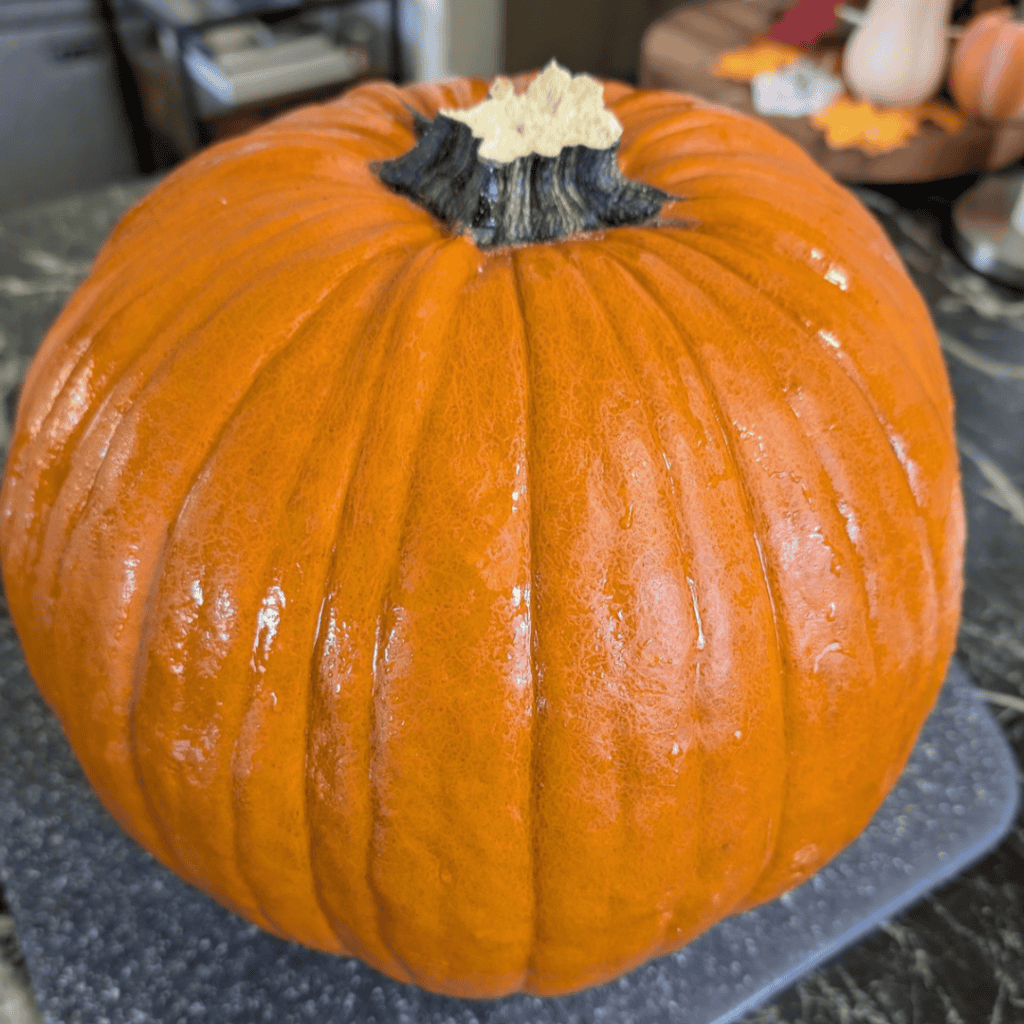
What to Do With Your Pumpkin Once You Get It Home
Once you’ve chosen your pumpkin, the next step is getting the usable flesh out of that hard shell.
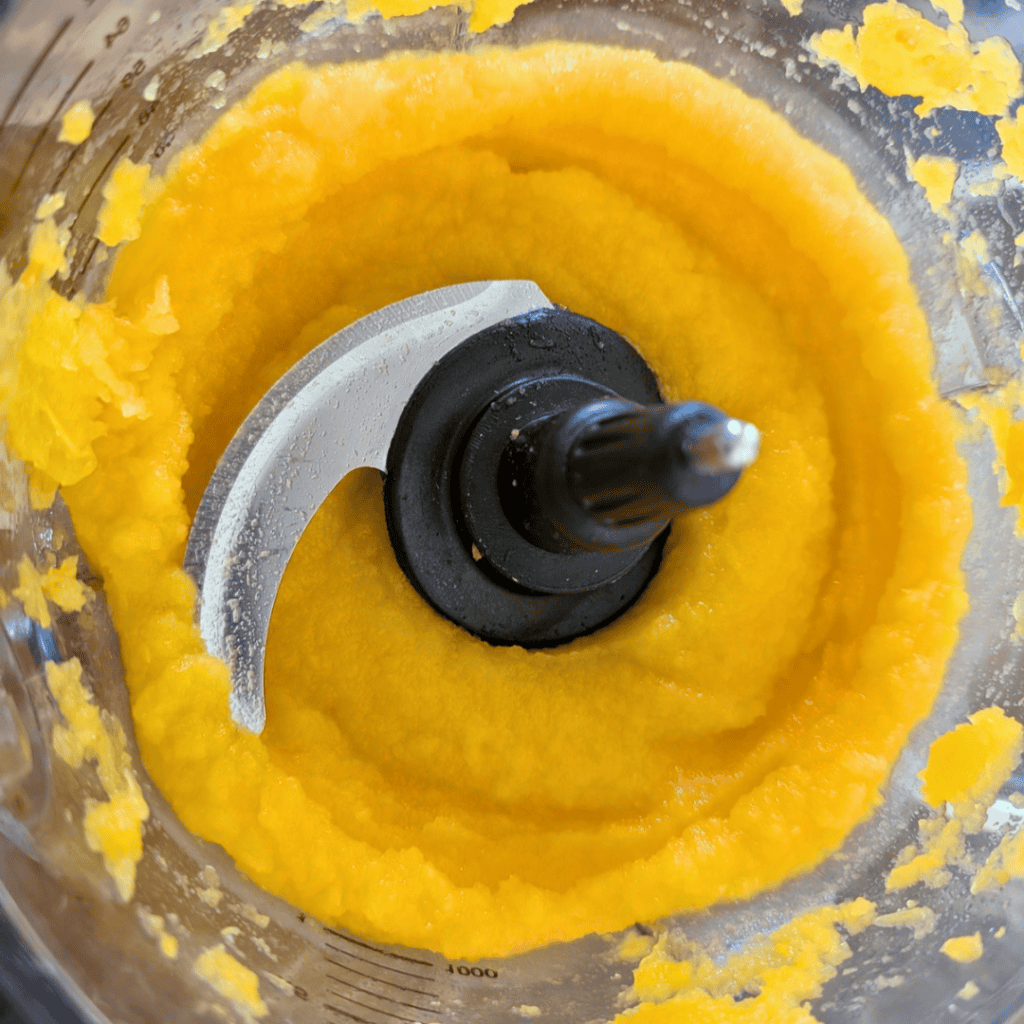
I roast mine rather than trying to peel and cube a raw pumpkin. Roasting softens the flesh so it can be scooped away from the skin and turned into homemade pumpkin puree.
Before cutting it, wash the outside of the pumpkin under running water. Even though you aren’t eating the rind, a knife can carry dirt or bacteria from the outside into the flesh as you cut.
From there, follow my How to Roast a Pumpkin for Pumpkin Puree tutorial for cutting, removing the seeds, roasting and scooping out the flesh.
And don’t throw away those seeds. They can be cleaned and roasted separately.
FAQ
Before You Cook It
Pumpkin season gives you a lot more choices than the little orange pumpkins labelled specifically for pie. Regular field pumpkins, white pumpkins and many of the unusual-looking pumpkins at a farm stand can have a place in the kitchen.
The trick is knowing what you have and choosing it for the job you’re asking it to do.
If you’re buying specifically for cooking, choose a sound smaller or medium pumpkin with good weight and firm flesh. If you’re using a pumpkin you already have, don’t assume it has to be a pie pumpkin before it is worth cooking.
And if you’re staring at something from a decorative fall display and can’t tell whether it’s actually an edible pumpkin or squash, leave that one out of the kitchen.
What kinds of pumpkins do you usually find where you live—mostly regular orange field pumpkins, or do your local farms carry pie, white or other varieties?


