Mini Muffins vs Regular Muffins (It’s the Same Batter)
What is the actual difference between mini muffins and regular muffins? If you’re a new baker, you might think there’s more to it, but there really isn’t. It’s the same batter you’d use in recipes like banana muffins or blueberry muffins, just baked in a different pan.
After decades of baking, I can tell you this is one of those things that gets overcomplicated more than it needs to be.
Do You Need a Different Recipe for Mini Muffins?
No, you don’t.
Mini muffins, regular muffins, and even jumbo muffins all use the same batter. The ingredients, ratios, and mixing method stay exactly the same no matter what size pan you’re using. A standard 12-muffin recipe will make about 24 mini muffins. A larger batch or jumbo-style recipe can make closer to 36 mini muffins, depending on how full you fill the pan.
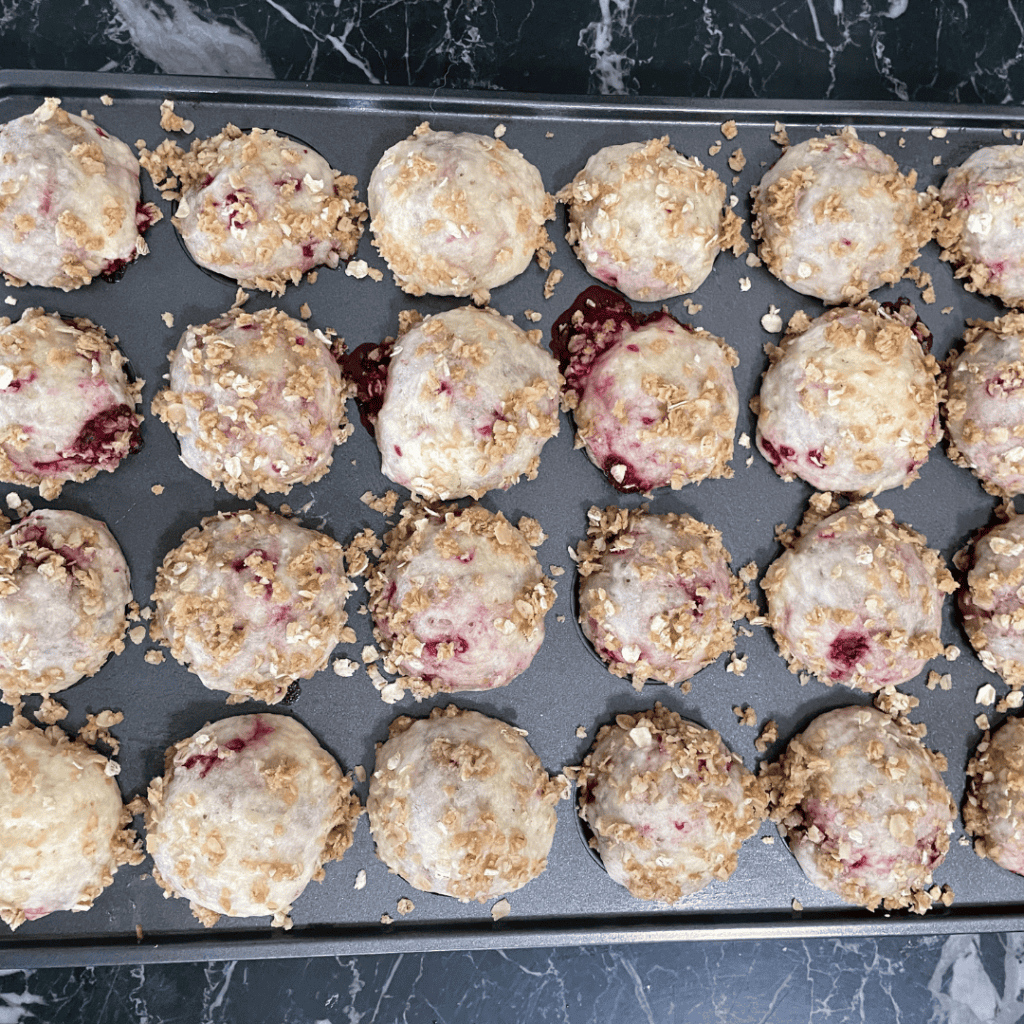
What changes is how that batter bakes. Most standard muffin recipes, like these blueberry or chocolate muffins, work across all pan sizes without changing the batter.
What Actually Changes When You Change Muffin Size
Pan Size
The size of the muffin pan determines how much batter goes into each well. The same batter you’d use for something like carrot oatmeal muffins or banana muffins will bake just as well in a mini muffin pan—you’ll just need to adjust the time.
Mini muffins use a mini muffin pan with smaller wells, while regular muffins use a standard pan, and jumbo muffins hold quite a bit more. The amount of batter in each well is what affects how quickly the muffins bake.
Smaller muffins cook through faster. Larger muffins take longer for the center to fully bake. You can use muffin liners or cupcake liners in any size, just match them to the pan. I personally don’t use liners often, as they don’t always release cleanly. I prefer a light coating of cooking spray instead. If you have an easy-to-clean pan you may not need liners or spray.
Baking Pan Type
The type of pan you use can also affect how your muffins bake.
Light-colored metal pans reflect heat and tend to bake more evenly. Dark pans absorb more heat, which can cause the outside of the muffins to brown faster before the center is fully baked.
If you’re using a dark pan, it can help to check your muffins a few minutes earlier to avoid overbaking the edges. For consistent results, I usually stick with a standard light-colored metal muffin pan.
Baking Time
This is where the real difference shows up.
As a general guideline:
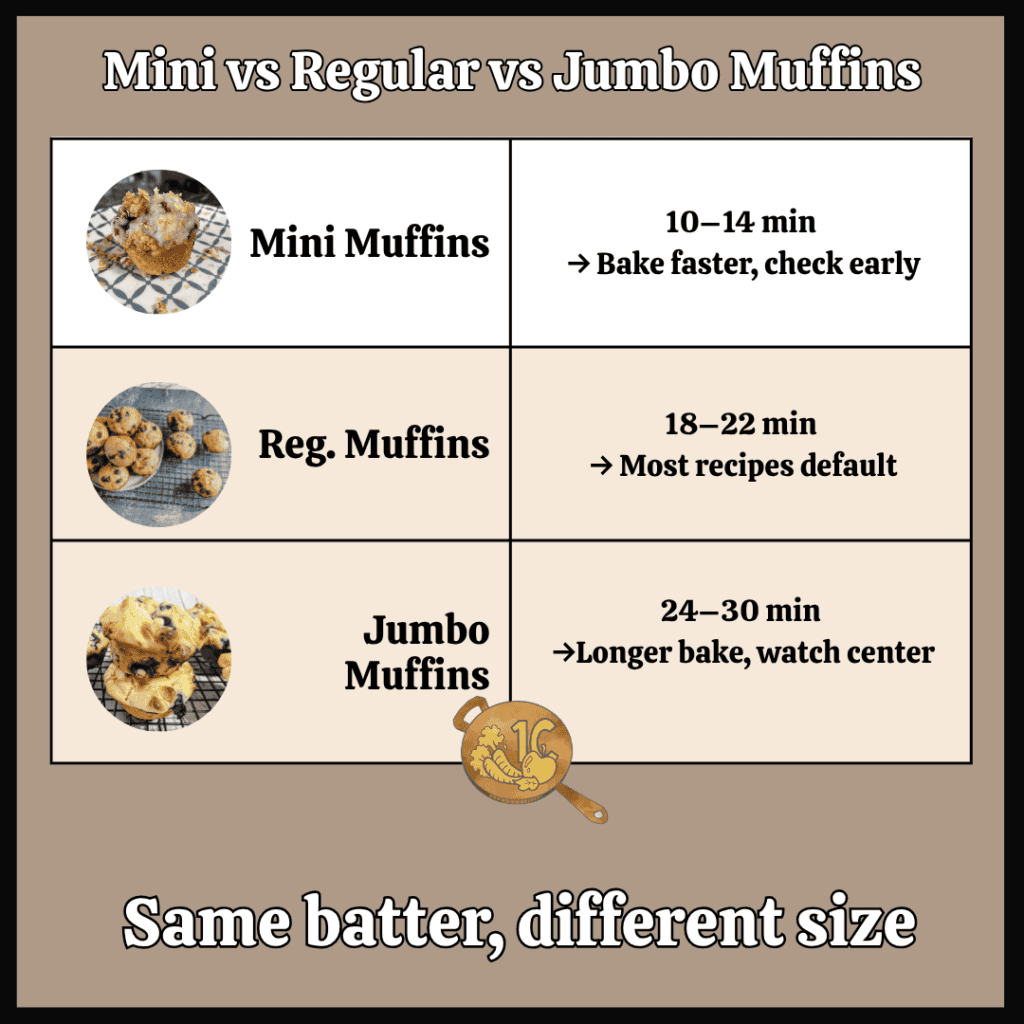
- Mini muffins: about 10–14 minutes, though some batches may be ready closer to 8–12 minutes depending on your oven and how full the pan is.
- Regular muffins: about 18–22 minutes
- Jumbo muffins: about 24–30 minutes
These times can vary depending on your oven and how full the pan is, so they’re best used as a starting point.
For mini muffins especially, it helps to start checking a few minutes early.
How to Tell When Muffins Are Done
Instead of relying only on the clock, it’s better to look for a few simple signs.
The old-school knife test:
Insert a butter knife at a slight downward angle from the outer edge toward the center of a muffin. Pull it back out—if it comes out clean or with just a few moist crumbs, they’re ready. If you see wet batter, give them a few more minutes.
You can also look for:
- lightly golden tops
- edges that look set
- a surface that springs back when gently pressed
After years of baking, you’ll start to notice something else too—the smell. Muffins give off a warm, slightly toasted scent when they’re ready. That comes with experience, but until then, the knife test and visual cues are your best guide.
Oven Temperature
In most cases, the oven temperature stays the same regardless of muffin size.
Some bakery-style muffins start at a higher temperature to create a taller rise, the recipe will indicate generally whether this is needed. A standard temperature of 350F works whether you’re baking small size or regular muffin recipes.
What Doesn’t Change
This is where a lot of confusion comes in.
The batter itself doesn’t change at all for miniature muffins or standard muffins:
- same ingredients
- same ratios
- same mixing method
You’re not making a “mini muffin batter” or a “jumbo muffin batter.” You’re making a muffin batter and baking it in a different size pan.
Whether you’re making something simple like raspberry muffins or bakery-style peach muffins, the batter itself stays the same.
When Size Might Make a Small Difference
There are a few situations where size can affect the final result slightly.
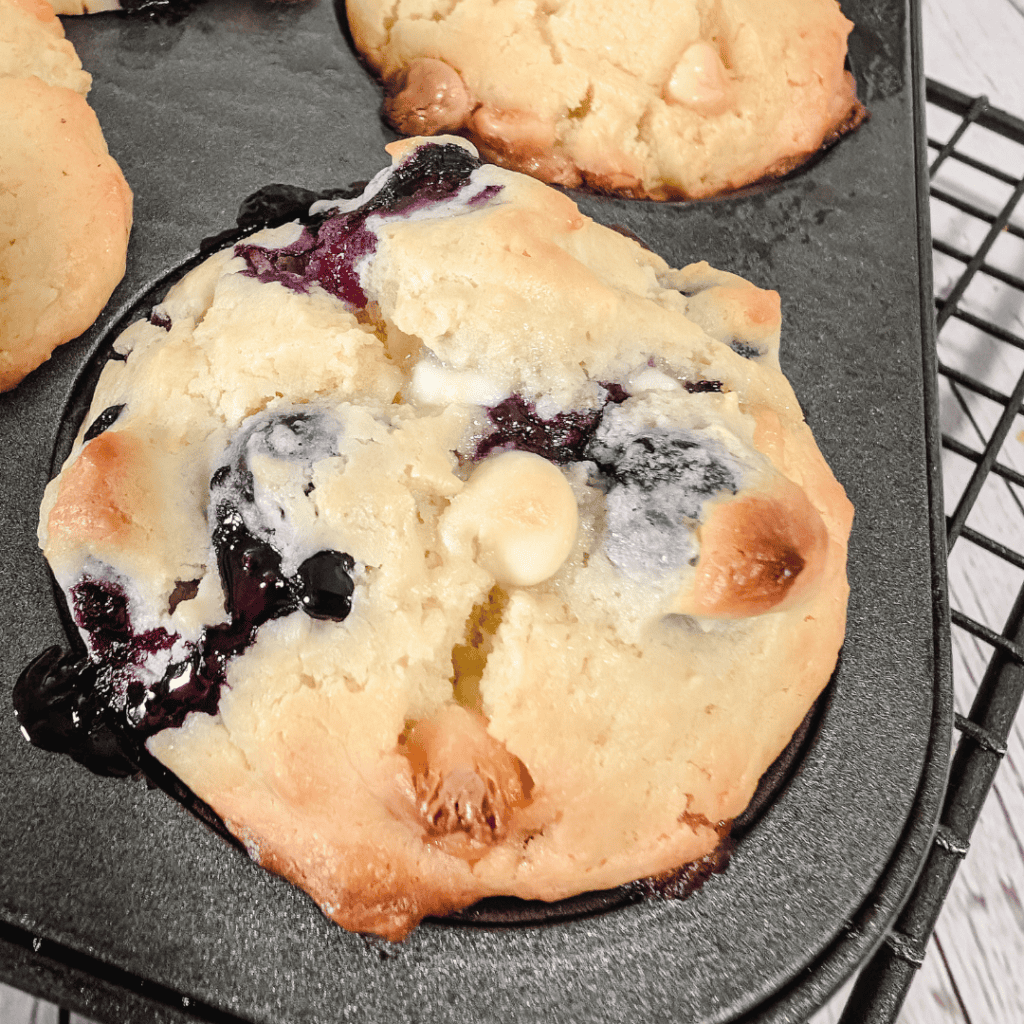
Very large muffins can brown more on the outside before the center is fully baked. Mini muffins can dry out quickly if they stay in the oven too long.
But these are timing issues, not recipe issues.
Once you adjust the bake time, the results stay consistent whether you bake mini muffins or standard muffins.
This is also true for miniature cupcakes and cake batter.
Common Beginner Mistake
One of the most common mistakes is assuming you need a completely different recipe for mini muffins or bakery-style muffins.
That usually leads to overcomplicating things or skipping recipes altogether because they don’t match the pan you have.
Most muffin recipes are flexible. You can use what you already have and adjust the bake time to fit the size you’re making.

How to Tell When Muffins Are Done
Instead of relying only on baking time, it helps to look for a few simple signs.
The butterknife method:
Insert a butter knife at a slight downward angle from the outer edge toward the center of a muffin. Pull it back out—if it comes out clean or with just a few moist crumbs, they’re ready. If you see wet batter, give them a few more minutes.
You can also look for:
- lightly golden tops
- edges that look set
- a surface that springs back when gently pressed
These signs work for mini, regular, and jumbo muffins alike.
Final Thoughts
Mini muffins, regular muffins sometimes called standard muffins, and jumbo muffins aren’t different recipes, they’re just different sizes of the same thing.
Once you understand that the batter stays the same, baking becomes a lot more straightforward. You can use the same recipe and adjust the time based on the pan you have.
It’s one of those small shifts that makes baking feel a whole lot easier. So go ahead and use the pan you have and adjust the time as needed. It’s a lot simpler than it seems.