Why Do People Save Bacon Grease and How To Use It?
Growing up in the early 1980s, nobody in my family saved bacon grease. In fact, bacon itself was usually reserved for the adults because it was considered a luxury item that didn’t fit comfortably into our household budget.
For part of my childhood, we lived without a refrigerator or freezer. Looking back, you might assume that would have made us more likely to save things like bacon fat. Surprisingly, we didn’t. My mother was very conscious of food safety and often warned about foods going rancid or spoiling. Long before I understood terms like salmonella or botulism, I understood that if something seemed questionable, it probably wasn’t worth keeping.
The idea of saving bacon grease wasn’t completely unfamiliar to me, though. I came across it repeatedly while reading older books. Characters in pioneer stories and historical novels often saved bacon fat for cooking, frying doughnuts, seasoning vegetables, or stretching ingredients a little further. I remember seeing references to it in books like the Laura Ingalls Wilder series long before I ever considered saving bacon grease myself.
As I got older and started reading historical recipes and old cookbooks, I noticed the same thing. Many home cooks treated leftover bacon grease as a valuable kitchen ingredient rather than a waste product. Some stored it in a coffee can, others in a crock or glass jar, and many used it regularly in everyday cooking.
That made me wonder why so many people considered bacon grease worth saving when my own family never did.
Quick Answer
People save bacon grease because it adds flavor to food, reduces waste, and can be reused as a cooking fat. Historically, bacon fat was often saved because vegetable oils were less common and more expensive than they are today. Modern home cooks who save bacon grease typically use it to add smoky flavor to foods such as fried potatoes, green beans, vegetables, cornbread, and cast iron skillet meals.
Why Did Earlier Generations Save Bacon Grease?
For much of history, people wasted very little food. If an ingredient could be used again, it usually was. Bacon grease was no exception.
Before inexpensive vegetable oils became widely available, animal fats were some of the most common cooking fats found in home kitchens. Families often kept lard, tallow, drippings, and bacon fat on hand because they added flavor to food and served a practical purpose in everyday cooking.
In many places and time periods, rendered animal fats were used for more than cooking. Depending on the fat available, they could be used in soap making, lamps, leather treatment, waterproofing, and other household tasks. Even today, some people use animal fats to help condition or waterproof leather boots and outdoor gear. When a resource had multiple uses, people tended to waste very little of it.
Bacon grease was especially valued because it was a byproduct of something people were already making. Instead of throwing away the rendered bacon fat left in the pan, cooks could save it and use it later to fry potatoes, season vegetables, cook eggs, flavor beans, grease baking pans, or fry breads such as bannock and pan bread. A spoonful of bacon grease could add flavor to foods that might otherwise be fairly plain.
For many households, saving bacon grease simply made sense. It was a useful ingredient they already had, and throwing it away meant losing both flavor and value.
Reusing bacon fat helped stretch food dollars while reducing food waste, allowing cooks to get more value from an ingredient they were already purchasing.
One thing food history has taught me is that previous generations often looked at ingredients differently than we do today. During periods of economic hardship, rising food prices, or limited access to ingredients, people often relied on skills that helped stretch their food budget further. Saving bacon grease was one example of that mindset.
In some ways, I can understand that way of thinking. Growing up during times of scarcity, I learned that wasting food was rarely an option. My father often worked away from home, and because my mother didn’t drive, we had to plan ahead and make what we already had in the house last. That experience taught me to look at ingredients differently and to find value in things that might otherwise be discarded.
The cost of bacon itself can be somewhat prohibitive, especially as grocery prices continue to rise. However, when you start thinking about bacon as more than just the meat, it changes the equation. In addition to the bacon itself, you’re also getting a flavorful cooking fat that can be used in future meals.

A package of bacon might provide breakfast one morning, bacon grease for fried potatoes later in the week, flavor for a batch of vegetables, and even a spoonful for a skillet of bannock. Looking at ingredients this way can help stretch both food and grocery dollars.
Many cooks considered bacon grease so useful that it earned nicknames such as “liquid gold” in some households. When a spoonful could flavor a skillet of potatoes, a pot of beans, or a batch of pan bread, it’s easy to see why some cooks referred to it as “liquid gold.” While that may sound unusual today, it reflected how valuable a flavorful cooking fat could be in a time when convenience foods and modern grocery stores didn’t exist.
Why Do Some People Still Save Bacon Grease Today?
Although bacon grease is no longer a kitchen staple in most homes, many people still save small amounts for cooking. Unlike neutral oils such as canola oil or vegetable oil, bacon fat adds flavor to food with very little effort.
A spoonful of bacon grease can be used to cook eggs, fry potatoes, sauté green beans, roast Brussels sprouts, or season cast iron cookware. I have even used bacon grease in my Corn Succotash recipe, where it adds depth and smoky flavor that would be difficult to achieve with vegetable oil alone.

Bacon grease can also be used in baking. While it won’t work in every recipe, it can add a subtle savory note to items such as cornbread, biscuits, and certain cookies. I even use bacon in my Maple Bacon Chocolate Chip Cookies, where the smoky bacon flavor complements the maple and chocolate surprisingly well.
Today, many home cooks still save bacon grease because it is economical, helps reduce food waste, and adds flavor to food. Whether you choose to save it or not is a personal decision.
One thing even many critics of bacon grease can agree on is that the flavor is difficult to replicate. A small spoonful can add a rich smoky taste to vegetables, potatoes, beans, and other dishes that would be hard to achieve with a neutral cooking oil alone. For cooks who enjoy that flavor, saving a small amount of bacon grease can be a practical way to get more value from something that might otherwise be discarded.

What Is Bacon Grease Used For?
Bacon grease can be used anywhere a recipe benefits from a little smoky flavor. Because it is a rendered animal fat, it behaves similarly to other cooking fats while contributing a distinct bacon taste.
One of the most common uses is frying or sautéing vegetables. Green beans, Brussels sprouts, onions, and potatoes all benefit from a spoonful of bacon grease. Many traditional recipes use bacon fat to season vegetables because it adds flavor without requiring additional ingredients.
Bacon grease is also popular for cooking eggs and breakfast foods. A small amount in the pan can add flavor to fried eggs, hash browns, and breakfast potatoes. It can also be used when making hearty skillet meals such as my Easy Hash Dinner with Hamburger Patties and Sunny-Side Eggs, where a little bacon fat can add extra flavor to the potatoes and onions.
Some home cooks use bacon grease in cast iron skillets to help season the cooking surface. While dedicated cast iron seasoning products are available today, bacon fat was often used in earlier generations as part of routine cast iron maintenance.
Bacon grease can also be incorporated into baking. Cornbread, biscuits, savory scones, and certain cookie recipes can benefit from the subtle smoky flavor that bacon fat provides. While it should not automatically replace butter or shortening in every recipe, it can work well when the flavor complements the finished product.
For people who enjoy deep, savory flavors, bacon grease can be added to beans, soups, stews, chowders, and vegetable side dishes. Even a small amount can have a noticeable impact on the final flavor.
Is It Safe To Save Bacon Grease?
The short answer is yes, bacon grease can be safely saved if it is handled and stored properly.
This was one of the reasons my family never saved it. My mother was very conscious of food safety and often worried about foods going rancid or spoiling. While bacon grease has been saved and reused for generations, modern food safety recommendations generally suggest storing it in the refrigerator or freezer rather than leaving it at room temperature for extended periods.
One of the biggest concerns with saved bacon grease is not usually the fat itself but the small food particles left behind after cooking. Tiny pieces of bacon can shorten the shelf life of the grease and may contribute to off flavors over time.
For this reason, many home cooks strain hot bacon grease through a fine mesh strainer, coffee filter, or similar filter before storing it. Removing bacon bits helps create a cleaner fat that stores longer and is easier to reuse later.
Like any cooking fat, bacon grease should be discarded if it develops an unpleasant odor, unusual color, mold, or other signs of spoilage. If you’re ever unsure whether saved bacon grease is still good, it’s safer to throw it away and start fresh.
While earlier generations often kept bacon fat at room temperature, modern home cooks generally have access to refrigeration and freezers. Taking advantage of those tools can help extend the shelf life of bacon grease and reduce the risk of spoilage.
How To Store Bacon Grease
Many older homes stored bacon grease in a tin, crock, or covered container inside a cool, dark cupboard rather than in a refrigerator. This was often done out of necessity. Refrigeration was not always available, and families relied on cool pantries, root cellars, and cupboards to store many foods.
Some people still store bacon grease this way today, particularly if they use it frequently and go through it quickly. Pure rendered fat contains very little water, which helps explain why it was historically stored at room temperature more often than many other foods. Older homes were often cooler than modern centrally heated houses, especially during the winter months, which also helped slow spoilage.
To help extend its usable life, many cooks strained the warm bacon grease before storing it. This removes bacon bits and other food particles that can shorten the shelf life of the fat. Many home cooks pour the warm bacon grease through a fine mesh strainer lined with a coffee filter. The coffee filter catches small particles while allowing the liquid bacon fat to pass through.
However, modern food safety recommendations generally favor refrigeration. Small pieces of bacon left in the grease can introduce moisture and food particles that shorten shelf life. Over time, bacon grease can also become rancid, developing unpleasant flavors and odors.
Since most of us now have access to refrigeration, there’s little reason to store bacon grease in a cupboard when colder storage can help extend its quality and shelf life. Storing bacon grease in the refrigerator or freezer helps slow spoilage, extends shelf life, and provides a more consistent storage environment than a kitchen cupboard that may experience temperature fluctuations throughout the year.
Once strained, transfer the bacon grease to a clean glass jar or other storage container with a tight-fitting lid.

For short-term storage, bacon grease can be kept in the refrigerator. Refrigeration helps slow rancidity and extends the usable life of the fat compared to leaving it at room temperature.
For longer storage, bacon grease can also be frozen. Some people freeze small amounts in an ice cube tray so individual portions can be removed as needed. Once frozen, transfer the cubes to a labeled freezer bag or freezer-safe container. This frees up the ice cube tray for other uses while making it easy to grab a portion whenever you need it.
Be sure to label the bag with the date it was frozen. While frozen bacon grease keeps much longer than refrigerated bacon grease, it is still a good idea to use the oldest cubes first and periodically check for any signs of freezer burn or off odors before use.
Always allow hot bacon grease to cool slightly before pouring it into a storage container. Avoid sealing extremely hot grease in a glass jar, as sudden temperature changes can stress the glass.
Before using saved bacon grease, give it a quick inspection. If it smells off, has developed mold, or shows other signs of spoilage, discard it and start with a fresh batch. When stored properly, bacon grease can be a convenient way to add smoky flavor to future meals while reducing food waste.
How Long Does Bacon Grease Last?
The shelf life of bacon grease depends heavily on how it is stored. Bacon grease kept in a cool, dark cupboard may last for a period of time, but factors such as room temperature, light exposure, humidity, and the cleanliness of the container all affect how quickly it deteriorates.
One of the biggest factors is whether the bacon grease has been strained. Small pieces of bacon left in the fat can introduce moisture and food particles that shorten its usable life. Thoroughly strained bacon grease stored in a clean glass jar with a tight-fitting lid will generally last longer than grease containing bacon bits.
Refrigeration and freezing can extend storage time even further. Because every kitchen environment is different, it is best to rely on your senses rather than a calendar alone. Frozen bacon grease generally lasts longer than refrigerated bacon grease, although exact storage times depend on the quality of the grease, how well it was strained, and the storage conditions.
While recommendations vary, many sources suggest using refrigerated bacon grease within several months and frozen bacon grease within about a year for best quality. If the grease develops an unpleasant odor, unusual color, mold, discoloration, or other signs of spoilage, it should be discarded.
Bacon Grease and Cast Iron Skillets
Bacon grease has long been associated with cast iron cooking. Before modern non-stick cookware became common, many families cooked almost exclusively in cast iron skillets and other heavy iron cookware. Many traditional foods were cooked in cast iron simply because that was the cookware people owned. Bacon grease and cast iron became natural companions in kitchens where both were used daily.
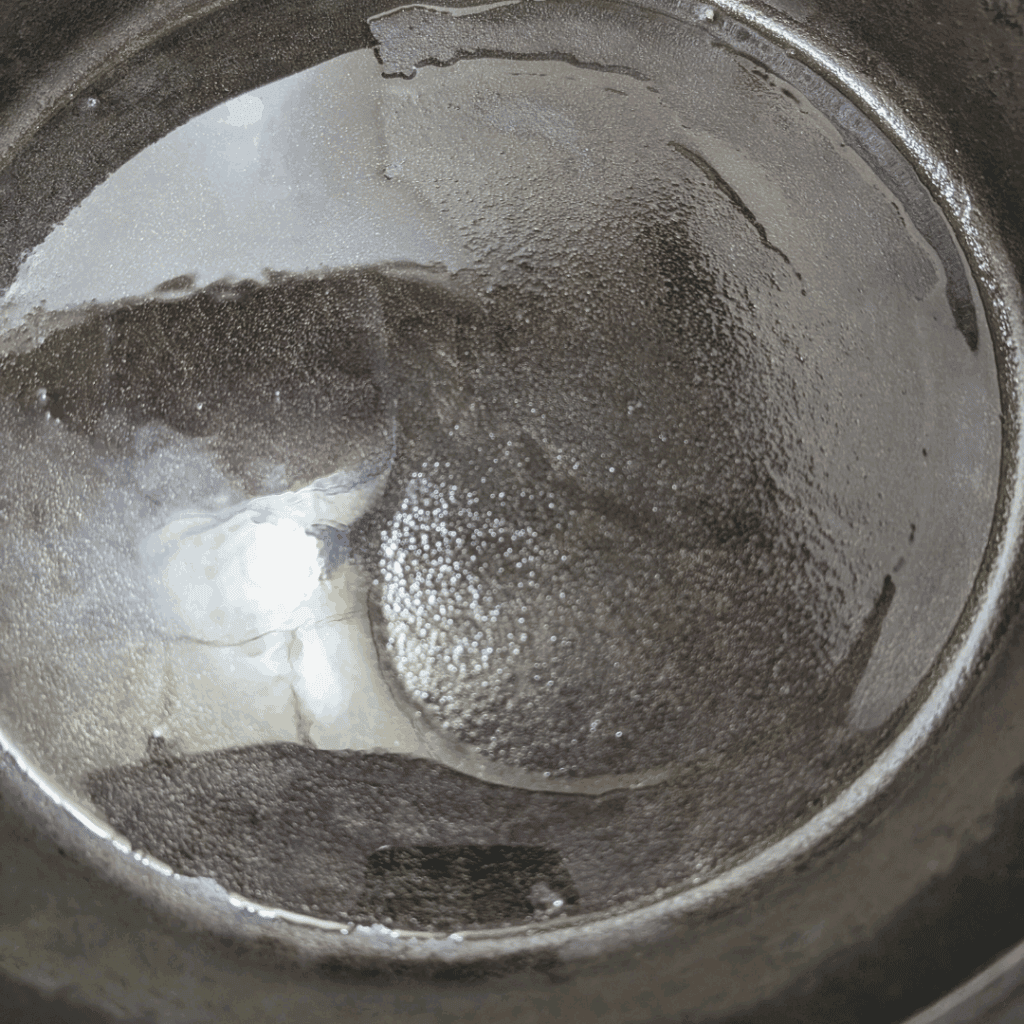
A small amount of bacon grease can help prevent sticking while contributing flavor to the food being cooked. Many traditional dishes, including fried potatoes, eggs, and vegetables, were prepared in cast iron using saved bacon fat. Some cooks also used animal fats as part of their routine cast iron care, applying a thin coating after cleaning and drying the pan.
Even today, many home cooks appreciate the combination of cast iron and bacon grease for the flavor it brings to simple meals. While there are now many methods and products available for seasoning cast iron, bacon grease remains closely tied to cast iron cooking traditions.
Beyond vegetables and breakfast foods, bacon grease can also be used when frying pan bread, bannock, or similar skillet breads. A small amount in a cast iron skillet can help create a crisp, golden exterior while adding extra flavor to the finished bread.
When Should You Throw Away Bacon Grease?
Even when stored properly, bacon grease does not last forever. If you notice an unpleasant smell, sour odor, mold, discoloration, or any other signs of spoilage, it is best to throw it away rather than risk using it.
Rancid bacon grease often develops an off smell that is noticeably different from the pleasant smoky aroma of fresh bacon fat. If you open the container and immediately question whether it is still good, that is usually a sign it should be discarded.
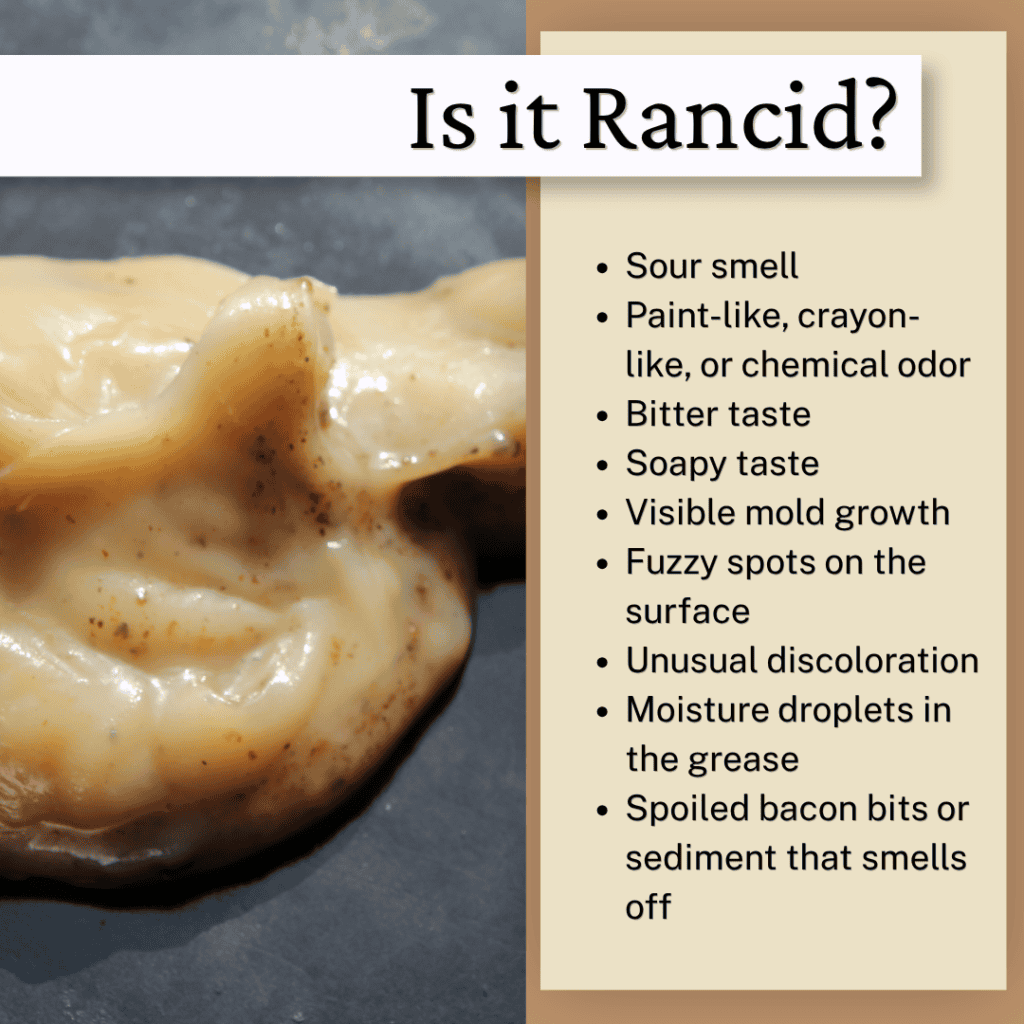
You should also throw away bacon grease if large amounts of food particles were accidentally left in it during storage. Bacon bits and other debris can shorten the shelf life of the grease and increase the likelihood of spoilage.
If the grease has been sitting at room temperature for an extended period and you are unsure how long it has been there, it is safer to discard it. While earlier generations often stored bacon fat differently than we do today, modern refrigeration makes it easy to store bacon grease under more controlled conditions.
When in doubt, throw it out. Bacon is relatively inexpensive compared to the potential consequences of using spoiled food. A fresh batch of bacon grease is easy enough to make the next time you cook bacon.
Final Thoughts
Bacon grease has remained part of many kitchens because it offers something simple: flavor and utility. Whether you choose to save it for cooking, baking, cast iron meals, or skillet breads, knowing how to store and use it properly can help you make the most of an ingredient you have already paid for
FAQ