Farm-Style Vegetable Omelette Recipe
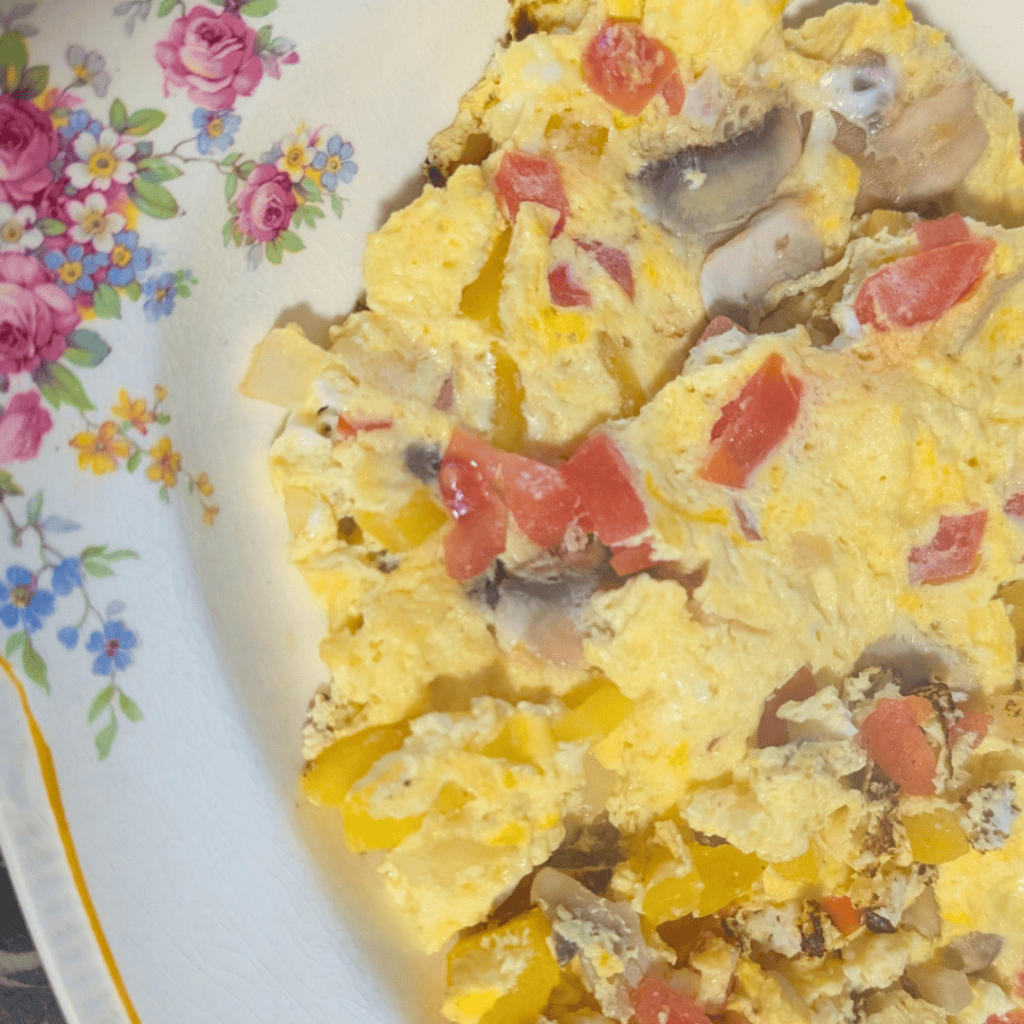
This farm-style vegetable omelette recipe is the kind of simple meal that has been made in my family for generations. Tender eggs cook gently around mushrooms, onion, bell pepper and tomato, giving you vegetables in every bite rather than tucked into the middle of a folded version.
The real idea behind this dish is to use what you have. In my family, it was very much a kitchen-sink meal made with the little bits and pieces of vegetables left in the refrigerator. Any common onion will work, the bell pepper can be whatever colour you have on hand, and the tomato is optional.
The vegetables are briefly sautéed first to soften them and cook away some of their moisture. Then the egg mixture is added and everything cooks gently in a covered 12-inch skillet until the centre is set. There is no flipping or folding involved.
It’s quite different from the thin, folded restaurant style many people picture today. I go into those differences more thoroughly in my guide to omelet vs. omelette vs. frittata, including why the names and cooking methods can vary depending on where and how you learned to make eggs.
Quick Answer
This farm-style vegetable omelette is made by briefly sautéing chopped vegetables, adding the egg and milk mixture, then covering the skillet and cooking over low heat until the centre sets. The vegetables cook throughout the eggs, so there is no flipping or folding.
Makes:
One large 12-inch omelette
Method:
Covered stovetop cooking
Pan:
12-inch nonstick frying pan
Skill Level:
Beginner-friendly
Best For:
Breakfast, brunch or a quick dinner
Style:
Vegetables cooked throughout the eggs rather than folded inside
My mother taught my sister and me how to make omelettes when we were fairly small. We used to make up little menus for my parents for anniversaries and other occasions and bring them breakfast in bed. Omelettes and scrambled eggs were some of the easier choices. I wasn’t nearly as thrilled when somebody ordered a poached egg from our menu because those took a little more work, but we learned to make those too.
After years of making eggs for children, family breakfasts and plenty of quick meals, this is still one of those useful methods worth knowing. It doesn’t require much food, and the ingredients can change depending on what needs using.
Cost Rating: 🍳 Low Cost | 2-serving skillet meal
Cost guideline:
Cost Per Batch: ~$3.00–$4.00 CAD
Cost Per Serving: ~$1.50–$2.00 CAD (based on 2 servings)
Estimated using average Canadian grocery prices in 2026.
The eggs are the largest single cost in this recipe, while the vegetables are used in fairly small amounts. That makes this especially useful when you have part of a pepper, half an onion or a few mushrooms remaining after making something else.
Farm-fresh eggs may cost more or less depending on where you buy them, but even then, this is a meal that stretches four eggs with milk and vegetables into a large skillet omelette.
Why You’ll Love This Farm-Style Vegetable Omelette
Uses Up Ingredients: You don’t need an entire pepper, tomato, onion or package of mushrooms to make it.
Flexible Vegetables: The vegetable combination can change depending on what is already in your refrigerator.
Simple Cooking Method: There is no flipping or trying to fold a large omelette without breaking it.
Useful Beyond Breakfast: Serve it for breakfast or brunch, but it also makes an inexpensive quick dinner.
Beginner-Friendly: Watching the centre of the omelette rather than relying only on a cooking time makes doneness easier to judge.
Budget Tip:
Keep this recipe in mind when you have small amounts of fresh vegetables left from another meal. Those pieces that aren’t quite enough to become a side dish can often be chopped and added to an omelette instead of being forgotten at the back of the refrigerator.
This is also the kind of cooking I talk about in my Meals That Stretch When Money Is Tight guide—using small amounts of food you already have to make another meal instead of letting those ingredients go to waste.
How to Make a Farm-Style Vegetable Omelette
Start by preparing the vegetables. Slice the mushrooms fairly thinly so they have time to soften during the short sauté. Dice the onion, bell pepper and tomato into small pieces so they distribute evenly through the eggs and cook quickly.
I used white onion and yellow bell pepper, but this is a flexible recipe. Yellow or red onion can be used instead, and any colour of bell pepper will work. The tomato is optional, so leave it out if you don’t have one or simply prefer the omelette without it.
Keeping the vegetables fairly small also helps prevent large, wet pieces from sitting in the egg mixture while the center is trying to set.


I used four farm-fresh eggs—two green and two brown. Different shell colours work the same way for this recipe, so use the eggs you normally buy. Egg Farmers of Canada explains that shell colour is determined by the hen and does not change the nutritional value of the egg.
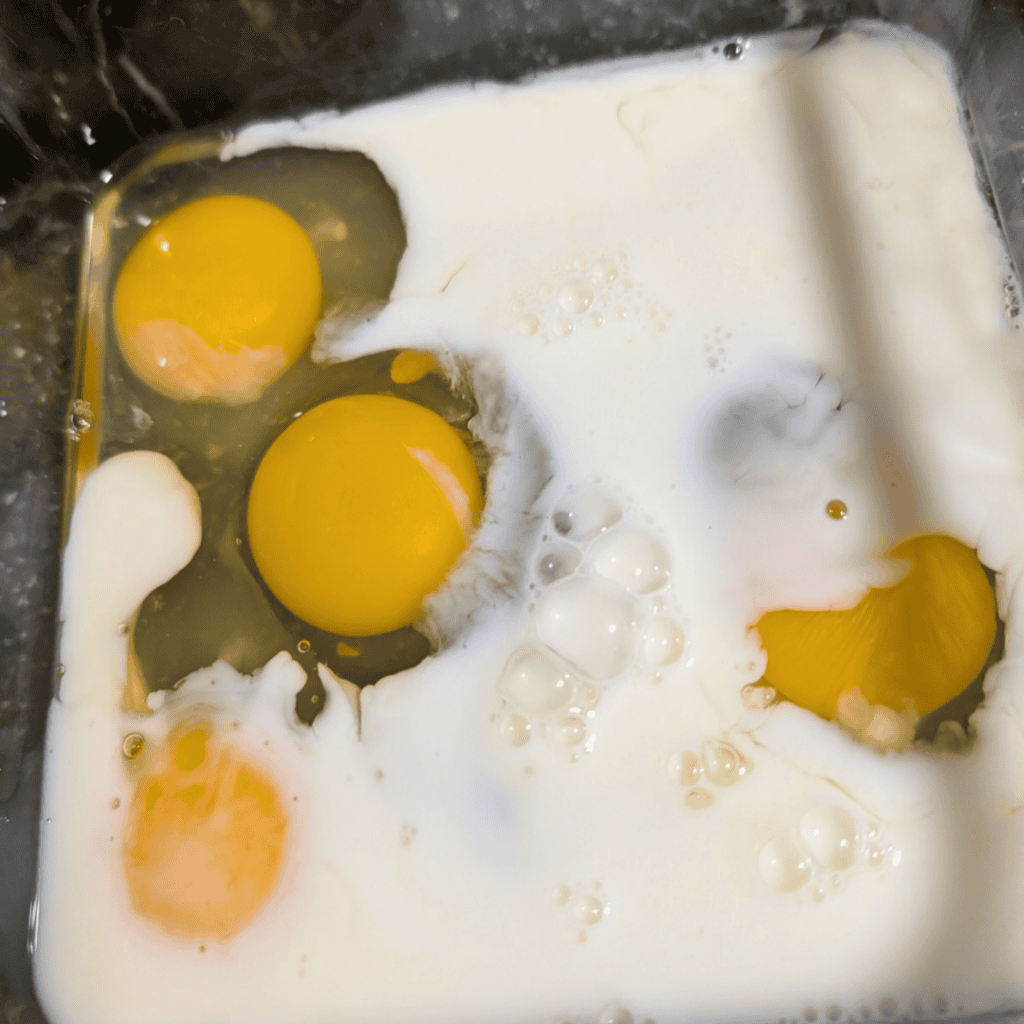
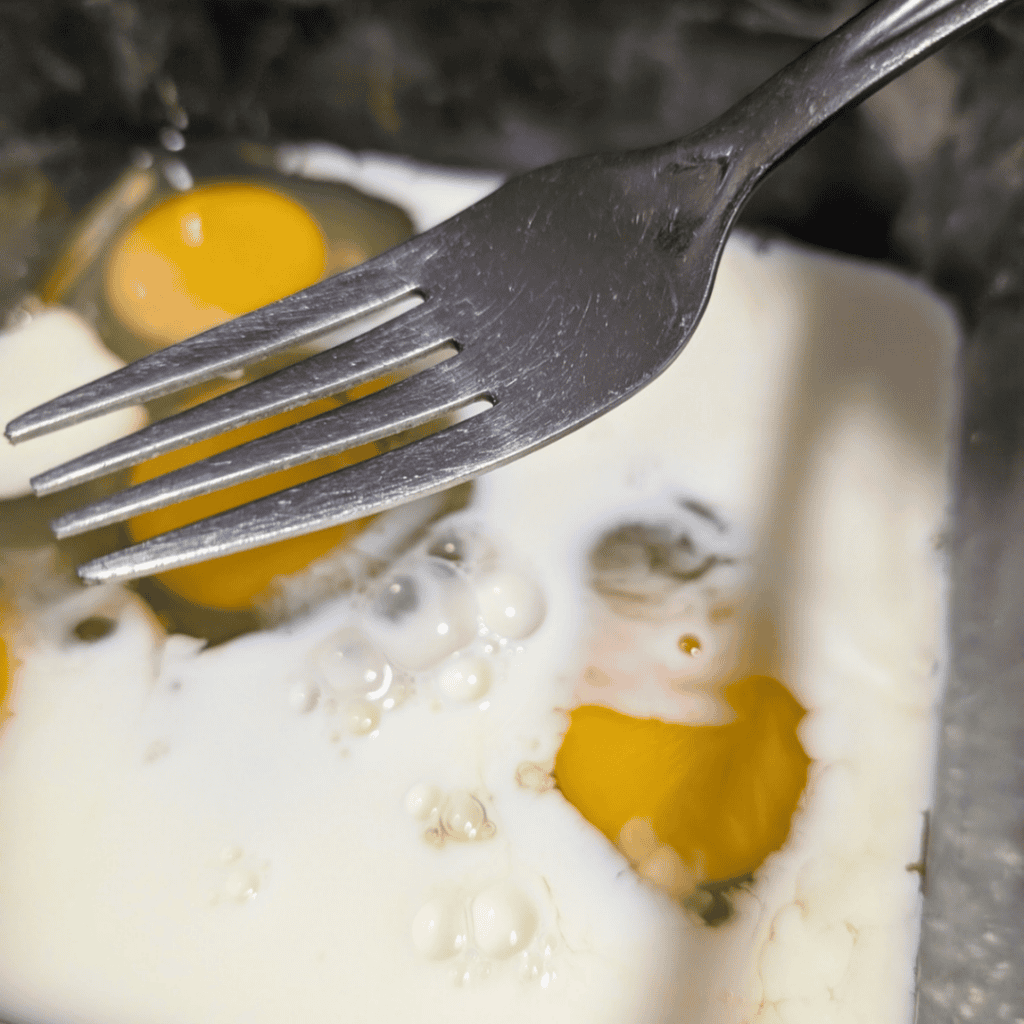
Crack the four eggs into a bowl with the milk. I usually mix mine with a fork, working in small circles with a folding motion. This makes it easy to break the yolks and gradually blend them into the milk without needing any special equipment. A whisk works perfectly well too, but a fork is one of those useful kitchen tools that is almost always within reach.


Add the oil to a 12-inch nonstick frying pan and heat it over high heat until the pan is nicely warmed. Turn the heat down to medium before adding the vegetables.

Sauté the vegetables for a minute or two. You aren’t trying to fully cook them at this point. This short cooking time starts softening them and, importantly, allows some of their moisture to cook off before the eggs go into the pan.
Pour the egg and milk mixture over the vegetables.
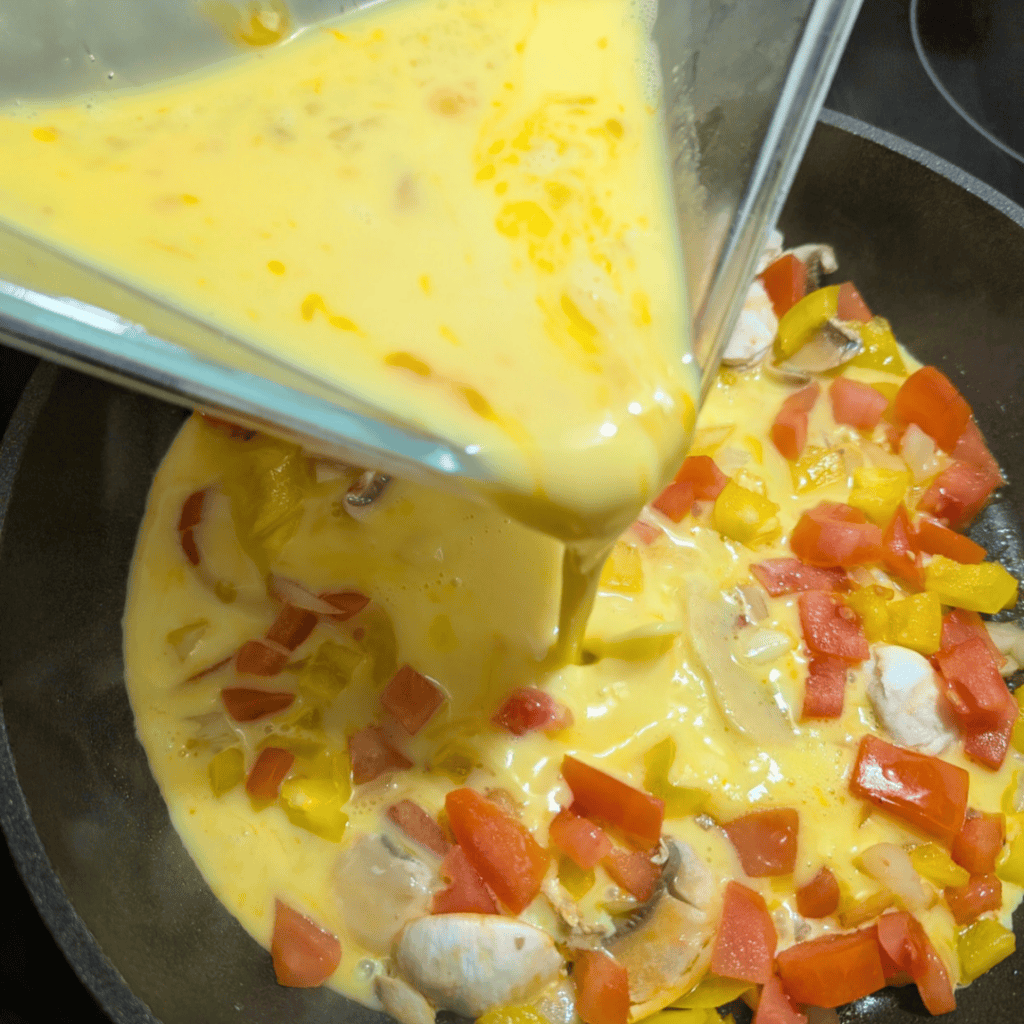

Take a quick look around the pan before putting on the lid. Sometimes pouring in the eggs pushes the vegetables toward one side. If that happens, use your spatula to redistribute them so you don’t end up with mushrooms and peppers concentrated in one half of the finished omelette.


Cover the frying pan with a lid and turn the heat down to low.
Low heat matters with this covered method. The bottom sits directly against the hot pan while the centre and top cook more gradually. If the heat is too high, the underside can burn before the middle has finished setting.
Be patient and let the eggs steam gently under the lid.
Don’t be alarmed if they suddenly puff up dramatically while cooking. Steam can collect underneath the egg mixture and create pockets that lift parts of it away from the pan. Mine did exactly that, and it settled back down again.
The edges will set before the centre, so don’t use them as your main indication that the omelette is finished. Pay attention to the middle instead.


I first checked mine after about seven minutes of covered cooking. That is a useful time to start looking, rather than treating seven minutes as an exact finished cooking time. Stoves, pans and the depth of the egg mixture can all make the timing vary.
You may also notice moisture sitting on top of the eggs when you remove the lid. Some moisture is expected because the omelette has been steaming. If more oil than necessary went into the pan, you may also see small amounts of oil work their way to the surface, which can look like uncooked egg at first glance.
Continue cooking gently until the centre itself is set.
If you prefer to check with a thermometer, Health Canada recommends cooking egg dishes to an internal temperature of 74°C (165°F).

Ingredients
This omelette uses eggs, milk and a small mixture of fresh vegetables, with oil for cooking.
Eggs: I used four farm-fresh eggs—two green and two brown. Different shell colours work exactly the same way for this recipe, so use the eggs you normally buy.
2% Milk: Adding milk gives the egg mixture some additional liquid while it cooks under the lid. I find that straight eggs do not steam quite the same way with this particular method.
Mushrooms: Thinly sliced mushrooms add a little substance without needing much cooking time.
White Onion: Finely dicing the onion allows it to soften during the short initial sauté.
Tomato: Dice the tomato fairly finely so it distributes evenly rather than leaving large wet pieces in the eggs.
Yellow Pepper: Yellow pepper brings a little sweetness and colour, but the amount is small enough that this remains an egg-forward dish.
Cooking Oil: The oil keeps the vegetables and eggs from sticking while they cook. Avoid adding much more than needed because excess oil can work its way to the surface of the eggs while they steam.
Salt and Black Pepper: I keep the basic seasoning simple and add salt and freshly ground black pepper after cooking so the flavour of the eggs and vegetables still comes through.
Italian Herb and Spice Blend: This is optional when you want a little more oomph. Lightly season the eggs while they cook rather than adding a heavy layer. The herbs should complement the vegetables and eggs rather than overpower them.
Substitutions and Add-Ins for Farm-Style Vegetable Omelette
This is meant to be a flexible, refrigerator-clean-out recipe, so the vegetable mixture does not need to be exactly the same every time.
Eggs: Whole eggs form the base of the dish, so replacing them would create something quite different. Green, brown or white-shelled eggs all work the same way here.
2% Milk: You can leave the milk out if needed. The mixture will contain less liquid and, in my experience, won’t steam quite as readily under the lid.
Mushrooms: Leave them out or replace them with another vegetable that cooks fairly quickly. Be cautious with vegetables that release a large amount of water.
White Onion: Yellow onion, red onion or green onion can be used depending on what you have.
Tomato: Another fresh tomato variety can be used. Keep the pieces fairly small and avoid overwhelming the eggs with very juicy vegetables.
Yellow Pepper: Red, orange or green bell pepper can be substituted without changing the cooking method.
Cooking Oil: Another everyday cooking oil can be used. Whatever you choose, use enough for the pan without leaving a deep layer of oil underneath the eggs.
Salt and Black Pepper: Use both to taste after cooking. You can also leave them off and let everyone season their own portion at the table.
Italian Herb and Spice Blend: This is completely optional. A light dusting added while the eggs cook gives the dish more savoury flavour. Use your favourite Italian-style herb and spice mixture, but keep it fairly light because eggs have a delicate flavour.
Expert Tips for Making a Vegetable Omelette
Tip #1: Watch the Centre: The edges cook first, so the centre of the omelette is the best place to judge whether the eggs have finished cooking.
Tip #2: Keep the Heat Low: Once the eggs are in the pan and covered, low heat gives the centre time to cook without burning the bottom.
Tip #3: Redistribute the Vegetables: Check that the vegetables are evenly spread after pouring in the eggs and before putting on the lid.
Tip #4: Expect Some Steam: A puffed-up section or a little moisture on top doesn’t necessarily mean something has gone wrong. This omelette cooks partly from the steam trapped under the lid.
Serving Suggestions
This farm-style omelette works equally well as a breakfast, brunch or simple supper.
Serve it with toast and fruit for breakfast, or add potatoes or a simple salad when you’re making it for dinner.
If you like practical egg breakfasts that use vegetables, my Easy Oven Baked Egg Bites With Spinach and Tomato are another option when you want individual portions instead of one large egg dish.
For a larger breakfast or brunch dish, my Cheesy Zucchini Breakfast Casserole uses eggs and zucchini and makes enough to serve a group.
For another stovetop egg dish where the ingredients are cooked throughout the eggs rather than tucked inside a folded version, see my Spinach Feta Frittata With Sun-Dried Tomato.
If you like the softer texture that comes from cooking eggs with added liquid, try my Easy Microwave Korean Steamed Eggs (Gyeran Jjim). They use water instead of milk and cook into a much softer, custard-like egg dish, but there is a similar gentle steamed quality to the eggs.
A Little Note About the Platter
I served this egg dish on an old Royal Winton, Grimwades England platter. I chose it because the old-fashioned design reminds me of my grandmother’s farmhouse, and it seemed like exactly the sort of dish this breakfast belonged on.
Sometimes the dishes we serve family recipes on become part of the story too.
Storing Leftover Vegetable Omelette
This is best served shortly after cooking, while the eggs are tender and the vegetables still have their fresh texture.
If you do have leftovers, refrigerate them promptly in a covered container. Leftovers can be refrigerated promptly in a covered container for 3–4 days rather than leaving the reader without a storage duration.Reheat gently rather than using high heat, which can make the eggs tougher.
Because the recipe comes together quickly and the vegetables can be chopped ahead of time, I generally prefer making it fresh rather than cooking it in advance.
FAQ
Conclusion
This is one of those recipes that has stayed with me because it is less about following a particular combination of vegetables and more about knowing a useful way to cook eggs.
My mother taught us to make this style of omelette when we were children because we could manage it ourselves. Years later, I’m still making essentially the same thing: eggs, a little milk, whatever vegetables need using, and enough patience to let the centre cook properly over low heat.
What vegetables did your family traditionally put into an omelette, and was yours folded or cooked through in the pan like this one?
Farm-Style Vegetable Omelette Recipe

Equipment
- 12" Frying Pan Non-stick, with lid
- Tablespoon
- Fork
- Spatula
Ingredients
- 4 Eggs
- ½ Cup 2% Milk
- ¼ Cup White Mushroom Thinly sliced whole mushrooms
- ¼ Cup Tomato Finely diced
- ¼ Cup Yellow Pepper Finely diced
- 2 Tbsp White Onion Finely diced
- Salt and black pepper To taste
- 1 Tsp Italian Seasoning *Optional
- 2 Tbsp Cooking Oil
Instructions
- Add the eggs and milk to a bowl. Using a fork, mix them together with a small circular folding motion to break the yolks and blend the eggs evenly into the milk. A whisk can also be used.
- Heat the oil in a 12-inch nonstick frying pan over high heat until the pan is warm.
- Reduce the heat to medium. Add the mushrooms, onion, tomato and yellow pepper.
- Sauté the vegetables for 1–2 minutes to begin softening them and cook off some of their moisture.
- Pour the egg mixture evenly over the vegetables.
- Check that the vegetables are evenly distributed throughout the pan. If they have shifted to one side, gently spread them back out before covering.
- If using Italian herb and spice seasoning, lightly sprinkle it over the eggs. Use only a light dusting, up to about 1 teaspoon, so the seasoning does not overpower the flavor of the eggs.
- Cover the frying pan with a lid and reduce the heat to low.
- Cook gently until the center of the omelette is set through, beginning to check it after about 7 minutes. The edges will set before the middle, so use the center rather than the outside edge to judge doneness.
- Remove the lid and check the center before removing the omelette from the pan. A small amount of moisture on the surface is normal after cooking covered.
- Transfer the omelette to a serving plate. Season with salt and black pepper to taste and serve warm.
Notes
- A fork works well for combining the eggs and milk. Small circular folding motions make it easy to break the yolks and blend everything together when a whisk isn’t handy.
- Keep the heat low once the eggs are covered. Higher heat can burn the bottom before the center has finished cooking.
- If excess oil is used, some may rise to the surface and can be mistaken for uncooked egg.
- Other vegetables can be used in place of the mushrooms, onion, tomato and yellow pepper. Avoid adding large amounts of particularly watery vegetables.
- For simple seasoning, finish the cooked omelette with salt and black pepper. For more flavour, lightly season the eggs with an Italian herb and spice blend while they cook.
- Green, brown and white-shelled eggs all work the same way in this recipe.
Nutrition