Easy Microwave Korean Steamed Eggs (Gyeran Jjim)
Korean steamed eggs, also called Gyeran jjim (pronounced gyuh-ran jim) (계란찜), are a soft Korean egg dish made by cooking beaten eggs with water until the mixture becomes light, custardy, and gently set. This microwave version keeps things simple with just eggs, water, and sesame oil cooked in a porcelain ramekin.
Korean steamed eggs, also called gyeran jjim, are a soft Korean egg dish cooked until lightly fluffy and custard-like. This microwave version uses eggs, water, and sesame oil for a quick homemade version ready in minutes.
Korean steamed eggs are a popular Korean side dish often served alongside rice, Korean barbecue, and other Korean dishes. The microwave method also makes it approachable if you want Korean steamed eggs without using a stone pot on the stovetop.
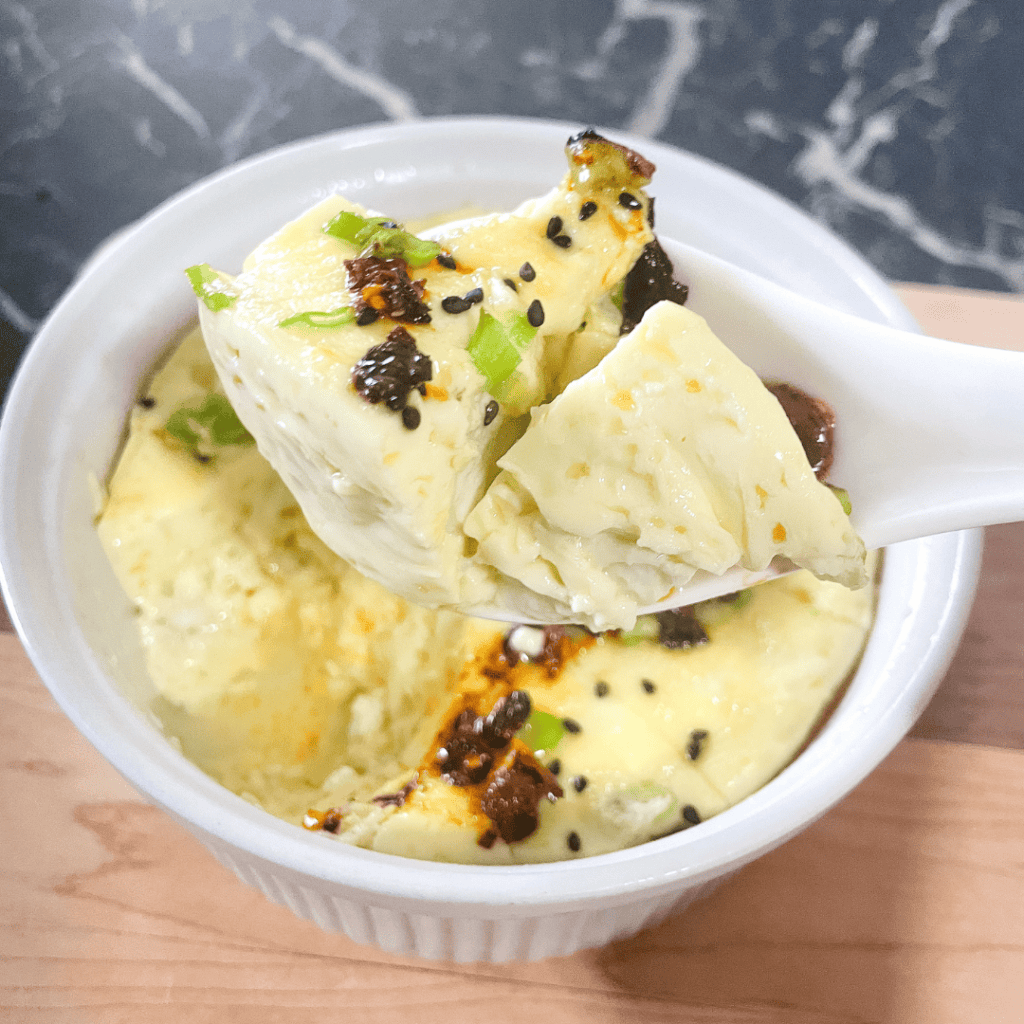
Traditional gyeran jjim is often cooked over low heat in a small pot or Korean earthenware bowl with a lid to trap steam while the eggs cook. This microwave version keeps the process simpler by using a porcelain ramekin and a few basic ingredients instead. I tested this version in a mid-sized porcelain ramekin using only water instead of broth to keep the recipe inexpensive and straightforward. The texture came out similar to a firm savory custard, with edges that puffed slightly while the center stayed soft enough to eat with a spoon.
Quick Answer
Easy Microwave Korean Steamed Eggs (Gyeran Jjim) are Korean-style steamed eggs cooked in the microwave with eggs, water, and sesame oil. The eggs cook into a soft custard-like dish with a lightly fluffy texture around the edges and a gently set center.
Cost Rating: 🍳 1 Pan — Budget Friendly (Single Serving)
Cost guideline:
Cost Per Batch: ~$1.50–$3
Cost Per Serving: ~$0.75–$1.50 (based on 2–3 servings)
Eggs are the main cost in this recipe, but the ingredient list stays very small overall. Using water instead of broth keeps these Korean steamed eggs inexpensive while still creating a soft custard-like texture.
This recipe stretches well as either a light breakfast for two people or a simple side dish served alongside rice and other Korean-style dishes.
Why You’ll Love These Easy Microwave Korean Steamed Eggs
Fast Cooking Method: The microwave cooks the eggs in about four minutes, making this useful for quick breakfasts or small meals.
Minimal Ingredients: The recipe uses basic ingredients like eggs, water, and sesame oil without needing specialty broth or extra preparation.
Easy Cleanup: Everything mixes directly in one ramekin, so there are very few dishes afterward.
Customizable Garnishes: A drizzle of sesame oil, soy sauce, or chili crisp gives the eggs their best flavor while adding more depth to the overall flavor of the dish.

Budget Tip:
Buy eggs in larger packs if you make simple egg-based breakfasts often. Sesame oil can seem expensive at first, but this recipe only uses a small amount and the toasted flavor is strong, so a bottle usually stretches a long way.
If needed, you can use a more neutral cooking oil to lower the cost further, although the finished Korean steamed eggs will have a milder flavor. Sesame oil is also useful in many other Asian-inspired dishes, noodle bowls, marinades, and stir fries, so the bottle usually does not go to waste once you start cooking with it regularly.
How to Make Easy Microwave Korean Steamed Eggs (Gyeran Jjim)
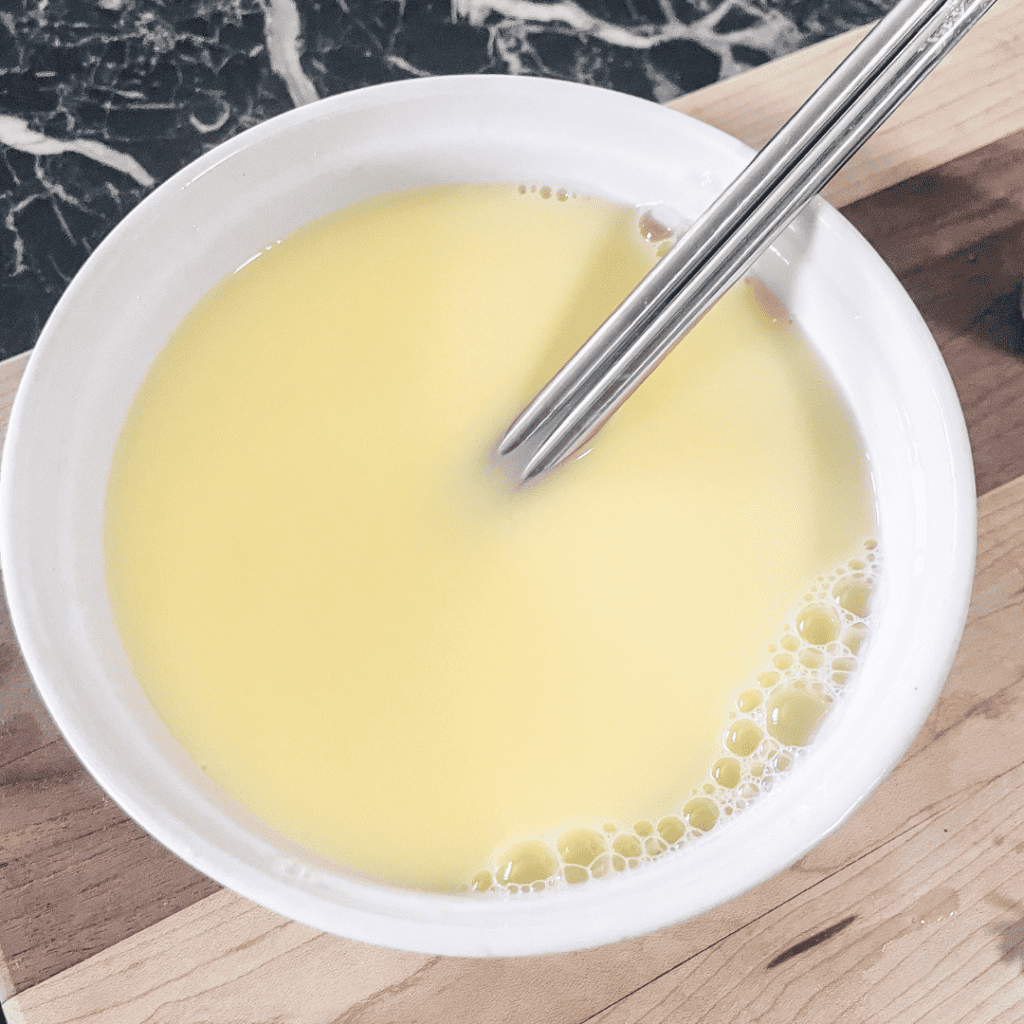
You do not need a separate mixing bowl for this easy Korean recipe because the egg mixture is stirred directly inside the ramekin before microwaving. Start by cracking four large eggs directly into a mid-sized porcelain ramekin. Add 1 cup water and stir thoroughly with chopsticks or a fork until the eggs are completely blended into the water. The egg mixture should look very thin and pale yellow, almost milky, instead of thick like scrambled eggs.

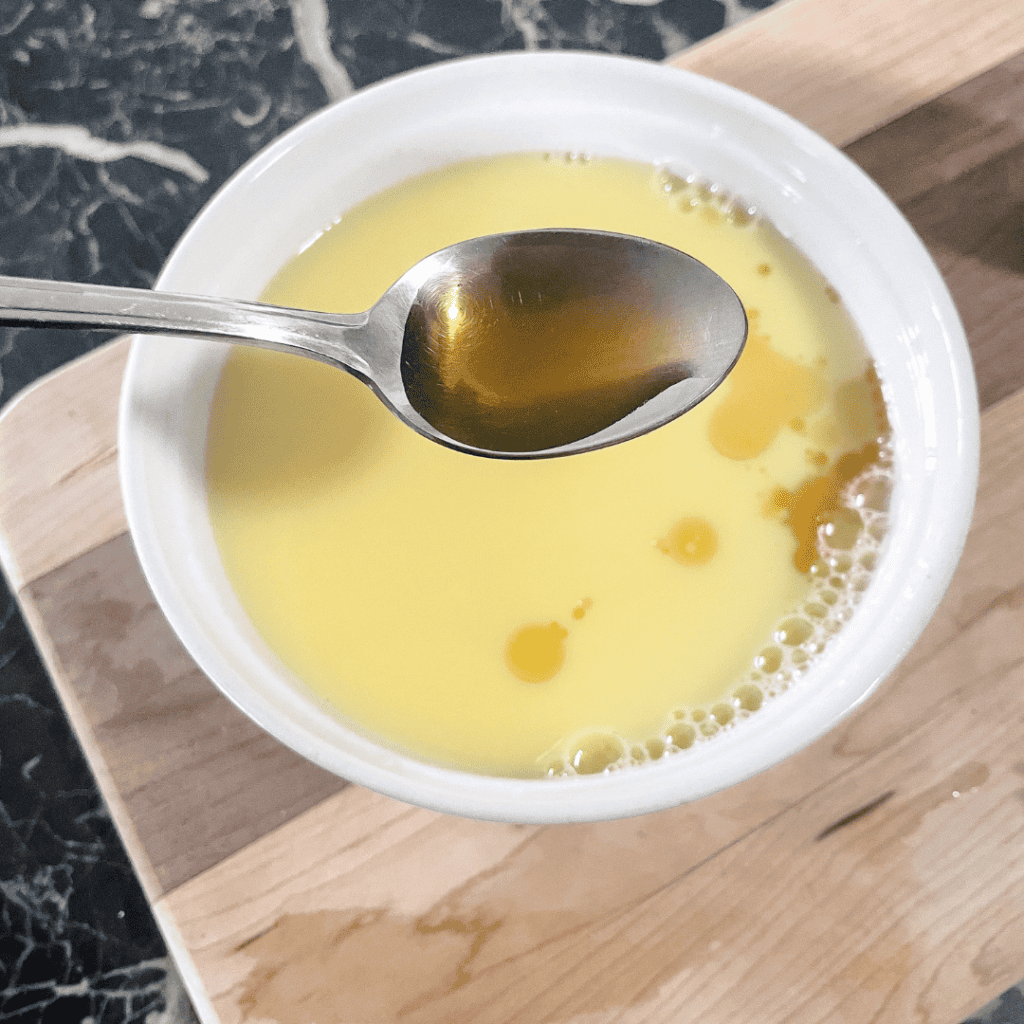
Drizzle one teaspoon of sesame oil over the surface of the egg mixture. Leave the ramekin uncovered before placing it into the microwave. Covering the dish can trap steam and leave extra water inside the eggs while they cook.

Microwave the Korean steamed eggs on full power for about four minutes. Watch the eggs closely near the end of cooking because overheating can cause the eggs to puff aggressively or pop in the microwave.
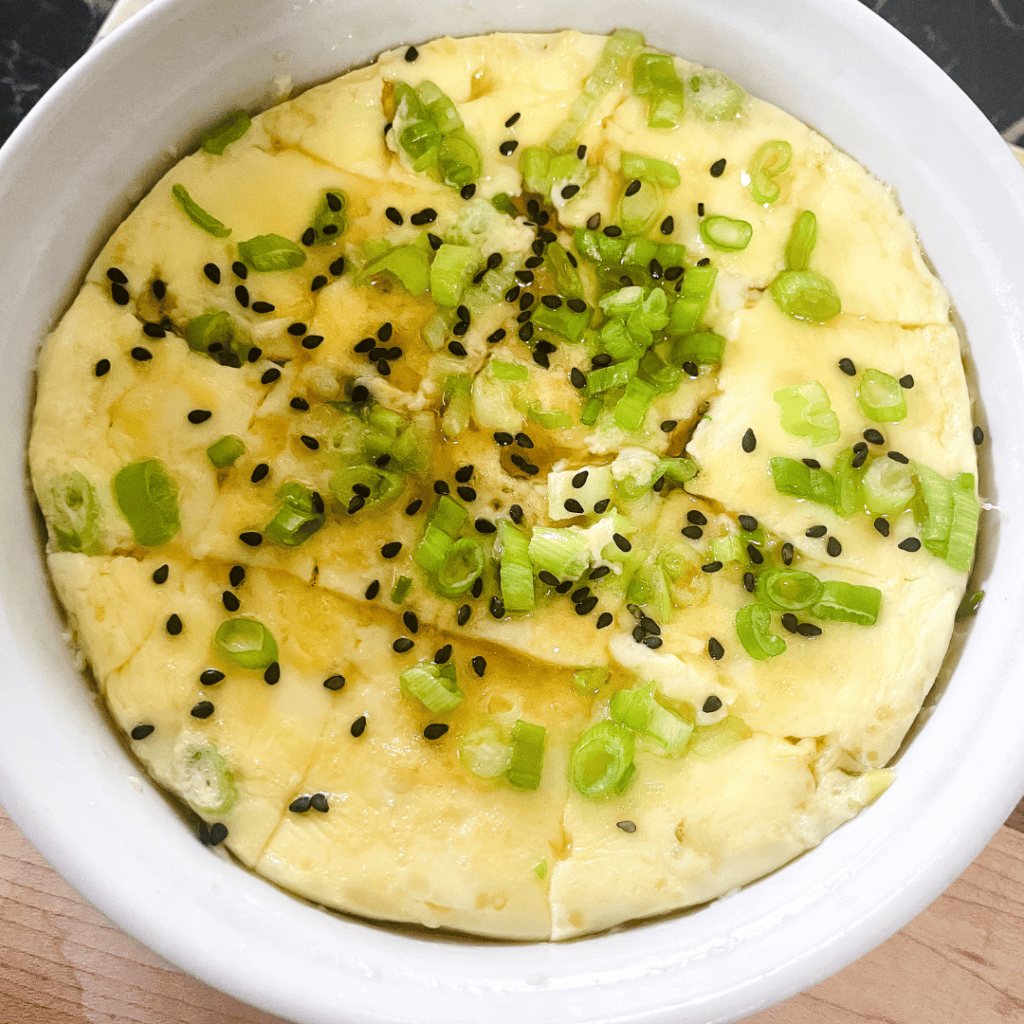
The finished Korean steamed eggs should look solid on top with bubbly or slightly rufflly edges. The center should still jiggle gently like soft gelatin, but your finger should not sink into the surface or leave a wet indentation.

If the eggs still look watery in the center, continue microwaving in short intervals until fully set. Overcooking can cause the eggs to stick to the ramekin and become rubbery around the edges.
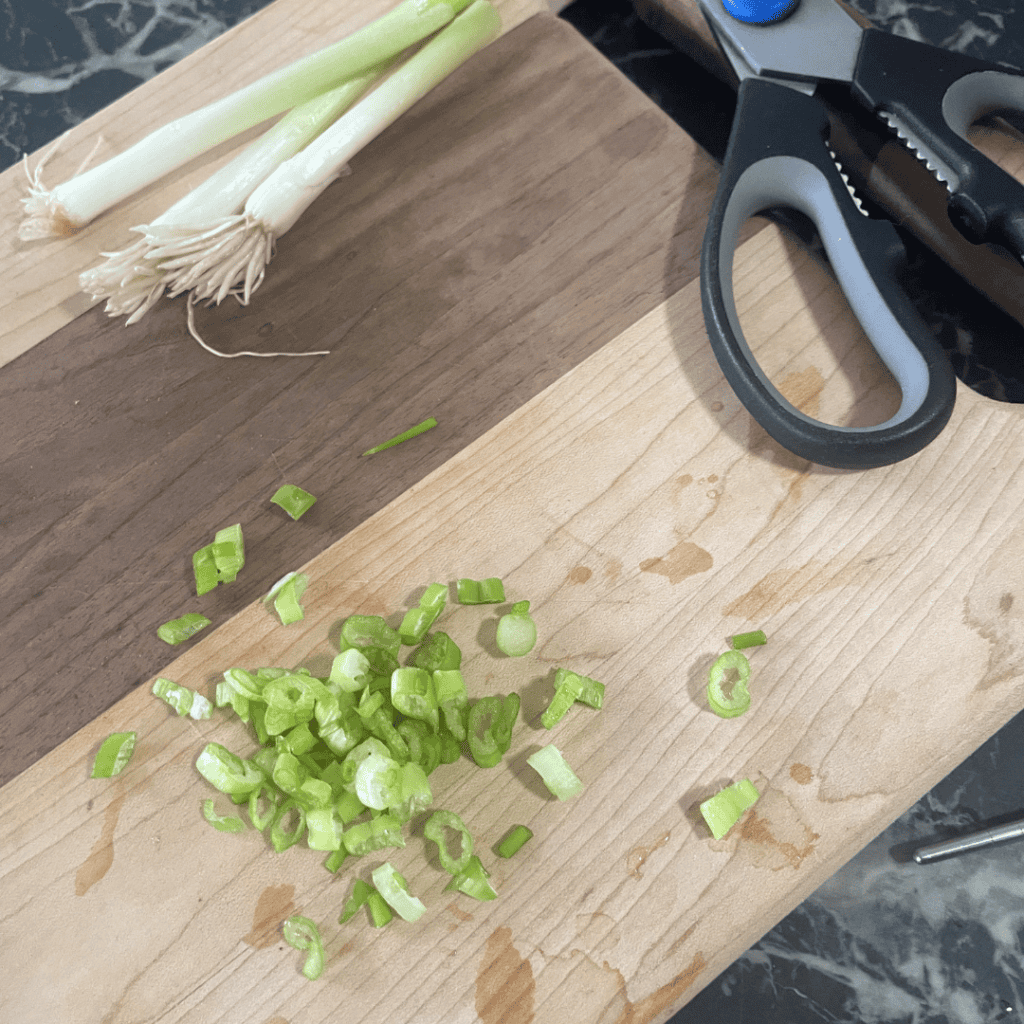
Top the Korean steamed eggs with finely sliced green onions, black or white sesame seeds, and chili crisp before serving warm directly from the ramekin. If this is your first time making Korean steamed eggs, the texture may seem unusual at first because the eggs stay soft and custard-like instead of firm like scrambled eggs.

Ingredients
This recipe uses a short ingredient list to create soft, custardy Korean-style steamed eggs in the microwave.
Eggs: Create the structure of the dish and cook into a soft savory custard texture. Mixing them thoroughly with water helps keep the texture even.
Water: Keeps the eggs light and soft while helping create the steamed custard consistency. Using plain water also keeps the recipe inexpensive.
Sesame oil: Adds a light toasted flavor across the surface of the eggs while helping the top stay moist during cooking.
Green onions: Add freshness and a mild sharp flavor that balances the richness of the eggs.
Sesame seeds: Add light texture and a nutty finish. Black or white sesame seeds both work well.
Chili crisp: Adds heat and crunch that contrast nicely with the soft egg texture.
Substitutions and Add-Ins for Easy Microwave Korean Steamed Eggs (Gyeran Jjim)
This recipe is flexible with toppings, but the base egg and water mixture should stay fairly simple for the texture to work properly.
Eggs: The eggs are essential to the structure and identity of Easy Microwave Korean Steamed Eggs (Gyeran Jjim) and should not be substituted.
Water: Chicken stock or anchovy broth can replace the water if you want a deeper savory flavor, although plain water keeps the recipe inexpensive and straightforward. A very small splash of fish sauce can also be added for extra briny flavor similar to some Korean restaurant versions.
Sesame oil: A drizzle of sesame oil, soy sauce, green onions, sesame seeds, or chili crisp can be added on top before serving depending on how much flavor you want. Sesame oil, chili crisp, and Korean chili flakes can usually be found in Korean grocery stores or the international aisle of many larger supermarkets.
Green onions: Chives or very thinly sliced scallion greens can replace green onions with a similar fresh finish.
Sesame seeds: Either black or white sesame seeds work well depending on what you have available.
Chili crisp: Chili oil or Korean chili flakes can be used instead, although chili crisp adds more texture.
Expert Tips, Serving and Storing Suggestions
Tip #1: Use a larger ramekin. A mid-sized porcelain ramekin gives the eggs enough room to puff slightly while cooking without overflowing too quickly in the microwave.
Tip #2: Leave the ramekin uncovered. Covering the dish traps steam and can leave excess water sitting on top or around the eggs after cooking.
Tip #3: Watch closely near the end of cooking. Microwave power varies quite a bit, and overcooked Korean steamed eggs can become rubbery or stick heavily to the ramekin.
Tip #4: Look for a gently set center. The finished eggs should jiggle lightly like soft gelatin while still looking solid on top without wet spots.
Easy Microwave Korean Steamed Eggs (Gyeran Jjim) are best served hot directly from the ramekin while the texture is still soft and custardy. One of my favorite ways to eat Korean steamed eggs is straight from the ramekin with chili crisp and green onions on top. The first bite is soft, savory, and lightly nutty from the sesame oil.
These Korean steamed eggs also work well as a side dish alongside Korean barbecue, kimchi, or other Korean food. The mild egg flavor balances spicy or salty dishes particularly well. For another simple egg-based meal, try my Spicy Peanut Instant Noodles With Jammy Eggs. For another Asian-inspired dinner from my kitchen, try my Bok Choy Chicken Stir Fry.
Easy Microwave Korean Steamed Eggs (Gyeran Jjim) are best eaten fresh since the texture is softest immediately after cooking. As the eggs cool, the custard becomes firmer and slightly denser.
If needed, leftovers can be refrigerated for a short period in the ramekin covered loosely with plastic wrap or transferred to an airtight container. Reheating may slightly change the texture and make the eggs firmer around the edges.
FAQ
Easy Microwave Korean Steamed Eggs (Gyeran Jjim)

Equipment
- Mid-sized microwave-safe porcelain ramekin
- Chopsticks or fork or whisk
- Microwave
- knife
- Teaspoon
Ingredients
- 4 Lrg Eggs
- 1 Cup Water
- 1 Tsp Sesame Oil
- 1 Green Onion Green part only snipped/cut small
- 1 Tsp Black Sesame Seeds Or White
- Chili Crisp Optional
Instructions
- Crack the large eggs directly into a mid-sized microwave-safe ramekin. Add the water and stir thoroughly with chopsticks or a fork until the egg mixture becomes fully blended and pale yellow.4 Lrg Eggs, 1 Cup Water
- Drizzle the sesame oil over the surface of the egg mixture. Leave the ramekin uncovered before microwaving.1 Tsp Sesame Oil
- Microwave on full power for about 4 minutes. Watch closely near the end of cooking because the eggs can puff up quickly or overflow if overheated.
- The Korean steamed eggs should look solid on top with lightly fluffy edges while the center still jiggles gently like soft gelatin. If the center still looks watery, microwave in short additional intervals until fully set.
- Cut into squares then top with green onions, sesame seeds, chili crisp, soy sauce, or additional sesame oil before serving warm directly from the ramekin.1 Green Onion, 1 Tsp Black Sesame Seeds, Chili Crisp
Notes
Notes
- Traditional gyeran jjim is often cooked in a Korean earthenware pot on the stovetop, but this microwave version simplifies the cooking process.
- Do not cover the ramekin while cooking or excess water may collect inside the eggs.
- Overcooking can make the eggs rubbery or cause them to stick to the ramekin.
- Chicken stock or fish broth can replace the water for a deeper savory flavor.
Nutrition