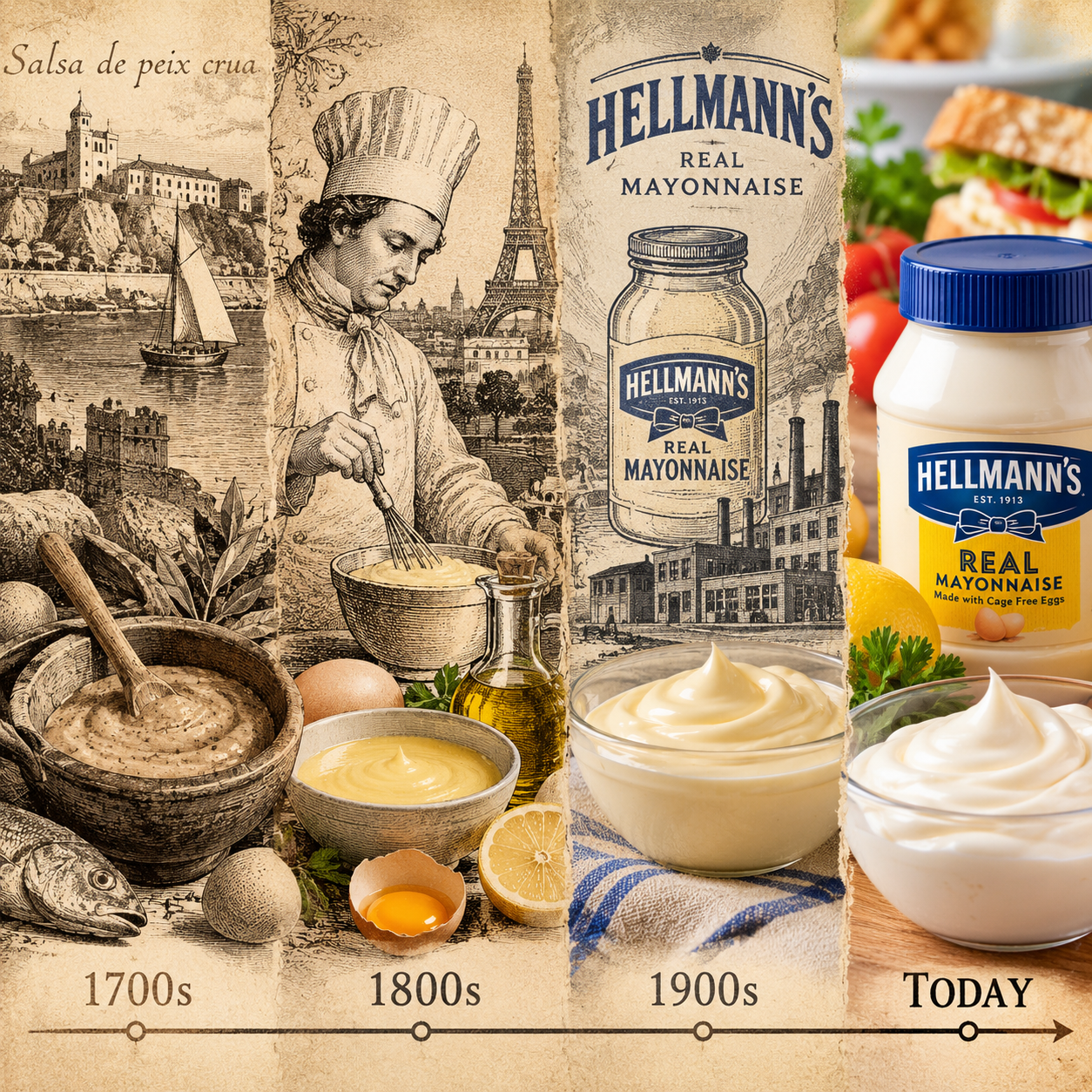
How Mayonnaise Changed Over Time | History of Mayonnaise
My great-grandmother made her own mayonnaise. It wasn’t the nearly white, mild mayonnaise that comes out of a jar today. Hers was brown. I recently recreated her old fashioned mayonnaise recipe, which is what sent me down this rather large historical rabbit hole in the first place.
It wasn’t the nearly white, mild mayonnaise that comes out of a jar today. Hers was brown.
For years, that was simply one of those family food memories I accepted without thinking too much about it. Homemade mayonnaise was homemade mayonnaise. But once you start looking at old recipes, it raises a surprisingly good question.
When did mayonnaise become white?
Because the mayonnaise people were making a century or two ago could be quite different from the mayonnaise filling our grocery-store shelves today.
The basic idea hasn’t changed very much. Oil, egg and acid are worked together into an emulsion. What changed were the oils we had available, the way mayonnaise was made, how it was manufactured and, eventually, what consumers came to expect mayonnaise to look and taste like.
And before we can get to the white jar, we have to go considerably farther back.
Where Did Mayonnaise Come From?
The familiar story says mayonnaise was created in 1756 after French forces under the Duke of Richelieu captured Mahón on the Mediterranean island of Menorca.
There are several versions of the story. A chef supposedly improvised the sauce during a victory celebration. Richelieu supposedly encountered it locally and brought it home. In some versions, there is even a Menorcan woman and a romantic connection.
They’re good stories.
Unfortunately, good stories aren’t necessarily good history. Researchers at the University of Liège have examined these competing mayonnaise origin stories, including the frequently repeated connection between Mahón, Richelieu and the eventual French name.
Recent research has made the Menorcan connection much more interesting, but not because anyone has finally proven the Richelieu legend.
In 2024, a scholarly edition of an eighteenth-century Menorcan household cookbook called the Receptari Caules was published. Among its 251 recipes is one called salsa de peix crua, or raw fish sauce. Its preparation is remarkably familiar: egg yolk is worked while oil is gradually incorporated, along with acid and seasonings. The modern editors identify it as the earliest documented mayonnaise recipe.
Its preparation is remarkably familiar: egg yolk is worked while oil is gradually incorporated, along with acid and seasonings. The modern editors identify it as the earliest written preparation for mayonnaise yet located.
The finished scholarly project describes the manuscript as coming from an affluent Mahón household toward the end of the eighteenth century. That makes it important evidence for mayonnaise in Menorca, but it also means we should be careful with earlier claims that simply called this a “1750 mayonnaise recipe.”
Another Menorcan cookbook adds to the case.
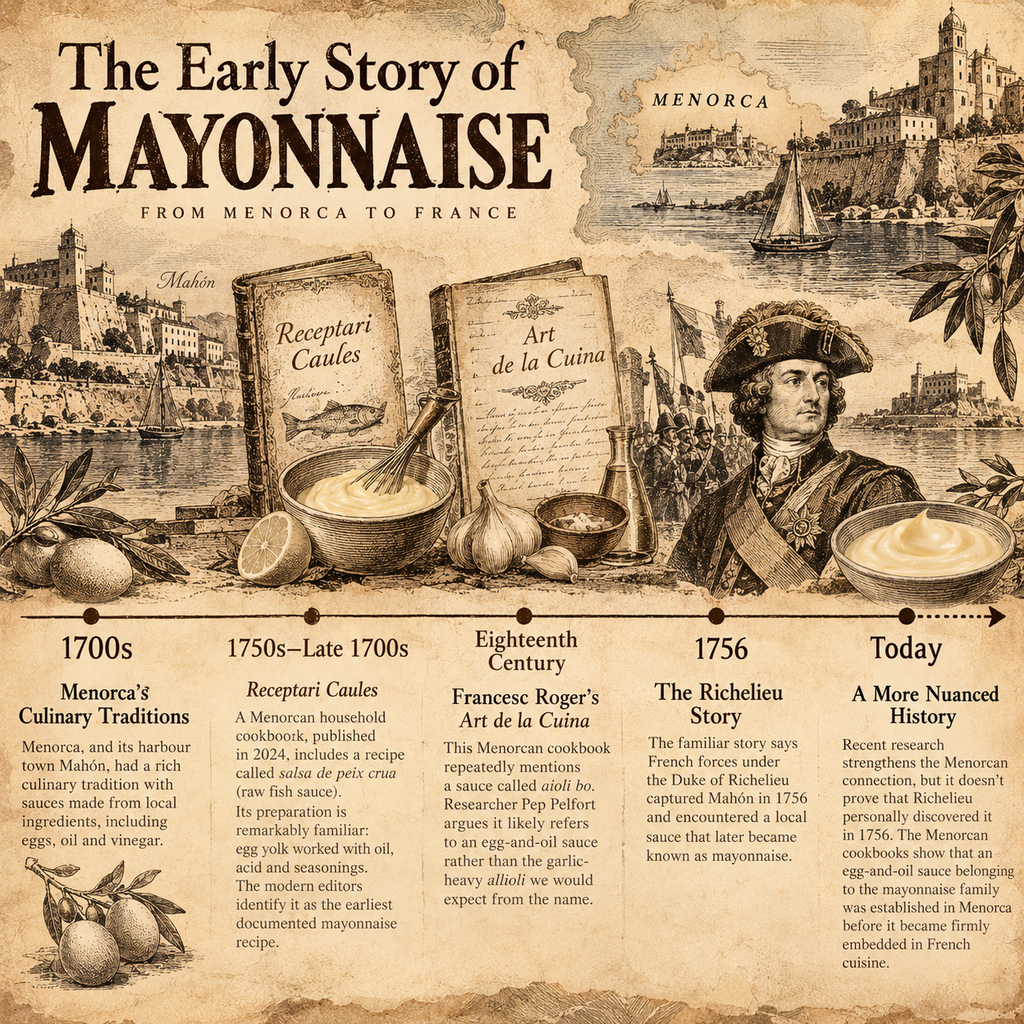
Francesc Roger’s eighteenth-century Art de la Cuina repeatedly mentions a sauce called aioli bo. Researcher Pep Pelfort has investigated the history of aioli bo and Menorcan mayonnaise, arguing that the ways Roger uses aioli bo make more sense if it refers to an egg-and-oil sauce rather than the garlic-heavy allioli we would expect from the name.
That evidence is more interpretive. Roger doesn’t stop and give us a neat standalone mayonnaise recipe.
The Caules manuscript does.
Taken together, however, these old Menorcan cookbooks make a serious case that an egg-and-oil sauce belonging to the mayonnaise family was established there before mayonnaise became firmly embedded in French cuisine.
What they don’t prove is that Richelieu personally discovered it in 1756.
Those are two different questions.
The Sauce and the Name May Have Different Histories
This is where mayonnaise history gets strange.
The first written appearance of the word mayonnaise doesn’t line up neatly with the development of the sauce.
French culinary historian Pierre Leclercq has traced the early French history of mayonnaise, including Mayonnaise de Poulet appearing on a Paris restaurant menu at the beginning of the nineteenth century and André Viard’s use of mayonnaise in his influential 1806 cookbook.
You might expect Viard’s mayonnaise to be egg yolk beaten with oil.
It wasn’t.
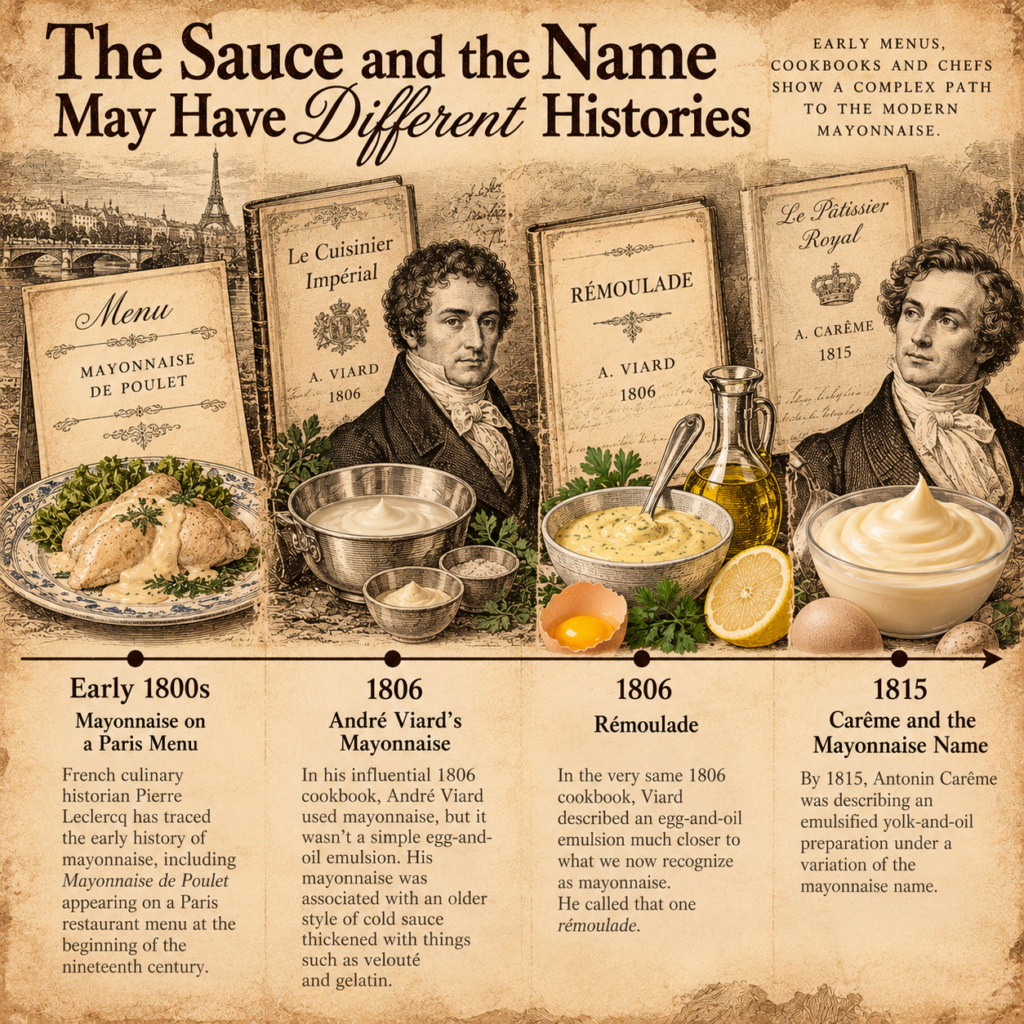
His mayonnaise was associated with an older style of cold sauce thickened with things such as velouté and gelatin.
Yet in the very same 1806 cookbook, Viard described an egg-and-oil emulsion much closer to what we now recognize as mayonnaise.
He called that one rémoulade.
By 1815, Antonin Carême was describing an emulsified yolk-and-oil preparation under a variation of the mayonnaise name.
In other words, the history doesn’t run in a tidy straight line.
The technique existed.
The name appeared.
And eventually the name and technique settled together into the sauce we recognize.
Mayonnaise Wasn’t Always a Mild White Spread
By the late nineteenth century, mayonnaise recipes start looking very familiar to a modern home cook.
Fannie Merritt Farmer’s 1896 Boston Cooking-School Cook Book, for example, instructs the cook to combine egg yolks and seasonings, then add oil gradually—initially drop by drop—while stirring constantly. Vinegar or lemon juice is added as the mixture thickens.
Sarah Tyson Rorer gave similar directions in her historical salad cookbook. Her plain mayonnaise recipe used egg yolks, olive oil, vinegar, salt and cayenne, with the oil added almost drop by drop.
Notice the oil.
Olive oil.
That’s important.
Today we’re accustomed to mayonnaise made from mild, highly refined vegetable oils. An older household mayonnaise made with a more strongly flavoured oil, deeply coloured egg yolks, mustard, spices and vinegar would not necessarily have looked or tasted anything like a spoonful from a modern jar.
And mayonnaise wasn’t the only dressing on the table.
Cookbooks contained mayonnaise dressing alongside cooked dressings, cream dressings and other salad sauces. Some included flour, sugar, milk or cream. Some were cooked. Families developed their own versions, and the everyday meaning of “salad dressing” or even “mayonnaise” wasn’t necessarily as rigid as the definitions we use today.
That helps put my great-grandmother’s brown mayonnaise into context.
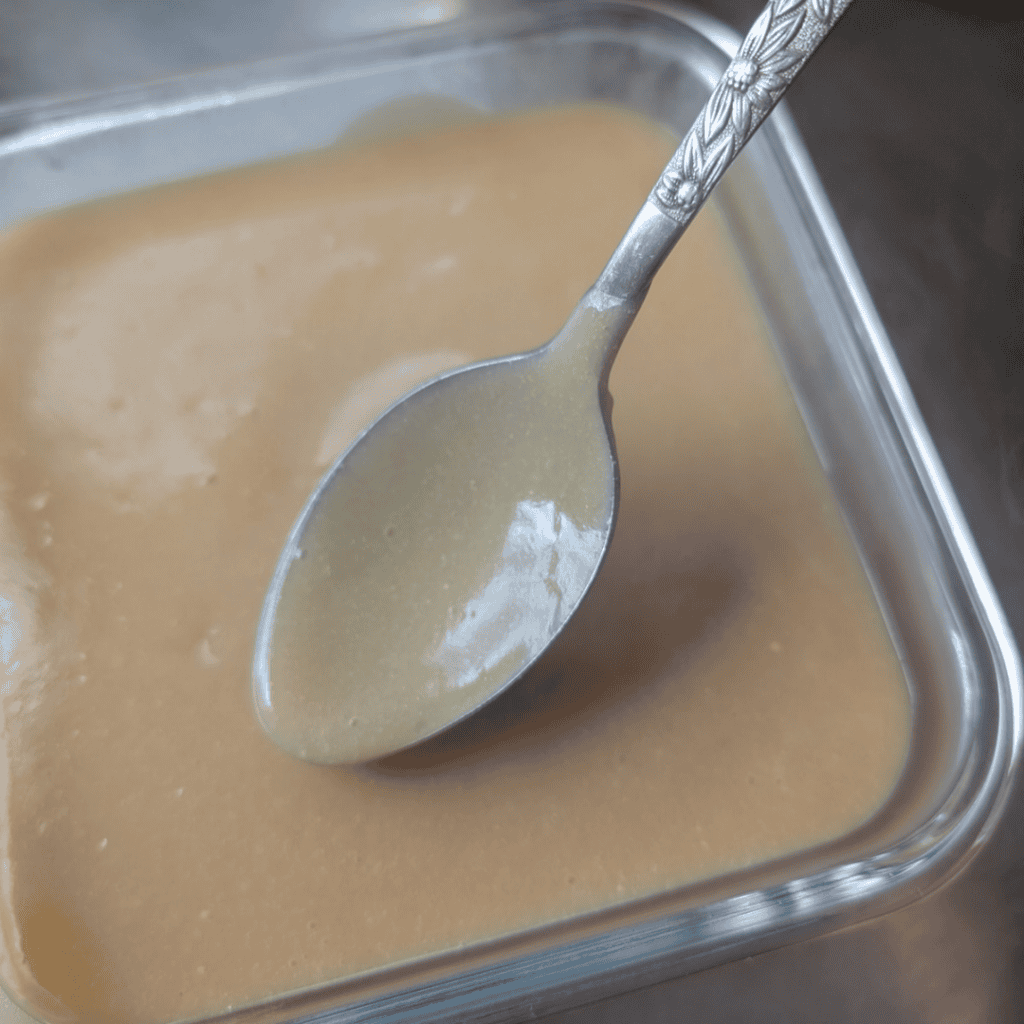
I can’t claim her colour came from one particular ingredient without having her exact recipe in front of me. But there was nothing historically unusual about homemade dressings being darker, yellower, sharper or more heavily seasoned than today’s commercial mayonnaise.
The standardized white jar hadn’t taken over yet.
Then Mayonnaise Became a Business
Commercial mayonnaise existed before Hellmann’s became a household name, but Hellmann’s played a major role in turning mayonnaise into the everyday packaged food Americans recognize.
Richard and Margaret Hellmann operated a New York delicatessen and began selling their mayonnaise commercially in the early twentieth century. Two versions were offered, with a blue ribbon used to distinguish the preferred version. The blue-ribbon mayonnaise became the foundation of the Hellmann’s brand.
Eventually Hellmann’s became dominant in the eastern United States while Best Foods became familiar in the West. When the brands came under the same corporate ownership, both names were retained because customers were already loyal to them.
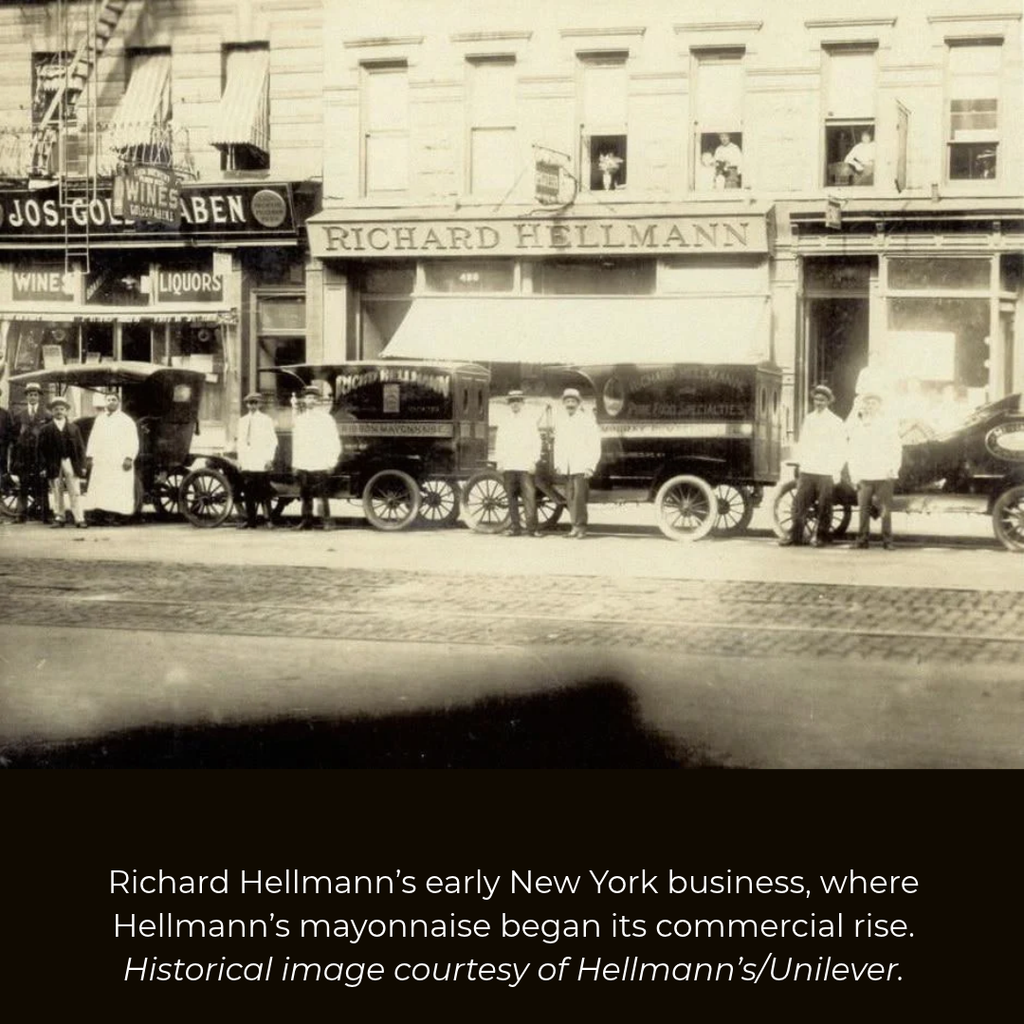
But putting mayonnaise into jars wasn’t simply a matter of making a giant batch of Grandma’s recipe.
Commercial mayonnaise had to do things homemade mayonnaise didn’t.
It had to remain emulsified.
It had to taste the same from one batch to another.
It had to survive transportation.
It needed predictable acidity, texture and colour.
And it had to be affordable enough to become an ordinary grocery item.
That brings us to one of the biggest changes in the mayonnaise jar.
The Oil Changed
For centuries, the oil available to a cook depended heavily on geography and cost.
Olive oil made sense around the Mediterranean. It also appears regularly in nineteenth- and early twentieth-century mayonnaise recipes.
But olive oil wasn’t necessarily the cheapest choice for mass-produced American mayonnaise.
By the 1930s, the change was already measurable.
A 1937 U.S. Department of Agriculture report on fats and oils noted that olive oil was highly valued for mayonnaise and French dressing because of its flavour, but its high price meant manufacturers were increasingly using less expensive oils.
The report specifically identifies refined cottonseed and corn oils among those widely used for dressings and says highly refined cottonseed, corn, sesame, sunflower, peanut and other oils could all be suitable.
That same report gives us a sense of just how quickly manufactured mayonnaise and salad dressings were becoming ordinary foods.
Production of mayonnaise, salad dressing and related products rose from approximately 92 million pounds in 1928 to 236 million pounds in 1936.
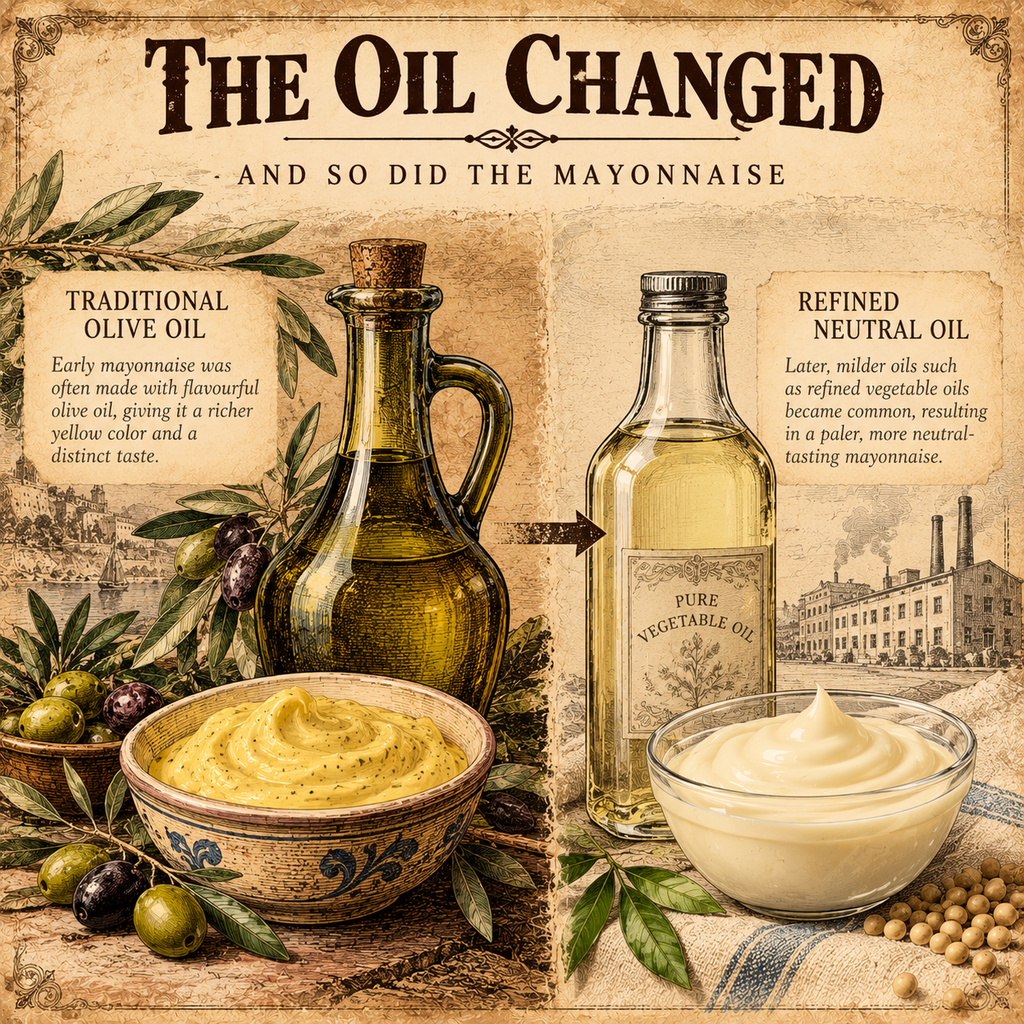
Mayonnaise was moving out of the mixing bowl and into industrial food production.
And refined oil made a major difference.
A highly refined oil is much milder in flavour and generally paler than a strongly flavoured traditional oil. That allowed the egg, vinegar, salt, mustard and other seasonings to be carefully standardized without the oil dominating every batch.
The familiar neutral flavour of supermarket mayonnaise was becoming possible.
So Why Is Store-Bought Mayonnaise So White?
This is my favourite part of the whole story because the answer isn’t simply “they use white ingredients.”
They don’t.
Oil can be yellow. Egg yolks certainly aren’t white. Mustard isn’t white either.
Mayonnaise looks pale because it is an emulsion.
Normally, oil and water don’t remain mixed. In mayonnaise, egg components help stabilize tiny droplets of oil throughout a water-based phase containing ingredients such as vinegar.
Commercial mayonnaise contains an enormous number of these tiny dispersed oil droplets. Food-science references describe typical mayonnaise droplets on the scale of only a few micrometres.
Those droplets interact with light.
Research on food emulsions shows that smaller droplets and higher concentrations of droplets increase light scattering and make an emulsion appear lighter and more opaque.
So mayonnaise isn’t white in quite the same way that flour or sugar is white.
Its structure helps make it look white.
Modern manufacturing can produce an extremely uniform emulsion from pale refined oil, controlled egg ingredients and a standardized recipe. The result is much lighter and more consistent than many handmade versions would have been.
That’s how yellowish ingredients can become the creamy, almost white condiment sitting in the refrigerator door.
Mayonnaise Became Standardized
Once mayonnaise became a mass-produced food, even the word mayonnaise eventually needed a legal meaning.
In Canada, mayonnaise must contain vegetable oil, whole egg or egg yolk, and vinegar or lemon juice, and it must contain at least 65 percent vegetable oil. Water, salt, sweetener and certain seasonings may also be included. That distinction becomes especially interesting here in Canada because of Miracle Whip. Many Canadian households use it anywhere they might otherwise use mayonnaise, from sandwiches to potato salad, but look closely at the jar and you won’t actually find the word mayonnaise on the product name. Miracle Whip is sold in Canada as a spread, and its ingredient list begins with water followed by vegetable oil, sugar, vinegar, modified cornstarch and egg yolk. In other words, the condiment many of us casually lump into the mayo category is a different product altogether.
That legal distinction gets particularly interesting when you compare Canada and the United States. For decades, one of mayonnaise’s biggest competitors in Canada wasn’t technically mayonnaise at all.
Miracle Whip once dominated the Canadian mayonnaise and mayonnaise-type dressing category. Around 2000, it held roughly 54 percent of the Canadian market, while Hellmann’s held less than 30 percent.
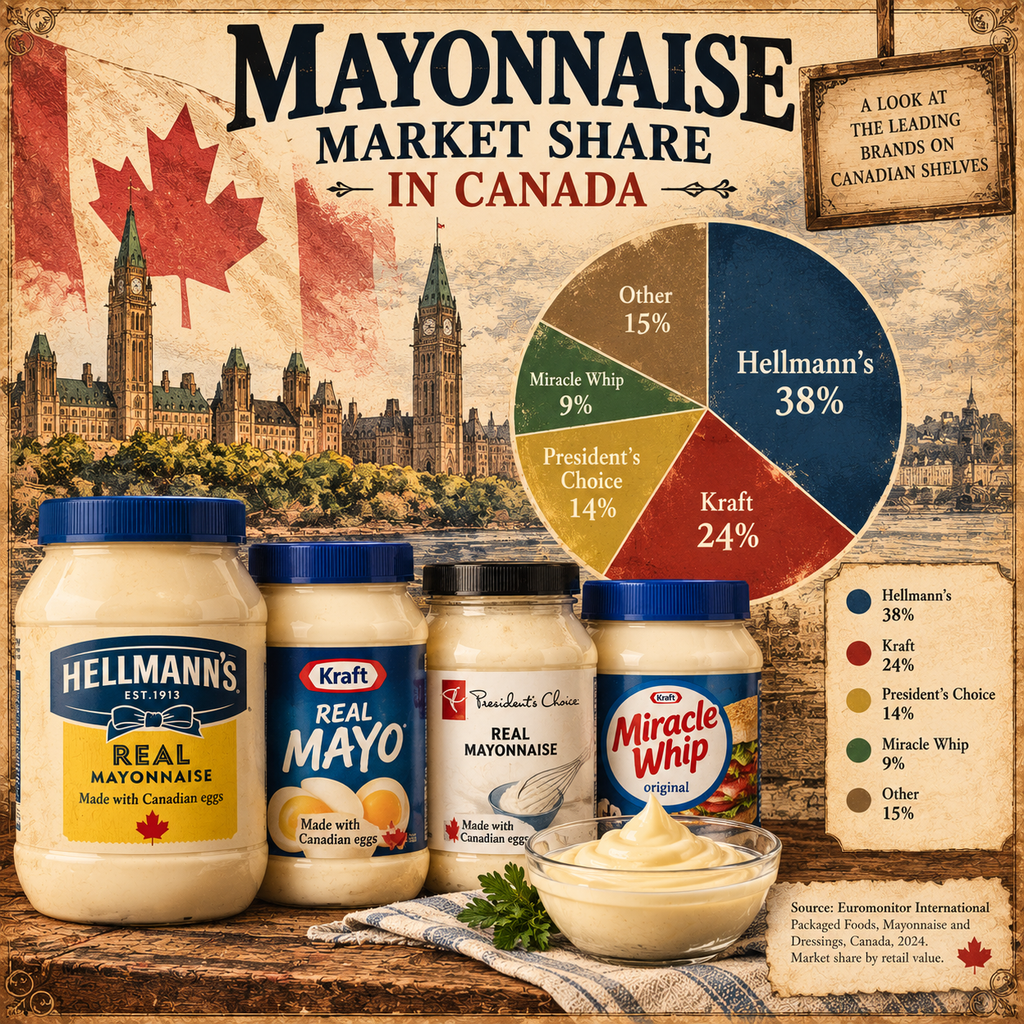
The American market looked quite different. By 2013, Hellmann’s and its western U.S. sister brand Best Foods together held about 45.5 percent of the U.S. mayonnaise market. Kraft Mayo accounted for another 23.8 percent, while Miracle Whip held only 15.6 percent.
Canada eventually shifted too. Hellmann’s overtook Miracle Whip in 2008, and by 2013 the positions had almost completely reversed: Hellmann’s held approximately 53 percent of the Canadian category while Miracle Whip had fallen to about one-third.
And here’s what makes that history so interesting: Miracle Whip isn’t mayonnaise. In Canada it is sold as Miracle Whip Original Spread, with a different formulation from standardized mayonnaise. So for years, Canadians were buying enormous quantities of a product they used much like mayonnaise, while technically buying something else.
The United States standard for mayonnaise likewise requires at least 65 percent vegetable oil and specifies permitted egg and acidifying ingredients.
That distinction matters more than it sounds.
Something sold as salad dressing can be formulated differently. In Canada, for example, standardized salad dressing has its own compositional requirements, allowing considerably less oil and including starch or flour as part of its composition.
The loose household world of mayonnaise, cooked dressing and salad dressing had become defined commercial categories.
The Jar Changed How We Used Mayonnaise Too
Once mayonnaise was inexpensive, standardized and waiting in the refrigerator, we didn’t have to make a bowl of it every time we wanted some.
That changed its job in the kitchen.
A sauce that once required carefully adding oil drop by drop could now be scooped out by the cupful.
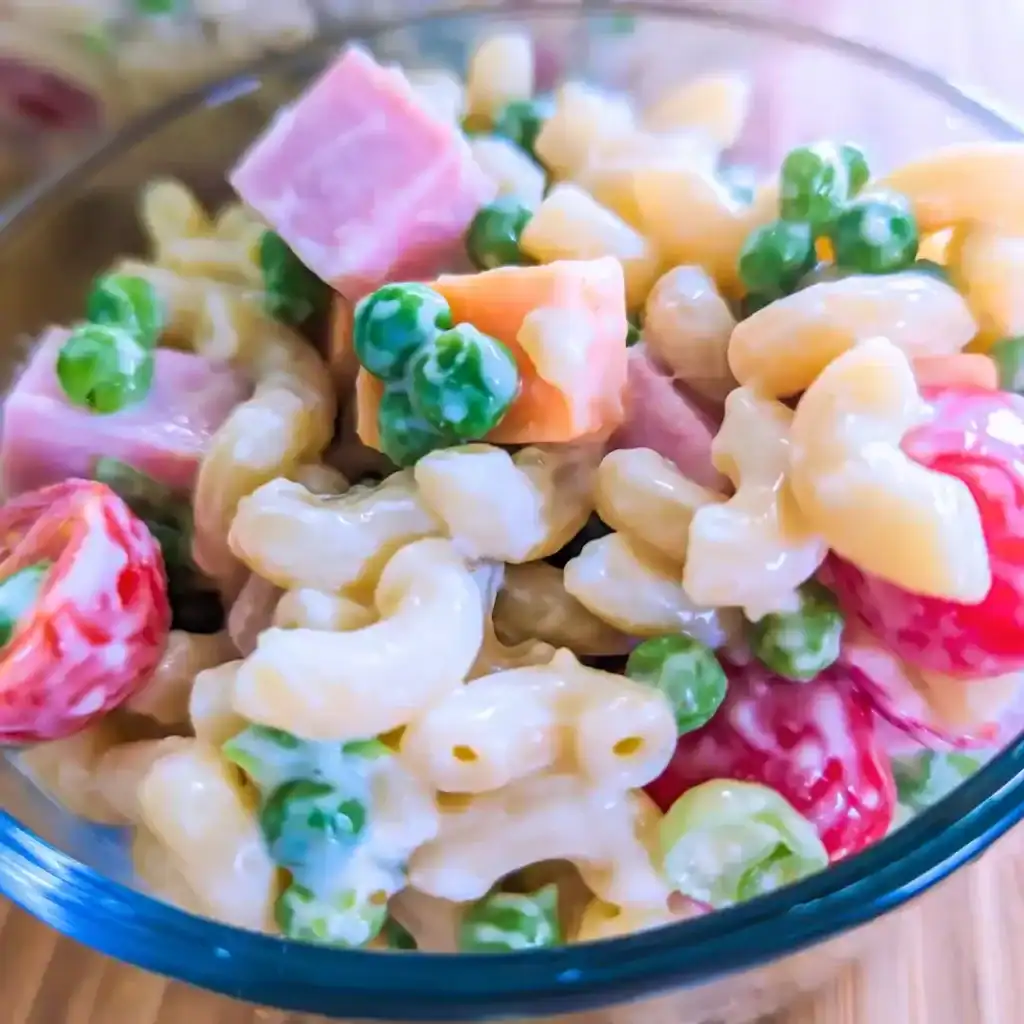

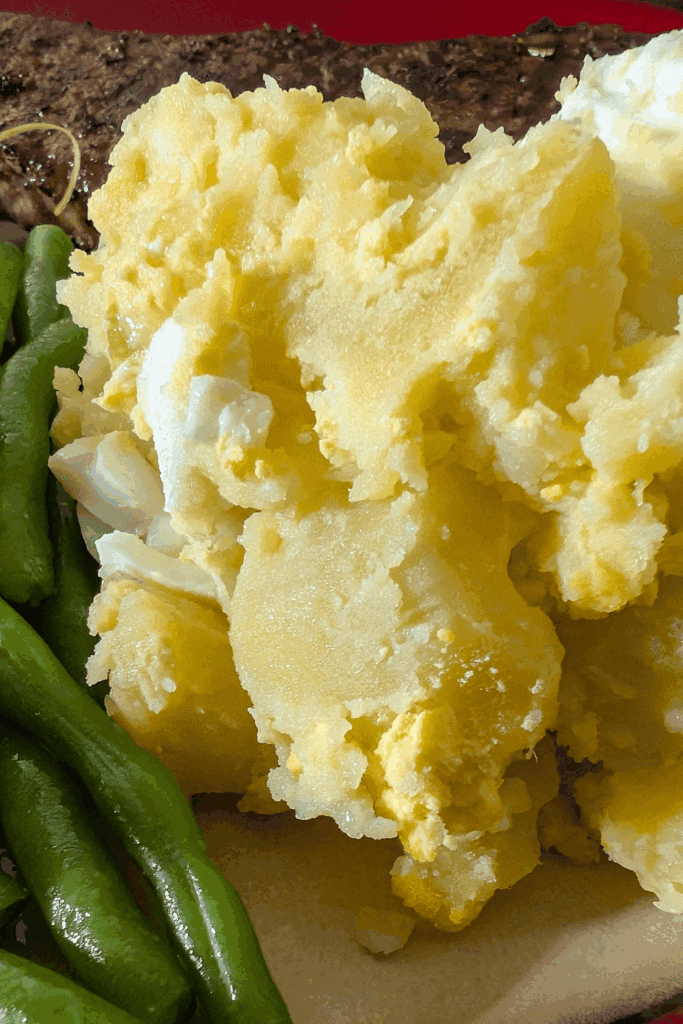
It went into sandwiches, potato salad, macaroni salad, coleslaw, deviled eggs, tuna salad, chicken salad, dips and casseroles.
Mayonnaise stopped being only something served with food.
It became something we cooked with.
That may be one of the biggest differences between the old sauce and the modern condiment.
The industrial version didn’t simply replace homemade mayonnaise because it was easier. Its convenience encouraged cooks to use mayonnaise in quantities and in dishes that would have been considerably more work when every spoonful first had to be emulsified by hand.
Today we barely think twice about using mayonnaise as the base for another flavour. It can be mixed with mustard, herbs, garlic, hot sauce or even pickle juice, like the mayo I use when I make an assorted sub sandwich. It can also become an entirely different sauce, like the mustard and mayonnaise combination in my imitation crab salad with Dijonnaise dressing.
From Brown Mayonnaise to the White Jar
So what happened between my great-grandmother’s brown mayonnaise and the jar in my refrigerator?
Not one thing.
Mayonnaise changed because the food system around it changed.
The oils became more highly refined and neutral.
Manufacturing made the emulsion finer and more consistent.
Recipes became standardized.
Commercial production made mayonnaise inexpensive and readily available.
Food regulations eventually established what manufacturers could actually call mayonnaise.
And generations of cooks became accustomed to mayonnaise being pale, mild, thick and exactly the same every time the lid came off.
Yet underneath all of that technology is still a remarkably old cooking trick.
Take oil and a watery ingredient that ordinarily refuse to stay together. Add egg yolk. Work them carefully enough and the oil breaks into tiny droplets that remain suspended rather than separating.
An eighteenth-century Menorcan cook would recognize that part.
My great-grandmother would recognize it too.
What she might find strange is that somewhere along the way we stopped expecting mayonnaise to taste much like the oil, egg, mustard and vinegar from which it was made.
And perhaps that’s the most interesting part of mayonnaise history.
We didn’t simply put an old sauce into a jar. We slowly changed the sauce until it was perfectly suited to living in one.
One Piece of This History I’d Still Like to Find
My great-grandmother’s mayonnaise may have looked nothing like the pale jarred mayonnaise in my refrigerator, but after following mayonnaise through more than two centuries of change, that no longer seems particularly strange.
The oils changed. The way mayonnaise was made changed. Commercial production changed its texture, flavour and consistency. Food standards eventually defined what could legally be sold as mayonnaise, while products such as Miracle Whip showed that consumers didn’t necessarily care what the label called it as long as it did the job they wanted it to do.
Somewhere along the way, mayonnaise stopped being a sauce that could vary considerably from one kitchen to another and became a product we expect to look and taste almost exactly the same every time we open a jar.
That may be the most interesting part of its history.
We didn’t simply put an old sauce into a jar.
We slowly changed the sauce until it was perfectly suited to living in one.
So if your grandmother or great-grandmother made homemade mayonnaise or salad dressing, what did hers look like—and what did she put in it?