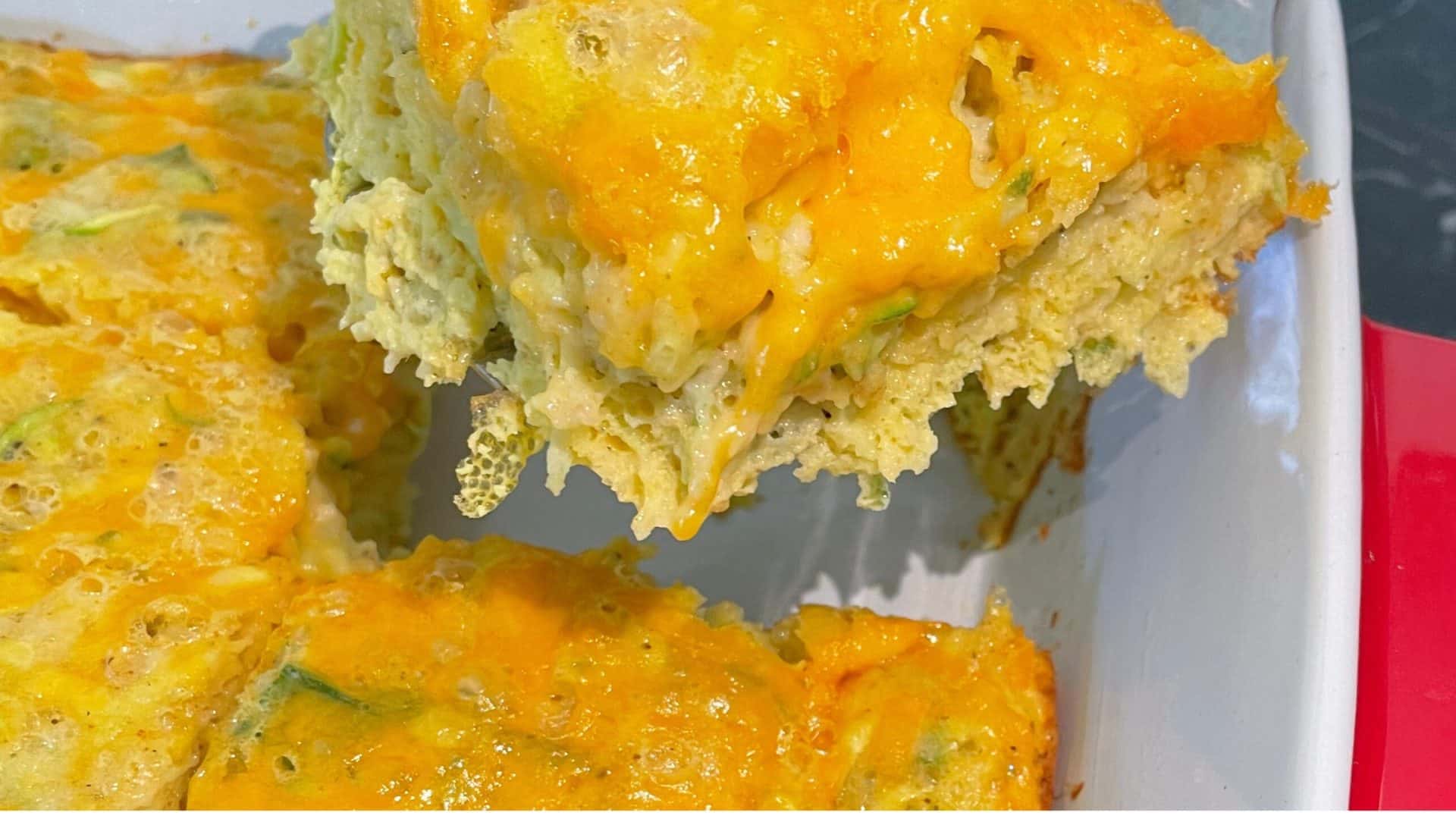
Moist Pumpkin Layer Cake with Vanilla Buttercream
Pumpkin cake has a habit of turning dense and heavy. This one doesn’t. The crumb is soft, springy and airy, while pumpkin purée and Greek yogurt keep it moist without weighing it down. Layered with pumpkin filling and vanilla buttercream, it’s the kind of cake that works for a fall birthday, Thanksgiving instead of another pumpkin pie, or simply dessert after dinner when you’re in the mood for something a little indulgent.
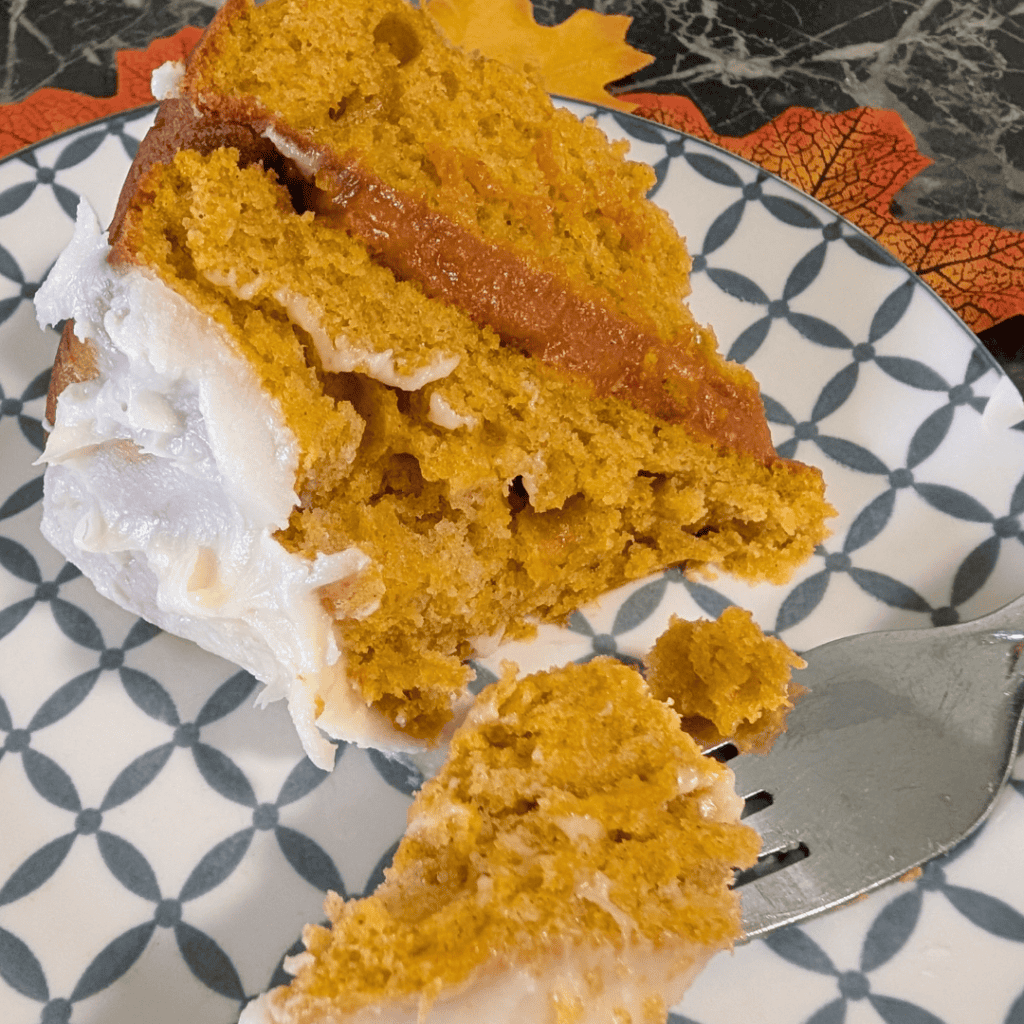
The cinnamon and ginger are deliberately mild, so this tastes like pumpkin cake first, not pumpkin spice cake. I finish it as a two-layer semi-naked cake, with just enough vanilla buttercream on the sides to let some of the pumpkin cake show through.
I finish mine as a semi-naked pumpkin layer cake, leaving some of the cake visible through the buttercream on the sides. It works just as well for a fall birthday as it does after dinner, and it makes a nice Thanksgiving dessert when you want pumpkin on the table but would rather have cake than another pie.
Quick Answer
This pumpkin layer cake is a moist, fluffy two-layer cake made with pumpkin purée, Greek yogurt and mild warm spices. It is filled with pumpkin, frosted with vanilla buttercream and finished in a simple semi-naked style.
Flavor:
Pumpkin with mild cinnamon and ginger
Oven Temperature:
350°F
Bake Time:
30–35 minutes
Yield:
One 2-layer, 9-inch round cake
Texture:
Soft, moist, springy and airy
Best For:
Fall birthdays, Thanksgiving and after-dinner dessert
Why I Made This Pumpkin Cake
I wanted a pumpkin cake that felt like fall without turning into a dense, heavily spiced pumpkin spice cake. I was looking for something light enough to serve after dinner but still special enough for a fall birthday or Thanksgiving when you want pumpkin on the dessert table without making another pie.
The combination of pumpkin purée, Greek yogurt and oil gave me the texture I was after: moist, soft, springy and airy rather than heavy. I also kept the cinnamon and ginger mild so the pumpkin comes through first. The pumpkin filling adds another layer of pumpkin flavor, while the simple vanilla butter frosting keeps the finished cake from becoming overly rich.
Cost Rating: 🍳🍳 Moderate Cost — Moderate Yield
Cost guideline:
Cost Per Batch: ~$9.50–$11.50
Cost Per Serving: ~$0.80–$0.95 (based on 12 servings)
This is still a fairly budget-friendly layer cake, especially compared with buying a decorated cake. Using your prices, the biggest identifiable cost is the pumpkin purée because the cake and filling together use about 2 cups. At $5 for a 796 mL can, that works out to roughly $3 of pumpkin used in the recipe.
The other supplied costs stay quite low: the pudding mix is about $1, the oil about $0.60, the milk about $0.20, the sugar about $0.20, and the butter for one batch of frosting about $0.60. The remaining cost comes primarily from the Greek yogurt, eggs and icing sugar, with flour, baking soda, spices and vanilla contributing smaller pantry amounts.
Why You’ll Love This Pumpkin Cake
Light, Moist Crumb: Pumpkin purée and Greek yogurt keep the cake moist, while the crumb stays soft, springy and airy instead of dense or heavy.
Mildly Spiced: Just ½ teaspoon each of cinnamon and ginger adds warmth without overpowering the pumpkin. If you prefer a more strongly spiced pumpkin cake, my pumpkin spice bundt cake goes further into that classic pumpkin-spice flavor.
Simple Fall Finish: Vanilla buttercream and the semi-naked sides keep the decoration fairly relaxed while still making the cake suitable for a birthday or holiday table.
Budget Tip:
Canned pumpkin is also worth buying when it goes on sale because unopened canned foods are shelf-stable. Check the date and condition of the can when you buy it, and remember that a best-before date refers primarily to food quality rather than an automatic safety cutoff. The Canadian Food Inspection Agency explains how best-before dates work.
Butter is another ingredient I watch for on sale and freeze for later baking. Health Canada’s safe food storage guide includes refrigerator and freezer storage recommendations for butter and other dairy products. I often buy bricks when they drop to around $5 and freeze the extras until I need them for baking. Flour, sugar, baking soda and spices are pantry staples, so keeping those basics on hand means the pumpkin, Greek yogurt and eggs are usually the main ingredients I need to specifically shop for when making this cake.
How to Make Pumpkin Layer Cake
Start by spraying two 9-inch nonstick round cake pans well with cooking spray. I use Pam for mine. Heat the oven to 350°F.
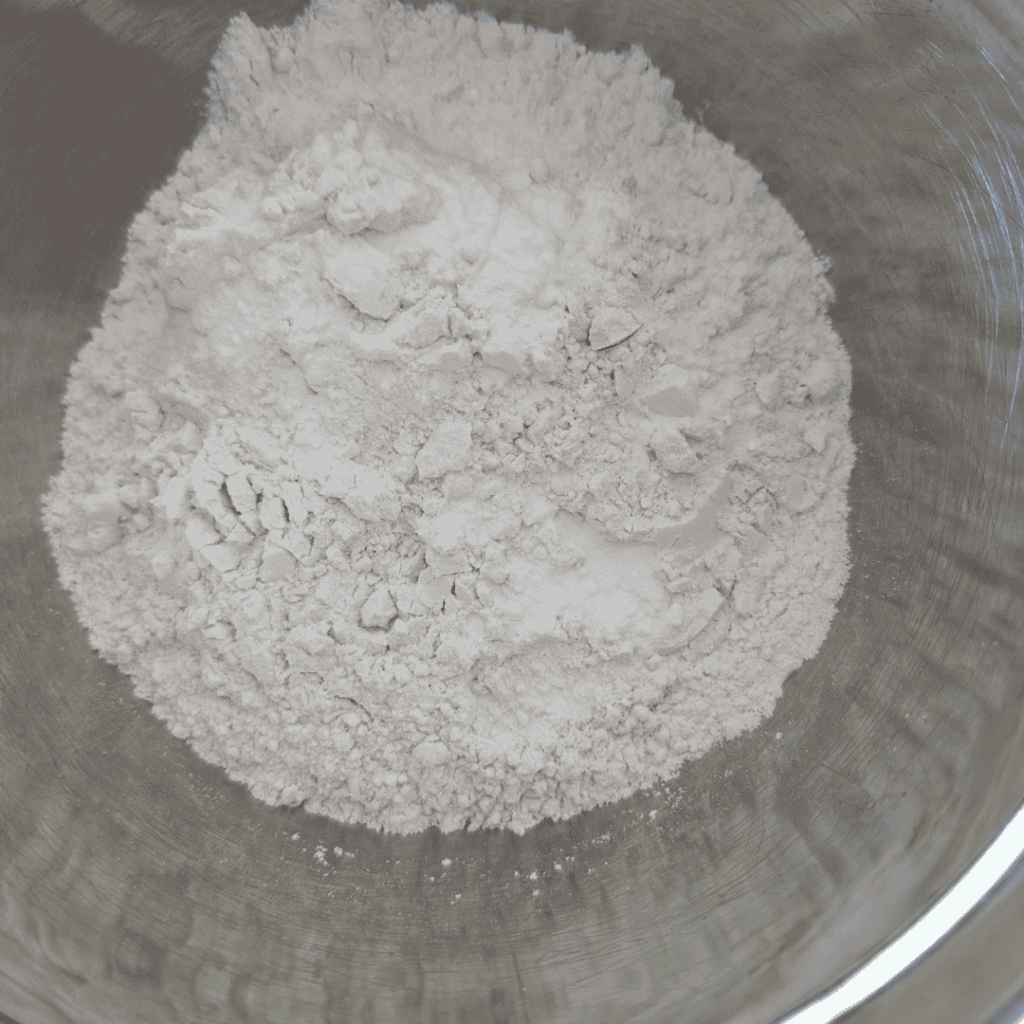
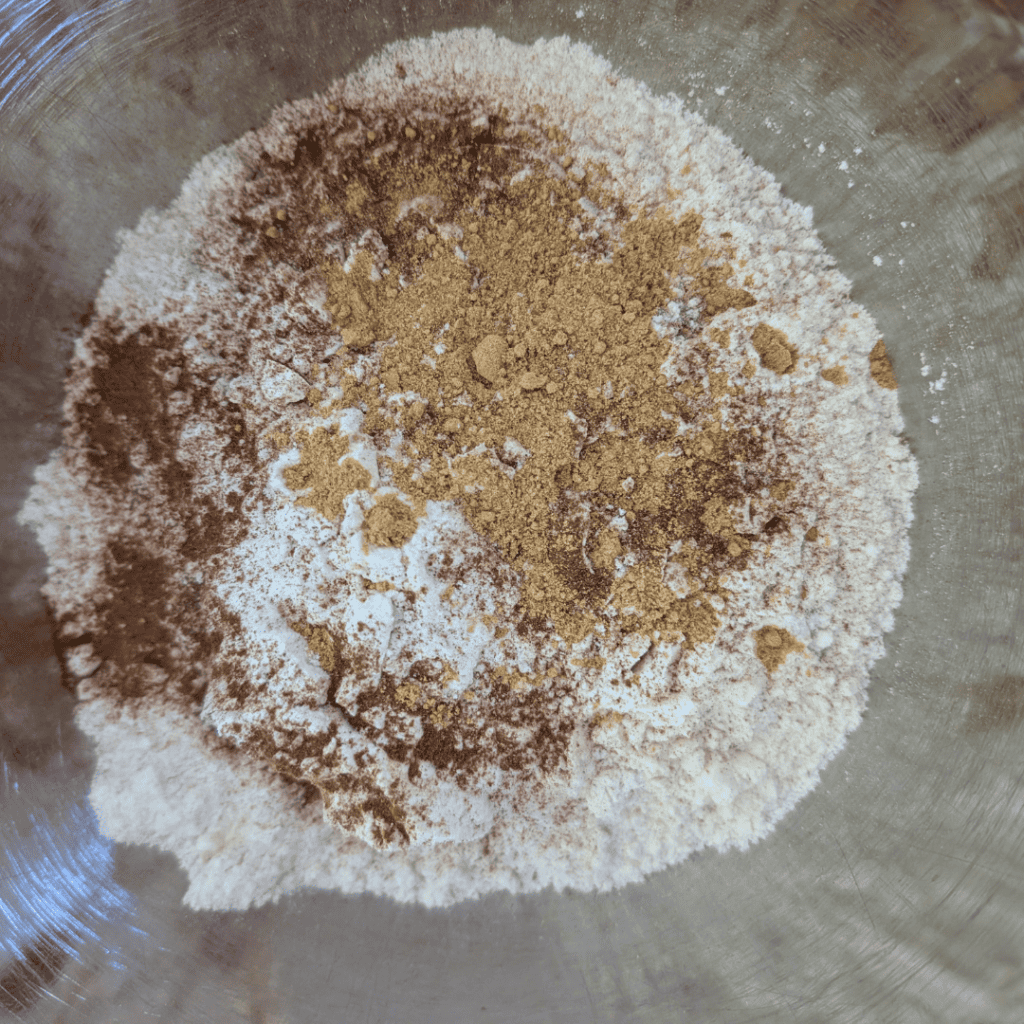
In one bowl, combine the flour, baking soda, cinnamon and ginger. Mixing the dry ingredients separately helps distribute the baking soda and spices evenly before they go into the batter.
In a second bowl, stir together the Greek yogurt and pumpkin purée until they are evenly combined. Keeping this mixture separate makes it easier to alternate the wet and dry additions without overworking the batter.
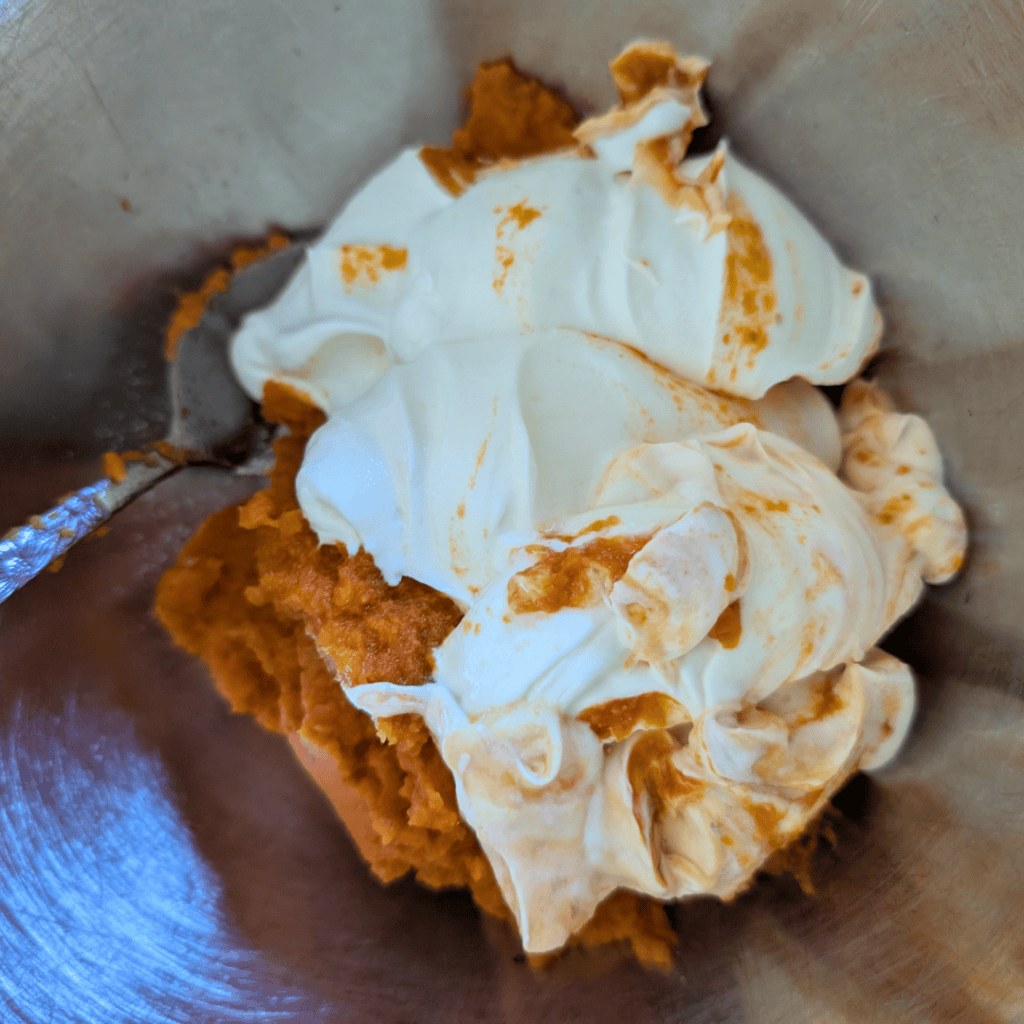
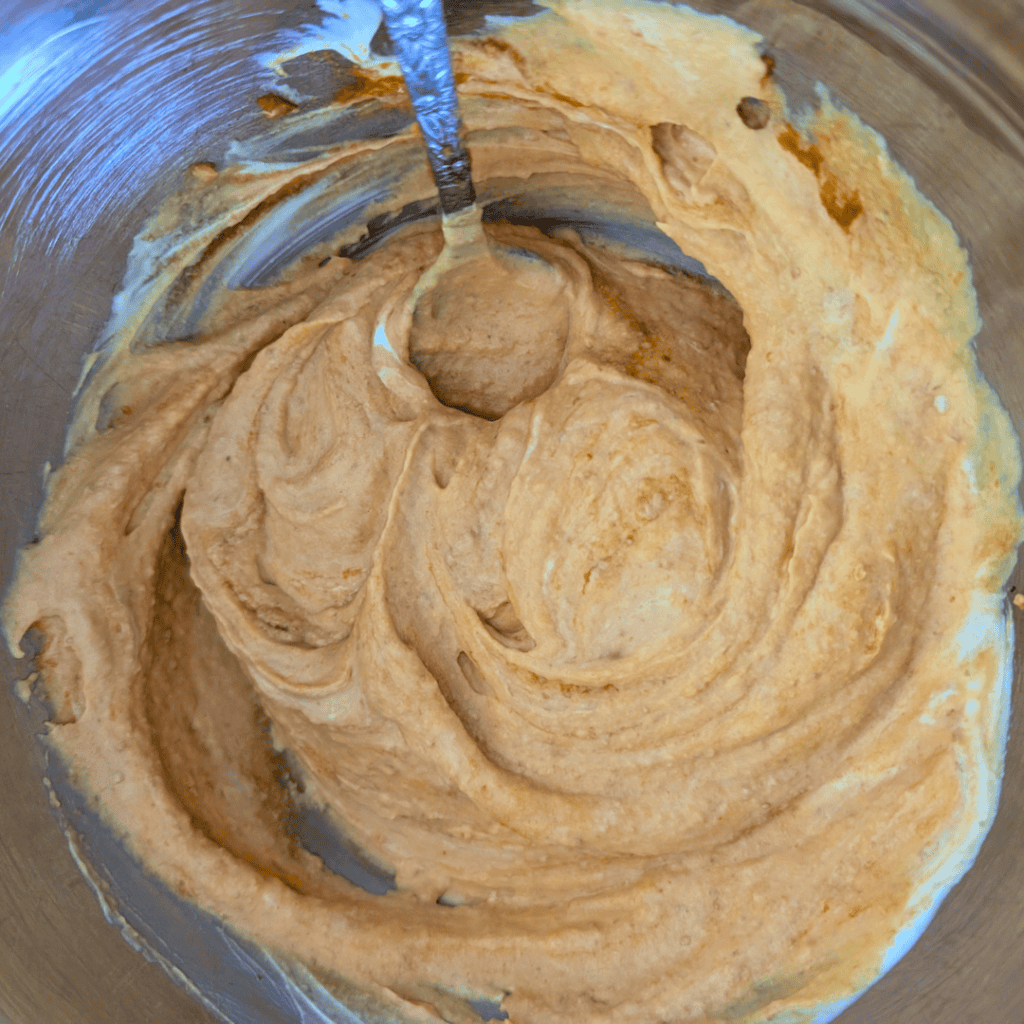
Add the sugar, oil and eggs to the bowl of a stand mixer. Beat them together well before beginning to add the other ingredients.
Add the flour mixture alternately with the pumpkin-yogurt mixture, mixing between additions just until everything comes together.
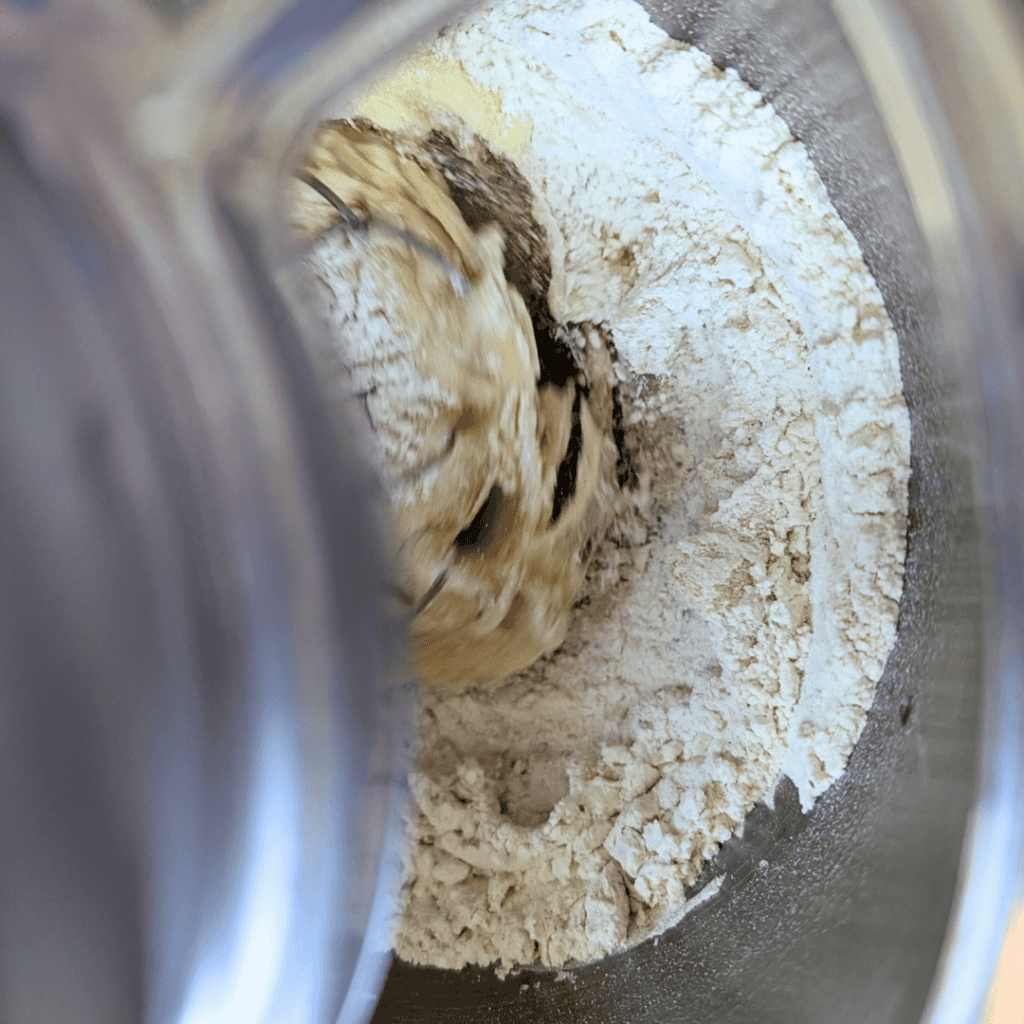
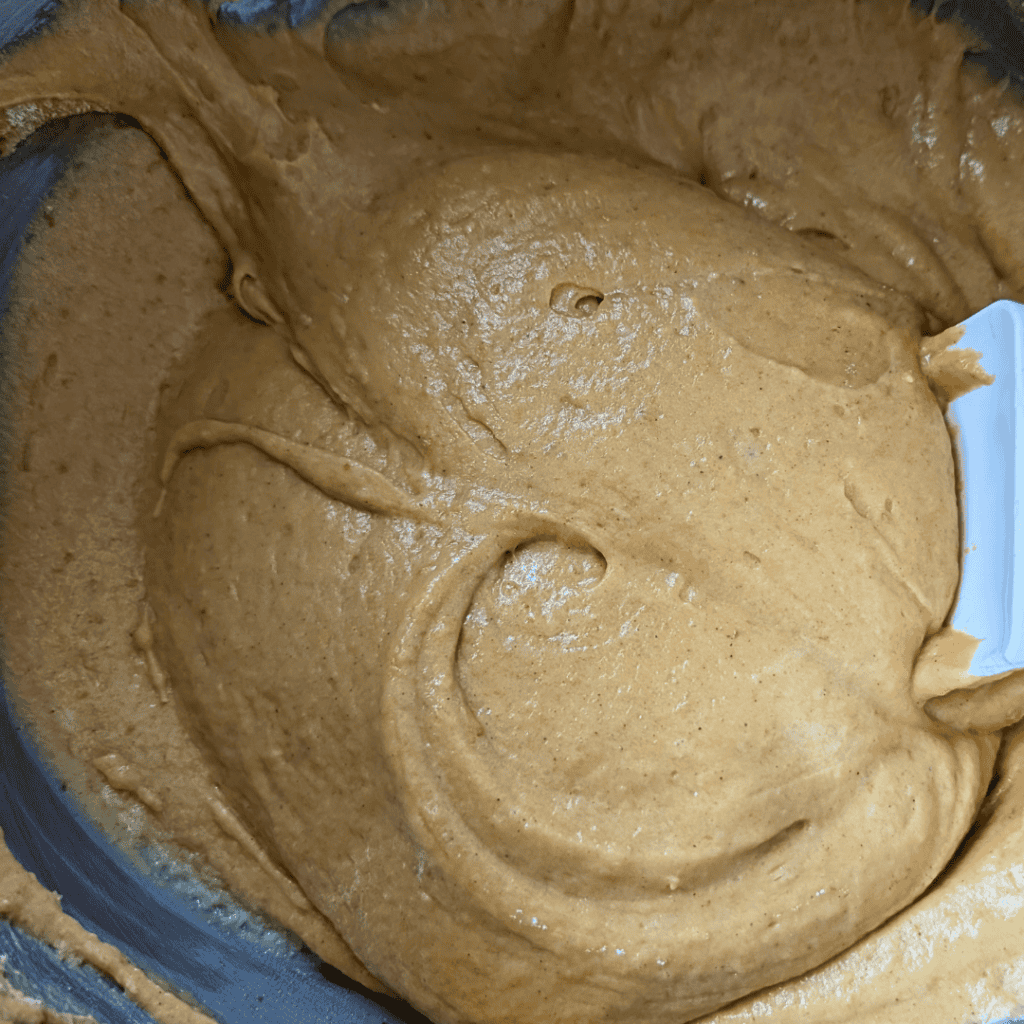
Divide the batter between the two prepared cake pans and smooth the tops.
Bake at 350°F for 30–35 minutes.
Doneness note to finish after your next bake: I want to add your actual visual/touch cue here—whether the center springs back, a tester comes out clean or with a few crumbs, how much the edges pull away, etc.—rather than guessing.
Let the cake layers cool before filling and frosting them.
How to Fill the Pumpkin Cake
Place the first cake layer top-side down on your cake plate or work surface. This puts the flat bottom of the cake facing upward, giving you a level surface for the pumpkin filling.
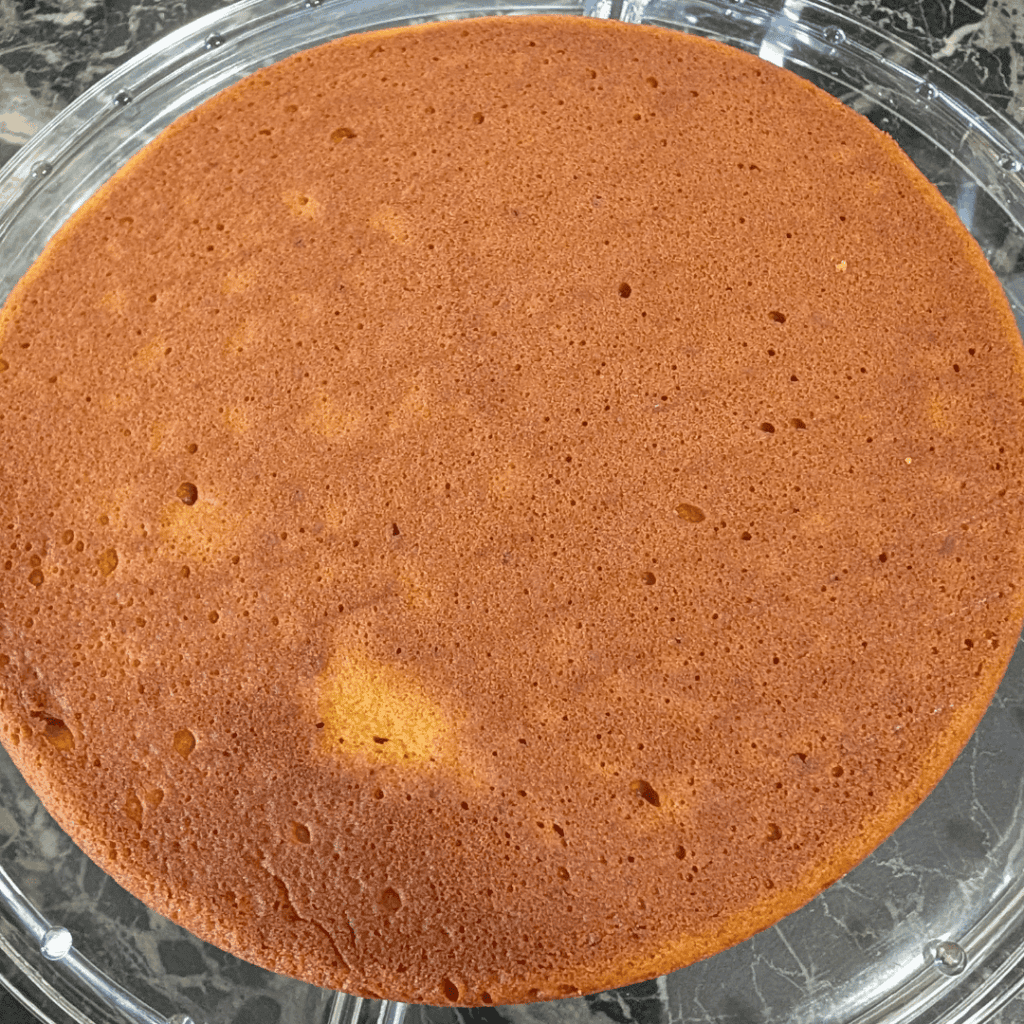
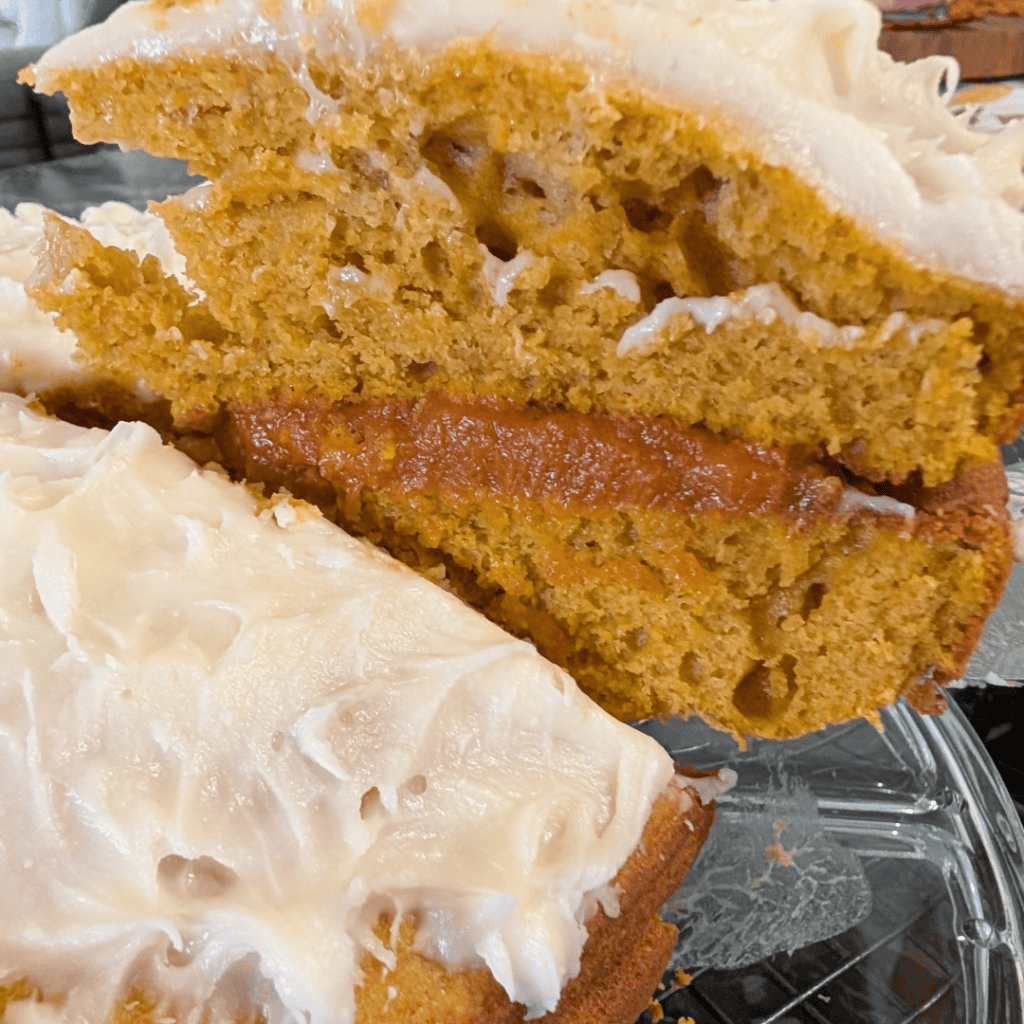
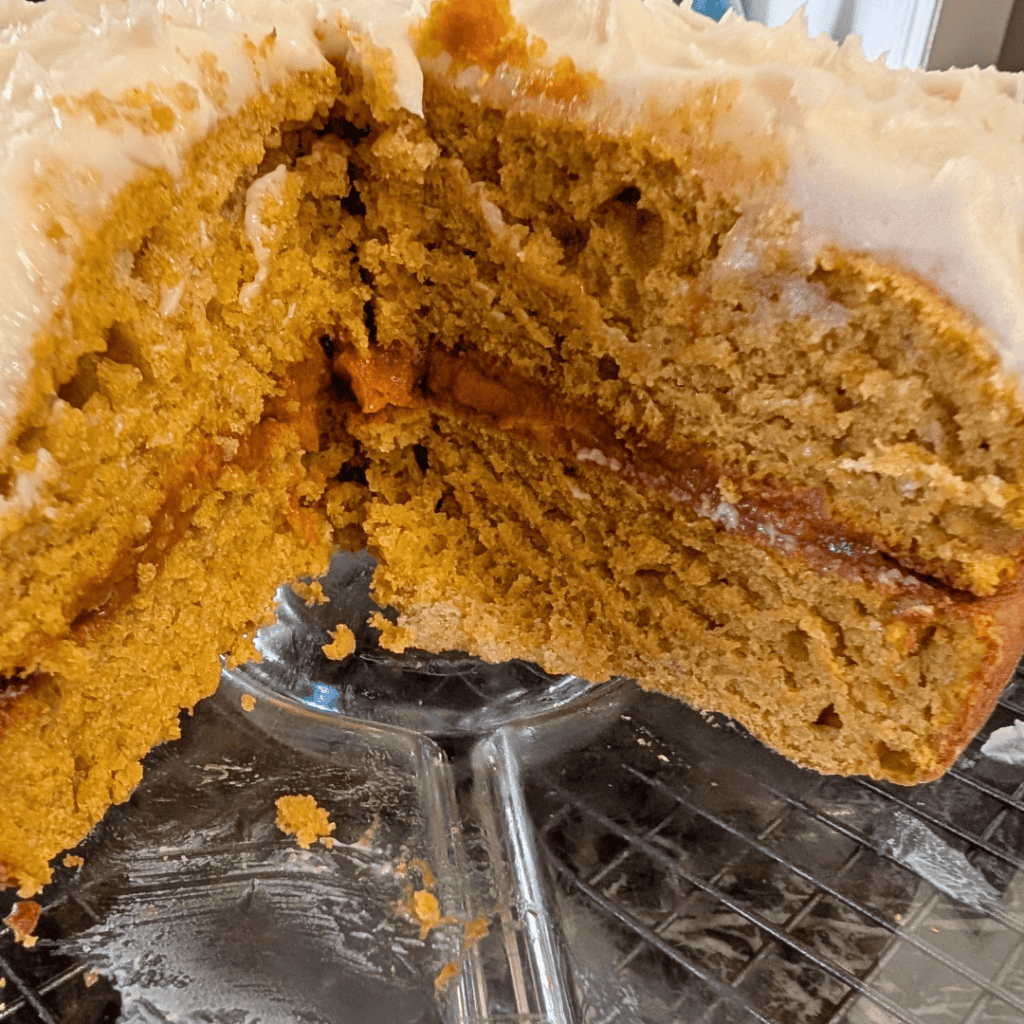
Spread the filling over the cake, stopping about 1 inch from the outside edge. Because this is a soft filling, it will spread outward when you place the second cake layer on top.
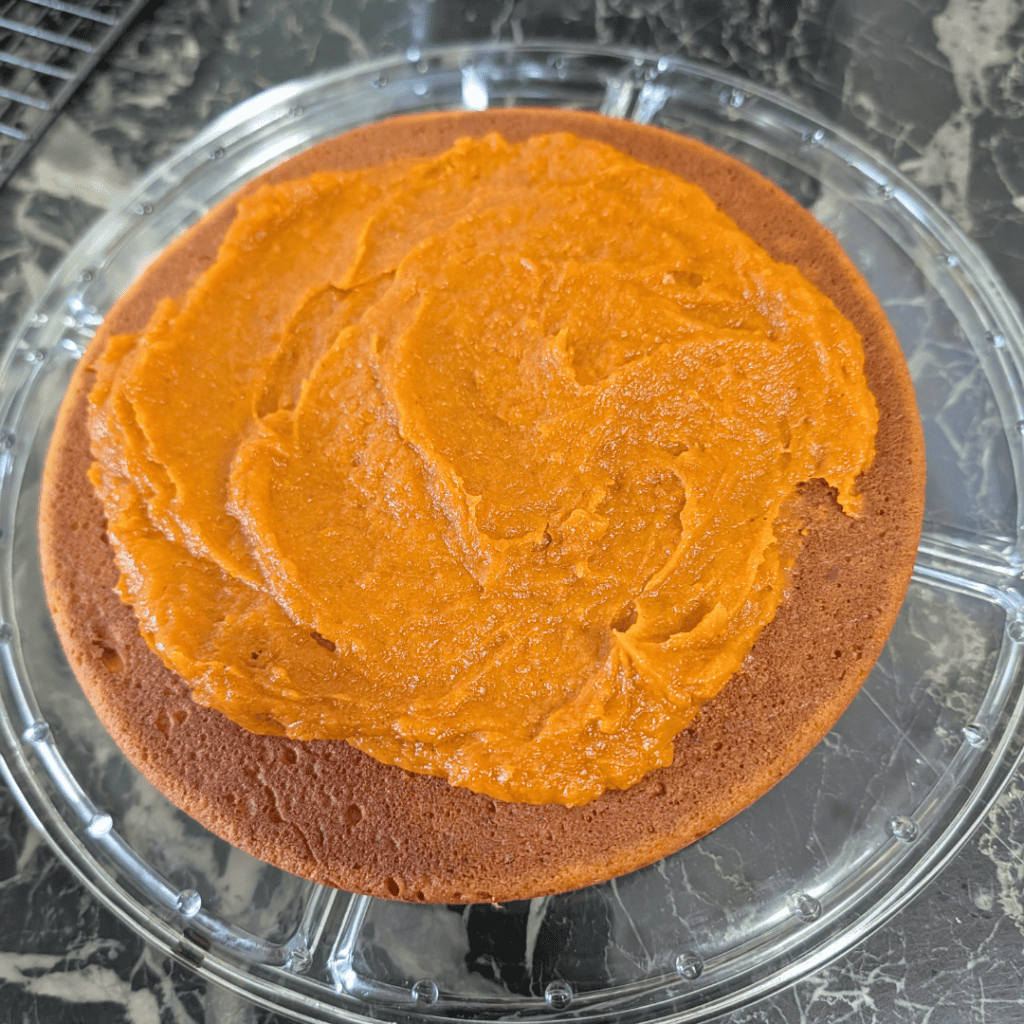
Place the second cake layer top-side up, so the two flat sides of the cake layers face one another with the pumpkin filling between them.
If the bottom cake layer has an unusually large dome, use a cake knife to level it before turning it over. This helps the finished layer cake sit more evenly.
Once the cake is filled and stacked, it is ready for the vanilla butter frosting.
How to Make Vanilla Butter Frosting
Add the softened butter to a mixing bowl and beat until it is light and creamy.
Add the vanilla and Greek yogurt and beat again until smooth.
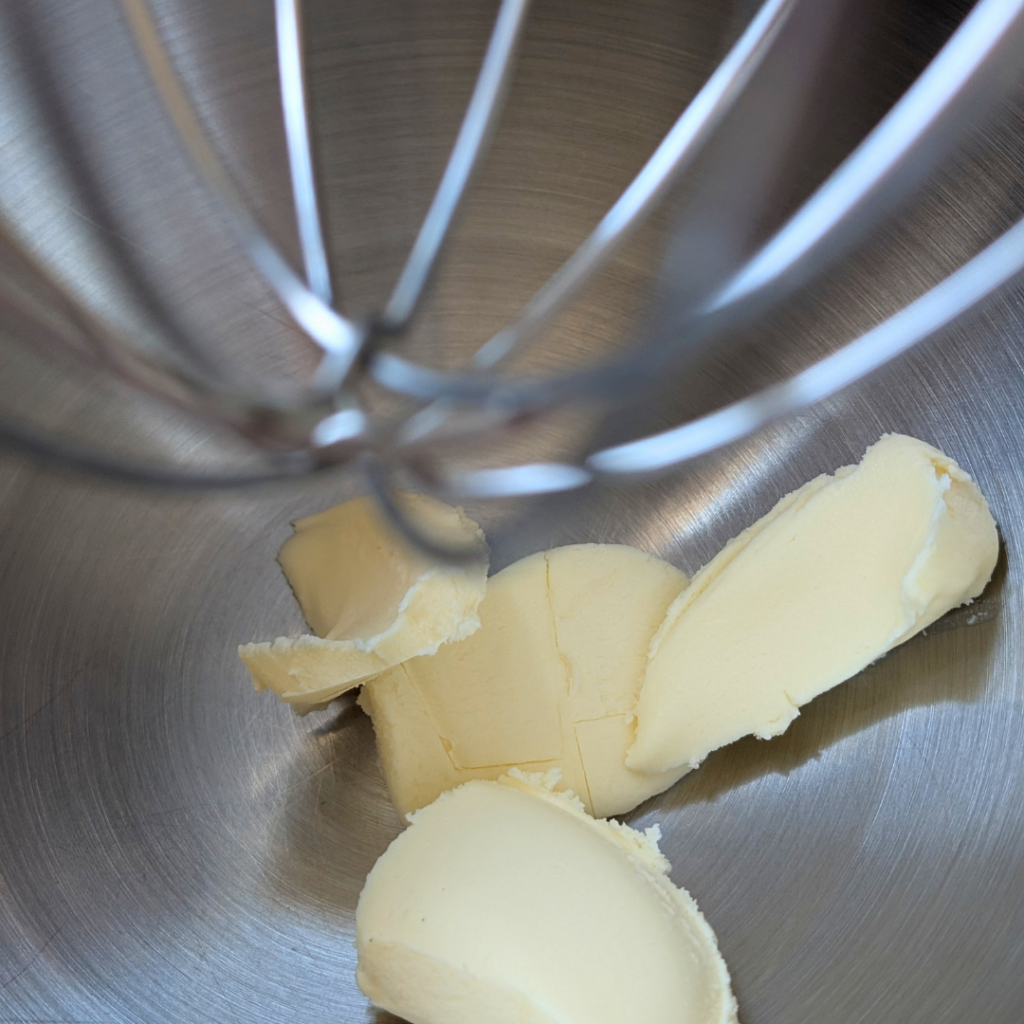
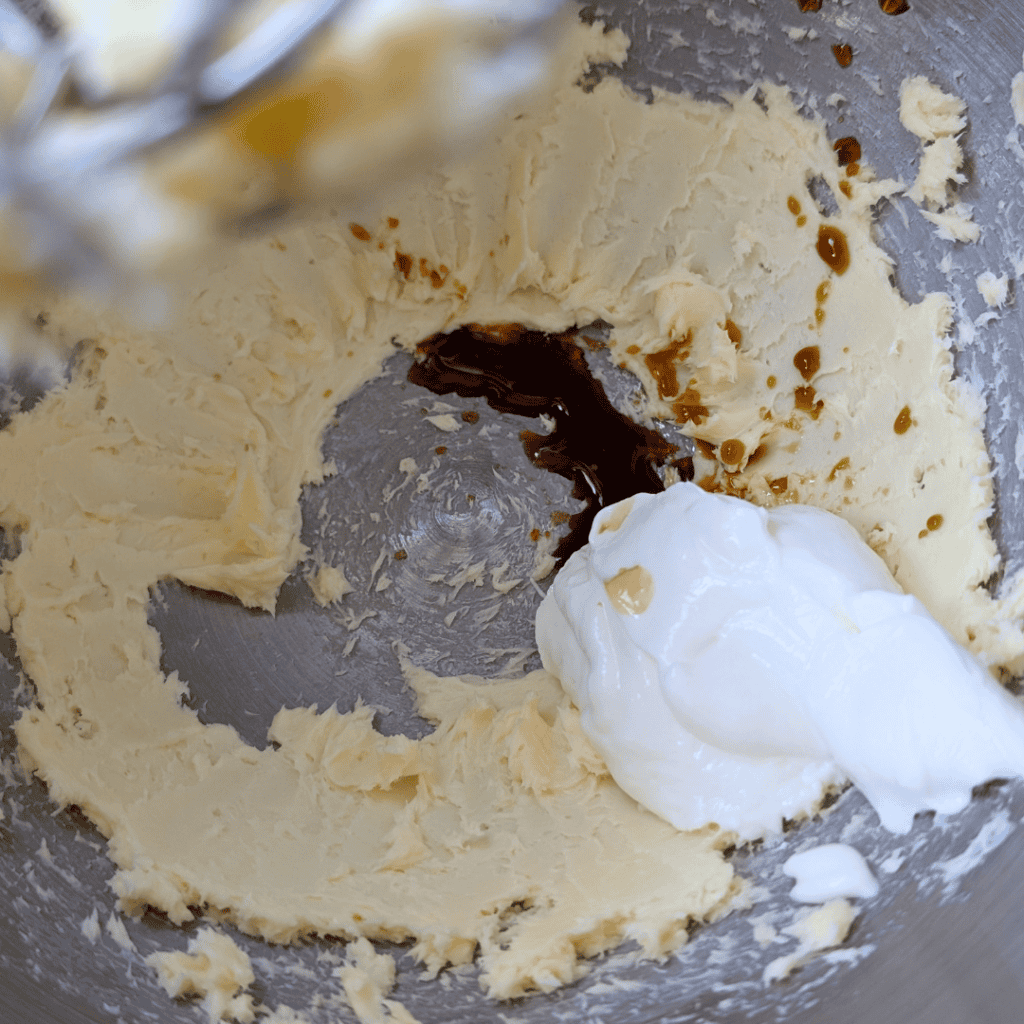
Add the icing sugar, mixing until the frosting is smooth, fluffy and spreadable.
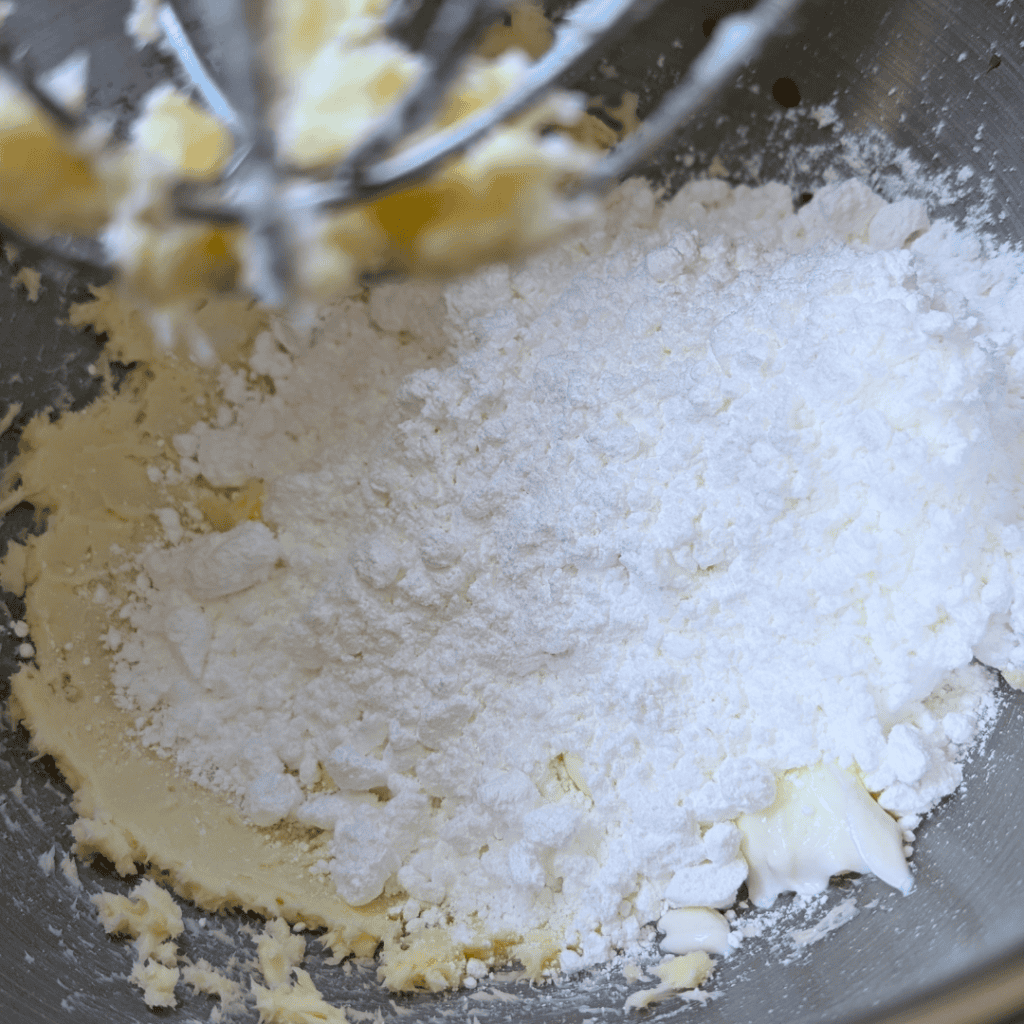
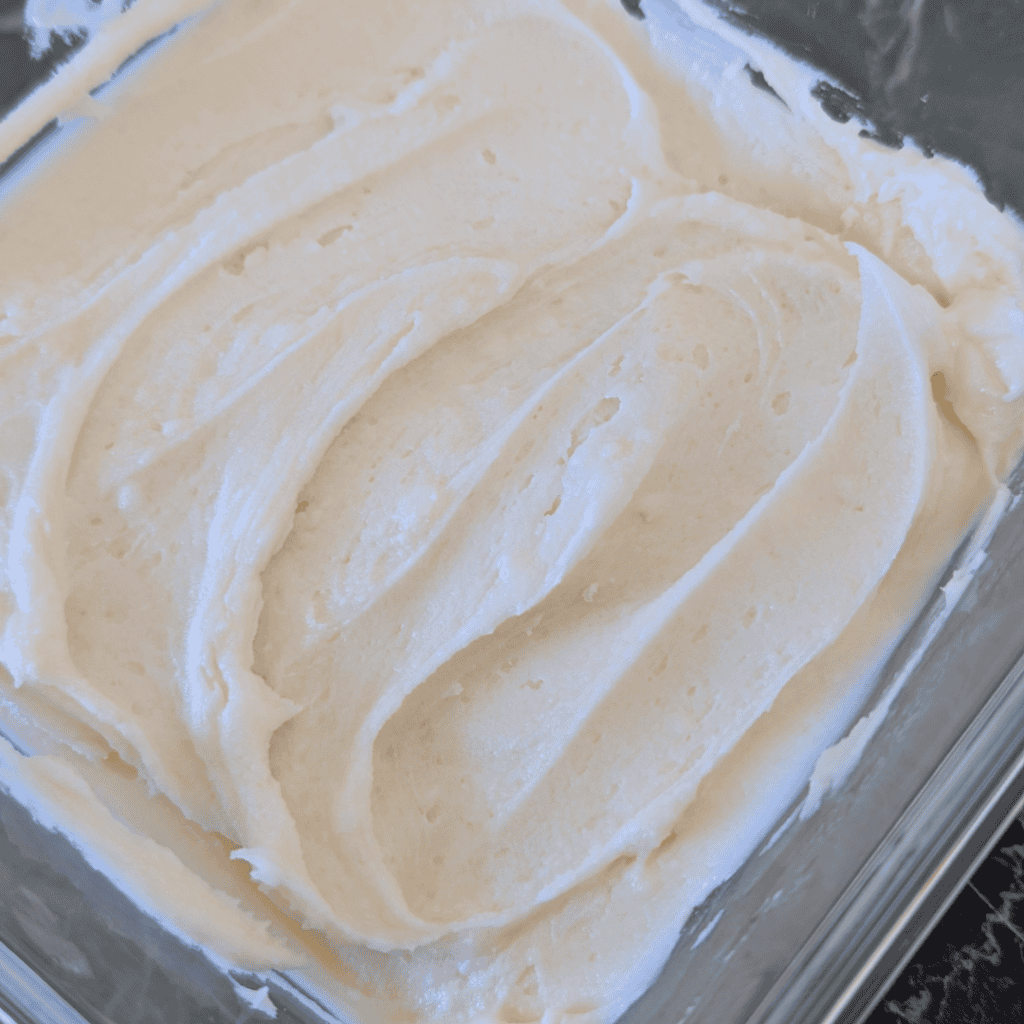
The frosting should be soft enough to spread easily over the cake but still thick enough to hold the textured peaks on top.
One batch makes enough to frost the top of the cake. If you want enough frosting to cover the top and sides completely, make three times the recipe.
How to Frost the Pumpkin Cake
Once the filled cake is assembled, spread the vanilla butter frosting evenly over the top.
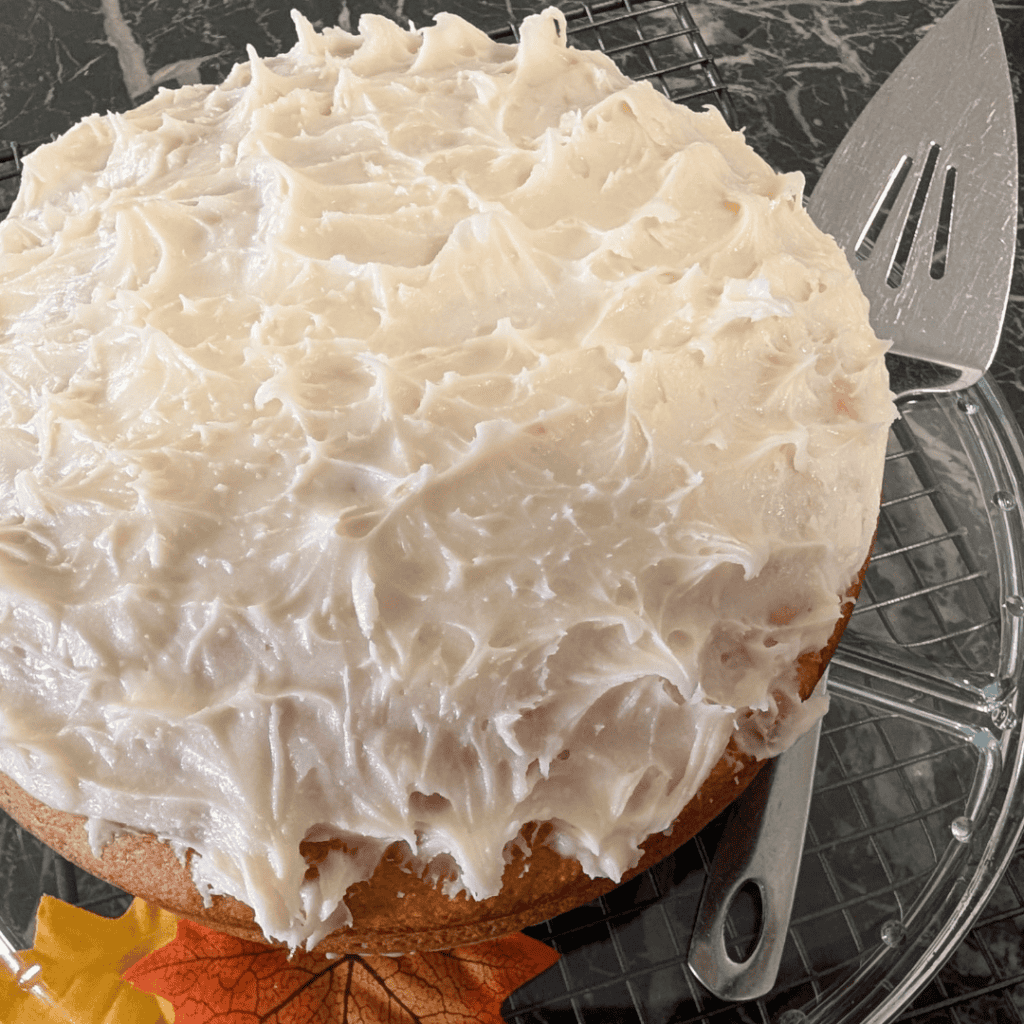
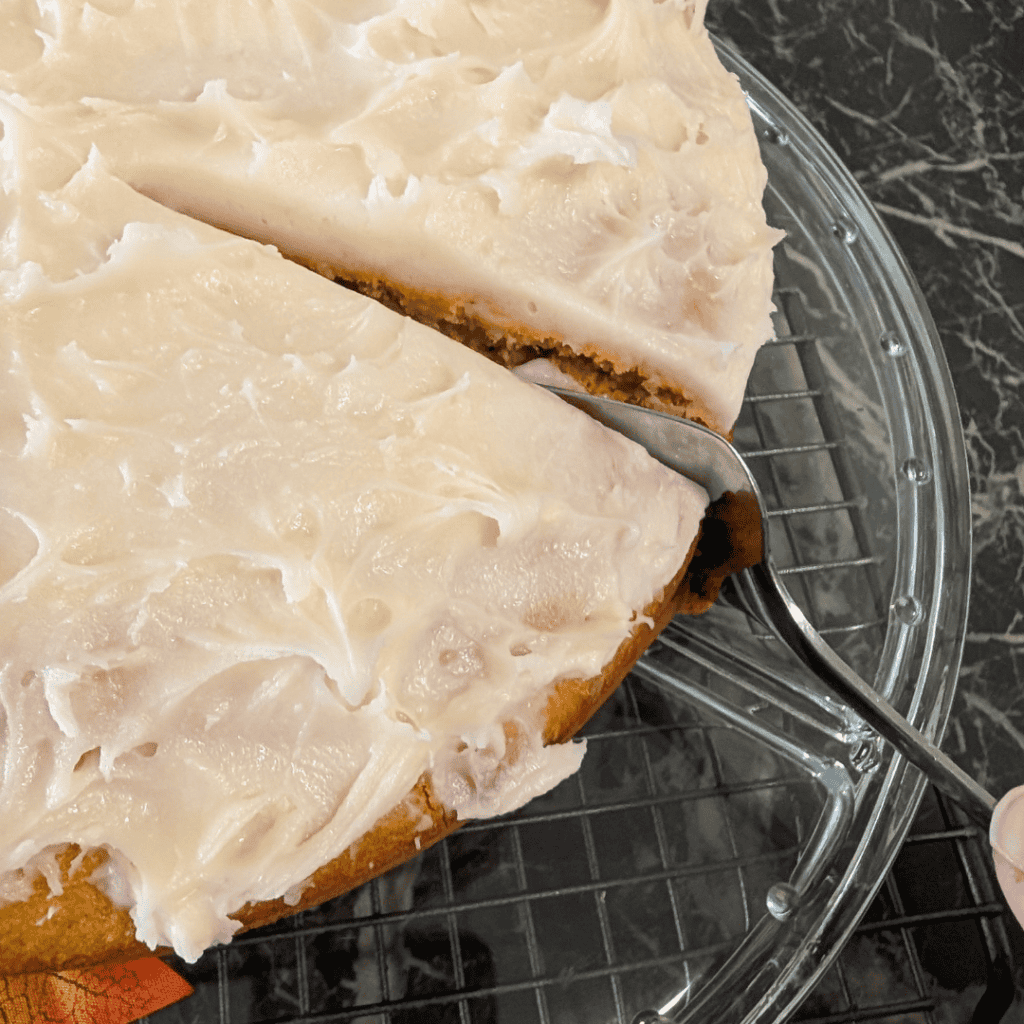
For the textured finish shown on this cake, use a clean bread knife. Place the edge of the knife lightly into the frosting, then lift upward to create a soft peak.
Continue across the surface of the cake, making small peaks as you go. This gives the cake a more finished, bakery-style look without needing a piping bag or decorating tips.
Ingredients
This pumpkin cake uses a fairly simple batter, with pumpkin purée and Greek yogurt providing moisture while oil keeps the crumb soft even after the cake cools.
Flour: Gives the cake its structure. Measure the flour carefully so you don’t accidentally add too much and lose the soft, airy texture we’re after.
Baking Soda: Provides the lift for the two cake layers. Make sure yours is fresh, since this cake relies on it for that lighter, springy crumb.
Cinnamon: Adds a little warmth to the pumpkin without making the cake taste strongly spiced. There is only ½ teaspoon in the whole cake.
Ground Ginger: Works alongside the cinnamon to give the pumpkin a subtle fall flavor rather than turning this into a full pumpkin spice cake.
Oil: Keeps the cake soft and moist and helps it stay tender after cooling. Use a neutral-flavored oil so it doesn’t compete with the pumpkin and vanilla frosting.
Granulated Sugar: Sweetens the cake while keeping the flavor fairly clean and allowing the pumpkin to remain noticeable.
Eggs: Give the batter structure and help create the soft, springy texture of the finished cake. They are beaten well with the sugar and oil before the other ingredients are added.
Greek Yogurt: Adds moisture and tenderness without making the cake feel heavy. It gets mixed with the pumpkin purée before being alternated with the flour mixture.
Pumpkin Purée: Provides the pumpkin flavor, color and additional moisture. Use plain pumpkin purée rather than a prepared pumpkin pie filling so you control the sweetness and spice in the cake yourself. Be sure to use plain pumpkin purée here rather than prepared pumpkin pie filling. If you have extra pumpkin on hand, you can also use it to make my pumpkin pie filling from scratch.
Pumpkin Filling Ingredients
This simple pumpkin filling is soft and creamy once the pudding mixture has been fully incorporated, making it easy to spread between the two cake layers.
Pumpkin Purée: Use plain pumpkin purée rather than pumpkin pie filling. It gives the filling its pumpkin flavor and naturally soft consistency.
Instant Vanilla Pudding Mix: Thickens the pumpkin mixture while adding vanilla flavor and sweetness. Make sure you are using instant pudding rather than cook-and-serve pudding.
Milk: Helps the pudding mix blend smoothly into the pumpkin and creates a soft, spreadable filling.
Vanilla Butter Frosting Ingredients
This vanilla butter frosting is simple and soft enough to spread easily over the cake, with Greek yogurt helping give it a smooth texture.
Butter: Use softened butter so it blends evenly with the icing sugar and creates a smooth base for the frosting.
Icing Sugar: Provides the sweetness and structure. Add it gradually if needed so it incorporates without creating lumps.
Vanilla: Adds a simple vanilla flavor that complements the pumpkin cake without competing with it.
Plain Greek Yogurt: Loosens the frosting slightly and helps make it smooth and spreadable without making it too runny.
Substitutions and Variations for Pumpkin Cake
This cake is fairly simple, but substitutions that change the amount of moisture can also change the light, springy texture. I would keep the pumpkin cake batter close to the original and use the frosting and finishing options for most of the variation.
Flour: A 1:1 gluten-free baking flour may work in place of all-purpose flour, although the crumb may be slightly different. I would not use almond or coconut flour as a direct replacement because they absorb moisture differently.
Baking Soda: I would keep the baking soda as written rather than replacing it unless you are comfortable adjusting leavening ratios.
Cinnamon and Ginger: You can adjust the individual spices to suit your taste or use pumpkin pie spice for a more strongly spiced cake. The original recipe is intentionally mild so the pumpkin flavor remains noticeable. For a more pronounced spice flavor, you can replace the individual spices with a pumpkin pie spice blend. I also have a homemade pumpkin spice blend you can mix and keep on hand for fall baking.
Oil: Use another neutral-flavored oil such as canola, vegetable or avocado oil. Strongly flavored oils may compete with the pumpkin and vanilla.
Granulated Sugar: I would keep granulated sugar in the base recipe rather than replacing it with brown sugar, since that would add molasses flavor and could change the moisture and texture of the cake.
Eggs: I would not recommend replacing the eggs unless you have a tested egg substitute for layer cakes. They contribute to both the structure and the soft, springy crumb.
Greek Yogurt: Plain sour cream is the closest practical substitute for Greek yogurt, although I have not tested that variation in this particular cake. Use a thick, full-fat product rather than a thin yogurt so you do not add extra liquid to the batter.
Pumpkin Purée: Canned or homemade pumpkin purée can be used as long as it is thick rather than watery. Do not substitute prepared pumpkin pie filling because it already contains sugar and spices.
Instant Vanilla Pudding Mix: Keep instant pudding mix for the pumpkin filling rather than cook-and-serve pudding, since the filling is not cooked.
Milk: Another plain dairy milk should work in the filling. If using a nondairy milk, choose an unsweetened, neutral-flavored variety and keep in mind that the filling consistency may vary.
Vanilla Butter Frosting: Cream cheese frosting is a classic alternative if you want a tangier finish. Cream cheese frosting is another good option if you prefer a tangier finish with pumpkin. You can see that style of frosting paired with another warmly spiced cake in my chai cake with cream cheese frosting.Maple frosting also works well with pumpkin, while caramel can be added as a drizzle or incorporated into the frosting for a richer fall variation.
Semi-Naked Finish: You can leave the sides mostly unfrosted as shown, frost only the top, or triple the vanilla butter frosting recipe if you want enough to cover the entire two-layer cake.
Expert Tips, Serving and Storing Suggestions
Tip #1: Do Not Overmix the Batter: Once you begin alternating the flour mixture with the pumpkin and Greek yogurt mixture, mix only until everything is combined. Overmixing can work against the soft, airy crumb.
Tip #2: Let the Cake Layers Cool Completely: The pumpkin filling and butter frosting are both soft. If the cake layers are still warm, the filling can loosen and the frosting can melt.
Tip #3: Leave Space Around the Filling: Stop the pumpkin filling about 1 inch from the edge of the bottom cake layer. The weight of the second layer will naturally push the filling outward.
Tip #4: Use the Flat Sides for the Filling: Place the bottom cake layer top-side down and the second layer top-side up so the two flat sides face each other. This gives you a more even surface for spreading the filling and stacking the cake.
Serving Suggestions
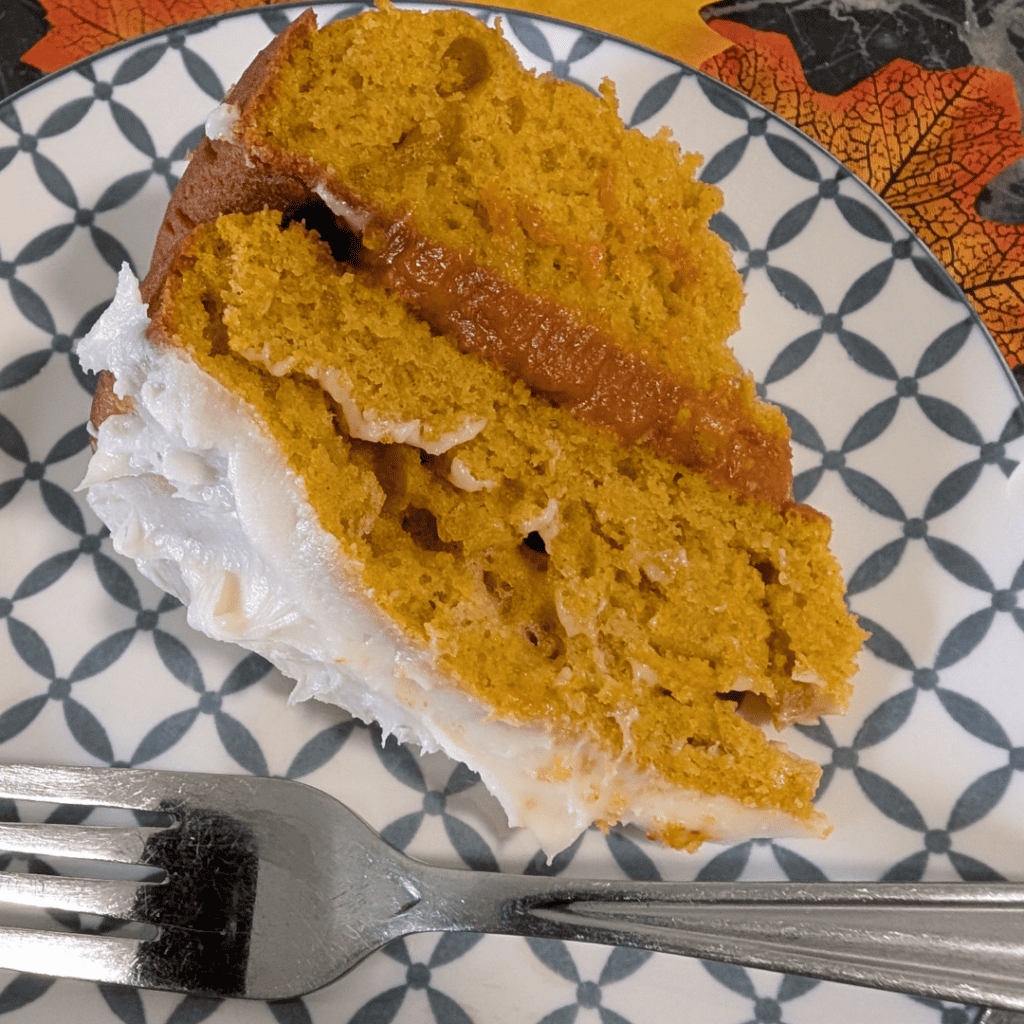
This pumpkin layer cake is a nice fit for a fall birthday, Thanksgiving dinner, or any autumn get-together where you want something a little more special than an everyday cake. Since the crumb is soft, moist and fairly light, it also works well after a larger meal without feeling overly heavy.
For a simple fall finish, add pumpkin, leaf or acorn quins, a scattering of fall-colored sprinkles, or a few around the edge of the frosting. You can keep it understated or dress it up a little more for a birthday or Thanksgiving table.
At Thanksgiving, I especially like it as a pumpkin pie alternative—you still get that familiar pumpkin flavor, just in a soft two-layer cake with pumpkin filling instead of another pie.
If the cake has been refrigerated, let it sit at room temperature for a short time before serving so the vanilla butter frosting softens and the cake loses some of its chill.
Storing Pumpkin Layer Cake
Because the finished cake contains a soft pumpkin filling and Greek yogurt in the frosting, I would store it covered in the refrigerator rather than leaving it at room temperature for extended periods.
Keep the cake in a covered cake container or loosely cover the cut surface so it does not dry out in the refrigerator.
For the best texture, bring individual slices or the cake out of the refrigerator for a short time before serving. The cake crumb and butter frosting will soften as they lose their chill.
More Fall Pumpkin Recipes
If you have more pumpkin to use, try my soft baked pumpkin donuts for a simple fall treat, pumpkin spice scones with a spiced icing drizzle, or pumpkin cheesecake muffins for another pumpkin baking option.
FAQ
Moist Pumpkin Layer Cake with Vanilla Buttercream

Equipment
- Stand Mixer Optional
- Mixing Bowls
- Measuring Cups
- Tablespoons
- Teaspoon
- Spatula
- 2- 9" Round Cake Pans
Ingredients
Pumpkin Cake
- 2½ Cups All-purpose flour
- 1 Tsp Baking Soda
- ½ Tsp Ground Cinnamon
- ½ Tsp Ground Ginger
- ½ Cup Neutral Oil
- 1 Cup White sugar
- 2 Eggs
- 1 Cup Plain Greek Yogurt
- 1 Cup Pumpkin purée
Pumpkin Cake Filling
- 1 Cup Pumpkin purée
- ½ Box Vanilla Instant Pudding Mix
- ½ Cup Milk
Vanilla Butter Frosting
- 4 Tbsp Butter Softened
- 2 Cups Confectioners Sugar
- 1 Tsp Vanilla Extract
- 2 Tbsp Plain Greek Yogurt
Instructions
Pumpkin Cake Batter
- Preheat the oven to 350°F. Spray two 9-inch round nonstick cake pans with nonstick cooking spray.
- In a medium bowl, combine the flour, baking soda, cinnamon, and ginger. Set aside.
- In a separate bowl, mix the Greek yogurt and pumpkin purée until evenly combined. Set aside.
- Add the sugar, oil, and eggs to the bowl of a mixer. Beat well until evenly combined.
- Add the flour mixture alternately with the pumpkin-yogurt mixture, mixing between additions until the batter is combined.
- Divide the batter evenly between the two prepared cake pans.
- Bake for 30–35 minutes, or until the cakes are baked through.
- Allow the cake layers to cool completely before filling and frosting.
Pumpkin Cake Filling
- Add the pumpkin purée and instant vanilla pudding mix to a bowl and mix well.
- Add the milk and continue mixing. The filling may look gritty at first; continue mixing until the pudding mix is incorporated and the filling becomes smoother.
Vanilla Butter Frosting
- Add the softened butter, icing sugar, vanilla, and Greek yogurt to a mixing bowl.
- Beat until smooth and spreadable.
Assemble The Pumpkin Cake
- Place the first cake layer top-side down on a cake plate or work surface. This leaves the flat bottom of the cake facing upward for filling.
- If the cake has an unusually large dome, use a cake knife to level the top before turning it over so the layer sits flatter.
- Spread the pumpkin filling over the first cake layer, leaving about 1 inch of space around the outside edge. The soft filling will spread outward when the second layer is added.
- Place the second cake layer top-side up over the filling. The two flat sides of the cake layers should now face one another with the filling in between.
- Spread the frosting over the top of the assembled cake.
- For the textured finish, place the edge of a clean bread knife lightly into the frosting and lift upward to form a soft peak. Repeat over the surface of the cake.
Notes
- Use plain pumpkin purée, not prepared pumpkin pie filling.
- One batch of vanilla butter frosting makes enough to frost the top of the cake.
- To completely frost the top and sides of the two-layer cake, make 3 times the frosting recipe.
- Store the assembled cake covered in the refrigerator because of the pumpkin filling and Greek yogurt frosting.
- Let refrigerated cake sit out briefly before serving so the cake and butter frosting can soften slightly.
Nutrition