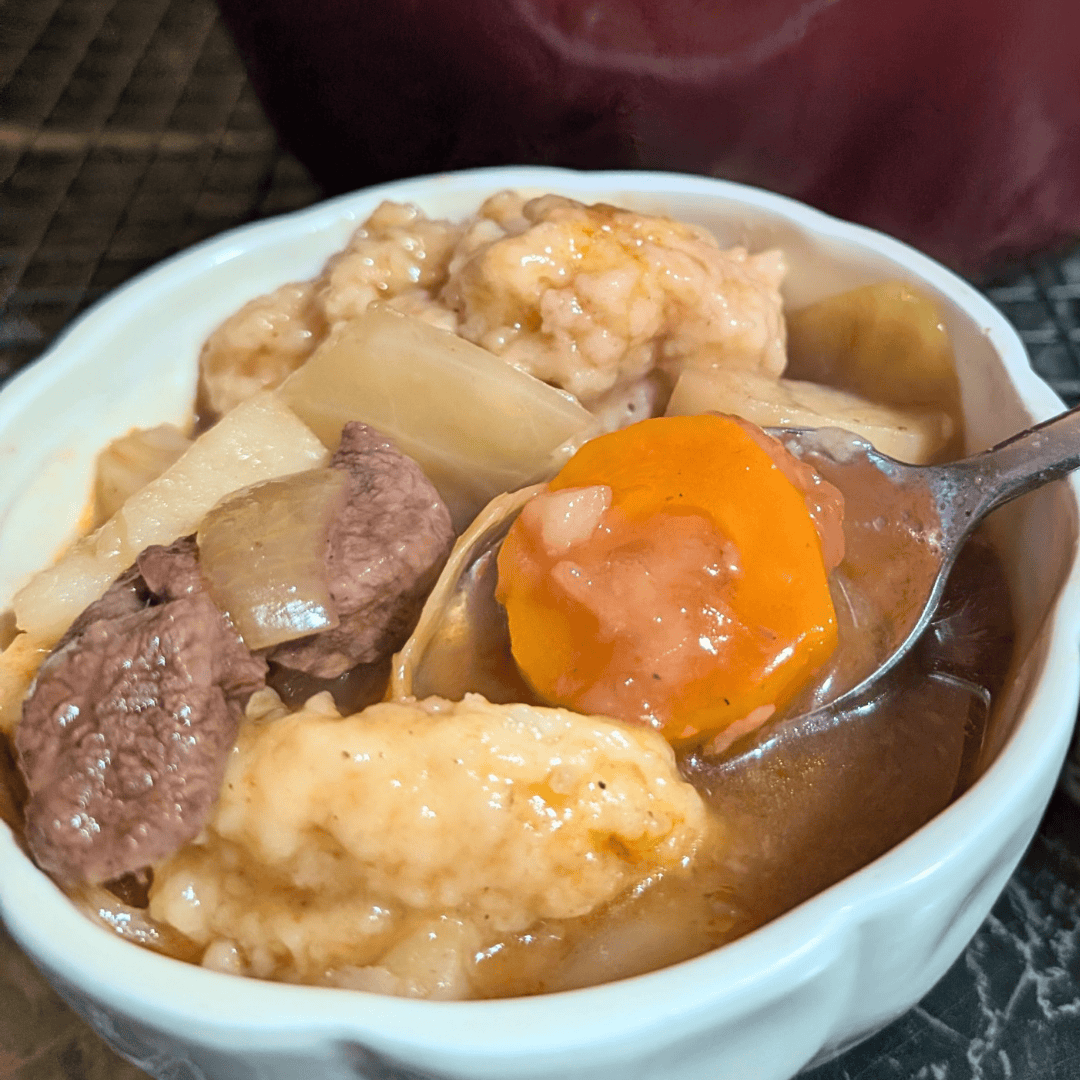
Irish Beef Stew With Dumplings
This Irish beef stew is a classic recipe with the added bonus of fluffy homemade dumplings. The dumpling recipe helps to thicken the broth a little as they cook. Cooked in your Dutch oven makes a large family-sized pot, making this flavorful winter stew the perfect comfort food for dinnertime.
I wanted to capture the stew’s classic flavor without worrying about making a thickened stew gravy. So this hearty stew has a thinner broth but the most tender beef chunks. I have made this stew so many times over the years. You can use stew meat, chuck roast, or even cubed steak, which is sometimes more economical. So long as you have enough beef and it cooks for long enough to deepen the broth flavor, you will have a good stew.
Fluffy dumplings are cooked by steaming, with the dumpling dough added to the top of the stew for the last twenty minutes of cooking time. This great Irish stew is perfect for St. Patrick’s Day or any time winter weather dips below freezing.
Note: This recipe has been edited to revise the method in which the dumplings are made.
Quick Answer:
To make beef stew and dumplings, simmer the browned beef and onions in stock until the beef starts to feel tender. Add the potatoes, carrots and cabbage, then drop spoonfuls of dough onto the stew for the last 20 minutes. Keep the pot covered while the dumplings steam.
Skill Level:
Beginner-friendly
Prep Time:
20 minutes
Cook Time:
About 1 hour 40 minutes

Yield:
6 servings
Texture:
Tender beef and vegetables in a brothy stew with fluffy drop dumplings
Best For:
A cold-weather family supper or St. Patrick’s Day dinner
A Note From My Kitchen
I’ve made this stew for years with whichever cut of beef made sense at the grocery store. I’ve used chuck roast and even cubed flank steak when I found it at a better price. I like the broth a little thinner so there’s plenty to spoon over the dumplings when I serve it.
Cost Rating: 🍳🍳 Moderate — One Dutch Oven
Cost guideline:
Cost Per Batch: ~$17–$20 CAD
Cost Per Serving: ~$2.83–$3.33 CAD (based on 6 servings)
Estimated using Ontario grocery prices in November 2026.
The beef is the biggest expense in this stew. Potatoes, cabbage and homemade dumplings help turn two cups of cubed beef into a pot that feeds six.
Why you will love this Beef stew
It’s easy. It’s a great recipe to enjoy on a cold winter’s day. There is something so homey about having a simmering stew on the stove.
The stew has simple ingredients, so you don’t have to wander grocery aisles looking for complicated ingredients. The dumpling recipe uses simple pantry staples, and it comes together quickly.
It makes excellent leftovers. Because this recipe makes so much, you can reheat the leftover stew the next day as a hearty lunchtime treat. If you enjoy hearty Dutch oven dinners but want to use leftover cooked meat instead of buying fresh stew beef, my ham and lentil stew with sweet potatoes is another comforting option. It uses dried green lentils to make a substantial meal without needing a large amount of meat.
Budget Tip:
Check the price per pound on chuck roast and packaged stew beef. If the roast is cheaper, cube what you need for this pot and freeze the rest for another supper. If you’re trying to get more suppers out of the meat you buy, my guide to meals that stretch shows how I use potatoes, vegetables and other staples to make a smaller amount go further.
Let’s This Beef Stew Started!
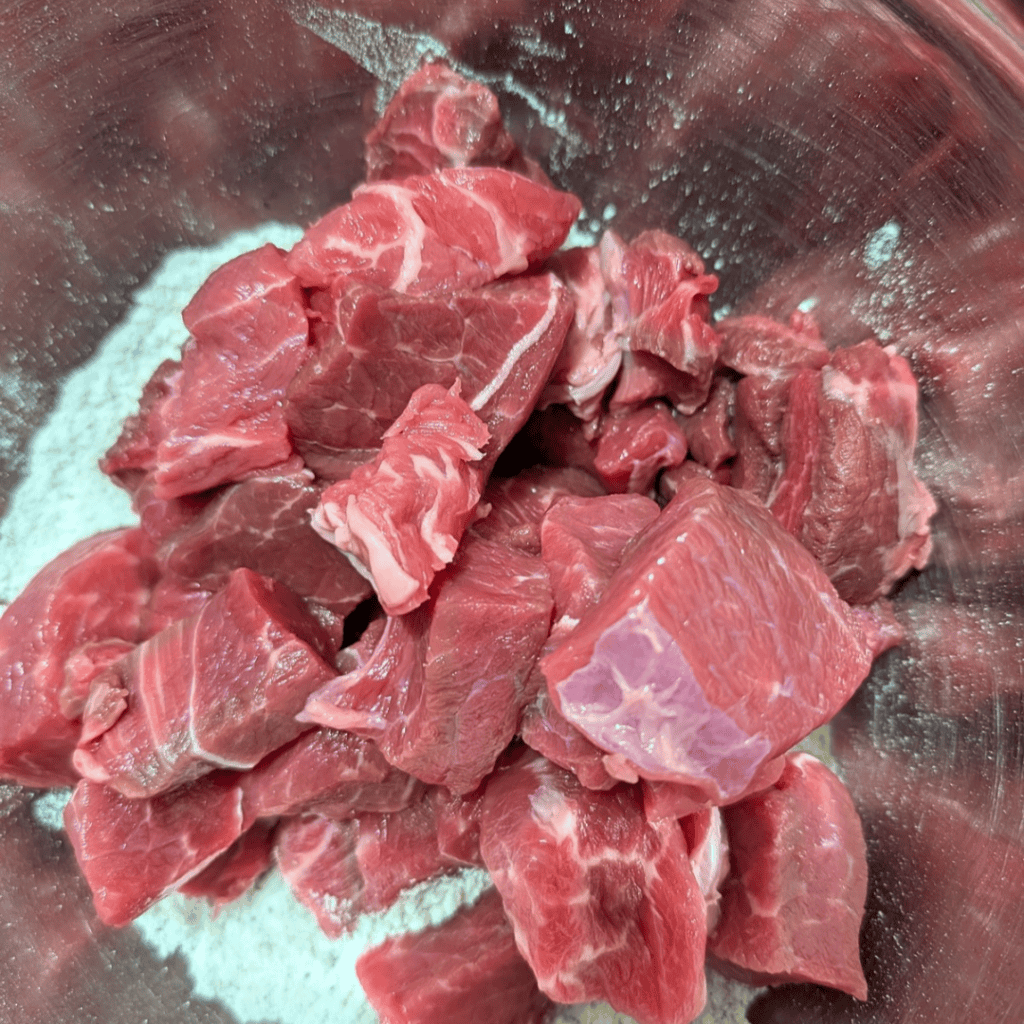
Start by cutting the beef into bite-sized cubes if it isn’t already cut. I’ve used roasts or steaks when I’ve found them on sale, since packaged stew beef can creep up in price. Mix the flour, salt and black pepper in a bowl, then toss the beef in the mixture until the pieces are lightly coated. Shake off any loose flour before the beef goes into the pot.
Heat the olive oil in your Dutch oven over medium-high heat. Add the beef and let it sit long enough to brown on the first side before turning it. Sear it in batches if the pieces crowd the pot. Once the beef is browned on the outside, add the finely chopped onions and beef stock and bring it to a simmer. The beef will finish cooking in the broth.



Next, slice the cabbage into pieces. Then, peel your potatoes and carrots. You can peel them immediately, but fully submerge the potatoes in cold water until ready to cook. This will keep them from blackening (oxidizing).


You will simmer the stew on medium-low heat for an hour before adding the vegetables. Putting the lid on keeps moisture from escaping, so you don’t lose all the beef stock.

After about an hour, check the beef with a fork. If it’s still tough, give it a little longer before adding the vegetables. Once the beef starts to feel tender, add the potatoes, carrots, cabbage, black pepper and salt if using. Cover and cook for another 15 to 20 minutes before adding the dumplings.


While it is simmering, you can work on making the dumplings. This recipe has a basic steamed dumpling, much like a biscuit dough. Add the all-purpose flour, salt, baking powder, and sugar to the mixing bowl. Then, you will add the milk to the flour mixture and mix until well blended. If the mixture is too dry, add a little more milk mixing well. It’s a sticky dough that you are looking for. It is not runny, though it needs to hold together in a ball.
These dumplings are always a hit with the family, and dumplings disappear fast. Homemade dumplings are always a hit with kids old and young, so you may find yourself quickly memorizing the simple recipe. (Mental note for later: this dumpling can be made into a fruit dumpling dessert with fruit compote later. You will need to add a bit more sugar to the essential dumpling mix.)


To add dumplings to the stew, use a large tablespoon to control the size of the dumpling. Add a rounded amount to the pot one at a time, leaving a small space around each one to allow them to fluff up as they cook. This drop method often produces a more rustic and irregular shape, giving the dumplings an appealing homemade look.
Once the dumplings are in, cover the pot and keep the stew at a gentle simmer. Leave the lid on for 20 minutes so the dumplings can steam and puff up. When you lift the lid, the tops may still look moist. Split one open to check that it’s fluffy inside with no wet dough in the middle.
Scoop up a couple of dumplings and a generous amount of this delicious stew. It’s the best stew to enjoy on cold days.
Ingredients:
Beef: This recipe uses beef cubed to make the stew a hearty and complete meal. Slowly cooked beef imparts a savory and meaty flavor to the broth.
Onion: The onion is cooked longer in this broth, which adds to the deep flavors of the finished stew.
Beef Stock: Boxed beef stock is added to the stew to increase the flavor profile. Boxed broth is generally made with beef bones, meat, and vegetables to create a complex flavor compared to straight beef.
Potato: The Irish are known for their potatoes, dating back to the 18th century, when they became widely used. This versatile starch rounds out this meal well.
Carrots: Sweet and earthy carrots pair well with potatoes in most meals. The colorful root vegetable is also high in vitamins, making it a nutritious addition to this meal.
Cabbage: Cabbage has been a part of the Irish diet for centuries. It is a hardy vegetable that grows well in the Irish climate, making it readily available and affordable for many people throughout history. In a traditional Irish stew, cabbage was used sparingly. It was later introduced as a regional addition as the cook saw fit. Its mild sweetness adds to the flavor of this stew.
Flour: Regular all purpose flour works in making dumplings because it has enough structure to hold up during the steaming process. It also has a neutral flavor, meaning the finished dumplings flavor won’t detract from the deep flavors of the beef stew.
Baking Powder: Acts as a leavening agent to help the steamed dumplings rise. The addition of baking powder creates a more tender and fluffy dough.
Salt: This is needed to strengthen the gluten formation, allowing the dough to develop and contributing to a desirable texture in the finished dumplings.
Milk: Contains proteins and fats that can contribute to a softer and more tender texture in the dumpling dough. The additional fat content enhances the richness of the dough, resulting in dumplings that are more delicate and pleasant to eat.
Sugar: Adds a slight sweetness to the dumplings that complement the savoryness of the beef stew.

Substitutions or Add-Ins for the stew.
Beef: Traditional Irish stew was made with lamb or mutton as it was readily available. However, beef was adopted when the Irish came to America as the meat was more readily available. Nowadays, it’s more economical to use beef. I use any cut of beef that will stew well. In fact, for this recipe, I used cubes of steak. I have also successfully used whole chuck roast. Beef stew meat has collagen, connective tissues, and flavorful compounds. When these components are slowly cooked, they break down and release gelatin and other substances that enhance the texture and taste of the broth. Using tougher cuts of meat will improve the development of a rich broth. This is why a tough, cheap steak or cheap roast made from a similar part of the animal works well. If you find a roast on sale and want to cook it whole, try my Dutch oven roast beef with vegetables.
Beef Stock: Store-bought beef stock adds to the meaty flavor of the finished stew. Because the stew relies heavily on the flavors that the meat and vegetables impart, you will need the added salt of the store-bought stock to enhance it. It also adds enough moisture to the stew to create a lovely broth. Alternatively, you can make your own beef stock, or if you are using stew meat, use enough water to cover it with a dash of additional salt.
Variations: This stew can be varied by adding additional root vegetables such as parsnip, turnip, rutabaga, celeriac, and even sweet potato or squash. Remember, though, that you will alter the finished outcome flavor profile each time you add a new element. You can also vary the dumpling flavor if you find the plain dumpling too plain by adding a spoonful of Italian seasoning or a blend of dried parsley and dried chives. Again, adding the extra herbs will alter the flavor of this stew.
Expert Tips and Serving Suggestions:
Tip #1: Be sure to slow-cook the meat for the total time called for. This is especially important when working with beef stew meat, as it tends to be more sinuous, making it much tougher. If you remove it too soon, it will remain challenging to chew.
Tip #2: The dumplings recipe: Once you add the liquid to the dry ingredients, mix the dough until it comes together. Overmixing can lead to dense dumplings, but a gentle hand ensures a tender result. If you like this way of making dumplings, I also drop spoonfuls of dough right into the pot in my one-pot leftover turkey and dumplings.
This hearty beef stew can be scooped into a large soup bowl and served on its own for a complete meal. When serving, have at least one dumpling in each bowl. If you’re looking for another brothy beef supper, my beef and barley soup is another good one for a cold day.
Leftover stew can be stored in the fridge covered for up to four days.
If you want to freeze the stew, remove any remaining dumplings, allow it to cool completely, and store it in airtight plastic containers. It can be frozen for up to six months.
It’s essential to note that while freezing preserves food safety by preventing bacterial growth, it does not stop the aging process. Over time, frozen food may experience changes in quality, such as texture, color, and flavor.
FAQ
If you enjoyed this Irish beef stew with dumplings, we would love to hear about it. Leave a comment below the recipe card if you test this recipe. As always, we love hearing from you, our readers!

Comforting and Easy Irish Beef Stew With Fluffy Dumplings

Equipment
- 1 Dutch Oven
- 1 knife For chopping vegetables
- 1 Paring Knife or Peeler Depending on which method you prefer to peel root veggies
- 1 Teaspoon
- 1 Wooden Spoon
Ingredients
Dredging Mix
- ½ Cup Flour
- 1 Tsp Salt
- 1 Tsp Black Pepper
Irish Beef Stew
- 2 cups Cubed stew meat Stew meat is super expensive right now so we subbed in cubed flank steak
- 2 Tsp Olive oil Vegetable oil or other fat is okay too
- 2 boxes Beef soup stock Sub in any stock if you're out of beef. There should be enough to cover the veg and meat as it cooks. If it boils off during simmering process add a bit more stock or water.
- 4 Small onions Chopped fine. It seems like a lot I know but your not going to taste them too much in the end
- 1/2 Cup Chopped carrot Cut how you prefer diced or chunks
- 4 Potatoes Cut into bite sized chunks. It's recommended you use waxy for texture as Russets can be mealy when boiled
- 1/2 Head of cabbage Sliced or chunked
- 3/4 Tsp Salt
- dash Black pepper
- dash Nutmeg or mace
Dumplings
- 2 Cups Flour
- 2 Tbsp Baking Powder
- 1 Tsp Salt
- 2 Tsp Sugar
- 1 Cup Milk
Instructions
- Cut the beef into bite-sized cubes.
- Cut up the potato, carrot and cabbage into bite sized pieces and chunks.
- In a bowl, mix the flour, salt and black pepper. Toss the beef in the mixture to coat it lightly and shake off any excess.½ Cup Flour , 1 Tsp Salt, 1 Tsp Black Pepper, 2 cups Cubed stew meat
- Heat the olive oil in a Dutch oven over medium-high heat and sear the beef, turning the pieces to brown them on several sides.2 Tsp Olive oil
- Peel and cut onion up into small sized pieces. Add to the pot with the beef and beef stock. Bring to boil and then reduce heat to simmer. Simmer for one hour.4 Small onions, 2 boxes Beef soup stock
- If not adding to the pot for awhile be sure to cover potatoes with cold water in a bowl. This will prevent oxidization.
- After one hour add in the vegetables and continue to cook for another 15-20 minutes on med-high heat.1/2 Cup Chopped carrot, 4 Potatoes, 1/2 Head of cabbage
- Add in the black pepper and nutmeg or mace.dash Black pepper, dash Nutmeg or mace
Dumplings
- Make your dumpling batter up and have ready to add to the soup 20 mins before it is done.3/4 Tsp Salt, 2 Cups Flour, 2 Tbsp Baking Powder, 2 Tsp Sugar, 1 Cup Milk
- Add all of the ingredients into a mixing bowl and mix just enough to form a soft mass.
- Drop by heaping Tbsp on to surface of the stew leaving a bit of space around each one.
- Once all the dumpling batter is in the pot you MUST cover the pot with the lid.
- Let cook for twenty mins on simmer to low heat.
- Remove lid and check dumplings for doneness they will look wet but have puffed up to cover the entire surface of the stew.
- Dish stew into bowls and serve while hot.
Nutrition


