
Upper Peninsula Pasty Recipe – Michigan-Style Meat Pasties
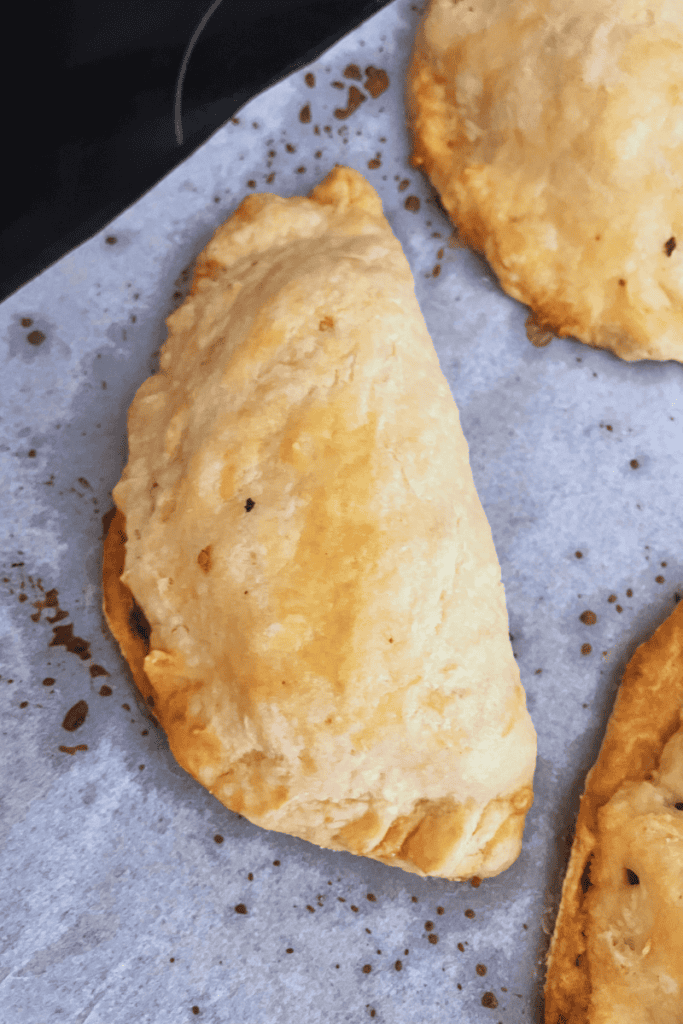
If you’re unfamiliar with Upper Peninsula pasties, these hearty Michigan-style meat pies are one Northern comfort food worth knowing. My Canadian version of the classic Michigan pasty recipe wraps a generous filling of ground beef and pork, potatoes, onion, peas, and carrots inside flaky homemade pastry. These substantial beef pasties make a filling lunch or dinner and are especially handy when you want a portable, meal-in-one hand pie. I like to serve ours warm with a spoonful of sour cream.
Pastry:
Homemade flaky pie pastry
Prep Time:
About 1 hour, including chilling time
Bake Time:
About 1 hour
Yield:
10 large pasties
Best For:
Hearty lunches, dinners, packed meals, and comfort food
Serve With:
Sour cream, gravy, or a simple vegetable side
Years ago, my Gran (Grandmother) would take me on tours across the border to the US. We would travel around to various stops, and on one of these excursions, we ventured to the city of Mackinaw. There were many touristy shops in the village, and in one of these quaint shops, I first tasted the Upper Michigan Pasty. The renowned dish came over with the Cornish immigrants years ago. Local miners quickly adopted the recipe to have an easy, satisfying meal. And boy, oh boy, if it isn’t just one of the tastiest hand pies out there.
The big hand pies are made with a traditional pie pastry and savory ground meat filling. We’ve shaken things up for this Canadian version of the Upper Peninsula Pasty.
Cost Rating: 🍳 Budget-Friendly | Makes 10 Large Pasties
Cost guideline:
Cost Per Batch: ~$18–$19 CAD
Cost Per Serving: ~$1.80–$1.90 CAD (based on 10 pasties)
Estimated using average Canadian grocery prices in 2026.
The ground meat is the largest cost in this recipe, accounting for about $12 of the batch at the prices shown. The remaining ingredients stretch well: four cups of flour cost less than $1, the potatoes used are only a small portion of a 10-pound bag, and two cups of frozen peas and carrots use less than half the package.
To lower the cost, buy ground meat, butter, and shortening when they are on sale and freeze what you will not use right away. You can also use 1½ pounds of whichever ground meat is the better price instead of buying both beef and pork. Buying flour, potatoes, and frozen vegetables in larger packages also keeps the portion used for each batch inexpensive.
Why You’ll Love This Upper Peninsula Pasty Recipe
Hearty Meal in One: Each pasty combines meat, potatoes, vegetables, and pastry, so one large pasty is substantial enough for lunch or dinner.
Portable and Practical: These Michigan-style pasties work well for packed lunches, road trips, or meals that need to travel without much fuss.
Generous Filling: The ground beef and pork, diced potatoes, onion, peas, and carrots make these much more filling than a small snack-size hand pie.
Flexible Meat Option: You can use the beef-and-pork mixture as written or use 1½ pounds of whichever ground meat is more affordable or convenient.
Budget Tip:
Ground meat, butter, and shortening are good ingredients to buy when they go on sale and freeze for later. You can also make these pasties with 1½ pounds of whichever ground meat is less expensive that week instead of buying both beef and pork. For more ways to make ground meat and everyday ingredients go further, see my Meals That Stretch When Money Is Tight.
Larger bags of flour and potatoes and family-size frozen vegetables usually bring the cost per batch down further because you are only using a portion of each package.
Let’s get started with the pastry.
This pastry recipe must rest in the fridge for an hour, so we are making it up first. This particular pastry makes enough for two double-crust pies should you want to use it again later. If you have extra pastry left after shaping the pasties, my air fryer breakfast pockets are another easy way to turn leftover pastry into a meal.
The butter should be nice and cold, and I highly recommend using a pastry knife to work the shortenings into the flour. It allows the pastry to develop that cornmeal-like texture easier than mixing with your hand.
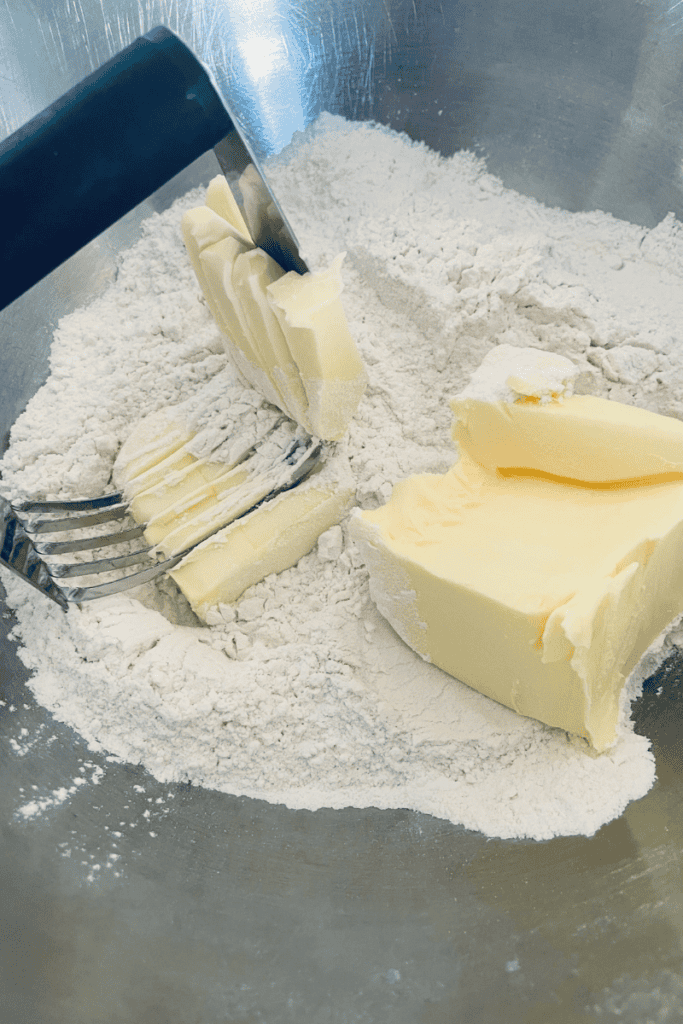
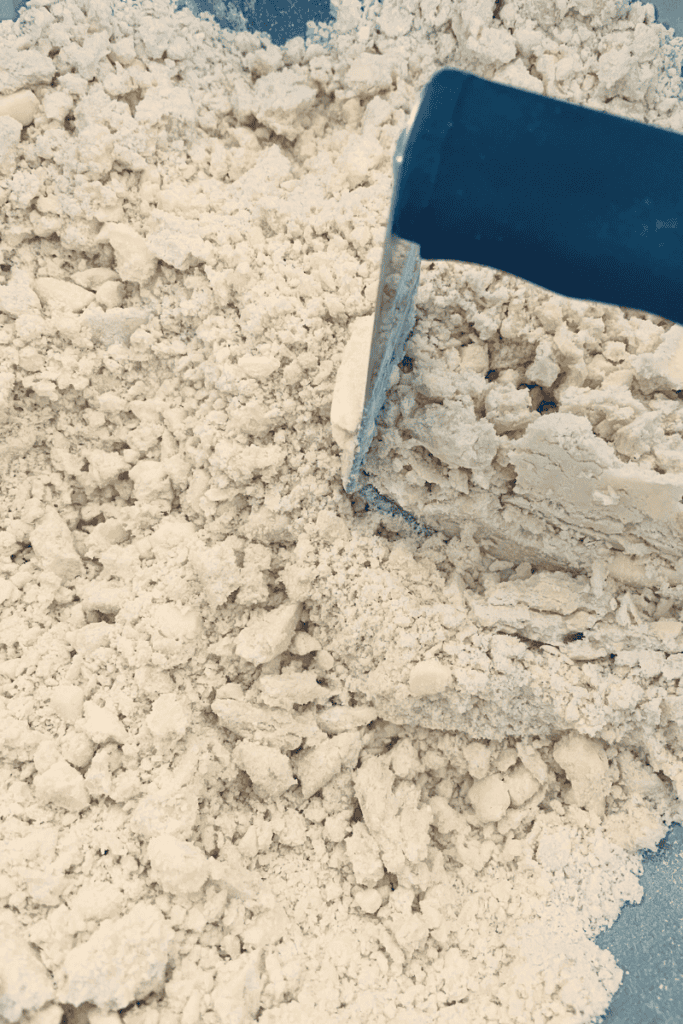
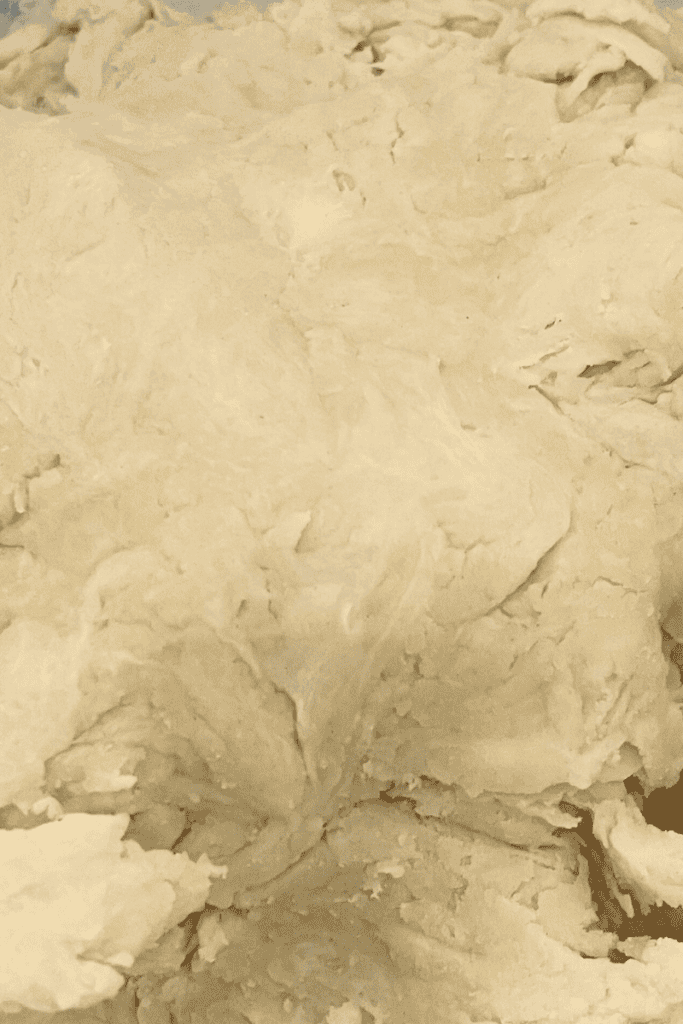
Once we’ve worked the shortening into the flour and salt mix, we add the ice-cold water. We are adding the water a little at a time so we don’t add too much. I like to use a big mixing bowl for pastry that’s being worked by hand; it allows for more gentle flour tossing without creating a big mess. If you prefer, turn it onto a lightly floured surface to work it into a soft pastry ball. Add only just enough water, or it will become tough.
You will know when it’s formed a nice non-sticky ball of dough that it is ready to be wrapped up. Use enough saran/cling wrap to cover it completely and place it in the fridge for an hour.
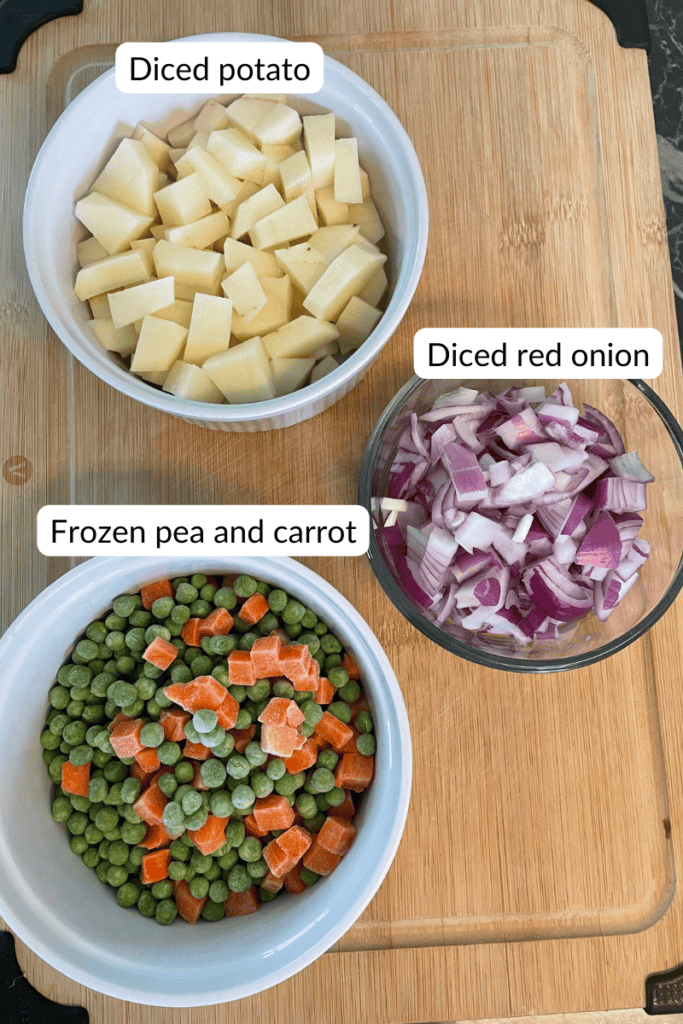
During the hour it’s chilling, you will be getting the filling for your Pasty’s ready. We will start by cutting up the root vegetables. I cheated a little in this recipe by using a frozen pea and carrot mixture. If you are cutting carrots from fresh, keep the pieces small and uniform so they cook evenly through with the potatoes.
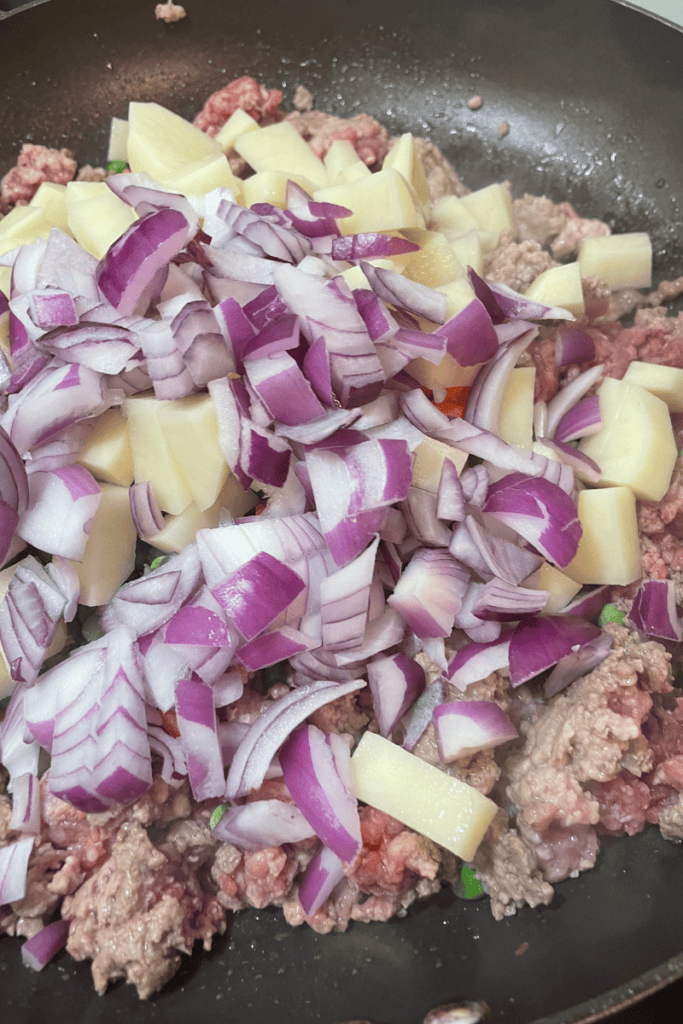
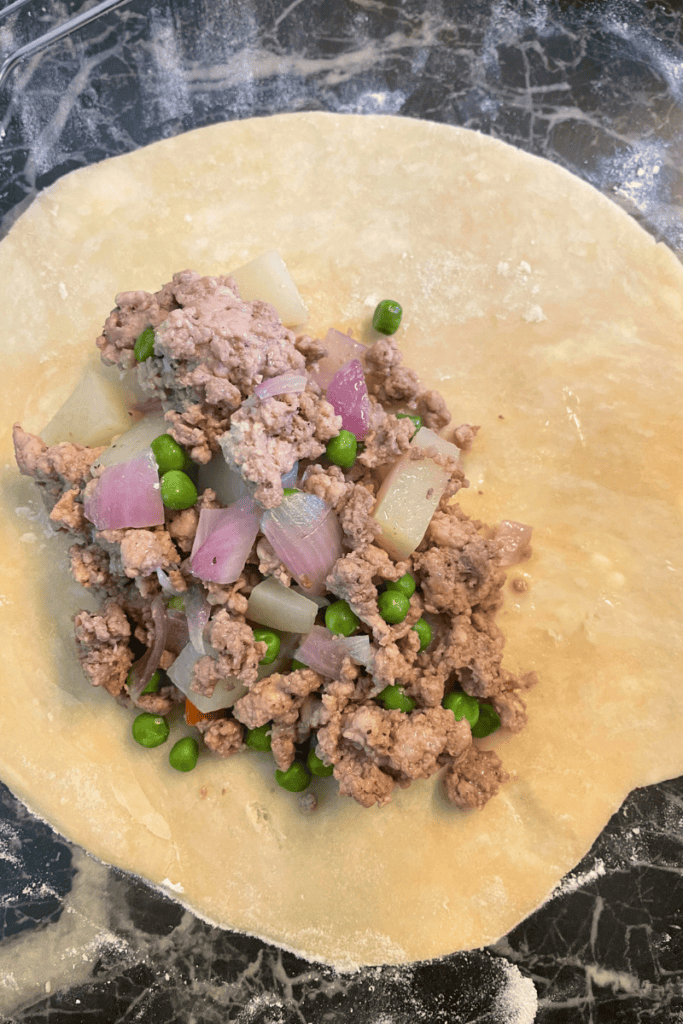
We are using two good-sized potatoes diced roughly the same size as the frozen carrot pieces. As well you will need to dice up your onion. I use red simply because I like red onions more than yellow cooking. You can use cooking onions if you have them on hand instead. I use the same budget-friendly combination of ground meat, potatoes, and frozen vegetables in my family-sized Shepherd’s pie.
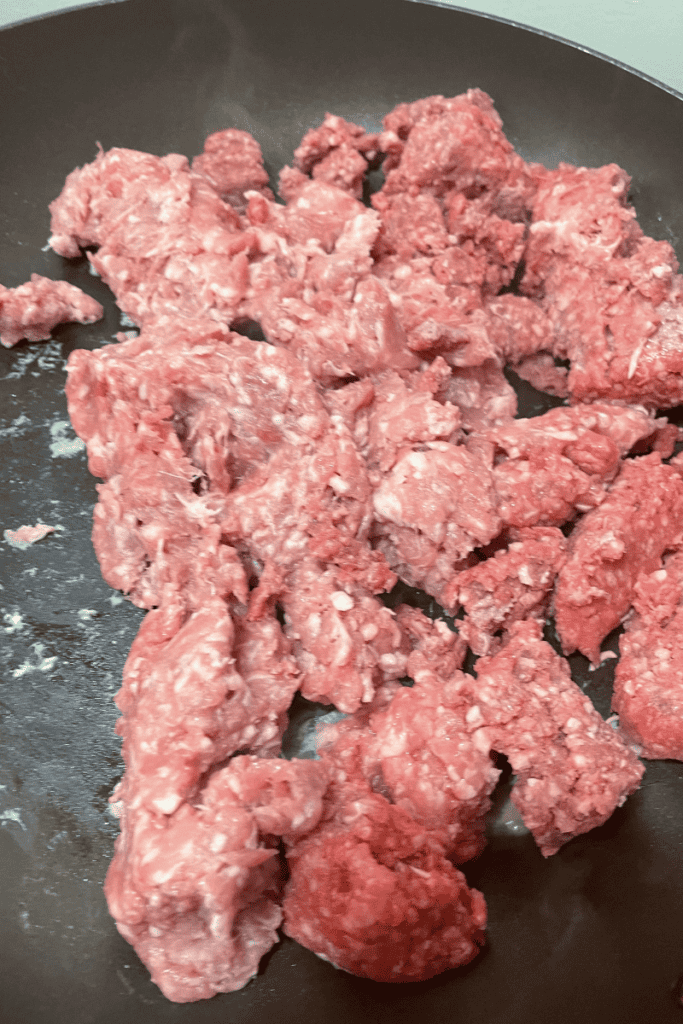
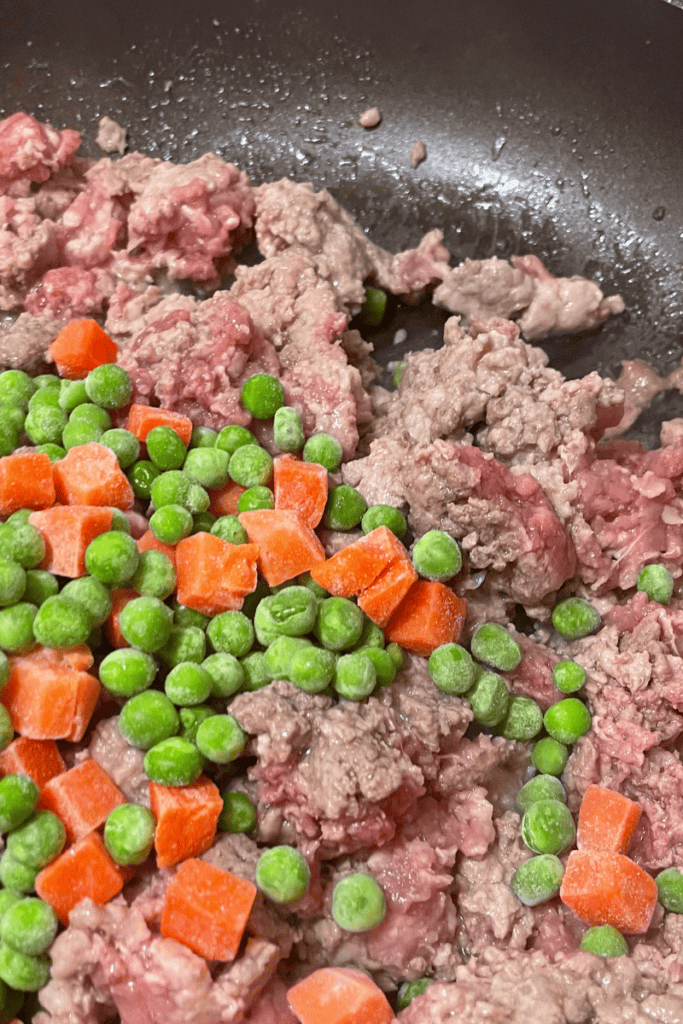
Set your diced veggies aside while you get the ground pork and beef on to brown. We can purchase a split package of ground pork/beef mixture locally. If you can’t use two small packs, one of each meat. While in the pan, use a utensil to break it into fine ground pieces and mix the two types of meat well. Halfway through the browning, add in the vegetables and your frozen mix. We want to blend the flavors as much as possible while thawing out our frozen vegetables and browning the meat the rest of the way.
Add to this simple salt and pepper. Traditionally Upper Michigan Pasties are not overly spiced. If you would like to add other spices, do so now.
Once the mixture is browned, set it aside to cool. Get your pastry out of the fridge and roll it to 1/8″ thickness. That’s pretty thin, so be careful when folding over the meat mixture so as not to rip the dough. Holes in the dough can be ‘patched’ with extra dough if needed. Remember, good food isn’t dependent on appearances unless you are serving guests. In fact, many meals can look downright awful and still pack a flavorful punch while satisfying hungry bellies.
The dough should be cut into 8-9″ circles. The Upper Peninsula Pasty’s are large. One is good for the average person to take to work, and two, if they are ravenous.
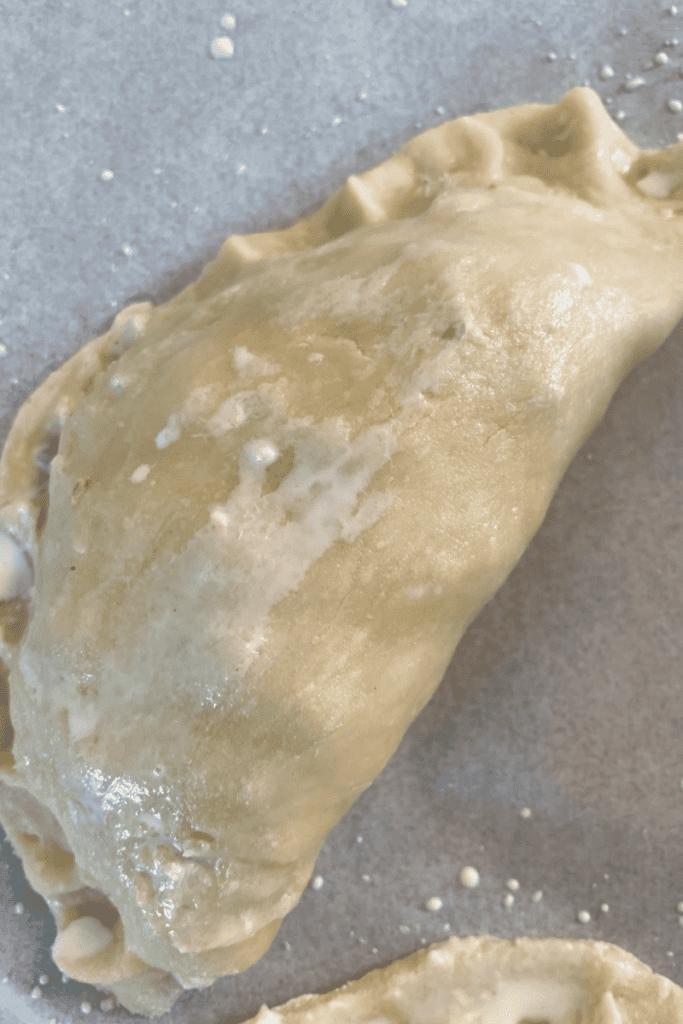
Lay the meat mixture on one side of the pastry circle. Leave enough room around the edge to crimp it together afterward. Fold the empty side of the dough up and over the meat mixture. Do NOT underfill your Pasty’s. These are meant to be very meaty and have lots of filling. Use milk or half-and-half cream to seal the edges together. Then using your fingers crimp the edge tightly as you would for the edge of a pie shell. If you prefer, you can use a fork’s tines to push the two edges together to seal it up tight.
If you enjoy homemade savory hand pies, my jerk chicken Jamaican patties use a completely different spicy filling inside homemade pastry.
Ensure the edges are sealed, or any juices made will seep out while baking. You will be baking these in a 350-degree Fahrenheit oven for 1 hour! The tops of the Pasty’s need to be brushed with milk or half and half cream to get a nice golden brown. Once you’ve done that, place them on a prepared baking sheet and pop them in the oven.
When they have finished baking, they can be covered in the fridge for up to three days. Or serve immediately for dinner with a scoop of sour cream!
Ingredients
These Upper Peninsula pasties use a homemade butter-and-shortening pastry with a simple ground meat, potato, onion, pea, and carrot filling.
Pasty Dough
All-Purpose Flour: Provides the structure for the pastry. Regular all-purpose flour works well here and is sturdy enough to hold the generous filling.
Golden Vegetable Shortening: Helps keep the pastry tender and easy to work with. A standard vegetable shortening such as Crisco can be used if that is what you keep on hand.
Salted Butter: Adds flavor and contributes to a flaky pastry. Keep the butter cold until you are ready to cut it into the flour.
Salt: Seasons the pastry so the crust has enough flavor to balance the savory filling.
Ice Water: Brings the pastry dough together while helping keep the fat cold. Add it gradually so the dough does not become overly wet or sticky.
Michigan Pasty Filling
Ground Beef: Gives the filling its beef flavor and forms part of the hearty meat base. Buy it on sale when possible and freeze extra for another batch.
Ground Pork: Adds richness to the filling and blends well with the beef. Ground pork is often economical and can also be purchased on sale and frozen.
White Potatoes: Add bulk and make the pasties more filling. Choose firm potatoes and dice them fairly small and evenly so they cook consistently.
Red Onion: Adds savory flavor with a little natural sweetness. A regular yellow cooking onion also works if that is what you already have.
Frozen Peas and Carrots: Make the filling convenient without requiring extra peeling and chopping. Frozen vegetables are useful to keep on hand because you can use only what the recipe needs and return the rest to the freezer.
Black Pepper: Adds simple seasoning without overpowering the meat and vegetables.
Salt: Brings out the flavor of the meat, potatoes, and vegetables while keeping the filling traditionally simple.
Milk or Half-and-Half Cream: Helps seal the pastry edges and is brushed over the outside before baking to encourage an evenly golden crust.
Substitutions and Add-Ins for Upper Peninsula Pasties
This recipe has a little flexibility, especially in the meat and vegetables, but I would keep the pastry and potato base fairly close to the original so the pasties still hold together and feel like the same recipe.
All-Purpose Flour: I would keep regular all-purpose flour for the pastry because it gives the dough enough structure to hold the generous filling. I have not tested this pastry with gluten-free flour or other flour blends.
Golden Vegetable Shortening: Regular vegetable shortening, such as Crisco, can be used in place of golden shortening. It will still help produce a tender, workable pastry.
Salted Butter: I would keep the butter in the pastry rather than replacing it entirely with shortening because it contributes flavor as well as texture.
Ground Beef and Ground Pork: Use all ground beef or all ground pork if one is less expensive or already in your freezer. Chopped beef can also be used instead of the ground meat mixture, although the filling will have a chunkier texture.
White Potatoes: Potatoes are an important part of the filling and help make these Michigan-style pasties substantial. I would keep them rather than replacing them with another vegetable.
Red Onion: A regular yellow cooking onion can be used instead. Either works well, so use whichever you already have on hand.
Frozen Peas and Carrots: For a version closer to the traditional Michigan pasty vegetable combination, omit the peas and use diced rutabaga or turnip along with the carrots and potatoes.
Milk or Half-and-Half Cream: Either can be used to seal the pastry edges and brush the outside before baking.
Oregano or Thyme: Add a small amount to the meat filling if you prefer more herbal seasoning. Traditional-style pasties are usually simply seasoned, so this will change the flavor slightly.
Garlic: Minced garlic can be added to the filling for a stronger savory flavor, although it is not part of the simple seasoning used in this version.
Expert Tips for Making Upper Peninsula Pasties
Tip #1: Use a Heavy Rolling Pin: These pasties require fairly large, thin rounds of pastry, and a heavier rolling pin lets the weight of the pin do more of the work. After years of rolling pastry—and breaking a wooden rolling pin or two—I find this much easier than having to press hard on the dough.
Tip #2: Roll the Pastry Evenly: Keep the dough as close to the same thickness as possible across the entire round. Uneven pastry can leave thinner areas browning too quickly while thicker sections take longer to bake.
Tip #3: Flip the Pasties Halfway Through Baking: Carefully turn the pasties over partway through the bake so both sides have a chance to brown. This gives you a more evenly golden pastry instead of a well-browned top with a pale bottom.
Serving Suggestions
Serve these Upper Peninsula pasties warm with a spoonful of sour cream on the side. Because each pasty already contains meat, potatoes, onion, peas, carrots, and pastry, it is filling enough to serve as a complete lunch or dinner on its own. For another hearty meat-and-pastry dinner, try my sausage and leek pie with its creamy sausage filling.
For a larger meal, pair one with a simple green salad or cooked vegetables rather than another heavy side. These large Michigan-style pasties also work well for packed lunches, picnics, or meals on the go because the filling is enclosed inside the pastry.
Storing Upper Peninsula Pasties
Allow the baked pasties to cool completely before storing them. Keep leftovers in an airtight container in the refrigerator for up to three days.
For longer storage, wrap each fully cooled pasty first in plastic wrap and then in foil for added protection against freezer burn. Freeze for up to one month for the best pastry quality.
Thaw frozen pasties overnight in the refrigerator. Reheat in a 350°F oven for about 15 minutes, or until heated through.
FAQ
Upper Peninsula Pasty Recipe – Michigan-Style Meat Pasties

Equipment
- baking sheet
- mixing bowl
- Frying Pan
- Spatula
- Tablespoon
- Teaspoon
- parchment paper optional
Ingredients
Pastry
- 1 Cup Golden vegetable shortening Or Crisco
- ½ Cup Salted Butter
- 4 Cup Flour
- 2 Tsp Salt
- ⅔ Cup Ice Water More if needed
Pasty Meat Filling
- ½ LB Ground Beef
- 1 LB Ground Pork
- 1 Cup Red Onion Diced
- 2¼ Cups White Potatoes Diced
- 1 Cup Frozen Peas and Carrot Mix
- 1 Tsp Black Pepper
- ½ Tsp Salt
- Milk or cream to seal pastry and brush outsides
Instructions
Pastry
- Mix the flour and salt together in a mixing bowl.
- Add the golden vegetable shortening and the cold butter. Cut in with pastry knife until it resembles coarse cornmeal.
- Add in a bit at a time the ice cold water. Use more if needed to make a soft non-sticky pastry dough.
- Wrap pastry dough in cling wrap and refrigerate for one hour.
Making the Meat Filling
- In a fry pan add the ground meats. Mix them together and break into small pieces over medium heat.
- When partially browned add in the vegetables and spices.
- When fully browned remove from heat and set aside to cool.
Forming the Pasty's
- After one hour remove the pastry dough from the fridge.
- Roll a small ball of pastry dough into a 8-9" 1/8" thick round.
- Spoon some of the cooled meat mixture onto one side of the pastry round. Be careful to leave an edge to crimp.
- Run a line of milk or cream around the edge by the meat mixture.
- Lift the empty pastry side up and over the meat mixture.
- Put the two edge pieces together and crimp with your hands or tines of a fork.
- Brush outside of Pasty with milk or half and half.
- Bake in a preheated 350℉ oven for one hour or until golden brown.
- Serve immediately with sour cream. Or let cool and store in airtight container in fridge for up to three days.
Nutrition




Can you freeze the pies? If so, should I pre-bake half way, cool, them freeze?
Hi Suzy,
Yes you can definitely freeze them. Just cool completely then wrap well. They can freeze for up to three months. To thaw put in fridge overnight and then reheat in the oven at 350F for 15-20 minutes. I recommend using a meat thermometer to ensure that they have reheated right in the middle well. The internal temp should be 165°F.